
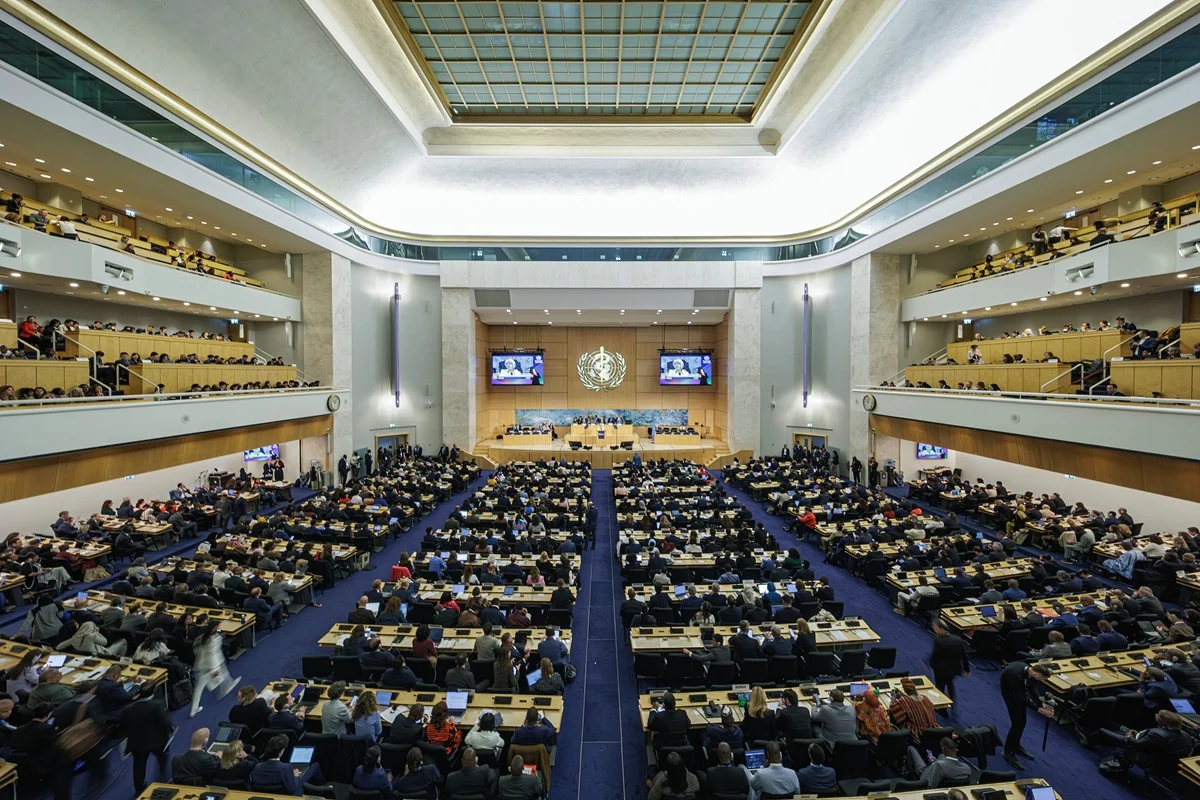
The Seventy-ninth session of the World Health Assembly (WHA79) officially commenced today at the Palais des Nations in Geneva, Switzerland, marking a pivotal moment for international health diplomacy as member states gather to address the most pressing challenges facing the global medical landscape. The assembly, which serves as the supreme decision-making body of the World Health Organization (WHO), opened with the formal election of Dr. Víctor Elías Atallah Lajam of the Dominican Republic as the President of the Health Assembly. Dr. Atallah Lajam, a distinguished physician and public health advocate, assumes the presidency at a time when the international community is navigating a complex transition toward sustainable health systems in the post-pandemic era.
Following the presidential election, the Assembly appointed five Vice-Presidents to ensure balanced regional representation in its governance. The elected officials include Dr. Mohamed Ali Al-Ghouj of Libya, Dr. Assa Badiallo Touré of Mali, Mrs. Katarzyna Drążek-Laskowska of Poland, Mrs. Neesha Mehta of Nepal, and Mr. Elias Kapavore of Papua New Guinea. The procedural framework for the session was further solidified with the appointment of the Chairs for the two main technical committees: Dr. Timur Sultangaziyev of Kazakhstan was selected to lead Committee A, which focuses on technical and health matters, while Dr. Kwabena Mintah Akandoh of Ghana will chair Committee B, which handles administrative, financial, and legal issues.
High-Level Welcome and Diplomatic Addresses
The opening ceremony featured a high-level welcome session that underscored the intersection of health, peace, and multilateralism. H.E. Elisabeth Baume-Schneider, Federal Councillor of the Swiss Confederation, delivered the opening remarks on behalf of the host nation. She emphasized Geneva’s role as a global hub for health diplomacy and called for renewed commitment to international cooperation in the face of rising geopolitical tensions that threaten health security.
Following the Swiss address, H.E. John Dramani Mahama, President of Ghana and the session’s Special Guest of Honour, addressed the delegates. President Mahama highlighted the critical need for equitable access to medical technologies and the strengthening of primary healthcare systems in the Global South. His presence underscored the growing leadership of African nations in shaping the global health agenda, particularly regarding local manufacturing of vaccines and pharmaceuticals.
The Assembly also received high-level video messages from several world leaders. United Nations Secretary-General António Guterres urged member states to accelerate progress toward the Sustainable Development Goals (SDGs), noting that the 2030 deadline is fast approaching while many health targets remain off-track. H.E. Ahmad Al Sharaa, President of the Syrian Arab Republic, and H.E. Mia Mottley, Prime Minister of Barbados, also provided insights. Prime Minister Mottley, a vocal advocate for the "Bridgetown Initiative," specifically linked the climate crisis to global health outcomes, arguing that the financial architecture of global health must be reformed to support vulnerable nations facing environmental catastrophes.
The Director-General’s Vision and Global Health Awards
Dr. Tedros Adhanom Ghebreyesus, Director-General of the WHO, delivered a comprehensive opening address that set the tone for the week-long deliberations. Dr. Tedros reflected on the progress made since the 78th Assembly, particularly in the realms of pandemic preparedness and the negotiation of international health regulations. He emphasized that while the acute phase of previous global emergencies has passed, the "silent pandemics" of non-communicable diseases, mental health crises, and antimicrobial resistance continue to claim millions of lives annually.
A central highlight of the afternoon session was the presentation of the Awards for Global Health, a tradition that recognizes individuals who have dedicated their lives to the advancement of human well-being. This year’s recipients included:
- Dr. Tore Godal: Recognized for his foundational role in global immunization efforts and his leadership in the creation of Gavi, the Vaccine Alliance.
- Dr. Merceline Dahl-Regis: Honored for her pioneering work in the Caribbean, where she led successful efforts to eliminate polio, measles, and rubella.
- Dr. Mike Ryan: The Executive Director of the WHO Health Emergencies Programme, awarded for his decades of frontline service in managing outbreaks ranging from Ebola to COVID-19.
- Dr. Heba El Sewedy: An Egyptian humanitarian recognized for her work in providing medical care to victims of conflict and trauma through her foundation.
The plenary session concluded with an address by Special Guest H.E. Pedro Sánchez, Prime Minister of Spain. Prime Minister Sánchez reaffirmed Spain’s commitment to universal health coverage and highlighted the importance of social determinants of health, such as housing and education, in achieving long-term public health stability.
Chronology of the 79th World Health Assembly
The WHA79 is scheduled to run for eight days, with a densely packed agenda reflecting the multifaceted nature of contemporary health issues.
- Day 1 (Opening): Election of officers, adoption of the agenda, and high-level speeches.
- Days 2–4: Intensive sessions in Committee A focusing on the 14th General Programme of Work (GPW 14), which outlines the WHO’s strategy for the period 2025–2028. Topics include pandemic treaty implementation and universal health coverage.
- Days 3–5: Committee B deliberations on the WHO’s program budget for the 2026–2027 biennium, including discussions on sustainable financing and the "Investment Round" aimed at securing predictable funding.
- Day 6: Technical briefings on climate change and health, digital health transformation, and the integration of artificial intelligence in diagnostics.
- Days 7–8: Final reports from committees, adoption of resolutions, and the closing plenary.
Supporting Data and the Global Health Landscape
The 79th World Health Assembly convenes against a backdrop of significant statistical challenges. According to current WHO data, approximately 4.5 billion people—more than half of the world’s population—were not fully covered by essential health services as of the last reporting cycle. Furthermore, the global health funding gap remains a critical hurdle. The WHO’s proposed budget for the upcoming biennium seeks to address a projected shortfall in voluntary contributions, which currently make up nearly 80% of the organization’s funding, leading to concerns about "earmarked" priorities overriding general health needs.
In terms of disease burden, the Assembly is reviewing data showing a 15% increase in mental health conditions worldwide over the last decade, exacerbated by global instability and economic pressures. Additionally, antimicrobial resistance (AMR) is now directly responsible for an estimated 1.27 million deaths per year, a figure that Committee A is expected to address through a new global action plan.
Official Responses and Strategic Implications
The election of Dr. Víctor Elías Atallah Lajam has been met with positive reactions from the Americas region. Diplomats from the Pan American Health Organization (PAHO) noted that his presidency signifies a recognition of the Dominican Republic’s recent successes in healthcare reform and its proactive stance on regional health security.
In a joint statement following the morning session, several civil society organizations expressed cautious optimism regarding the "Investment Round" discussed by Dr. Tedros. They emphasized that while sustainable financing is necessary, it must be accompanied by transparency and accountability to ensure that funds reach the most marginalized communities rather than being absorbed by administrative overhead.
The participation of Prime Minister Pedro Sánchez and President John Dramani Mahama also signals a shift toward "Health for Peace" initiatives. Analysts suggest that the 79th Assembly is increasingly being used as a platform for middle-income and developing nations to demand a seat at the table in deciding how global medical intellectual property is shared during future crises.
Broader Impact and Future Outlook
The outcomes of WHA79 are expected to have a profound impact on how the world prepares for future biological threats. A primary focus of the negotiations in Committee A involves the finalization of protocols related to the "Pathogen Access and Benefit-Sharing System." This system aims to ensure that when countries share data on new viruses, they receive equitable access to the vaccines and treatments developed from that data.
Furthermore, the Assembly’s focus on the 14th General Programme of Work (GPW 14) will define the WHO’s priorities for the next four years. This includes a major push for "One Health"—an approach that recognizes the interconnectedness of human, animal, and environmental health. With zoonotic diseases (those jumping from animals to humans) making up 75% of emerging infectious diseases, the resolutions passed this week in Geneva will likely dictate global surveillance and prevention strategies for the remainder of the decade.
As the delegates move into the technical committee sessions tomorrow, the spirit of the opening day remains one of "urgent cooperation." The 79th World Health Assembly is not merely a procedural meeting but a critical forum where the legal and financial architecture of tomorrow’s global health system is being built. With a diverse leadership team and a robust agenda, the international community looks to Geneva for the resolutions that will safeguard the health of the 8 billion people inhabiting the planet.
