
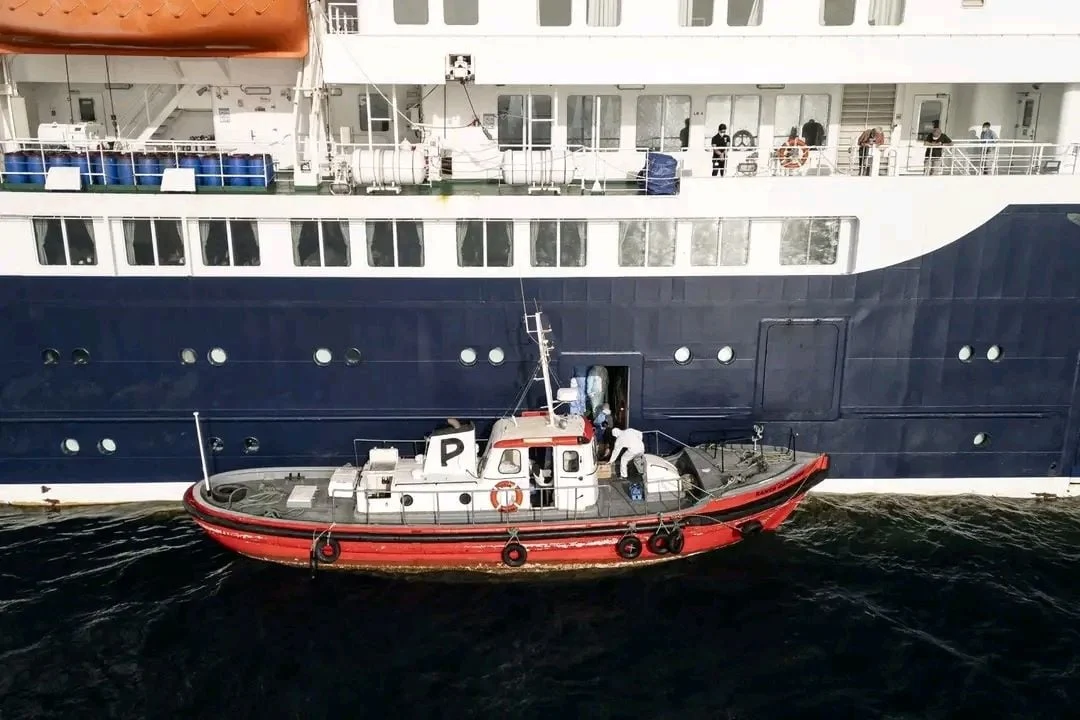
The World Health Organization (WHO) has confirmed that its Director-General, Dr. Tedros Adhanom Ghebreyesus, will travel to the island of Tenerife to personally supervise the arrival and repatriation of passengers and crew from the MV Hondius. The vessel, an ice-strengthened expedition ship, has been at the center of an international public health response following an outbreak of the Andes strain of hantavirus that resulted in the deaths of three individuals. While the WHO has categorized the current risk to the general public in Tenerife as low, the operation is being handled with the highest level of biosafety protocols to ensure the containment of the virus and the safety of the local population.
The decision to dock the MV Hondius in Tenerife follows a formal request from the WHO to the Spanish government, led by Prime Minister Pedro Sánchez. The choice of Tenerife was dictated by the island’s sophisticated medical infrastructure and its strategic location, fulfilling the requirements set forth by the International Health Regulations (IHR). Dr. Tedros has characterized Spain’s decision to accept the vessel as an "act of solidarity and moral duty," highlighting the necessity of international cooperation in managing maritime health crises.
Background and Context of the MV Hondius Outbreak
The MV Hondius, a vessel frequently utilized for polar expeditions and remote maritime travel, reported its first cases of illness several weeks ago while at sea. The pathogen responsible for the fatalities and the subsequent quarantine is the Andes orthohantavirus (ANDV). Unlike many other strains of hantavirus, which are primarily transmitted to humans through contact with the excreta of infected rodents, the Andes strain is unique for its documented potential for human-to-human transmission.
The current situation involves approximately 150 passengers and crew members representing 23 different nationalities. Following the three confirmed fatalities, the ship’s medical team, in consultation with WHO experts, implemented strict isolation measures. As of the latest reports from the vessel’s captain, Jan Dobrogowski, there are currently no symptomatic individuals on board, suggesting that the incubation period for the primary contacts may be reaching a point of stabilization.
Scientific Analysis of the Andes Hantavirus Strain
To understand the severity of the precautions being taken in Tenerife, it is necessary to examine the nature of the Andes virus. First identified in the mid-1990s in South America, the Andes strain causes Hantavirus Pulmonary Syndrome (HPS), a severe and sometimes fatal respiratory disease. The clinical progression of HPS typically begins with flu-like symptoms, including fever, muscle aches, and fatigue, which can rapidly progress to acute respiratory failure and cardiogenic shock.
According to data from the Centers for Disease Control and Prevention (CDC) and the WHO, the case fatality rate for HPS caused by the Andes strain can be as high as 35% to 40%. Because of the human-to-human transmission risk—which typically occurs through close contact or shared environments—the WHO has treated the MV Hondius as a high-priority containment case. However, experts emphasize that hantaviruses are not airborne in the same manner as SARS-CoV-2 (COVID-19); they require much closer proximity or contact with bodily fluids, which significantly lowers the risk of a community-wide outbreak in a controlled environment like a modern port.
Chronology of the Response Operation
The timeline of the MV Hondius incident reflects a coordinated effort between maritime authorities, the WHO, and the Spanish Ministry of Health:
- Initial Outbreak: The ship reported the first cluster of respiratory illnesses while in transit. Following the first death, the vessel was placed under a self-imposed quarantine while seeking guidance from international health bodies.
- Pathogen Identification: Laboratory samples processed via maritime health protocols confirmed the presence of the Andes strain of hantavirus. Two additional deaths occurred shortly thereafter.
- WHO Intervention: The WHO dispatched a specialized expert to the ship to assist the onboard medical team and ensure that containment protocols met international standards.
- Diplomatic Negotiation: Dr. Tedros engaged in direct communication with Prime Minister Pedro Sánchez to secure a safe harbor for the vessel, citing the International Health Regulations (2005) which mandate that countries provide assistance to ships in distress with public health concerns.
- Selection of Granadilla: The Spanish government designated the industrial port of Granadilla in Tenerife as the disembarkation point due to its isolation from residential areas and its ability to accommodate large-scale logistics operations.
- Dr. Tedros’s Announcement: In a rare direct address to a local community, the Director-General announced his intention to visit Tenerife to witness the operation and provide transparency to the worried public.
Logistics of the Repatriation and Containment Plan
The repatriation of the 150 individuals on board the MV Hondius is being described as a "cordoned-off operation." The Spanish authorities, in conjunction with the WHO, have designed a logistical corridor that ensures no contact between the ship’s occupants and the residents of Tenerife.
Upon docking at the industrial port of Granadilla, passengers will be moved directly from the ship to a fleet of sealed, guarded vehicles. These vehicles will travel through a strictly controlled and cordoned-off corridor to a designated area for processing. From there, the passengers will be repatriated to their 23 home countries via chartered flights.
The Port of Granadilla was specifically chosen because it is an industrial facility located away from the high-density tourist and residential zones of Santa Cruz and the southern resorts. This distance serves as a physical buffer, reinforcing the "low risk" assessment provided by health officials. Furthermore, all medical supplies and personal protective equipment (PPE) required for the port staff and health workers are already in place, ensuring that those managing the transfer are fully protected.
The Role of International Health Regulations (IHR)
The legal and ethical framework for this operation is grounded in the International Health Regulations (2005). These regulations are a legally binding instrument of international law that includes 196 countries, including all WHO Member States. The IHR requires countries to develop certain minimum core public health capacities and to notify the WHO of events that may constitute a public health emergency of international concern.
Under the IHR, Tenerife was identified as the nearest port with the "sufficient medical capacity" to handle the complexities of a hantavirus repatriation. The regulations are designed to prevent the unnecessary interference with international traffic and trade while ensuring the maximum protection of people from the spread of disease. By honoring these regulations, Spain is upholding a global commitment to maritime safety and public health, a move that Dr. Tedros has lauded as a benchmark for international solidarity.
Official Responses and Local Sentiment
The reaction in Tenerife has been a mixture of concern and cautious cooperation. Memories of the 2020 COVID-19 pandemic remain vivid on the island, which was one of the first locations in Spain to experience a major lockdown after an outbreak at a local hotel. Addressing these concerns, Dr. Tedros emphasized in his address that the current situation "is not another COVID," citing the different transmission dynamics of hantavirus and the highly controlled nature of the MV Hondius operation.
Prime Minister Pedro Sánchez has reinforced the government’s commitment to the mission, stating that Spain’s role is one of "humanity and responsibility." Local officials in the Canary Islands have also been in constant communication with the central government to ensure that the Granadilla port operations do not disrupt the island’s economy or the safety of its citizens.
Captain Jan Dobrogowski of the MV Hondius expressed his gratitude for the cooperation of the Spanish authorities, noting that the crew and passengers have faced significant psychological strain after weeks at sea. The collaboration between the ship’s operator and the WHO has been described as exemplary, with the company providing full access to medical logs and passenger data to facilitate the repatriation.
Broader Implications and Fact-Based Analysis
The arrival of the MV Hondius in Tenerife serves as a critical case study in how the global health community responds to "high-consequence, low-probability" events. While hantavirus outbreaks on cruise ships are exceedingly rare, the potential for human-to-human transmission in the Andes strain necessitates a level of caution that can often be mistaken for alarmism.
From a public health perspective, the operation demonstrates the evolution of response strategies since 2020. The use of specialized industrial ports, the implementation of "sealed corridors," and the direct involvement of the WHO Director-General suggest a new standard for transparency and containment. By addressing the people of Tenerife directly, the WHO is attempting to combat the "infodemic" of misinformation that often accompanies viral outbreaks.
The mission also highlights the vulnerabilities of the cruise and expedition industry to emerging pathogens. As travelers venture into more remote areas where zoonotic viruses like hantavirus are endemic, the protocols established during the MV Hondius incident may become the blueprint for future maritime health emergencies.
Conclusion and Next Steps
As the MV Hondius nears the shores of Tenerife, the focus remains on the seamless execution of the Granadilla transfer. The presence of Dr. Tedros Adhanom Ghebreyesus on the ground is intended to serve as a guarantee of the WHO’s oversight and a tribute to the health workers involved.
The passengers, who have spent weeks in a state of uncertainty and grief, are expected to begin their journey home within 48 hours of docking. Following the departure of the passengers, the MV Hondius will undergo a rigorous disinfection process in accordance with international maritime health standards before it is cleared to return to service.
The WHO continues to monitor the situation, but the primary message to the international community and the residents of the Canary Islands is one of controlled management. Through the combination of rigorous science, legal frameworks like the IHR, and a commitment to humanitarian solidarity, the resolution of the MV Hondius crisis stands as a testament to the lessons learned in a post-pandemic world. The people of Tenerife, in hosting this complex operation, are playing a pivotal role in a global effort to ensure that no ship is left at sea in a time of crisis.
