
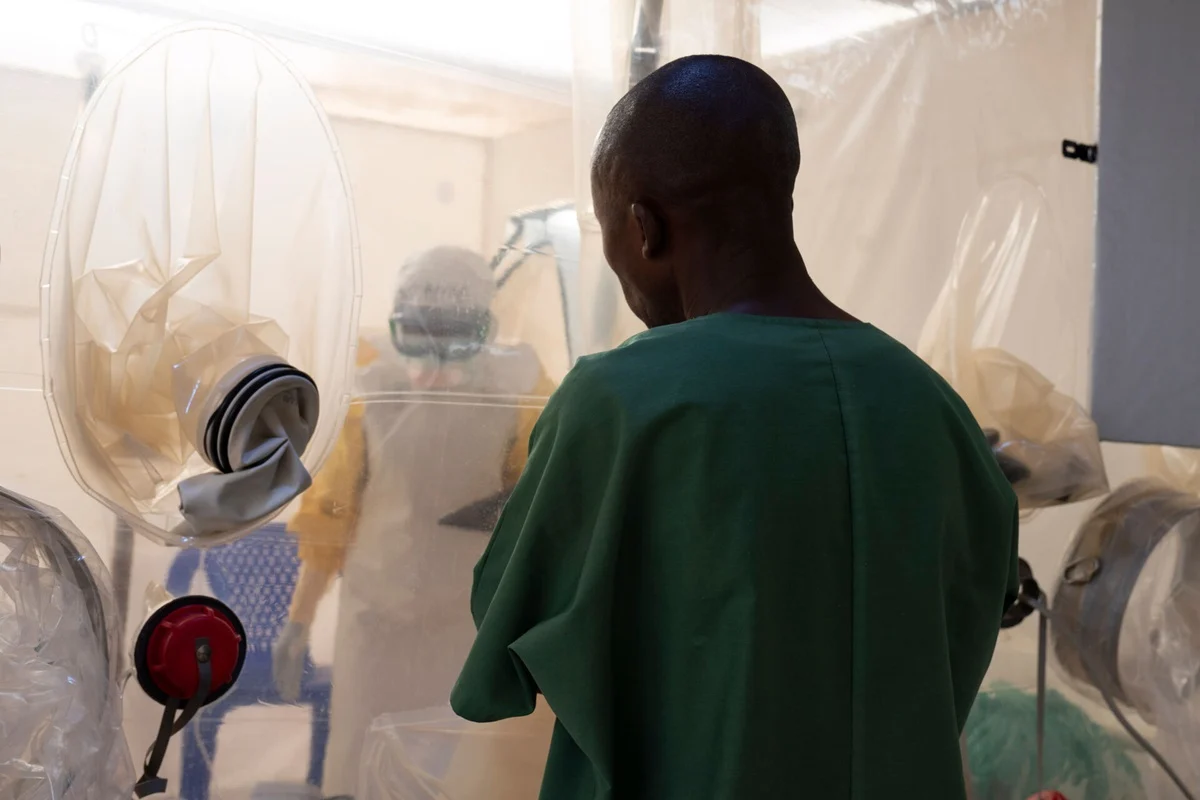
In a landmark advancement for global health security and infectious disease research, the PARTNERS clinical trial has officially commenced patient enrollment in the Democratic Republic of the Congo (DRC). This international initiative, formally known as the Platform Adaptive Randomised Trial for New and Repurposed Filovirus TreatmentS, is designed to rigorously evaluate potential life-saving treatments for Bundibugyo virus disease (BVD), a rare but deadly form of Ebola. As the outbreak continues to impact communities within the DRC, the trial represents a critical bridge between emergency humanitarian response and high-level scientific inquiry, aiming to establish a standard of care where none currently exists.
The PARTNERS trial is a multi-country, multi-partner effort sponsored by the World Health Organization (WHO) and coordinated by a coalition of the world’s leading scientific institutions. These include the Institut National de Recherche Biomédicale (INRB) in the DRC, the Institute of Tropical Medicine in Belgium, and the University of Oxford’s Pandemic Sciences Institute in the United Kingdom. Supported by the Africa Centres for Disease Control and Prevention (Africa CDC) and various humanitarian organizations, the trial seeks to determine if specific antiviral therapies can significantly reduce mortality rates among those infected with the Bundibugyo virus.
The Therapeutic Framework: Assessing Monoclonal Antibodies and Antivirals
At the heart of the PARTNERS trial are two primary therapeutic candidates: MBP134 and remdesivir. MBP134 is an experimental monoclonal antibody cocktail specifically engineered to target the glycoprotein of the virus, preventing it from entering and infecting human cells. Unlike previous antibodies that were specific only to the Zaire strain of Ebola, MBP134 has shown promise in preclinical studies for its broad-spectrum potential against multiple filoviruses, including Bundibugyo and Sudan virus.
Remdesivir, a well-known broad-spectrum antiviral originally developed by Gilead Sciences, functions by inhibiting the viral RNA polymerase, effectively preventing the virus from replicating within the host. While remdesivir has been utilized in the treatment of COVID-19 and was previously tested during the 2018-2020 Zaire Ebola outbreak in the DRC, its efficacy against the Bundibugyo species remains a critical question that this trial intends to answer.
The trial is structured as a "platform" study. This innovative design allows researchers to evaluate multiple treatments simultaneously against a single control group receiving the standard of care. Furthermore, the "adaptive" nature of the trial means that as new scientific evidence emerges or new candidate drugs are developed, they can be integrated into the trial framework without the need to start a completely new study. This flexibility is essential in the context of an active outbreak, where time is the most precious commodity.
Epidemiological Context and the Current Outbreak in the DRC
The necessity of the PARTNERS trial is underscored by the current epidemiological situation in the Democratic Republic of the Congo. Since the onset of the current Bundibugyo virus disease outbreak, the nation has reported more than 1,400 confirmed cases. The human toll has been significant; while approximately 210 individuals have successfully recovered, nearly 440 deaths have been recorded. These figures highlight a case fatality rate that remains alarmingly high, particularly in regions where healthcare infrastructure is already strained by concurrent health crises and regional instability.
Bundibugyo virus disease is one of several viral hemorrhagic fevers caused by the Orthoebolavirus genus. It was first identified in 2007 following an outbreak in the Bundibugyo District of western Uganda. While it generally exhibits a lower mortality rate compared to the Zaire ebolavirus—which can see fatality rates as high as 90%—BVD is still a severe illness characterized by fever, fatigue, muscle pain, headache, and sore throat, often followed by vomiting, diarrhea, rash, and in some cases, internal and external bleeding.
The lack of approved therapeutics for BVD has long been a gap in the global medical arsenal. While the medical community celebrated the approval of treatments like Inmazeb and Ebanga for the Zaire strain following the 2018 PALM trial, those treatments are not effective against the Bundibugyo or Sudan strains. The PARTNERS trial is the first major effort to rectify this disparity, ensuring that therapeutic progress is inclusive of all virus types that cause Ebola diseases.
A Chronology of Filovirus Research and Response
The launch of the PARTNERS trial is the culmination of decades of research and lessons learned from previous filovirus emergencies.
- 2007: The Bundibugyo virus is first discovered during an outbreak in Uganda, establishing the need for species-specific research.
- 2012: A significant BVD outbreak occurs in the Haut-Uélé Province of the DRC, highlighting the virus’s ability to cross borders and cause regional emergencies.
- 2014-2016: The West Africa Ebola epidemic (Zaire strain) prompts a global realization that clinical trials must be integrated into outbreak responses.
- 2018-2020: The PALM (Pamoja Tulinde Maisha) trial in the eastern DRC successfully identifies effective treatments for Zaire ebolavirus, providing a blueprint for the PARTNERS trial.
- 2022-2023: Outbreaks of the Sudan virus in Uganda further emphasize the urgent need for "pan-Ebola" therapeutics.
- Present Day: The PARTNERS trial begins enrollment in the DRC, utilizing a platform design to address BVD while preparing for future filovirus threats.
This timeline demonstrates a shift in the global health philosophy: moving from reactive emergency aid to a model of "research as response." By conducting high-quality clinical trials during the heat of an epidemic, the international community ensures that the evidence generated is directly applicable to the patients currently suffering from the disease.
Collaborative Governance and Institutional Support
The scale of the PARTNERS trial requires unprecedented cooperation between national governments, international health agencies, and academic institutions. The World Health Organization, acting as the primary sponsor, utilized its Technical Advisory Group to select the treatments based on a rigorous review of preclinical safety and efficacy data.
The Institut National de Recherche Biomédicale (INRB), under the leadership of Professor Jean-Jacques Muyembe-Tamfum—a co-discoverer of the Ebola virus in 1976—serves as the primary coordinating body within the DRC. The INRB’s involvement is crucial, as it provides the local expertise and laboratory infrastructure necessary to conduct complex clinical research in challenging environments.
The University of Oxford’s Pandemic Sciences Institute (PSI) brings its extensive experience in trial operations and data management. Professor Amanda Rojek, the PARTNERS Trial Operations Lead, emphasized that the goal is to generate evidence in "months rather than years." This accelerated timeline is made possible by the partnership with frontline humanitarian organizations such as ALIMA (The Alliance for International Medical Action) and Médecins Sans Frontières (MSF), who manage the treatment units where patients are enrolled.
Methodology: Ensuring Patient Safety and Ethical Standards
The trial is a randomized, controlled study, which is the gold standard for medical research. Patients of all ages with confirmed BVD are eligible for enrollment. Upon entering the trial, all participants receive "optimized supportive care." This is a critical component of the study, as early intervention with intravenous fluids, electrolyte replacement, oxygen support, and pain management significantly improves survival rates regardless of the specific antiviral being tested.
To maintain the highest ethical and safety standards, the study data is regularly reviewed by an independent Data and Safety Monitoring Board (DSMB). This board has the authority to recommend stopping the trial if one treatment is found to be exceptionally effective or if there are concerns regarding patient safety. Furthermore, participants are provided with close clinical follow-up for at least 28 days following their enrollment to monitor for long-term recovery and potential side effects.
Official Perspectives on the Trial’s Impact
The launch has drawn praise from global health leaders who view the trial as a turning point in the fight against filoviruses. Dr. Tedros Adhanom Ghebreyesus, Director-General of the WHO, noted that while some people recover from BVD without specific drugs, the addition of safe and effective therapeutics to the medical "toolkit" is essential for saving more lives. He highlighted the record time in which the trial was established as a testament to the power of international collaboration.
Dr. Samuel Roger Kamba, the Minister of Health for the DRC, emphasized the trial’s role in strengthening national and global preparedness. "The launch of the PARTNERS clinical trial represents a significant step forward, offering renewed hope to patients, their families, and affected communities," Kamba stated. He framed the research as a contribution to the global scientific community, positioning the DRC as a leader in biomedical research.
Professor Jean-Jacques Muyembe-Tamfum of the INRB highlighted the integration of research into clinical care. By making investigational treatments available within the context of a trial, the medical community provides immediate potential benefits to patients while simultaneously building the evidence base needed to treat future generations.
Analysis of Broader Implications and Global Health Security
The PARTNERS trial has implications that extend far beyond the current outbreak in the DRC. First, it validates the "platform trial" model as the preferred method for responding to emerging infectious diseases. By having a pre-established protocol and infrastructure, the global health community can respond to "Disease X"—a hypothetical, unknown pathogen—with much greater speed.
Second, the trial addresses the issue of health equity. For too long, research into diseases that primarily affect sub-Saharan Africa has lagged behind Western medical priorities. By focusing on the Bundibugyo virus, the PARTNERS consortium is addressing a neglected tropical disease and ensuring that the benefits of modern biotechnology, such as monoclonal antibodies, are available to those in resource-limited settings.
Finally, the trial strengthens the resilience of local health systems. The partnership involves training local healthcare workers, improving laboratory capacities, and establishing robust data collection systems in the DRC. These improvements will remain long after the current outbreak ends, providing the country with better tools to manage other endemic diseases like malaria, tuberculosis, and measles.
As the PARTNERS trial continues its enrollment, the eyes of the global scientific community are on the DRC. The results of this study could redefine the standard of care for Bundibugyo virus disease and provide a sustainable research platform for other filoviruses, including Marburg virus. In the face of an unpredictable and dangerous pathogen, the PARTNERS trial stands as a beacon of scientific rigor and humanitarian commitment, working to ensure that no community is left defenseless against the threat of Ebola.
