
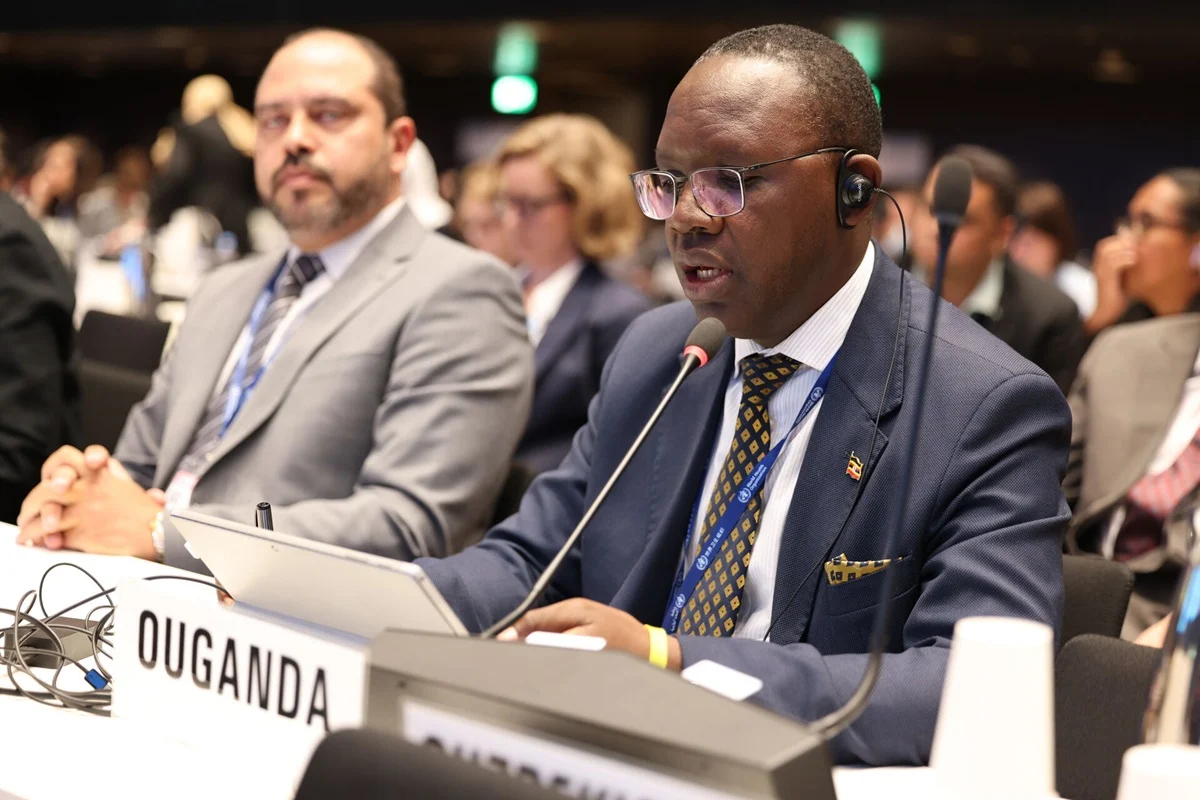
The 79th World Health Assembly opened today in Geneva with a clarion call from Director-General Dr. Tedros Adhanom Ghebreyesus for a fundamental restructuring of international cooperation, framing the future of global health as a "shared responsibility" among all Member States. Addressing the Assembly during the presentation of his annual report, Dr. Tedros emphasized that the lessons of the past decade—marked by the devastating COVID-19 pandemic and a series of regional health crises—must now be codified into binding international law. The Assembly’s agenda is dominated by the ongoing efforts to finalize the WHO Pandemic Agreement, a landmark treaty intended to ensure the world is never again caught unprepared by a high-threat pathogen.
Central to the day’s proceedings was the critical decision regarding the Pathogen Access and Benefit Sharing (PABS) system. After months of intensive deliberations, Member States reached a consensus to extend the drafting and negotiation period for the PABS Annex under the Intergovernmental Working Group (IGWG). This extension acknowledges the profound technical and political complexities inherent in creating a system that balances the rapid sharing of biological samples with the equitable distribution of vaccines, diagnostics, and therapeutics. The Assembly decided to submit the final outcome of these negotiations for consideration by the Eightieth World Health Assembly in May 2027, though a provision was made for a dedicated special session in 2026 should a breakthrough occur sooner.
The PABS Annex: Balancing Sovereignty and Global Security
The Pathogen Access and Benefit Sharing (PABS) Annex remains the most contentious and vital component of the broader WHO Pandemic Agreement. Mandated under Article 12 of the Agreement, the PABS system is designed to rectify the inequities witnessed during the COVID-19 pandemic, where many developing nations shared viral genomic data but struggled to access the resulting medical countermeasures. The proposed framework aims to establish a legal obligation for Member States to share pathogen samples and sequence data in exchange for a guaranteed percentage of the resulting health products being provided to the WHO for distribution to low- and middle-income countries.
Negotiations have been characterized by a divide between nations with significant pharmaceutical manufacturing sectors and those seeking firmer guarantees on equity. The decision to resume negotiations at the seventh meeting of the IGWG, scheduled for July 6-17, 2026, reflects a commitment to reaching a "grand bargain" that satisfies both public health imperatives and intellectual property considerations. Legal experts note that the adoption of the PABS Annex is the final hurdle required for the opening for signature of the WHO Pandemic Agreement, making the next twelve months a pivotal period in the history of international health law.
Committee A: Addressing Health Emergencies and Regional Conflicts
While the high-level negotiations on the Pandemic Agreement continued, Committee A focused on the immediate operational realities of health emergencies. Delegates reviewed the implementation of the International Health Regulations (IHR 2005), the primary legal framework for responding to the international spread of disease. The report of the Independent Oversight and Advisory Committee (IOAC) for the WHO Health Emergencies Programme provided a sobering assessment of current global readiness, noting that while technical capabilities have improved, political fragmentation remains a significant barrier to effective response.
A significant portion of the Committee’s time was dedicated to the health impact of the ongoing conflict in the Middle East. The discussion centered on the alarming rise in attacks on healthcare infrastructure and the safety of medical personnel in conflict zones. Delegates emphasized that the protection of health workers is not merely a humanitarian obligation but a requirement under international humanitarian law. In a swift response to deteriorating conditions, the Committee adopted a draft decision on the health emergency in Lebanon, authorizing increased technical and material support to a healthcare system currently strained by displacement and regional instability.
A Decade of the WHO Health Emergencies Programme: Lessons from the Frontlines
On the margins of the main Assembly, a strategic roundtable titled "From COVID-19 to Action" marked the tenth anniversary of the WHO Health Emergencies Programme (WHE). Established in 2016 in the wake of the West African Ebola outbreak, the WHE was designed to provide the WHO with operational capabilities to match its technical expertise. Dr. Chikwe Ihekweazu, Executive Director of WHE, reflected on the program’s evolution, noting that it has been "forged in fire" through successive emergencies.
Dr. Mike Ryan, the former Executive Director of the WHE and a veteran of numerous global health crises, provided a historical perspective on the program’s growth. He observed that global health systems have historically been reactive, evolving only after a major catastrophe such as SARS or Ebola. The goal of the current reforms, Ryan argued, is to transition toward a "proactive posture" where surveillance and response capacities are permanently integrated into national health systems rather than activated only when a crisis is already underway.
The roundtable featured a diverse panel of experts who identified four pillars of future health security:
- Epidemic Intelligence and AI: Professor Johanna Hanefeld of the Robert Koch Institute argued that the next decade will be defined by "intelligent surveillance." This involves using artificial intelligence to analyze vast datasets—from environmental monitoring to social media trends—to identify threats before they become outbreaks. However, she cautioned that technology cannot replace public trust or strong national laboratory systems.
- Sustainable Financing: Dr. Daniela Garone of Médecins Sans Frontières (MSF) highlighted the persistent "panic and neglect" cycle of global health funding. She warned that relying on reactive, ad hoc funding during an emergency is inefficient and costs lives. The call was for a shift toward flexible, predictable financing that allows the WHO and Member States to maintain readiness during "peacetime."
- End-to-End Countermeasures: Dr. John-Arne Røttingen of the Wellcome Trust stressed that scientific innovation is meaningless without equitable access. He advocated for a streamlined approach that connects research and development directly to manufacturing and distribution networks in the Global South.
- National Capacity Building: Representatives from Ethiopia and the Central African Republic (CAR) provided evidence of how international cooperation translates to local impact. Dr. Mekdes Daba Feyssa, Ethiopia’s Minister of Health, detailed how investments made during COVID-19—particularly in oxygen infrastructure and laboratory diagnostics—are now being used to combat endemic diseases and localized outbreaks.
Recognition of Public Health Excellence
In addition to the policy discussions, the Secretariat held a ceremony to present certificates of achievement for outstanding public health milestones. The awards particularly focused on tobacco control, a long-standing priority for the WHO. These World No Tobacco Day awards recognized Member States and organizations that have successfully implemented the MPOWER measures, including significant tax increases on tobacco products, the implementation of smoke-free public spaces, and the introduction of plain packaging.
These awards serve as a reminder that while pandemic preparedness is the current focus, the WHO’s mandate remains broad, covering non-communicable diseases and lifestyle-related health risks that continue to claim millions of lives annually. The Director-General congratulated the recipients, noting that tobacco control remains one of the most effective ways to reduce the burden on national health systems and improve overall population resilience.
Implications for the Future of Global Health
The decisions made on the first day of the 79th World Health Assembly indicate a world in a state of transition. The extension of the PABS negotiations suggests that while there is a universal desire for a Pandemic Agreement, Member States are unwilling to compromise on the fundamental principles of equity and national sovereignty. The delay, while potentially frustrating to those seeking a quick resolution, may ultimately lead to a more robust and universally accepted treaty.
The focus on the Middle East and Lebanon underscores the increasing intersection between geopolitics and public health. As conflicts become more protracted and urbanized, the WHO is increasingly called upon to operate in "red zones," requiring not just medical expertise but diplomatic navigation. The adoption of the decision on Lebanon signals the Assembly’s recognition that health cannot be separated from peace and security.
As the Assembly continues through the week, the focus will shift toward the approval of the WHO’s program budget and the integration of the lessons learned from the WHE’s first decade into future strategic plans. The overarching message remains clear: the "ultimate stress test" of COVID-19 has revealed the structural vulnerabilities of a fragmented global system. The task of the 79th World Health Assembly is to begin the arduous process of rebuilding that system on a foundation of shared responsibility, ensuring that the progress made in the heat of a crisis is not lost in the complacency of its aftermath.
The upcoming July negotiations in Geneva will be the next critical touchpoint. For the WHO and its 194 Member States, the stakes could not be higher. The successful finalization of the PABS Annex and the broader Pandemic Agreement will determine whether the international community has truly learned the lessons of the past decade or if it is destined to remain in a cycle of reactive crisis management. For now, the spirit of "shared responsibility" serves as the guiding principle for a world seeking to safeguard its collective future.
