
The World Health Organization (WHO) has issued a high-level call to action for the international community to intensify its efforts against tuberculosis (TB), marking World TB Day 2026 with a suite of new diagnostic guidelines designed to revolutionize disease detection. Central to this initiative is the deployment of rapid, point-of-care diagnostic tests and non-invasive tongue swabs, which are expected to bridge the gap in reaching underserved populations. These innovations represent a critical shift in the global strategy to eliminate one of the world’s most persistent and lethal infectious diseases, focusing on accessibility, affordability, and speed.
Tuberculosis continues to exert a devastating toll on global public health. Despite being preventable and curable, the disease claims approximately 3,300 lives every day, while more than 29,000 individuals fall ill with the infection daily. While global interventions have saved an estimated 83 million lives since the turn of the millennium, the WHO warns that progress is at a precarious crossroads. Funding shortfalls and logistical barriers have slowed the adoption of modern diagnostics, leaving millions undiagnosed and continuing the cycle of transmission. The 2026 theme, “Yes! We can end TB: Led by countries, powered by people,” underscores a shift toward localized, person-centered care.
Breakthroughs in Point-of-Care Diagnostics
The cornerstone of the WHO’s new guidance is the endorsement of portable, molecular diagnostic tests that can be utilized at the point-of-care. Historically, TB diagnosis has relied heavily on centralized laboratory facilities, requiring the transport of samples over long distances, which often results in delays or the loss of follow-up with patients. The new generation of diagnostic tools is designed to be battery-powered, allowing for operation in rural or resource-constrained settings where stable electricity is often unavailable.
These devices are not only portable but also significantly more affordable, costing less than half the price of many existing molecular diagnostic systems. By delivering results in under an hour, these tools enable clinicians to initiate treatment during the same visit a patient presents symptoms. This "test-and-treat" approach is vital for curbing transmission, as it reduces the window during which an infected individual can spread the bacteria within their community. Furthermore, these diagnostic platforms are versatile; the WHO notes their potential for integration into broader health services to test for other conditions such as HIV, mpox, and human papillomavirus (HPV), facilitating a "one-stop-shop" healthcare model.
Innovations in Sample Collection: The Tongue Swab and Sputum Pooling
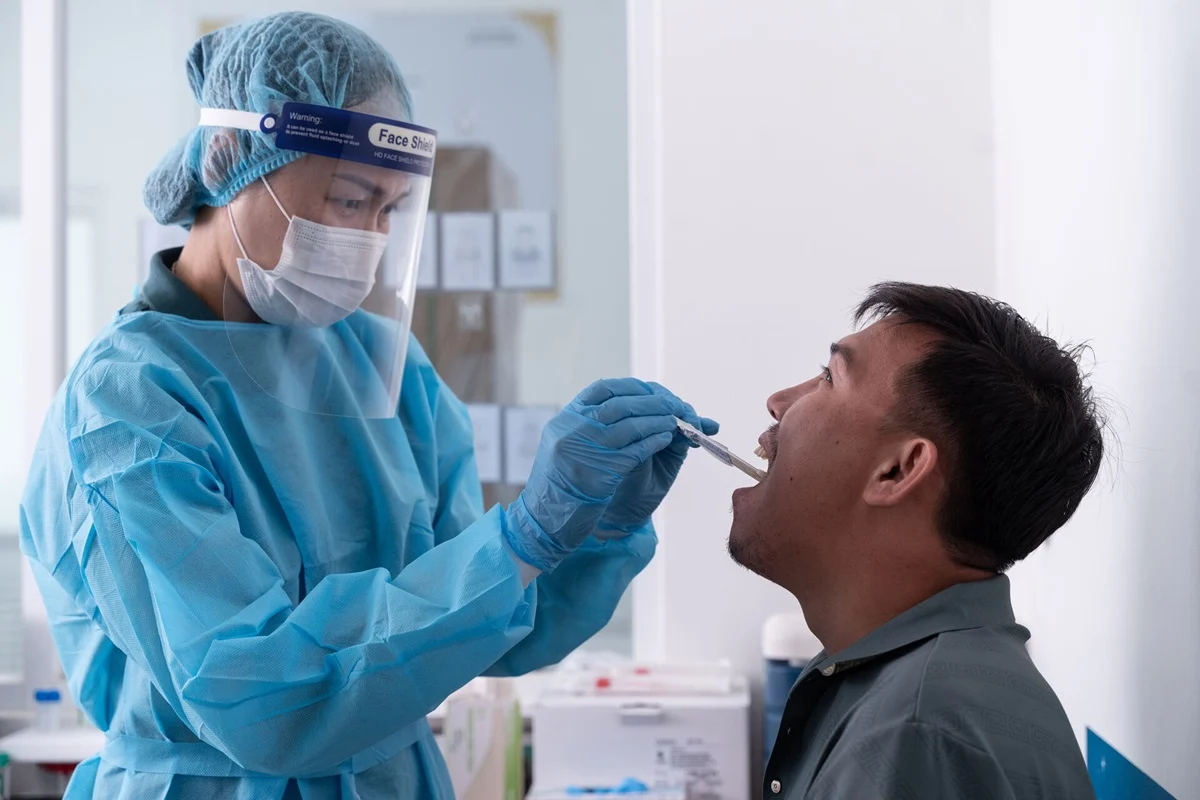
One of the most significant barriers to TB diagnosis has been the difficulty of obtaining sputum samples—the thick mucus coughed up from the lower airways. Many patients, particularly children, adolescents, and those living with HIV, struggle to produce adequate sputum for testing. The WHO’s updated guidelines now recommend the use of tongue swabs as a viable alternative for sample collection. This non-invasive method involves swabbing the surface of the tongue to collect cellular material and bacteria, offering a painless and simple procedure that can be performed by frontline health workers without specialized equipment.
In addition to tongue swabs, the WHO has introduced a cost-saving strategy known as sputum pooling. This method involves combining samples from multiple individuals into a single test run. If the pool tests negative, all individuals in that group are cleared; if the pool tests positive, the individual samples are then tested separately to identify the infected person. This strategy is specifically recommended for areas with low TB prevalence or exceptionally constrained resources, as it significantly reduces the consumption of expensive chemical reagents and maximizes the throughput of diagnostic machines.
A Chronology of Global TB Efforts and the Path to 2026
The fight against tuberculosis has evolved through several distinct phases over the last century. Following the discovery of the Mycobacterium tuberculosis bacterium by Robert Koch in 1882—an event commemorated annually on March 24—the mid-20th century saw the development of effective antibiotics and the BCG vaccine. However, the emergence of the HIV epidemic in the 1980s and 1990s led to a massive resurgence of TB, particularly in Sub-Saharan Africa.
In 2014, the World Health Assembly approved the "End TB Strategy," which set ambitious targets to reduce TB deaths by 95% and new cases by 90% by 2035. The 2026 milestone represents a critical checkpoint in this timeline. While the period between 2000 and 2020 saw a steady decline in mortality, the COVID-19 pandemic caused significant disruptions to TB services, leading to the first increase in TB deaths in over a decade. The current push for innovation is largely seen as a recovery effort to regain the momentum lost during the pandemic and to address the rising threat of multi-drug-resistant TB (MDR-TB).
The Economic Imperative for Investment
Public health experts and economists have long argued that the cost of inaction regarding TB far outweighs the investment required to end it. Dr. Tereza Kasaeva, Director of the WHO’s Department for HIV, Tuberculosis, Hepatitis, and Sexually Transmitted Infections, emphasized the strategic value of funding these programs. Research indicates that for every US$1 invested in TB prevention and treatment, there is a potential return of up to US$43 in health and economic benefits. This return manifests through increased workforce productivity, reduced healthcare costs for families, and the prevention of premature death.
Despite this compelling economic case, global funding for TB research and development remains chronically inadequate. Current estimates suggest an annual funding gap of approximately US$5 billion. This shortfall hinders the development of next-generation vaccines, shorter treatment regimens, and even more advanced diagnostics. The WHO is currently advocating for governments to treat TB as a central pillar of national health security and universal health coverage (UHC), arguing that a robust TB response strengthens the overall health infrastructure against future pandemics.
Official Responses and Global Leadership
The leadership of the WHO has been vocal in its demand for political commitment. Dr. Tedros Adhanom Ghebreyesus, WHO Director-General, highlighted that the new tools are only effective if they reach the people who need them most. "These new tools could be truly transformative for tuberculosis, by bringing fast, accurate diagnosis closer to people, saving lives, curbing transmission, and reducing costs," Dr. Tedros stated. He called on all member states to scale up access immediately, emphasizing that the technology now exists to make the "End TB" goal a reality.
International health organizations and civil society groups have echoed these sentiments. Many NGOs have pointed out that while the WHO guidelines provide the roadmap, the actual implementation depends on domestic budget allocations and the removal of intellectual property barriers that can keep diagnostic costs high. There is a growing consensus that community-led responses—where local health workers and TB survivors lead outreach efforts—are essential for overcoming the stigma still associated with the disease in many parts of the world.
Future Outlook: The Role of the TB Vaccine Accelerator Council
Looking beyond 2026, the WHO is placing significant emphasis on the development of a new TB vaccine. The existing BCG vaccine, while effective in preventing severe forms of TB in children, offers limited protection for adults and adolescents against the pulmonary form of the disease, which is responsible for most transmissions.
To address this, the TB Vaccine Accelerator Council was launched to streamline the pipeline for new vaccine candidates. By aligning the interests of governments, private sector funders, and research institutions, the Council aims to fast-track clinical trials and ensure equitable access to any successful vaccine. Experts believe that a new, effective vaccine is the "missing piece" of the puzzle that could finally tip the scales toward total eradication.
Implications for Global Health Security
The integration of TB diagnostics into general health systems has broader implications for global health security. The diagnostic platforms used for TB are increasingly capable of multiplexing—testing for multiple pathogens simultaneously. By strengthening the diagnostic network for TB, countries are simultaneously building the surveillance capacity needed to detect emerging infectious diseases.
As the world observes World TB Day 2026, the message from the WHO is clear: the tools to end tuberculosis are within reach, but the window of opportunity requires immediate and decisive action. The shift toward point-of-care testing and non-invasive sampling represents a democratization of healthcare, moving the focus from the laboratory to the patient. However, without closing the $5 billion research gap and ensuring political accountability, the goal of a TB-free world will remain elusive. The next four years leading toward the 2030 Sustainable Development Goal targets will be the most defining period in the history of the fight against this ancient disease.
