
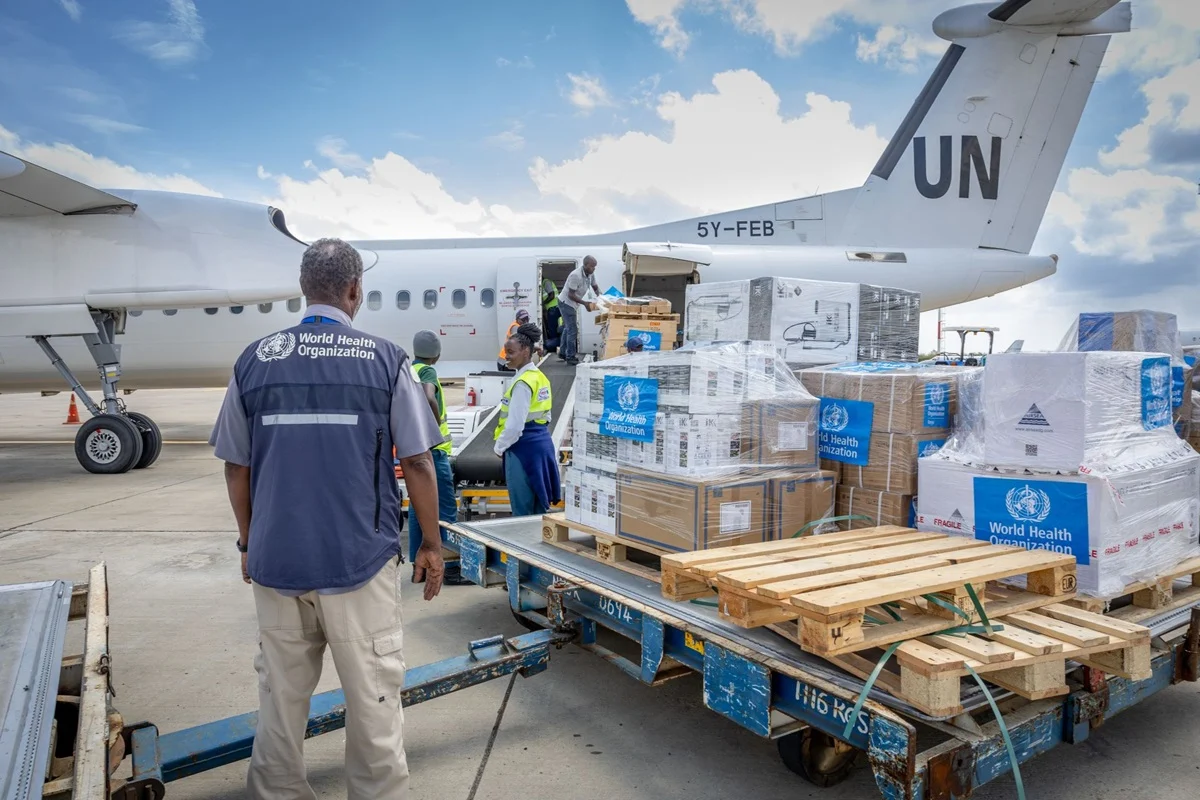
On May 17, 2026, the Director-General of the World Health Organization (WHO) officially determined that the ongoing epidemic of Ebola disease caused by the Bundibugyo virus (BDBV) in the Democratic Republic of the Congo (DRC) and Uganda constitutes a Public Health Emergency of International Concern (PHEIC). This declaration was made under the legal framework of the International Health Regulations (2005), following extensive consultations with the States Parties directly affected by the virus. While the situation has been classified as a PHEIC—the highest level of global health alert—the Director-General noted that the event does not currently meet the specific criteria for a "pandemic emergency" as defined by the most recent IHR updates. This distinction highlights a localized but severe threat that requires a coordinated international response to prevent further cross-border escalation.
The determination followed the first meeting of the IHR Emergency Committee on May 19, 2026, where independent experts reviewed the epidemiological data, the status of current response efforts, and the unique challenges posed by the Bundibugyo strain. The Committee’s findings underscored a sobering reality: the epidemic is unfolding in one of the most complex operational environments in the world, characterized by security instability, high population mobility, and a lack of established medical countermeasures for this specific viral strain.
Scientific Context: The Challenge of the Bundibugyo Strain
The current crisis is driven by the Bundibugyo virus, one of the six species within the Orthoebolavirus genus. While the Zaire ebolavirus is more frequently cited in global media due to the devastating 2014–2016 West Africa outbreak and subsequent outbreaks in the eastern DRC, the Bundibugyo strain presents a distinct set of challenges. First identified in 2007 in the Bundibugyo District of Uganda, this strain historically exhibits a case fatality rate (CFR) ranging from 25% to 40%. While this is lower than the Zaire strain’s CFR, which can reach 90%, it remains a highly lethal pathogen.
The most critical difference in 2026 is the lack of a "silver bullet" intervention. Unlike the Zaire ebolavirus, for which the Ervebo vaccine and monoclonal antibody treatments (such as Ebanga and Inmazeb) have been successfully deployed, there are currently no approved vaccines or therapeutics specifically for the Bundibugyo virus. The international community is essentially operating without the primary pharmaceutical tools that helped contain recent outbreaks in North Kivu and Equateur. Consequently, the response must rely on traditional public health measures: rapid isolation, intensive contact tracing, community engagement, and rigorous infection prevention and control (IPC).
Chronology of the 2026 Outbreak and Response
The timeline of the current emergency reflects a rapid escalation from a localized cluster to a regional concern.
- Early May 2026: Health officials in the Democratic Republic of the Congo report a cluster of unexplained hemorrhagic fever cases in the eastern provinces. Initial laboratory results confirm the presence of the Bundibugyo virus.
- May 15, 2026: Uganda reports two confirmed cases of BVD. Epidemiological investigations reveal that both individuals had traveled from affected areas in the DRC, marking the first instances of cross-border transmission in this cycle.
- May 17, 2026: The WHO Director-General declares a PHEIC, issuing initial advice to States Parties to heighten surveillance and prepare for potential importation.
- May 19, 2026: The IHR Emergency Committee convenes for its inaugural session. Experts align with the DG’s assessment of the risk level and emphasize that the "challenging operational environment" requires a nuanced, community-centric approach.
- May 22, 2026: The WHO Secretariat releases an updated risk assessment. The risk is classified as "Very High" for the DRC, "High" for Uganda, "High" at the regional level, and "Low" globally.
As of late May, Uganda has managed to keep its case count stable at two confirmed cases with no documented onward transmission. However, the situation in the DRC remains volatile, with transmission chains still being mapped across difficult-to-reach terrains.
Regional Risk and the Operational Environment
The "Very High" risk assessment for the DRC is driven by the intersection of public health and regional instability. The eastern provinces of the DRC have long been plagued by conflict, involving various armed groups and resulting in massive internal displacement. This environment complicates every aspect of the medical response. Health workers often require security escorts to reach remote villages, and the movement of displaced populations makes contact tracing—a cornerstone of Ebola containment—extraordinarily difficult.
Furthermore, the region is a hub of economic activity with porous borders. Thousands of people cross daily between the DRC, Uganda, Rwanda, and South Sudan for trade and family visits. The WHO has noted that the "High" regional risk is a direct result of this connectivity. If the virus reaches major urban centers or refugee settlements, the potential for a "super-spreader" event increases exponentially.
Temporary Recommendations for States Parties
Under the PHEIC declaration, the WHO has issued a set of temporary recommendations tailored to the risk level of different countries. These recommendations are legally non-binding but carry significant weight in the international community and are designed to harmonize the global response.
For Documented Affected Countries (DRC and Uganda)
The primary focus for the DRC and Uganda is the aggressive scaling-up of public health interventions. Without a vaccine, the WHO emphasizes "patient referral pathways" and "optimized intensive care." Providing high-quality supportive care—including fluid replacement, electrolyte balance, and treatment of co-infections—has been shown to significantly improve survival rates even in the absence of specific antivirals.
The recommendations also stress "Safe and Dignified Burials" (SDB). Ebola is frequently transmitted during traditional funeral rites involving contact with the body of the deceased. The WHO advises that burial teams must work closely with community leaders to ensure that health protocols are followed without alienating the local population or disrespecting cultural traditions.
For Adjoining States and the Global Community
Neighboring countries are urged to enhance their "Border Health" measures. This does not necessarily mean closing borders—which the WHO generally advises against as it can drive travel underground and damage local economies—but rather implementing exit and entry screening and improving the capacity of border health posts to recognize and isolate suspected cases.
For the rest of the world, the risk remains "Low," but the WHO advises all States Parties to maintain a high index of suspicion for travelers arriving from the affected region who present with fever or unexplained bleeding. The priority for these nations is to ensure that their healthcare workers are trained in the use of personal protective equipment (PPE) and that laboratory protocols for viral hemorrhagic fevers are up to date.
Research, Development, and the Search for Countermeasures
A significant portion of the WHO’s advice centers on "Research and Development of Medical Countermeasures." Because there are no approved products for BDBV, the current outbreak is seen as a critical window for clinical research. The WHO is working with the DRC and Ugandan governments to fast-track the evaluation of candidate vaccines and therapeutics under "Monitored Emergency Use of Unregistered and Investigational Interventions" (MEURI) protocols.
The goal is to integrate clinical trials into the heart of the response. If a candidate vaccine can be proven effective during this outbreak, it could change the trajectory of future Bundibugyo events. Scientists are currently looking at several "multivalent" Ebola vaccine candidates that aim to provide protection against both the Zaire and Bundibugyo strains.
Broader Implications for Global Health Security
The declaration of a PHEIC for the Bundibugyo virus serves as a stark reminder of the gaps in global health security. While the world has made significant strides in managing Zaire ebolavirus, the "neglected" strains like Bundibugyo and Sudan virus (which caused a major outbreak in Uganda in late 2022) remain potent threats.
The economic implications are also significant. The DRC and Uganda are vital players in regional trade. Prolonged emergency status can lead to decreased foreign investment, travel restrictions, and a strain on national budgets already stretched thin by other health priorities, such as malaria and measles.
Furthermore, this event tests the 2024 amendments to the International Health Regulations. The distinction between a "PHEIC" and a "pandemic emergency" is a relatively new nuance in the international legal framework, intended to provide a more calibrated response to health threats. The international community’s ability to respond to the DG’s advice without resorting to unnecessary trade and travel barriers will be a litmus test for the future of global health governance.
In conclusion, the WHO’s determination on May 17, 2026, has set in motion a massive international effort. The focus remains on the frontlines in the DRC and Uganda, where health workers are battling not just a virus, but a landscape of logistical and security hurdles. The success of this response will depend on the speed of international funding, the agility of research teams in the field, and, most importantly, the trust and cooperation of the affected communities. As the WHO Secretariat continues to monitor the situation, the global health community remains on high alert, recognizing that in an interconnected world, a threat in one region is a threat to all.
