
This renewed commitment, punctuated by a fresh allocation of €500,000 for 2024, signifies a deepening synergy between the Dutch government and the global health agency. The funding is earmarked specifically to bolster the Alliance for Transformative Action on Climate and Health (ATACH) Secretariat, a critical hub designed to translate global climate ambitions into tangible, on-the-ground healthcare improvements. As the international community prepares for the upcoming COP29 summit in Azerbaijan, this financial injection serves as both a practical resource and a diplomatic signal that health must remain a non-negotiable pillar of climate policy.
The Evolution of a Strategic Partnership
The collaboration between the Netherlands and the World Health Organization (WHO) has evolved rapidly since its formal inception in 2023. Prior to this, Dutch involvement in global health was often segmented, focusing on specific disease outbreaks or developmental aid. However, the 2023-2030 Dutch Global Health Strategy marked a paradigm shift, explicitly identifying the intersection of climate change and health as a top-tier priority.
The partnership’s initial phase focused on building capacity in the African, Asian, and Eastern Mediterranean regions. By establishing integrated climate and health surveillance systems, the alliance has empowered local health authorities to move from a reactive posture—responding to disasters after they occur—to a proactive one, utilizing early warning systems to anticipate climate-driven health risks. Since 2023, the Netherlands has contributed over €1.1 million to these initiatives, a figure that, while modest in the context of global health financing, has been strategically deployed to act as a force multiplier for national health systems.
A Chronology of Climate-Health Integration
To understand the weight of this renewal, one must look at the progression of climate-health discourse within international governance:
- 2021 (COP26): The launch of the COP26 Health Programme, which established the goal of building climate-resilient and sustainable low-carbon health systems.
- 2023: The formalization of the Dutch-WHO partnership, focusing on early warning systems and the implementation of climate-health surveillance in vulnerable regions.
- 2024 (World Health Assembly 77): The Netherlands and Peru co-led the successful adoption of a new resolution on Climate Change and Health, effectively replacing the aging 2008 framework and mandating a new, urgent global action plan.
- Late 2024 (Projected): The COP29 summit, where the outcomes of these partnerships will be measured against the backdrop of an intensifying climate crisis.
The 2024 WHA resolution is particularly significant. It serves as a mandate for the WHO to mainstream climate considerations into its Fourteenth General Programme of Work (GPW). By integrating climate resilience into the core planning of the world’s leading health agency, the resolution ensures that climate adaptation is not an "add-on" program but a structural element of global health service delivery.
Data-Driven Realities: The Case for Resilience
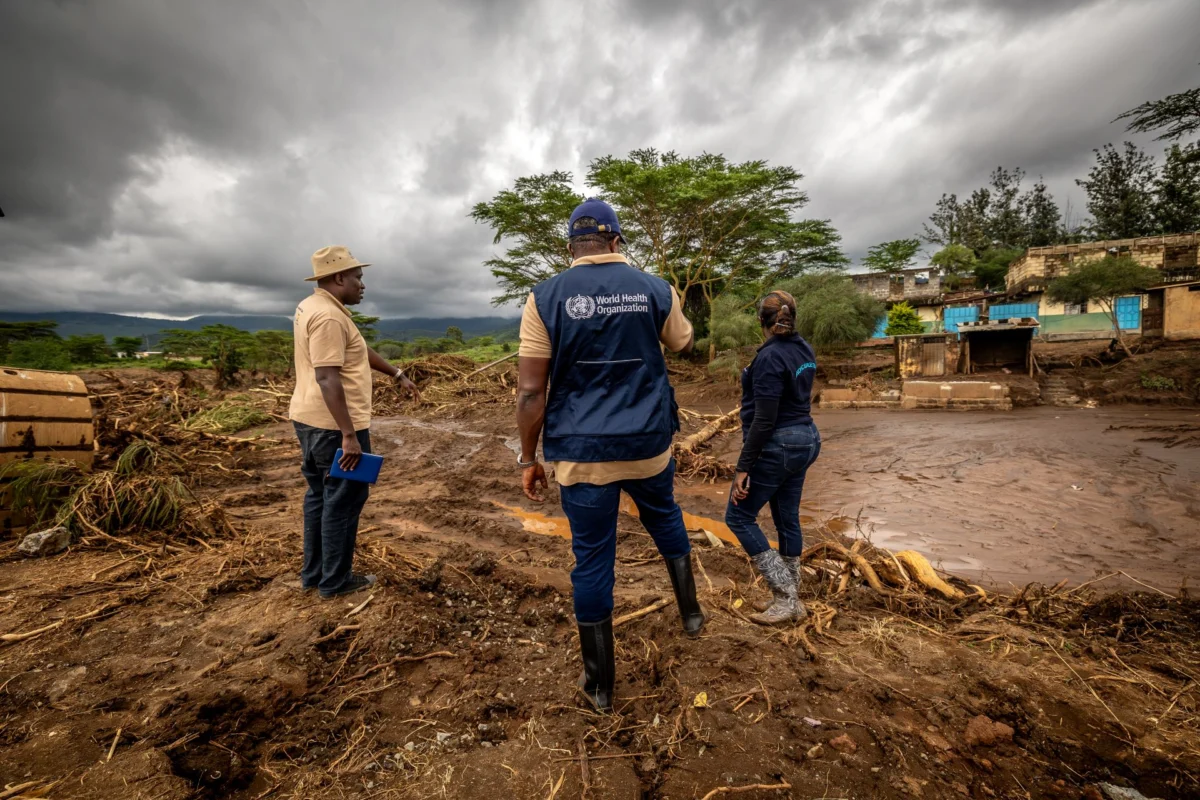
The urgency of this partnership is underscored by the current state of global health. According to recent WHO projections, climate-sensitive health risks are accelerating at an unprecedented rate. The recent catastrophic floods in Kenya, which occurred between March and May 2024, serve as a harrowing case study. The devastation—marked by mass displacement, the destruction of critical health infrastructure, and subsequent disease outbreaks—highlights the vulnerability of health systems that lack adaptive capacity.
The WHO’s latest investment case provides a compelling argument for the economic and humanitarian benefits of these interventions: by investing in climate-resilient health infrastructure now, the global community stands to save an estimated 7.5 million lives over the next four years. This projection relies on a three-pronged approach: strengthening the healthcare workforce to handle climate-related emergencies, digitizing surveillance systems for real-time monitoring of disease outbreaks, and transitioning to low-carbon energy sources within hospitals and clinics.

Official Perspectives and Policy Alignment
The Dutch government’s proactive stance is rooted in a philosophy that treats health as a barometer for the success of climate action. Dutch diplomats have consistently argued that if health systems fail, the entire societal response to climate change is compromised.
While specific ministerial statements often emphasize the "shared responsibility" of high-income nations, the underlying technical objective is the empowerment of the Global South. By supporting the ATACH Secretariat, the Netherlands is facilitating the exchange of best practices between nations that have already begun the transition to green energy and those currently struggling with the immediate, destabilizing effects of climate change.
From the WHO’s perspective, this funding is essential for maintaining the "connective tissue" of global climate-health initiatives. Without the administrative and technical support provided by the ATACH Secretariat, many Member States would struggle to harmonize their early warning systems or meet the rigorous reporting requirements mandated by international climate agreements.
Implications for Future Health Security
The implications of this partnership extend far beyond the immediate allocation of funds. By anchoring their efforts in the Fourteenth General Programme of Work, the WHO and the Netherlands are creating a template for how multilateral organizations can respond to the "polycrisis" of the 21st century.
- Systemic Integration: The shift from vertical, disease-specific programs to horizontal, climate-resilient health systems represents a fundamental change in how international aid is structured.
- Climate-Health Diplomacy: The leadership shown by the Netherlands and Peru at the World Health Assembly suggests a growing coalition of nations willing to elevate health to the center of climate negotiations.
- Economic Sustainability: As the global health community moves toward COP29, the emphasis on "low-carbon healthcare" is expected to become a major talking point. Hospitals are among the largest consumers of energy in many countries; transforming them into net-zero facilities is not only an environmental necessity but a long-term financial strategy to reduce operational costs.
Challenges and the Road to COP29
Despite the progress, the challenges remain daunting. The divide between the pace of climate-induced health crises and the pace of global policy implementation remains wide. As the WHO and its partners prepare for discussions at COP29 in Azerbaijan, the focus will likely shift toward the "financing gap." While initial contributions like the €500,000 from the Netherlands provide a vital foundation, the total cost of transitioning global healthcare systems to a climate-resilient model runs into the billions.
The upcoming summit will be a litmus test for whether the commitments made in the 2024 WHA resolution can be translated into large-scale, sustainable funding mechanisms. The Netherlands has positioned itself as an early mover, setting a benchmark for other donor nations to follow.
As the world continues to grapple with the aftermath of extreme weather events, the partnership serves as a reminder that health is the most intimate and immediate casualty of a changing climate. The ability of the global community to safeguard 7.5 million lives depends on the capacity of agencies like the WHO to continue acting as a bridge between scientific data and national policy. With the renewal of this partnership, the Netherlands and the WHO have signaled that they are not merely observing the crisis, but are actively constructing the framework necessary to survive it.
The integration of climate-resilient health systems into the core mission of global health agencies is no longer an aspirational goal—it is the operational reality of the current era. As countries look toward 2025 and beyond, the success of this collaboration will be measured by its ability to scale, replicate, and ultimately, survive the tests posed by an increasingly volatile planetary environment.
