
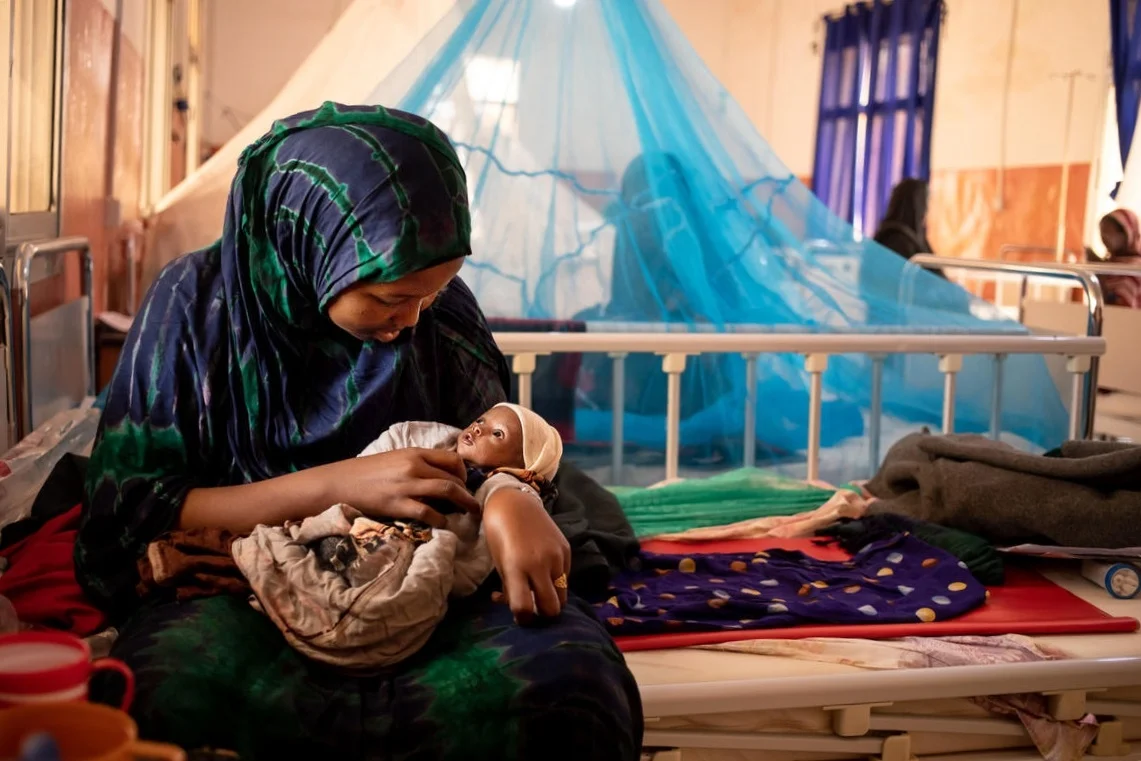
An estimated 4.9 million children died before reaching their fifth birthday in 2024, a figure that includes 2.3 million newborns, according to the latest data released by the United Nations Inter-agency Group for Child Mortality Estimation (UN IGME). While the global community has made significant strides in reducing child mortality over the past two decades, the report, titled "Levels & Trends in Child Mortality," warns of a concerning stagnation in progress. Since 2015, the pace at which under-five mortality is declining has slowed by more than 60 percent, suggesting that without renewed political and financial commitment, the world will fail to meet the Sustainable Development Goal (SDG) targets for child survival.
The 2024 report represents a milestone in global health data as it provides the most comprehensive analysis to date of where and why children are dying. For the first time, the findings fully integrate estimates from the Child and Adolescent Causes of Death Estimation (CA CODE) group, a research consortium led by the Johns Hopkins Bloomberg School of Public Health. This integration has allowed researchers to pinpoint specific drivers of mortality with unprecedented accuracy, including a first-of-its-kind estimation of deaths directly caused by severe acute malnutrition (SAM).
A Chronology of Progress and Stagnation
The history of child survival over the last quarter-century is a narrative of two distinct eras. Between 2000 and 2015, the world witnessed a dramatic decline in child deaths, spurred by the Millennium Development Goals (MDGs). During this period, under-five mortality was slashed by more than half as global investments poured into immunization programs, malaria prevention, and maternal health services. This era proved that large-scale, low-cost interventions could yield transformative results in even the most resource-constrained environments.
However, the transition to the Sustainable Development Goal era in 2015 marked the beginning of a slowdown. The report indicates that the annual rate of reduction in the under-five mortality rate has dropped significantly in the last nine years. This deceleration is attributed to a confluence of factors, including the lingering effects of the COVID-19 pandemic on routine healthcare, an increase in the number of children living in conflict-affected regions, and a shift in the global development financing landscape that has left many maternal and child health programs underfunded.
The Hidden Crisis of Malnutrition
One of the most significant revelations in the 2024 report is the documented impact of severe acute malnutrition (SAM). The data shows that in 2024, more than 100,000 children aged 1 to 59 months—representing 5 percent of deaths in that age bracket—died as a direct result of SAM. However, health experts warn that this figure is likely the "tip of the iceberg."
Malnutrition acts as a lethal multiplier. It weakens a child’s immune system, making them far more susceptible to common childhood illnesses like pneumonia and diarrhea. When these indirect effects are considered, the role of nutrition in child mortality becomes even more central. The report highlights that mortality data frequently fails to capture SAM as an underlying cause of death, meaning the actual burden is substantially underestimated. Countries currently facing the highest numbers of direct deaths from malnutrition include Pakistan, Somalia, and Sudan, where food insecurity is often exacerbated by climate shocks and internal displacement.
Neonatal Mortality: The First 28 Days
Newborn deaths—those occurring within the first month of life—now account for nearly half (47 percent) of all under-five deaths. This high proportion reflects a slower rate of progress in preventing deaths around the time of birth compared to deaths among older children. The leading causes of neonatal mortality remain largely preventable: complications from preterm birth (36 percent) and complications during labor and delivery, such as birth asphyxia or trauma (21 percent).
Infections also remain a critical threat to newborns. Neonatal sepsis and congenital anomalies continue to claim hundreds of thousands of lives annually. Public health experts argue that these deaths are a direct reflection of gaps in the quality of care provided during pregnancy and at birth. Addressing these gaps requires a sustained focus on "the continuum of care," ensuring that women have access to quality antenatal visits, skilled birth attendants, and essential newborn care services immediately following delivery.
Regional Disparities and the Geography of Risk
The 2024 data underscores a stark and widening gap in child survival based on geography. Sub-Saharan Africa remains the region with the highest burden, accounting for 58 percent of all under-five deaths globally. In this region, infectious diseases are responsible for 54 percent of all child deaths. By contrast, in Europe and Northern America, infectious diseases account for only 9 percent of under-five deaths, dropping further to 6 percent in Australia and New Zealand.
In Southern Asia, which accounts for 25 percent of the global total, the mortality profile is driven largely by neonatal complications. The high prevalence of preterm delivery and birth trauma in this region highlights the urgent need for investment in primary healthcare infrastructure and the training of skilled healthcare personnel.
Furthermore, children born in fragile and conflict-affected settings face a disproportionate risk. The report finds that children in these environments are nearly three times more likely to die before their fifth birthday than those in stable settings. Conflict disrupts supply chains for life-saving medicines, destroys hospitals, and causes the flight of trained medical professionals, leaving the most vulnerable populations without a safety net.
Leading Killers Beyond Infancy: Malaria and Respiratory Infections
For children who survive the neonatal period, the threats shift toward infectious diseases. Malaria remains the single largest killer of children aged 1 to 59 months, accounting for 17 percent of deaths in this group. The vast majority of these deaths occur in sub-Saharan Africa. While malaria mortality saw steep declines between 2000 and 2015, progress has since stalled.
The report identifies several biological and environmental threats that are hampering malaria control efforts. These include the rise of drug-resistant parasites, the spread of invasive mosquito species that are more difficult to control, and climate-driven changes in mosquito breeding patterns. Countries like Chad, the Democratic Republic of the Congo, Niger, and Nigeria continue to bear the brunt of the malaria epidemic.
Beyond malaria, lower respiratory infections (including pneumonia) and diarrheal diseases remain major causes of death. These conditions are highly treatable with oxygen, antibiotics, and oral rehydration salts, yet many children in low-income regions still lack access to these basic interventions.
Mortality Among Older Children and Adolescents
The report also sheds light on the 2.1 million children, adolescents, and youth aged 5 to 24 who died in 2024. In this age group, the causes of death shift from biological vulnerabilities to external risks and mental health challenges. Among younger children in this bracket, infectious diseases and injuries are the leading causes.
However, the profile changes significantly during adolescence. For girls aged 15 to 19, self-harm has emerged as the leading cause of death globally, highlighting a critical need for expanded mental health services and social support systems. For boys in the same age group, road traffic injuries remain the primary killer. These findings suggest that child survival strategies must evolve as children age, moving from a focus on clinical health to broader public safety and mental wellness initiatives.
The Economic Case for Child Survival
The report emphasizes that investments in child health are not merely a moral imperative but one of the most cost-effective development measures available. Evidence suggests that every dollar invested in child survival can generate up to twenty dollars in social and economic benefits.
Proven, low-cost interventions—such as routine immunizations, treatment for severe acute malnutrition, and skilled care at birth—deliver some of the highest returns in global health. By ensuring children survive and grow up healthy, nations can improve labor productivity, strengthen their economies, and reduce future public spending on chronic health issues.
However, the global development financing landscape is currently under pressure. Budget cuts in donor nations and a shift in focus toward other global crises have left critical maternal and child health programs vulnerable. Experts warn that without sustained funding for health information systems and the core functions of primary healthcare, the progress of the last 24 years could be reversed.
Official Responses and Calls to Action
Leaders of the major international organizations involved in the report have issued urgent calls for a renewed global commitment to child health.
UNICEF Executive Director Catherine Russell highlighted the tragedy of preventable deaths. "No child should die from diseases that we know how to prevent," Russell stated. "But we see worrying signs that progress in child survival is slowing—and at a time where we’re seeing further global budget cuts. History has shown what is possible when the world commits to protecting its children. With sustained investment and political will, we can continue to build on those achievements for future generations."
Dr. Tedros Adhanom Ghebreyesus, Director-General of the World Health Organization (WHO), emphasized the vulnerability of children in crisis zones. "The world has made remarkable progress in saving children’s lives, but many still die from preventable causes," he said. "Children living amid conflict and crisis are nearly three times more likely to die before their fifth birthday. We must protect essential health and nutrition services and reach the most vulnerable families so every child has the chance not only to survive, but to thrive."
Monique Vledder, Health Director at the World Bank Group, pointed to the need for scalable solutions. "These findings are a collective call to speed up implementation of the proven, scalable solutions we know are within reach," Vledder said. She noted that the World Bank Group has set a target of reaching 1.5 billion people with quality primary health services as part of its commitment to child and family welfare.
Li Junhua, UN Under-Secretary-General for Economic and Social Affairs, stressed the importance of data and political commitment. "The latest estimates are a stark reminder that progress on child survival is slowing and too many countries are off track to meet the Sustainable Development Goals," he remarked. "We know how to prevent these deaths. What is needed now is renewed political commitment, sustained investment in primary health care, and stronger data systems to ensure no child is left behind."
Technical Background and Methodology
The UN IGME, formed in 2004, is led by UNICEF and includes the WHO, the World Bank Group, and the Population Division of the United Nations Department of Economic and Social Affairs. The group was established to harmonize child mortality data and improve the accuracy of global estimates.
The 2024 estimates are the result of a rigorous process that incorporates new survey data, census results, and civil registration records from around the world. Because the group constantly revises its methodology and incorporates new data, the estimates from this round are not directly comparable to those of previous years. The slight increase in the reported number of deaths compared to last year is largely attributed to improved data collection and more precise estimation methods rather than a sudden spike in actual deaths.
The integration of the Child and Adolescent Causes of Death Estimation (CA CODE) group’s data has been particularly transformative. Dr. Li Liu, an associate professor at the Johns Hopkins Bloomberg School of Public Health, noted that the science is clear regarding what works. "Targeted investments in primary health care, maternal and newborn health services, routine immunization, nutrition programmes, and quality and timely data systems can save millions of lives," Liu stated.
Conclusion: A Critical Juncture
The 2024 child mortality report serves as both a testament to human achievement and a warning of future failure. While the world has successfully halved the number of child deaths since the start of the millennium, the current trajectory is insufficient to reach the 2030 SDG targets. The concentration of deaths in sub-Saharan Africa and Southern Asia, the rising impact of malnutrition, and the persistent challenges of newborn health and adolescent safety require a coordinated, well-funded global response. As the global community looks toward the next decade, the message from health experts and international leaders is clear: the tools to save these 4.9 million children already exist; what remains is the challenge of ensuring they reach every child, regardless of where they are born.
