
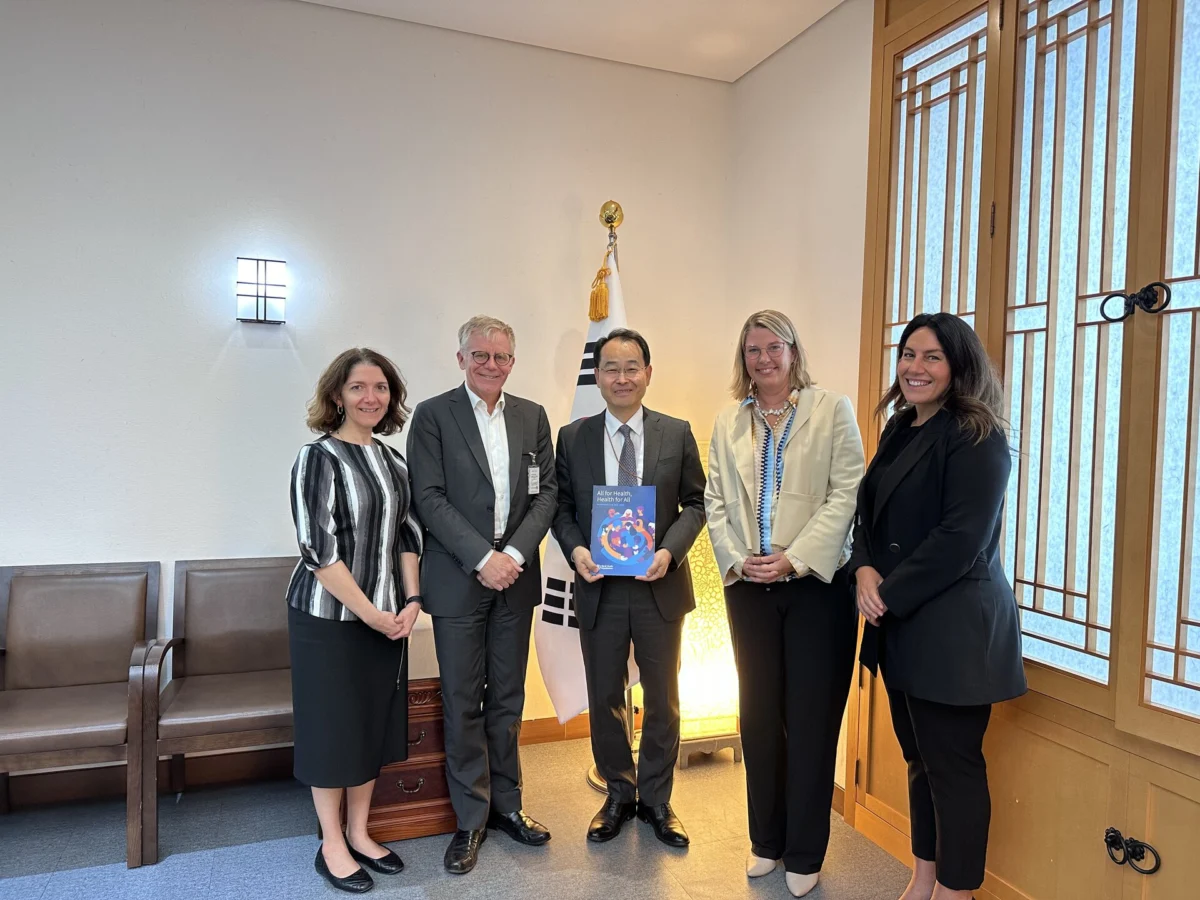
The World Health Organization (WHO) and the Republic of Korea recently concluded their second high-level Strategic Dialogue in Seoul, marking a pivotal moment in a collaborative relationship that has spanned more than 75 years. Held from August 28 to 29, 2024, the summit served as a formal mechanism to align the priorities of the global health body with one of the most significant success stories in international development. As the Republic of Korea transitions from a post-war aid recipient to a prominent donor nation and a leader in health innovation, this partnership has become increasingly central to the WHO’s strategy for addressing complex, multi-layered health challenges, including pandemic preparedness, health equity, and medical supply chain resilience.
A Historical Trajectory: From Aid Recipient to Global Benefactor
To understand the weight of the recent Strategic Dialogue, one must examine the extraordinary trajectory of South Korea’s socioeconomic development. In the aftermath of the Korean War, the nation was heavily reliant on international humanitarian assistance, including support from organizations that would eventually consolidate into the modern global health infrastructure. Over the subsequent decades, South Korea achieved a rapid industrial and health-sector transformation—often cited as the "Miracle on the Han River."
By the early 21st century, the Republic of Korea had shifted its status from an aid-recipient country to a donor nation, becoming a major contributor to the Global Fund, Gavi, the Vaccine Alliance, and various WHO initiatives. This transition is not merely financial; it represents a fundamental change in the country’s role as a norm-setter in public health policy. The current partnership with the WHO reflects this maturity, focusing on knowledge sharing, the digitalization of health systems, and the implementation of universal health coverage (UHC)—an area where Korea has demonstrated exceptional success.
The Seoul Summit: Objectives and Stakeholder Engagement
The second Strategic Dialogue was designed to move beyond traditional bilateral cooperation toward a more integrated, cross-sectoral approach. Dr. Catharina Boehme, Assistant Director-General for External Relations and Governance at the WHO, led the delegation, emphasizing that the organization’s relationship with Seoul is a template for how the WHO intends to engage with high-income partners who possess both technical expertise and the financial capacity to drive global health policy.
The composition of the delegations underscored the multidimensional nature of the discussions. Dr. Hye-Jin Kim, Deputy Minister for Planning and Coordination at the Ministry of Health and Welfare, led the Korean side. The dialogue involved key entities such as the Korea Disease Control and Prevention Agency (KDCA), represented by Commissioner Dr. Young-Mee Jee, as well as high-ranking officials from the Ministry of Foreign Affairs and the Ministry of Food and Drug Safety.

By involving these diverse agencies, the summit aimed to address the "whole-of-government" approach required for modern health crises. Issues discussed included:
- Pandemic Preparedness: Leveraging Korea’s robust, data-driven response systems to improve early warning signals globally.
- Supply Chain Sustainability: Utilizing the Republic of Korea’s advanced manufacturing capabilities, particularly in the biotechnology and pharmaceutical sectors, to address regional and global medicine shortages.
- Global Health Governance: Ensuring that the voices of both the WHO and the Korean government are synchronized in international forums like the World Health Assembly and the G20.
Engaging the Legislative Branch
A significant development during this two-day summit was the intentional outreach to members of the National Assembly. Recognizing that sustainable health funding and legislative reform require robust political backing, the WHO delegation held meetings with lawmakers championing the global health agenda. This engagement acknowledges that while ministries execute policy, national legislatures are responsible for the long-term commitments required for international health contributions. By bridging the gap between executive policy and legislative action, the WHO aims to secure the Republic of Korea’s role as a consistent, long-term champion of international health security.
Supporting Data: The WHO Investment Case
A focal point of the dialogue was the dissemination and discussion of the WHO Investment Case report. This document outlines the rationale for a sustained, flexible funding model that would allow the organization to operate with greater agility in an era of poly-crises.
For the Republic of Korea, the Investment Case represents an opportunity to scale its impact. Historically, Korea’s contributions have been vital to regional health security in the Western Pacific. Data from the OECD and WHO indicate that the Republic of Korea has consistently increased its Official Development Assistance (ODA) directed toward health, with a growing emphasis on climate-resilient health systems and digital health infrastructure. The Investment Case serves as a roadmap, demonstrating how strategic investments in the WHO can yield high returns in preventing future pandemics, which, as the COVID-19 pandemic proved, can cause trillions of dollars in economic disruption.
Implications for Global Health Security
The implications of this strategic alignment extend far beyond the two-day meeting. The world is currently navigating an era defined by climate change, aging populations, and the persistent threat of zoonotic diseases. The Republic of Korea’s expertise in managing a rapidly aging society while maintaining a high-tech healthcare system provides a critical case study for the WHO.
Furthermore, as the WHO works to reform its financing architecture, having a committed, technologically advanced partner like the Republic of Korea provides a buffer against the volatility of international health funding. Analysts observe that this partnership is emblematic of the "new diplomacy" in health—where nations are defined not just by their geographical size or economic output, but by their "health influence."

The synergy between the Korean Ministry of Food and Drug Safety and the WHO’s regulatory strengthening programs is particularly noteworthy. By aligning domestic regulatory standards with WHO benchmarks, Korea can act as a regional hub for medical product quality assurance, thereby improving health outcomes across the Indo-Pacific region.
Future Outlook: A Sustained Commitment
As the second Strategic Dialogue concluded, the consensus among participants was that the relationship had moved into a phase of heightened integration. The alignment of priorities established in Seoul provides a clear directive for both parties: the WHO gains a reliable, proactive partner, and the Republic of Korea solidifies its position as a central pillar of the global health order.
Moving forward, the success of this partnership will be measured by the concrete outcomes of these discussions—specifically, the scaling of digital health initiatives and the efficacy of joint training programs for health workers. The dialogue served as a reminder that in an interconnected world, health is not merely a national asset but a global public good. The Republic of Korea’s willingness to take a leading role in this arena is a testament to its evolution and a beacon for other nations seeking to transition into the global donor space.
In the coming months, observers in the public health sector expect to see the fruits of this summit materialize in the form of expanded joint research, more formalized data-sharing protocols, and a stronger, unified voice in international health negotiations. With the conclusion of the August meetings, both the WHO and the Republic of Korea have reaffirmed their shared belief that global health security is the foundation upon which future international stability must be built.
