
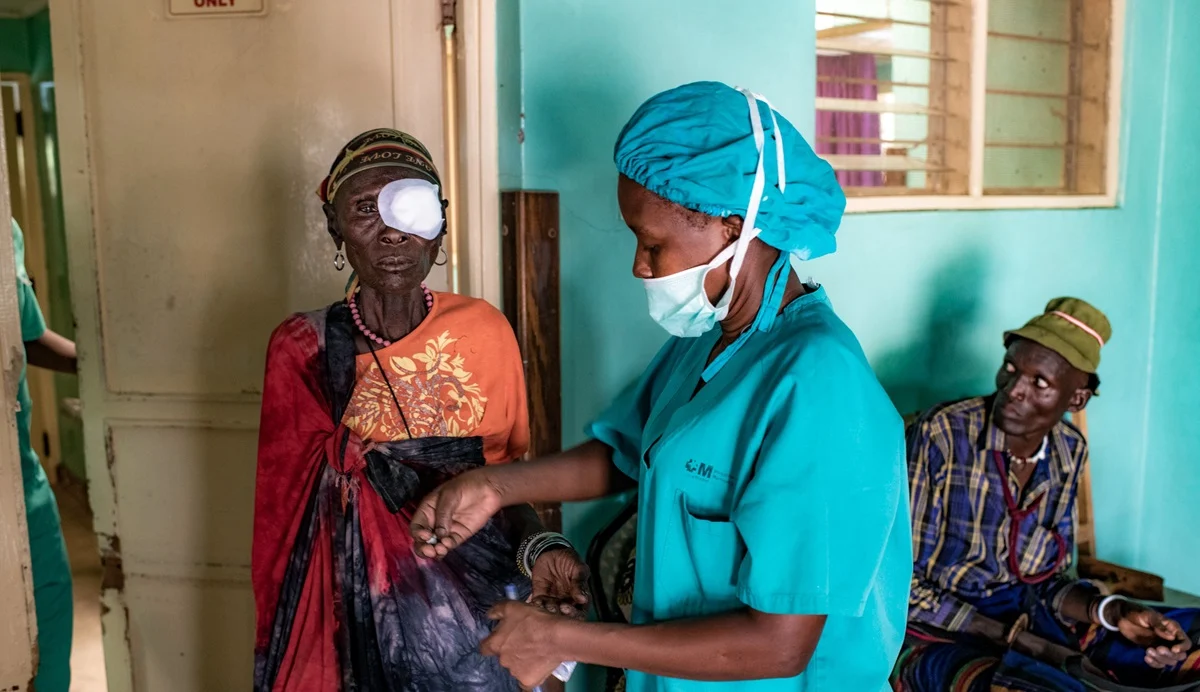
The World Health Organization (WHO) has issued a high-level appeal to the international community, urging governments and healthcare providers to drastically accelerate efforts to provide life-changing cataract surgery to millions of individuals currently suffering from avoidable vision loss. This directive comes in response to new research indicating that despite the existence of highly effective and affordable surgical interventions, nearly half of the global population requiring cataract-related care remains untreated. A comprehensive study published in The Lancet Global Health has underscored the magnitude of this public health challenge, revealing that the current pace of medical intervention is insufficient to meet the rising demand driven by aging populations and systemic healthcare inequities.
Cataract, characterized by the progressive clouding of the eye’s natural lens, remains the leading cause of blindness and vision impairment worldwide. The condition causes a gradual decline in visual acuity, leading to blurred vision, increased sensitivity to glare, and, eventually, total blindness if left untreated. While the condition is most commonly associated with the natural aging process, its impact is felt most acutely in low- and middle-income countries where access to ophthalmological services is often restricted by geographical, financial, and structural barriers.
The Scale of the Global Vision Crisis
According to the latest data released by the WHO and analyzed in The Lancet Global Health, more than 94 million people globally are currently living with cataracts. Of this population, a staggering percentage lacks access to the 15-minute surgical procedure that could restore their sight. The study, which synthesized reports and estimates from 68 countries between 2023 and 2024, found that the "cataract surgical coverage" (CSC)—the proportion of people who have received surgery among those who need it—is dangerously low in several regions.
In the African Region, the disparity is most pronounced. The research indicates that three out of every four individuals requiring cataract surgery remain untreated. This "treatment gap" means that millions of people are living in unnecessary darkness, unable to participate in the workforce or care for themselves, thereby placing a significant economic and social burden on their families and communities.
Furthermore, the data highlights a persistent and troubling gender gap. Across all analyzed regions, women are disproportionately affected by cataracts and consistently experience lower access to surgical care than men. This inequity is often attributed to broader socio-economic factors, including women’s limited control over household finances, lack of independent mobility in certain cultures, and the prioritization of male health in resource-constrained environments.
A Chronology of Global Vision Initiatives
The current push for expanded cataract services is part of a decades-long effort to combat avoidable blindness. Understanding the timeline of these initiatives provides necessary context for the WHO’s latest urgency:
- 1999: Launch of VISION 2020: The WHO and the International Agency for the Prevention of Blindness (IAPB) launched "VISION 2020: The Right to Sight." This global initiative aimed to eliminate the main causes of avoidable blindness by the year 2020, with cataracts identified as a primary target.
- 2013: Universal Eye Health Global Action Plan: Following the conclusion of Vision 2020, the WHO adopted a new action plan for 2014–2019, focusing on the integration of eye care into national health systems.
- 2021: World Health Assembly Resolution: In a landmark move, the 74th World Health Assembly endorsed new global targets for 2030. These included a 30-percentage-point increase in effective cataract surgical coverage and a 40-percentage-point increase in effective coverage of refractive errors.
- 2024-2025: Current Status Assessment: The recent study in The Lancet Global Health serves as a mid-point reality check, revealing that while global coverage has increased by approximately 15% over the last two decades, the current trajectory—predicting an 8.4% rise for this decade—will fall short of the 30% target mandated for 2030.
The Surgical Solution: Efficiency and Cost-Effectiveness
One of the most frustrating aspects of the global cataract crisis, according to health experts, is that the solution is already well-established, highly successful, and remarkably inexpensive. Modern cataract surgery typically involves removing the clouded lens and replacing it with an artificial intraocular lens (IOL).
In many developing regions, Manual Small Incision Cataract Surgery (MSICS) is the preferred method. This technique is sutureless, requires minimal specialized equipment compared to laser-based phacoemulsification used in high-income countries, and can be performed in about 15 minutes. The cost of the consumables for such a surgery can be as low as $20 to $50 in some settings, yet the return on investment is immense.
"Cataract surgery is one of the most powerful tools we have to restore vision and transform lives," stated Devora Kestel, Director a.i. of the WHO Department of Noncommunicable Diseases and Mental Health. "When people regain their sight, they regain independence, dignity, and opportunity. It is not merely a medical procedure; it is an engine for social and economic participation."
Analyzing the Barriers to Access
If the procedure is quick and affordable, why does nearly half the world still lack access? The WHO identifies several structural and social barriers that continue to impede progress:
- Workforce Shortages: There is a critical shortage of trained ophthalmologists and ophthalmic nurses, particularly in rural areas. Many specialists are concentrated in urban centers, leaving remote populations with no local options for care.
- Out-of-Pocket Costs: Even when the surgery is subsidized, hidden costs such as transportation to a hospital, lost wages for the patient and their caregiver, and post-operative medications can make the procedure prohibitively expensive for those living in poverty.
- Lack of Infrastructure: Many primary health centers lack the basic diagnostic tools to identify cataracts early, and secondary hospitals may lack the sterile environments or reliable electricity required for surgery.
- Awareness and Demand: In some communities, vision loss is mistakenly viewed as an inevitable and untreatable consequence of aging. Without community outreach and education, patients may not seek help until they are completely blind.
Risk Factors Beyond Aging
While age remains the primary driver of cataract development—as the proteins in the eye’s lens naturally begin to clump together over time—the WHO notes that several environmental and lifestyle factors can accelerate the process. Prolonged exposure to UV-B radiation from sunlight is a major contributor, particularly for outdoor workers in equatorial regions who do not have access to protective eyewear.
Additionally, tobacco use and poorly managed diabetes have been linked to earlier onset and faster progression of cataracts. The rising global prevalence of Type 2 diabetes, especially in middle-income countries, is expected to further increase the demand for cataract services in the coming decade. The prolonged use of corticosteroid medications is also a known risk factor.
Economic and Social Implications of Inaction
The failure to address the cataract backlog has profound economic consequences. Blindness and severe vision impairment contribute to a cycle of poverty. For every individual who loses their sight, at least one other family member—often a child or a woman—frequently must give up education or employment to act as a full-time caregiver.
Economic modeling suggests that the global loss in productivity due to vision impairment runs into hundreds of billions of dollars annually. Conversely, scaling up eye care services has been shown to have one of the highest "benefit-to-cost" ratios in global health, comparable to childhood immunization programs.
Strategic Solutions for Closing the Gap
To meet the 2030 target of a 30% increase in surgical coverage, the WHO is advocating for a multi-pronged approach that moves eye care from the periphery to the center of national health agendas.
First, countries are encouraged to integrate vision screening into primary health care. By training community health workers to perform simple vision tests, cataracts can be identified earlier, and patients can be referred to surgical centers before their vision loss becomes debilitating.
Second, there must be a concerted investment in surgical infrastructure. This includes not only building operating theaters but ensuring a steady supply of high-quality, low-cost intraocular lenses and surgical consumables.
Third, the eye-care workforce must be expanded and redistributed. This involves providing incentives for ophthalmologists to work in underserved areas and "task-shifting," where mid-level ophthalmic clinical officers are trained to perform certain aspects of the surgical process under supervision.
Finally, targeted efforts to reach women and marginalized communities are essential. This may involve mobile surgical camps that bring care directly to remote villages or voucher systems that eliminate out-of-pocket costs for the most vulnerable.
The Path Forward to 2030
The WHO’s call to action serves as a reminder that the tools to end unnecessary blindness are already in hand. The challenge is not a lack of medical knowledge, but a lack of political will and resource allocation. With the 2030 deadline approaching, the international community is at a crossroads.
By prioritizing underserved populations and addressing the systemic inequities that keep surgery out of reach for millions, the global health community can fulfill the promise of the World Health Assembly targets. As the WHO emphasizes, a sustained commitment to cataract surgery is a commitment to human rights, economic development, and the fundamental dignity of millions of people worldwide. The goal is to transform cataract surgery from a luxury of the few into a universally accessible intervention, ensuring that no one is left in the dark when a 15-minute procedure could bring them back into the light.
