
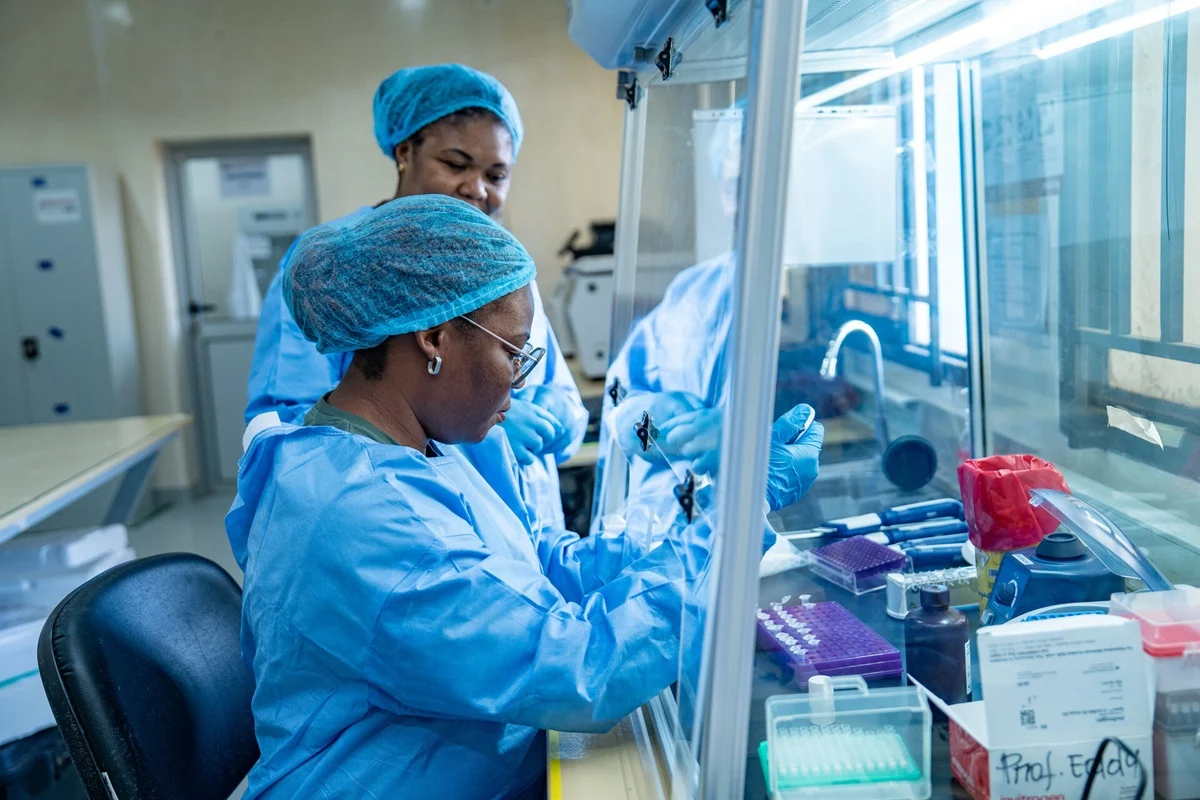
In a milestone for global health security and diagnostic equity, the World Health Organization (WHO) has officially added the first molecular diagnostic test for the Bundibugyo virus (BDBV) to its Emergency Use Listing (EUL). This authorization marks a critical turning point in the international response to the ongoing Ebola disease outbreak in Central Africa, providing healthcare providers with a validated tool to detect the virus by identifying its genetic material in blood samples. The introduction of this diagnostic capability is expected to significantly accelerate the confirmation of infections, allowing for more rapid clinical intervention and the implementation of containment measures to prevent further transmission.
The decision to list the diagnostic test follows a rigorous assessment of quality, safety, and performance standards. The EUL procedure is a specialized mechanism designed by the WHO to expedite the availability of essential health products during public health emergencies. By ensuring that these products meet minimum international standards even in the absence of full, long-term regulatory approval, the WHO addresses the urgent needs of low- and middle-income countries that are often the most affected by fast-moving infectious disease outbreaks.
The Significance of the Emergency Use Listing Procedure
The EUL mechanism serves as a bridge between the immediate need for medical countermeasures and the necessity for scientific rigor. During a Public Health Emergency of International Concern (PHEIC), the traditional timelines for regulatory approval—which can span years—are often incompatible with the pace of a spreading virus. Through the EUL, the WHO evaluates available evidence to determine if the benefits of using a specific diagnostic, vaccine, or treatment outweigh the potential risks in an emergency context.
This mechanism is particularly vital for United Nations procurement agencies and various national governments. It provides them with a trusted framework to make informed decisions regarding the acquisition and distribution of health products. By centralizing the evaluation process, the WHO reduces the burden on individual national regulatory authorities, many of which may lack the resources to conduct independent, high-level technical reviews of complex molecular diagnostics during a crisis.
Dr. Yukiko Nakatani, WHO Assistant Director-General for Health Systems, Access and Data, emphasized the dual necessity of speed and reliability in such settings. "Public health emergencies require not only speed, but also confidence that the health products being used meet standards for quality, safety and performance," Dr. Nakatani stated. "During a fast-moving outbreak, timely access to quality-assured diagnostic tests can make a critical difference in containing transmission. Through this Emergency Use Listing, WHO is helping countries access trusted diagnostic tools more rapidly so that they can respond more effectively."
Chronology of the Bundibugyo Virus Outbreak and Response
The current emergency trace its origins to mid-2026. On May 17, 2026, WHO Director-General Dr. Tedros Adhanom Ghebreyesus declared a Public Health Emergency of International Concern following a surge of Ebola disease cases caused by the Bundibugyo virus in the Democratic Republic of the Congo (DRC). The outbreak quickly demonstrated cross-border potential, with confirmed cases appearing in neighboring Uganda, prompting a heightened regional and international alert.
Recognizing the diagnostic gap, the WHO launched a call for manufacturers of in vitro diagnostics (IVDs) for the Bundibugyo virus to submit Expressions of Interest for the EUL procedure less than two weeks after the PHEIC declaration. The speed with which the first test has been listed reflects a coordinated effort between the global health community and the private sector to prioritize the BDBV response.
As of late 2026, the outbreak has become the largest recorded occurrence of Ebola disease caused by BDBV. In the Democratic Republic of the Congo alone, health authorities have reported 1,406 laboratory-confirmed cases and 438 deaths, representing a case fatality rate that underscores the severity of the pathogen. The virus’s expansion into new provinces has necessitated a decentralized approach to testing and surveillance.
Expanding Laboratory Infrastructure and Diagnostic Capacity
One of the most significant challenges in managing Ebola outbreaks in Central Africa has historically been the centralization of laboratory services. At the onset of the current outbreak, testing capacity was primarily limited to a few specialized sites, most notably the Institut National de Recherche Biomédicale (INRB) in Kinshasa and Goma. These facilities had an estimated combined capacity of approximately 200 to 400 tests per day—a volume insufficient for a large-scale, multi-province epidemic.
In response, the WHO, in collaboration with the Africa Centres for Disease Control and Prevention (Africa CDC), has worked to expand the diagnostic footprint. The network has now grown to 10 functional laboratories across the affected provinces. This expansion has increased the reported daily testing capacity to over 2,000 tests per day. The newly listed molecular diagnostic test will be integrated into this expanded network, providing a standardized and reliable method for identifying cases in the field.
The shift toward localized testing is essential for reducing "turnaround time"—the period between sample collection and result delivery. In the context of Ebola, every hour of delay in diagnosis can lead to further community exposure and delayed patient care, which significantly impacts survival rates.
Technical Profile of the Bundibugyo Virus
The Bundibugyo virus is one of six species within the genus Ebolavirus, and one of three (alongside Zaire and Sudan viruses) known to cause large, lethal outbreaks in human populations. First identified in 2007 in the Bundibugyo District of Uganda, BDBV is characterized by symptoms similar to other forms of Ebola virus disease, including high fever, severe headache, muscle pain, fatigue, diarrhea, vomiting, and in some cases, internal and external bleeding.
The virus is zoonotic, meaning it is transmitted from animals—likely fruit bats or non-human primates—to humans. Once an index case is established in a human population, transmission occurs through direct contact with the blood, secretions, organs, or other bodily fluids of infected people, or with surfaces and materials (such as bedding or clothing) contaminated with these fluids. The high mortality rate and the risk of transmission during traditional burial practices make rapid diagnosis a cornerstone of any successful containment strategy.
Collaborative Validation and Future Diagnostic Developments
The listing of the first molecular test is not the conclusion of the diagnostic response but rather a critical milestone in an ongoing process. The WHO and Africa CDC, supported by partners such as PATH, FIND, and the Clinton Health Access Initiative (CHAI), and with funding from Unitaid, are establishing a joint validation platform.
This platform is designed to rapidly evaluate the performance of various diagnostic products in real-world outbreak settings. The scope of this evaluation includes:
- Laboratory-based molecular tests: High-throughput systems used in provincial hubs.
- Near-point-of-care molecular tests: Portable or semi-portable systems that can be used in more remote health centers to provide rapid results without transporting samples long distances.
- Antigen rapid diagnostic tests (RDTs): Simpler tests that can provide quick results, though often with lower sensitivity than molecular methods, used for initial screening.
By generating clinical evidence on how these products perform in the field, the joint validation platform ensures that the global health community can continue to refine its diagnostic toolkit. The WHO has indicated that additional applications for BDBV diagnostics are currently under review through the EUL procedure, suggesting that a broader range of approved tools will soon be available to meet different logistical and clinical needs.
Broader Implications for Global Health and Science
The rapid authorization of the BDBV molecular test is a testament to the evolving landscape of global health emergency preparedness. It highlights the importance of the "Together for health. Stand with science" theme of World Health Day 2026, which champions science as the foundation for protecting health worldwide.
The implications of this listing extend beyond the immediate BDBV outbreak. It reinforces the importance of international cooperation and the role of the WHO as a central coordinating body in health emergencies. For manufacturers, the EUL provides a clear pathway to contribute to global health security, encouraging the development of diagnostics for "neglected" pathogens that may not have a large commercial market but pose significant public health risks.
For the affected communities in the DRC and Uganda, the availability of a WHO-listed test means a higher standard of care and a more effective public health response. Rapid and reliable diagnosis allows for the "ring-fencing" of cases—identifying and isolating infected individuals and monitoring their contacts—which is the only proven method to break the chain of transmission for Ebola viruses in the absence of a widely available vaccine for the Bundibugyo species.
As the WHO continues to work with global partners to expand access to life-saving health products, the focus remains on ensuring that no region is left behind due to a lack of diagnostic infrastructure. The expansion of laboratory capacity and the listing of new molecular tools represent a significant step toward a more resilient and responsive global health system, capable of confronting the challenges of emerging and re-emerging infectious diseases with scientific precision and operational speed.
