

Hyaluronic acid (HA) and its common derivative, sodium hyaluronate, have established themselves as foundational components in modern cosmetic chemistry, featuring prominently across topical formulations ranging from daily serums and moisturizers to specialized makeup primers. Naturally synthesized within the human body, the highest concentrations of hyaluronic acid reside within the extracellular matrix—the structural scaffolding that supports cutaneous cells. Distributed throughout both the outer epidermis and the deeper dermal layers, endogenous hyaluronic acid plays a critical physiological role in maintaining cellular hydration, regulating metabolic processes, facilitating tissue repair, and mitigating oxidative damage induced by ultraviolet radiation and environmental free radicals.
As a high-molecular-weight glycosaminoglycan, hyaluronic acid possesses a uniquely polar chemical structure that enables it to bind efficiently with water molecules, thereby providing turgidity and firmness to the skin architecture. While historical dermatological hypotheses suggested that intrinsic chronological aging directly depleted the cutaneous reservoirs of hyaluronic acid, contemporary peer-reviewed investigations indicate that total concentrations remain relatively stable over time. Instead, aging—both chronological and photoinduced—results in a significant spatial redistribution of hyaluronic acid within the skin layers, leading to localized deficits that contribute to textural changes and the visible loss of youthful resilience.
Functional Mechanics in Topical Skincare Formulations
Within commercial skincare regimens, the primary utility of hyaluronic acid stems from its classification as a potent humectant. Incorporated into serums and moisturizers, humectants function by drawing moisture into the stratum corneum from both the surrounding atmosphere and deeper dermal layers. Because epidermal dehydration frequently accentuates the visual prominence of fine lines and micro-wrinkles, effective humectancy temporarily restores surface plumpness, creating a smoother, more revitalized cutaneous appearance.
While alternative humectants such as glycerin offer similar moisture-retention properties at a lower economic cost, pure glycerin formulations can impart a heavy, tacky tactile sensation on the skin surface. Consequently, cosmetic chemists frequently formulate hyaluronic acid in synergy with glycerin to optimize moisture delivery while maintaining a lightweight, cosmetically elegant skin feel.
The efficacy and systemic behavior of topical hyaluronic acid are heavily dictated by molecular sizing. Raw material suppliers process the compound into distinct molecular weight classifications, categorizing them broadly into high molecular weight and low molecular weight variants. Sodium hyaluronate typically denotes smaller molecular fragments derived through enzymatic or chemical cleavage. Because molecular size dictates skin permeability, large-molecule variants remain primarily on the cutaneous surface, forming a breathable, moisture-retentive film. Conversely, lower molecular weight fragments possess the capacity to penetrate deeper into the upper strata of the epidermis, delivering hydration to sub-surface layers.
Scientific Discourse and Skin Penetration Realities
The deployment of low molecular weight hyaluronic acid has occasionally sparked debate within the dermatological and formulation communities regarding its potential to act as an inflammatory signaling molecule. However, advanced immunological research demonstrates that localized, controlled inflammatory responses are not uniformly detrimental to cutaneous health. Controlled studies examining human keratinocytes and epithelial tissues indicate that specific low molecular weight fragments can upregulate the skin’s natural defense mechanisms—such as the induction of beta-defensin 2 via Toll-like receptors—thereby supporting tissue repair and assisting in the management of chronic conditions such as seborrheic dermatitis.
Despite these advanced delivery mechanisms, clinical pharmacologists emphasize that topical application cannot replenish the body’s deep, systemic physiological stores of hyaluronic acid. Even fragmented, low molecular weight iterations are restricted in their migration depth, typically halting within the lower epidermis. Consequently, while topical hyaluronic acid offers exceptional superficial hydration, secondary antioxidant properties, and mild anti-inflammatory benefits, its primary physiological contribution remains tied to immediate moisture regulation rather than structural matrix regeneration.
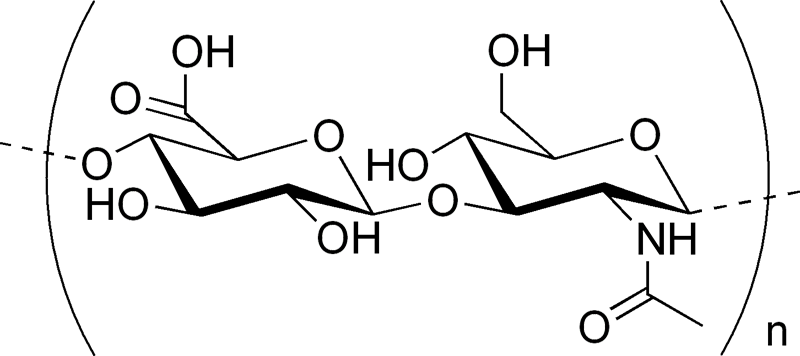
Furthermore, the commercial sourcing of hyaluronic acid varies significantly, presenting considerations for specific consumer demographics. The compound is predominantly produced via industrial biofermentation utilizing bacterial cultures (such as Streptococcus zooepidemicus) or extracted from animal tissues, most notably avian sources like rooster combs, which naturally contain exceptionally high concentrations of the glycosaminoglycan. Ethical and dietary considerations have increasingly pushed formulators toward biofermentation methods to align with vegetarian and vegan product standards.
Cross-Industry Applications: From Primers to Medical Aesthetics
Beyond traditional daily skincare, the unique physical properties of hyaluronic acid have been successfully leveraged in specialized makeup formulations and clinical medicine. In the cosmetics sector, manufacturers utilize dehydrated hyaluronic acid spheres embedded within anhydrous (water-free) matrices, most notably in high-performance skin-smoothing primers. Upon topical application, these microscopic dehydrated spheres settle into microscopic skin crevices, fine lines, and wrinkles. Once embedded, they absorb ambient moisture from the air and adjacent skin tissues, swelling locally to create an optical illusion of diminished textural irregularities.
In the realm of aesthetic medicine, chemically cross-linked hyaluronic acid serves as the primary active ingredient in temporary dermal fillers, including Juvéderm, Restylane, and Voluma. These injectable formulations are engineered to structurally replenish lost subcutaneous volume, correct deep facial folds, and contour facial features. Historically, modified variants like Macrolane were also explored for larger-volume body contouring, though indications have faced regulatory and clinical scrutiny. Concurrently, oral hyaluronic acid dietary supplements are widely marketed within the nutraceutical sector; however, independent clinical gastroenterology and dermatology reviews remain skeptical regarding whether intact macromolecules can survive human digestive processes and successfully migrate from the gastrointestinal tract to peripheral cutaneous tissues.
Historical Revisionism and Methodological Scrutiny in Cosmetic Literature
A notable development in the academic discourse surrounding hyaluronic acid involves the critical re-evaluation of foundational statistical claims frequently cited in scientific literature. For decades, review articles and introductory cosmetic chemistry papers repeated the ubiquitous "fun fact" that a single gram of hyaluronic acid is capable of binding up to six liters of water.
A meticulous historical audit revealed that this widely propagated metric originated from a secondary citation in an introductory text within the International Journal of Toxicology, authored by members of the Cosmetic Ingredient Review expert panel. Upon subsequent academic investigation, the originally cited source contained no empirical validation for the claim. Independent research published in the Journal of Cosmetic Science by Borchers and Pirrung formally dissected this statistic, categorizing it as a persistent scientific myth.
This methodological correction underscores broader quality-control challenges within scientific communication. It demonstrates how unverified anecdotal metrics can become entrenched within peer-reviewed literature, even among highly respected authors and academic journals. Experts currently advise heightened skepticism toward generalized superlative claims that are tangential to a study’s primary investigative focus, reinforcing the necessity of rigorous empirical validation across both cosmetic science and clinical dermatology.
References and Empirical Foundations
The safety, efficacy, and penetration dynamics of topical hyaluronic acid continue to be evaluated through controlled clinical and in vitro research. Key foundational studies informing contemporary understanding include the 2008 investigation by S. Gariboldi et al., published in the Journal of Immunology, which detailed the role of low molecular weight hyaluronic acid in stimulating skin epithelial self-defense mechanisms through Toll-like receptors 2 and 4.
Additional clarity regarding cutaneous absorption was provided by M. Essendoubi and colleagues in a 2016 publication within Skin Research and Technology, utilizing Raman spectroscopy to map the penetration profiles of varying molecular weights across human skin samples. Furthermore, clinical evaluations regarding the therapeutic utility of topical formulations—such as the 2014 study by T. Schlesinger and C. Rowland Powell published in the Journal of Clinical and Aesthetic Dermatology—have documented the safety and efficacy of low molecular weight gels in managing inflammatory cutaneous conditions like facial seborrheic dermatitis. As academic inquiry progresses, ongoing investigations aim to further isolate the distinct biochemical pathways influenced by engineered hyaluronic acid variants in normal, healthy human skin.
