
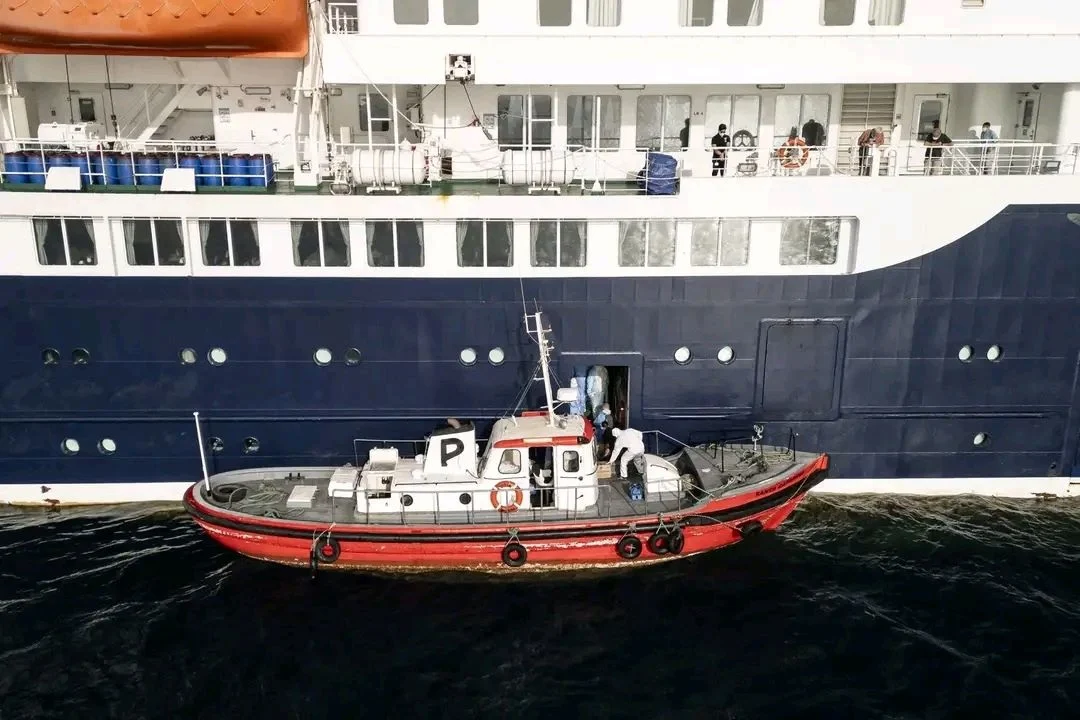
In an unprecedented direct address to the citizens of Tenerife, Dr. Tedros Adhanom Ghebreyesus, the Director-General of the World Health Organization (WHO), has confirmed the imminent arrival of the MV Hondius at the industrial port of Granadilla. The vessel, which has been at the center of an international maritime health crisis following an outbreak of the Andes strain of hantavirus, is carrying approximately 150 passengers and crew members from 23 different nations. The Director-General’s intervention comes at a time of heightened public anxiety, seeking to provide transparency regarding the logistical and medical protocols established to ensure the safety of both the passengers and the local population of the Canary Islands.
The decision to utilize Tenerife as a transit point for the repatriation of those on board follows weeks of diplomatic and medical negotiations. According to the WHO, the operation is being conducted under the strict governance of the International Health Regulations (IHR), a legally binding framework designed to prevent the international spread of disease while minimizing interference with world traffic. Dr. Tedros, in a rare personal statement, emphasized that the risk to the residents of Tenerife remains categorized as "low," citing the rigorous "sealed corridor" protocols developed in coordination with the Spanish national government and regional health authorities.
Understanding the Pathogen: The Andes Strain of Hantavirus
To address public concerns, it is essential to distinguish the current situation from the global COVID-19 pandemic. The Andes orthohantavirus (ANDV) is a lineage of hantavirus primarily found in South America. While most hantaviruses are transmitted to humans through contact with the excreta of infected rodents, the Andes strain is unique in its documented potential for limited human-to-human transmission, typically requiring close, prolonged contact.
Clinical data indicates that the virus can lead to Hantavirus Pulmonary Syndrome (HPS), a severe respiratory disease. The fatality rate for HPS can be significant, often cited between 25% and 40% in clinical settings. On the MV Hondius, the virus has already claimed three lives. However, the WHO reports that there are currently no symptomatic passengers on board, suggesting that the incubation periods for those exposed are being closely monitored under expert supervision. The presence of a WHO infectious disease specialist on the vessel ensures that real-time data is being used to guide the docking and disembarkation process.
Chronology of the MV Hondius Crisis
The crisis began several weeks ago when the first reports of respiratory distress emerged among the crew and passengers of the MV Hondius, an expedition vessel known for polar voyages. As the ship moved through international waters, the severity of the situation became apparent with the sudden onset of severe illness in several individuals.
- Initial Outbreak: Following the confirmation of the Andes strain, the vessel was placed under a self-imposed quarantine while seeking a port of call capable of handling a high-consequence pathogen.
- Diplomatic Negotiations: Multiple nations were consulted under the IHR (2005) framework. The WHO identified Spain, and specifically the infrastructure in Tenerife, as the most viable location for a safe, controlled repatriation operation due to its advanced medical facilities and the strategic layout of its industrial ports.
- The Spanish Agreement: Prime Minister Pedro Sánchez and the Spanish Ministry of Health finalized the agreement to allow the ship to dock at Granadilla, an industrial port located away from the primary tourist and residential hubs of Santa Cruz de Tenerife.
- The WHO Intervention: Dr. Tedros Adhanom Ghebreyesus issued a formal request to the Spanish government, characterizing the acceptance of the ship as an "act of solidarity and moral duty."
Logistical Execution: The Granadilla Protocol
The selection of the Port of Granadilla is a central component of the risk mitigation strategy. Unlike the Port of Santa Cruz, which is integrated into the capital city’s urban fabric, Granadilla is a specialized industrial facility. This allows for the creation of a total sterile zone.
The repatriation plan, described as a "step-by-step" operation, involves several layers of containment:
- Maritime Approach: The MV Hondius will be met by Spanish maritime authorities and guided to a restricted berth.
- The Sealed Corridor: Passengers will disembark directly into a cordoned-off area. They will not pass through standard terminal facilities.
- Secure Transport: Ground transportation will consist of sealed, guarded vehicles. These vehicles are tasked with moving passengers through a dedicated corridor that has been entirely cleared of public traffic.
- Direct Repatriation: The passengers, representing 23 countries, will be transported to a secure airfield for immediate repatriation to their home nations via chartered flights. None of the passengers will remain in Tenerife for treatment unless a medical emergency necessitates immediate stabilization in a high-level bio-containment unit.
The Role of International Health Regulations (IHR)
The WHO’s involvement is predicated on the International Health Regulations, which mandate that the nearest port with sufficient medical capacity must provide assistance to vessels in distress. This is not merely a humanitarian suggestion but a legal obligation for signatory member states. The IHR (2005) were revised specifically to handle events that could constitute a Public Health Emergency of International Concern (PHEIC).
By adhering to these regulations, Spain is upholding a global standard for maritime safety. The WHO has clarified that Tenerife was chosen because it meets the high standards of medical infrastructure and logistical capability required to manage a high-security health operation. The organization has also praised the collaboration of the ship’s captain, Jan Dobrogowski, and the vessel’s operating company for their transparency and adherence to international health protocols during the transit period.
Statements from Official Bodies and Local Reactions
While the Spanish government has focused on the logistical success of the operation, local sentiment in Tenerife remains a mix of concern and cautious support. Regional authorities in the Canary Islands have assured the public that the "bubble" established for the transit of passengers is impenetrable.
In his message, Dr. Tedros expressed a deep personal commitment to the island, announcing his intention to travel to Tenerife to oversee the operation in person. "I intend to travel to Tenerife to observe this operation firsthand, to stand alongside the health workers, port staff, and officials who are making it happen," Tedros stated. This move is seen by analysts as an effort to build public trust and demonstrate that the WHO is not managing the crisis from a distance but is directly involved in the risk management on the ground.
Prime Minister Pedro Sánchez has similarly characterized the operation as a reflection of Spain’s commitment to international cooperation. However, opposition figures and some local community leaders have called for even stricter assurances that no biological material or waste from the ship will enter the local ecosystem, a concern the WHO has addressed by confirming that all medical waste and potential contaminants on the MV Hondius are being handled according to Level 4 biosafety protocols.
Analysis of Broader Implications for Global Health
The MV Hondius incident serves as a critical case study for the post-COVID era. It highlights the tension between local public health anxieties and international humanitarian obligations. The speed with which the Andes strain was identified and the subsequent coordination between the WHO, the Spanish government, and the maritime industry suggests a significant evolution in global response capabilities since 2020.
Furthermore, the operation underscores the importance of "solidarity" as a functional tool in epidemiology. As Dr. Tedros noted, viruses do not respect borders, and the isolation of a vessel in distress without a clear plan for repatriation often leads to worse public health outcomes, as seen in various maritime crises during the early stages of the COVID-19 pandemic. By providing a controlled environment for disembarkation, the authorities are preventing a disorganized and potentially more dangerous health event.
The successful execution of this repatriation will likely set a precedent for how future infectious disease outbreaks on commercial and expedition vessels are managed. The use of industrial ports as "sterile transit hubs" could become a standard model for separating humanitarian aid from local population centers.
Conclusion and Future Outlook
As the MV Hondius nears the shores of Tenerife, the eyes of the international health community are on the Port of Granadilla. The operation is expected to take several days to complete, during which time the "sealed corridor" will remain under the highest level of security.
The WHO has reaffirmed that its primary goal is the safety and dignity of the passengers—many of whom have been at sea for weeks in a state of grief and fear—while ensuring that the people of Tenerife are protected from any secondary transmission. With the Director-General’s arrival, the operation transitions from a maritime logistical challenge to a high-profile demonstration of international health diplomacy.
For the residents of Tenerife, the message from the global health leadership is clear: the measures in place are designed to ensure that the "outbreak" remains confined to the history of the voyage, rather than becoming a new chapter in the island’s public health record. The WHO continues to urge the public to rely on official channels for information and to trust in the specialized preparations that have been established to manage this international concern.
