
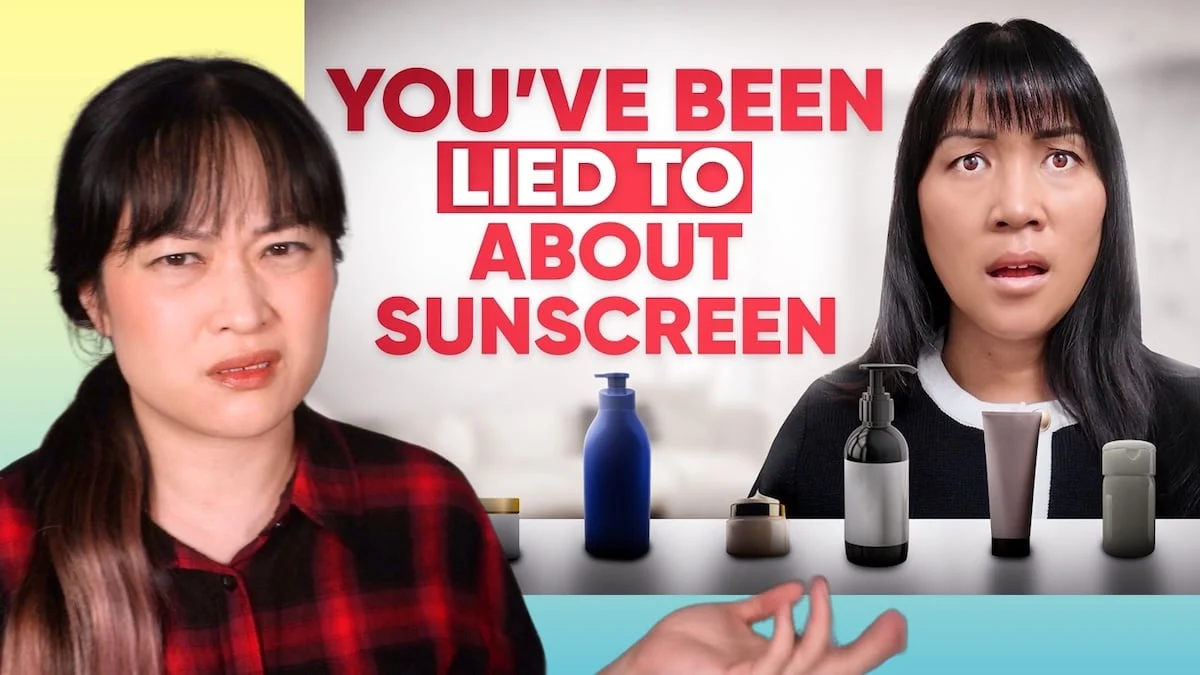
A persistent myth surrounding the inclusion of retinyl palmitate in sunscreens, claiming it increases the risk of skin cancer, has been widely disseminated by various "clean beauty" organizations, most notably the Environmental Working Group (EWG) through its annual sunscreen guide. This claim recently gained renewed traction following a viral video by toxicologist Dr. Yvonne Burkart, titled "You’ve been lied to about sunscreen: Toxicologist reveals 6 things you should know about sunscreen," where it was presented as a primary concern. However, leading cosmetic scientists and regulatory bodies have consistently refuted these assertions, citing a robust body of evidence that supports the safety of retinyl palmitate in topical formulations, including sunscreens.
The Allegations Unveiled: Concerns Over Retinyl Palmitate’s Photostability
Dr. Burkart’s video, a focal point of recent online discourse, posited that certain sunscreen ingredients, contrary to their intended purpose, could promote skin cancer. She specifically highlighted retinyl palmitate, a synthetic derivative of vitamin A, often incorporated into sunscreens for its purported anti-aging benefits, such as wrinkle reduction and skin texture improvement. The core of her concern lay in the ingredient’s purported instability when exposed to sunlight.
"Some [sunscreen] ingredients can actually promote skin cancer," Dr. Burkart stated, expressing shock given sunscreen’s primary role. She elaborated, "Retinyl palmitate is a synthetic form of vitamin A that’s often added to sunscreens for its so-called anti-aging benefit. You’ll see it often promoted as helping to reduce wrinkles or even to improve the texture of your skin." Her most critical assertion followed: "But here is what is most shocking. When exposed to sunlight, retinyl palmitate becomes highly unstable, breaks down into free radicals, which are extremely reactive. These free radicals damage DNA and lipids, as well as proteins, accelerate skin aging and may even increase the risk of tumor formation over time."
To support these claims, Dr. Burkart referenced studies demonstrating that retinyl palmitate, when applied to the skin and exposed to sunlight, generates reactive oxygen species (ROS) and lipid peroxides. These are widely recognized as drivers of oxidative stress and photocarcinogenesis—the formation of cancer in response to sunlight. The implication, from her statements, was that these findings pointed towards an increased risk of skin cancer in humans.
Scientific Scrutiny: Examining the Evidence Base
The scientific community, however, approaches such claims with a critical eye, differentiating between various types of research and their applicability to human health. In response to Dr. Burkart’s video, cosmetic chemist Michelle Wong of Lab Muffin Beauty Science, in collaboration with toxicologist and cosmetic safety assessor Mohammed Kanadil (@MoSkinLab), published a detailed rebuttal. Their work, which underwent additional review by experienced toxicologists Dr. Norbert Kaminski and Dr. Lyle Burgoon, systematically addressed the evidence presented.
The studies frequently cited by critics of retinyl palmitate fall into three main categories:
- In vitro experiments: These are "test tube" studies where retinyl palmitate is exposed to UV radiation, demonstrating its breakdown into reactive oxygen species. These ROS can indeed damage cellular structures, including DNA, contributing to oxidative stress—a known pathway in cancer formation. A study published in the International Journal of Environmental Research and Public Health in 2005 by Tolleson et al. is often referenced in this context, showing photodecomposition and phototoxicity of natural retinoids.
- Cell studies: Research involving cells grown in petri dishes has shown that when retinyl palmitate is added and subsequently exposed to UV light, these cells exhibit a higher rate of mutation. For instance, a 2005 study by Mei et al. in Toxicological Sciences observed photomutagenicity of retinyl palmitate in mouse lymphoma cells under ultraviolet A irradiation.
- Animal studies: Perhaps the most frequently cited piece of evidence is a specific animal study conducted by the National Toxicology Program (NTP). Dr. Burkart specifically referenced this: "What’s even more concerning is that animal studies conducted by the National Toxicology Program found that mice whose skin was treated with retinyl palmitate and exposed to sunlight (simulated sunlight) developed significantly more skin tumors than those animals who were not exposed to the same ingredient, but still had the simulated sunlight. But yet somehow this ingredient is still included in countless mainstream products, including sunscreens, which are marketed for daily use." The NTP study, published in 2012, involved SKH-1 hairless mice exposed to simulated solar light and topical application of retinoic acid and retinyl palmitate.
While these findings might appear alarming at first glance, the scientific and regulatory communities emphasize the crucial need for context and a thorough understanding of study limitations before drawing conclusions about human safety.
Regulatory Review and Expert Consensus: A Deeper Dive
The NTP study, along with the in vitro and cell research, has been public knowledge for a considerable period. The continued presence of retinyl palmitate in sunscreens and other cosmetic products is not an oversight but rather a consequence of comprehensive safety assessments conducted by expert bodies worldwide. These assessments go beyond individual studies, considering the entire body of scientific literature, the biological context, and real-world usage.
A prime example is the European Union’s Scientific Committee on Consumer Safety (SCCS). Comprising highly experienced scientists, predominantly toxicologists, the SCCS is responsible for evaluating the safety of cosmetic ingredients in the EU market. They conducted a thorough review of vitamin A derivatives, including retinyl palmitate, in 2016. This rigorous safety assessment, which is far more detailed and stringent than a typical peer-reviewed scientific paper, specifically evaluated the NTP study and other relevant data. The SCCS concluded that retinyl palmitate was safe for use in sunscreens.
Why is Retinyl Palmitate Deemed Safe? Deconstructing the Science
The SCCS’s conclusions, reaffirmed in a 2022 report, are based on several key differentiators that challenge the direct applicability of the aforementioned studies to human skin under real-world conditions:
-
In vitro experiments do not replicate the complex human skin environment: Test tube experiments often isolate retinyl palmitate, allowing its breakdown into reactive oxygen species to be observed without interference. However, human skin is a complex biological matrix rich in natural antioxidants (like vitamin E, vitamin C, and various enzymes). In this intricate environment, retinyl palmitate can behave very differently. Indeed, vitamin A derivatives are known antioxidants themselves and, within the skin’s complex antioxidant network, are more likely to contribute to reducing overall oxidative stress rather than increasing it. The absence of these protective mechanisms in a petri dish makes in vitro results insufficient for predicting in vivo (in living organisms) effects.
-
Significant differences between hairless mouse and human skin: The NTP study utilized SKH-1 hairless mice, a strain specifically bred for high sensitivity to UV radiation. These mice are employed in research because they develop tumors rapidly, allowing for quicker and clearer results in photocarcinogenesis studies. However, their skin anatomy, physiology, and UV response mechanisms differ significantly from human skin. Human skin, through millions of years of evolution, has developed robust defenses against solar radiation, including a thicker stratum corneum, greater melanin production, and a more sophisticated antioxidant defense system. Therefore, results observed in these highly susceptible mouse models cannot be directly extrapolated to humans, whose skin is much more adapted to sun exposure. In humans, retinoids have even been shown to have protective effects against certain skin cancers.
-
Real-world data suggests retinoids are protective, not harmful: Dermatologists have been using various forms of retinoids (including retinol, tretinoin, and other vitamin A derivatives) for over 50 years, not only for anti-aging and acne treatment but also for the prevention and treatment of certain precancerous skin lesions and some forms of skin cancer. Patients undergoing retinoid therapy are often under close dermatological supervision, and if retinoid use, especially in conjunction with sun exposure, were a significant driver of skin cancer, a clear pattern would have emerged in clinical practice over these decades. The lack of such a pattern strongly supports their safety and even protective role.
-
Another factor in the NTP mouse study: The role of diisopropyl adipate: The NTP mouse study presented some unusual findings that complicated the interpretation of retinyl palmitate’s role. For instance, in some experimental groups, higher doses of UV exposure resulted in fewer tumors, an outcome counterintuitive to established photocarcinogenesis principles. Furthermore, the cream base without retinyl palmitate also led to an increase in tumors compared to untreated controls. This anomaly led safety assessors to investigate other components of the experimental formulation. It was discovered that diisopropyl adipate, an ingredient in the cream base used in the NTP study, could potentially cause extra UV sensitivity in hairless mice. Crucially, studies on human skin have not replicated this effect, further highlighting the species-specific nature of the NTP findings.
Timeline and Chronology of Safety Assessments
- Mid-2000s: In vitro and cell studies (e.g., Tolleson et al., Mei et al., 2005) begin to raise questions about retinyl palmitate’s photostability and potential for generating reactive oxygen species.
- 2012: The National Toxicology Program (NTP) publishes its photocarcinogenesis study on retinoic acid and retinyl palmitate in SKH-1 mice, reporting increased tumor formation in mice treated with retinyl palmitate and exposed to simulated sunlight.
- 2013-2016: Growing public concern, largely amplified by "clean beauty" advocates like the EWG, begins to question the safety of retinyl palmitate in sunscreens based on the NTP study.
- October 6, 2016: The European Union’s Scientific Committee on Consumer Safety (SCCS) issues its comprehensive "Opinion on Vitamin A (Retinol, Retinyl Acetate, Retinyl Palmitate)." After a detailed review of all available scientific data, including the NTP study, the SCCS concludes that retinyl palmitate is safe for use in sunscreens, dismissing the concerns about photocarcinogenesis under realistic human exposure conditions.
- October 24, 2022: The SCCS publishes a "Revision of the Scientific Opinion (SCCS/1576/16) on Vitamin A (Retinol, Retinyl Acetate, Retinyl Palmitate)." This updated report re-evaluates the safety of vitamin A derivatives, reinforcing its previous conclusion regarding retinyl palmitate in sunscreens. The 2022 report did recommend restrictions on retinol and other vitamin A forms in other skincare products, not due to photocarcinogenesis concerns, but to limit cumulative systemic exposure to vitamin A from cosmetics when combined with dietary and supplemental intake, demonstrating the SCCS’s cautious and thorough approach to ingredient safety.
The Role of Misinformation and the Challenge for Public Health Communication
The ongoing debate surrounding retinyl palmitate underscores a broader challenge in public health and scientific communication: the prevalence of misinformation and the difficulty in distinguishing between preliminary research findings and definitive safety conclusions. Organizations like the EWG, while often positioning themselves as consumer watchdogs, have been criticized by the scientific community for misinterpreting scientific data, overstating risks, and contributing to "chemophobia" through their scoring systems and guides.
When individuals or groups selectively highlight individual studies—especially in vitro or animal studies—without considering the full body of evidence, the context of human physiology, or the comprehensive assessments by regulatory bodies, it creates a distorted picture of risk. For consumers, this leads to confusion, anxiety, and potentially the avoidance of effective and safe products.
The efforts by experts like Michelle Wong and Mohammed Kanadil, who translate complex toxicological and chemical information into accessible formats, are crucial in countering such narratives. Their approach, emphasizing peer-reviewed data, regulatory assessments, and the nuances of scientific methodology, serves as a vital corrective in an era saturated with online health advice. As they point out, relying on official reports from independent scientific committees like the SCCS, which meticulously evaluate vast amounts of data and consider real-world exposure scenarios, represents the most reliable source for product safety information. The absence of reference to such authoritative reports, while citing isolated studies, should indeed be considered a "big red flag" for consumers seeking accurate information.
Conclusion
In conclusion, the claim that retinyl palmitate in sunscreens increases the risk of skin cancer is not supported by the overwhelming scientific consensus or the rigorous safety assessments conducted by expert regulatory bodies such as the European Union’s SCCS. While initial studies raised questions about its photostability in isolated environments or in highly sensitive animal models, these findings do not translate directly to human skin under normal conditions of use. The complex biological environment of human skin, the protective role of other antioxidants, the significant physiological differences between human and animal models, and decades of dermatological experience all point to the safety and even beneficial properties of retinoids in skin care, including in sunscreens. Consumers are best advised to consult authoritative scientific and regulatory sources for information on cosmetic ingredient safety, rather than relying on selectively presented or misinterpreted data.
