
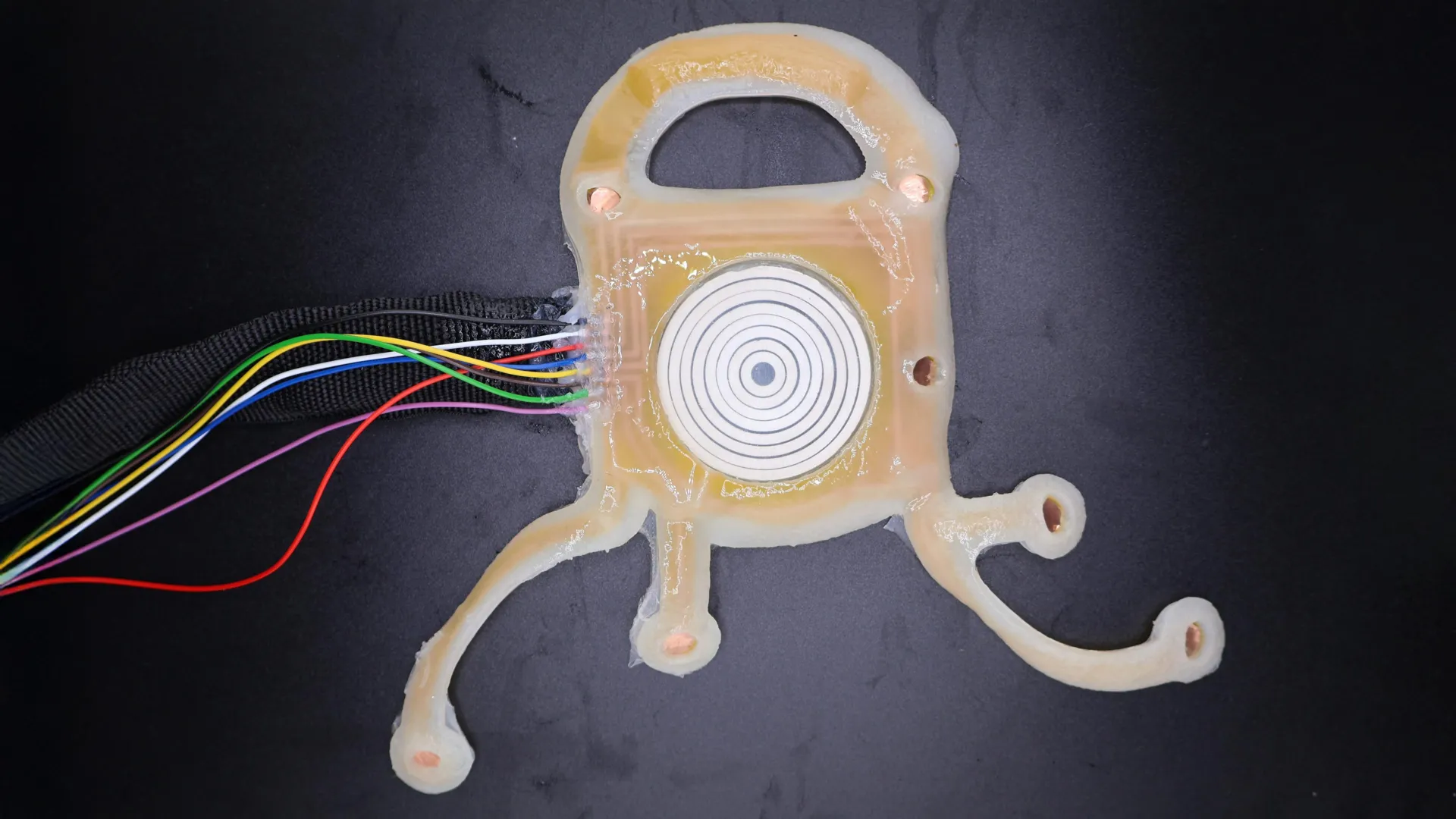
In the ongoing pursuit of optimizing human health through non-invasive technologies, a multidisciplinary team of researchers at the University of Texas at Austin has unveiled a breakthrough innovation: a soft, skin-attached wearable patch that successfully improves Rapid Eye Movement (REM) sleep in real-world settings. Known as NEUSLeeP, the device achieves this critical physiological milestone entirely without the use of pharmaceuticals or surgical intervention. By ingeniously combining gentle, targeted ultrasound stimulation with integrated electrodes that monitor real-time brain activity, the patch bridges the long-standing gap between diagnostic sleep tracking and therapeutic neural modulation. This dual capability allows NEUSLeeP to influence deep-seated brain regions historically challenging to reach without invasive procedures, while simultaneously observing how the brain reacts to the acoustic stimulation.
The unveiling of NEUSLeeP arrives at a critical juncture in modern medicine. Sleep disorders, particularly those affecting the restorative architecture of REM sleep, have reached epidemic proportions globally. Millions of individuals grapple with chronic insomnia, sleep apnea, and circadian rhythm disruptions that degrade their quality of life and exacerbate comorbid conditions such as cardiovascular disease, metabolic syndrome, and cognitive decline. Until now, interventions have largely relied on pharmacological agents—which frequently carry undesirable side effects, tolerance risks, and dependency issues—or behavioral therapies that require sustained compliance and time-intensive clinical oversight. The introduction of a comfortable, home-use wearable that actively promotes healthier sleep stages represents a paradigm shift in how clinicians and researchers approach restorative rest.
Chronology and Development of the NEUSLeeP Technology
The genesis of the NEUSLeeP project can be traced back to the burgeoning intersection of biomedical engineering, neuroscience, and material science at the University of Texas at Austin. Spearheaded by Kai Wing "Kevin" Tang, a recent biomedical engineering Ph.D. graduate, and supervised by Huiliang "Evan" Wang, an assistant professor in the Cockrell School of Engineering’s Department of Biomedical Engineering, the research effort spanned several years of meticulous design, bench testing, and iterative prototyping.
The primary engineering hurdle the team faced was twofold: how to non-invasively target deep brain structures—such as the brainstem and limbic circuits governing REM sleep—through the impenetrable barrier of the human skull, and how to do so in a form factor comfortable enough for wear during overnight sleep. Traditional transcranial focused ultrasound systems often require bulky, rigid machinery found exclusively in clinical laboratories or specialized research hospitals. To overcome this limitation, the UT Austin team leveraged advanced flexible electronics and piezoelectric materials to engineer a soft, conformal patch that adheres seamlessly to the skin, typically on the forehead or targeted craniofacial regions.
Following successful preclinical validations, the research collective advanced to human trials. A rigorous study involving 28 diverse participants was initiated to evaluate the safety, comfort, and efficacy of the NEUSLeeP device in real-world, home-like environments. The results of this foundational study, which have since been published in the prestigious peer-reviewed journal Nature Communications, exceeded initial expectations and laid the empirical groundwork for the device’s current transition toward commercialization.
Clinical Findings and Empirical Data
The clinical evaluation of NEUSLeeP yielded statistically significant data regarding its efficacy in altering sleep architecture. Across the cohort of 28 participants—which included both healthy sleepers and individuals reporting varying degrees of sleep difficulties—the device demonstrated a robust ability to accelerate the onset of REM sleep and prolong its duration.
According to the published findings, participants equipped with the active NEUSLeeP patch entered REM sleep an average of 43 minutes sooner than they did during baseline or control periods. Furthermore, once entered, the duration of the REM stage was extended by approximately 16 minutes per sleep cycle. These quantitative enhancements were achieved without disrupting the natural progression of non-REM (NREM) sleep stages, indicating a targeted neuromodulatory effect rather than a generalized sedation of the central nervous system.
Beyond sleep architecture metrics, the research team examined downstream physiological indicators of health and psychological resilience. Among healthy participants, the application of NEUSLeeP stimulation correlated with a measurable increase in heart rate variability (HRV). Higher HRV is widely recognized in cardiology and psychophysiology as a vital biomarker of autonomic nervous system flexibility, reflecting the body’s adaptive capacity to regulate stress and maintain homeostasis.
Simultaneously, functional brain imaging conducted in conjunction with the study revealed distinct neuroplastic changes within neural circuits associated with emotional processing. These neurological shifts suggest that the benefits of enhanced REM sleep extend far beyond physical rejuvenation, potentially offering a direct biological pathway for mood stabilization and psychological resilience.
Multidisciplinary Collaboration and Expert Insights
The success of the NEUSLeeP project underscores the power of cross-disciplinary collaboration within modern academic medical centers. The research brought together engineers from the Cockrell School of Engineering, psychiatrists and neuroscientists from the Dell Medical School, behavioral psychologists, and external clinical experts in sleep medicine.
"This is the first time we’ve been able to noninvasively target deep brain regions involved in REM sleep, while simultaneously monitoring brain activity," stated Kai Wing "Kevin" Tang, highlighting the technical novelty of the closed-loop system. Huiliang "Evan" Wang, the principal investigator directing the overall project, emphasized the accessibility of the technology: "Our skin-attached NEUSLeeP patch opens up new possibilities for understanding sleep and treating sleep disorders in home settings."
The psychological implications of the research are equally profound. Dr. Gregory Fonzo, an assistant professor in the Dell Medical School’s Department of Psychiatry and Behavioral Sciences and a co-principal investigator on the project, contextualized the findings within the broader framework of human mental health. "REM sleep is not just about dreaming—it’s about emotional reset and stress adaptation," Fonzo explained. "By enhancing REM, we may help people better cope with stress and improve their overall well-being."
Dr. Fonzo’s observations point to a critical gap in contemporary psychiatric care. Clinical literature has long established a bidirectional relationship between REM sleep disruptions and severe mental health conditions, including major depressive disorder, generalized anxiety disorder, and post-traumatic stress disorder (PTSD). Individuals suffering from PTSD, for instance, frequently experience fragmented REM sleep accompanied by recurrent nightmares, which exacerbates hyperarousal and emotional dysregulation. Traditional interventions—such as selective serotonin reuptake inhibitors (SSRIs) or trauma-focused psychotherapies—frequently fail to directly remediate the underlying architectural sleep deficits that perpetuate these conditions.
Adding a clinical perspective from outside the immediate university system, Dr. Vincent Mysliwiec, a professor at UT Health San Antonio and a nationally recognized authority on sleep disorders who serves as a co-PI on the project, underscored the societal potential of the innovation. "Our vision is a future where patients with mental health disorders can optimize their sleep with a noninvasive and safe treatment," Mysliwiec noted. "This technology could help millions of people get the restorative sleep they need."
Broader Implications for Medicine and Mental Health
The successful deployment of the NEUSLeeP patch introduces far-reaching implications across multiple sectors of healthcare, biomedical research, and consumer wellness.
From a neurological standpoint, the ability to safely modulate deep brain structures via non-invasive acoustic waves opens unprecedented avenues for treating neurological and psychiatric disorders. While pharmaceutical interventions flood the entire central nervous system with chemical agents—often resulting in systemic side effects such as weight gain, sexual dysfunction, or cognitive blunting—targeted ultrasound technology offers spatial and temporal precision. By stimulating specific neural nodes implicated in affective regulation and sleep homeostasis, clinicians may soon be able to "tune" brain activity with the surgical precision of a pacemaker, but without breaking the skin.
Furthermore, the economic and societal burden of sleep deprivation is staggering. According to data from the Centers for Disease Control and Prevention (CDC) and various economic research institutes, chronic sleep loss costs the United States economy hundreds of billions of dollars annually in lost productivity, workplace absenteeism, and healthcare expenditures related to cardiovascular incidents, diabetes, and mental health crises. A consumer-accessible, clinically validated device like NEUSLeeP could democratize sleep medicine, shifting the locus of care from overcrowded sleep clinics to the home environment.
The research team is already designing subsequent clinical trials aimed at validating these initial findings in larger, more diverse patient populations. These upcoming studies will specifically target clinical cohorts suffering from treatment-resistant insomnia, major depressive disorder, and combat- or trauma-induced PTSD. If these expanded trials corroborate the initial pilot data, NEUSLeeP could transition from an experimental engineering prototype into a cornerstone of integrative psychiatric and neurological therapeutics.
Commercialization Path and Future Outlook
Recognizing the immense translational potential of their discovery, the UT Austin research team has initiated formal steps to bring the technology out of the academic laboratory and into the global marketplace. The inventors are actively collaborating with Discovery to Impact, the University of Texas at Austin’s dedicated technology commercialization and venture development unit, to secure intellectual property rights, attract strategic investment, and forge partnerships with established medical device manufacturers.
A comprehensive patent application has already been filed to protect the proprietary design of the soft wearable patch, its ultrasound transducer array, and its closed-loop electrophysiological monitoring algorithms.
The path to commercialization, however, requires adherence to stringent regulatory frameworks. Before NEUSLeeP can be marketed to the general public or prescribed by physicians, it must undergo the rigorous clearance processes mandated by regulatory bodies such as the U.S. Food and Drug Administration (FDA). This process will necessitate multi-center randomized controlled trials (RCTs) to definitively establish safety, efficacy, and manufacturing reproducibility at scale.
As the commercialization efforts advance, the collaborative network behind NEUSLeeP continues to expand. The extended research team includes William D. Moscoso-Barrera, Mengxia Yu, Mengmeng Yao, Jinmo Jeong, Ilya Pyatnitskiy, Anakaren Romero Lozano, Jiachen Wang, Ju-Chun Hsieh, Tony Sungjin Chae, Daniel Song, Julieta Garcia, Rithvik Mittapalli, and Adam Bush from the Department of Biomedical Engineering; Benjamin Baird from the College of Natural Sciences’ Department of Psychology; and Wynn Legon from Virginia Tech’s Fralin Biomedical Research Institute.
In summary, the development of the NEUSLeeP patch represents a watershed moment at the crossroads of engineering, neurology, and sleep medicine. By successfully merging non-invasive deep brain stimulation with real-time physiological monitoring in a comfortable, wearable form factor, the UT Austin researchers have laid the groundwork for a new era of personalized, drug-free therapeutics. As the technology moves closer to commercial realization, it offers a tangible beacon of hope for millions of individuals burdened by sleep disorders, emotional distress, and the myriad health complications that follow in their wake.
