
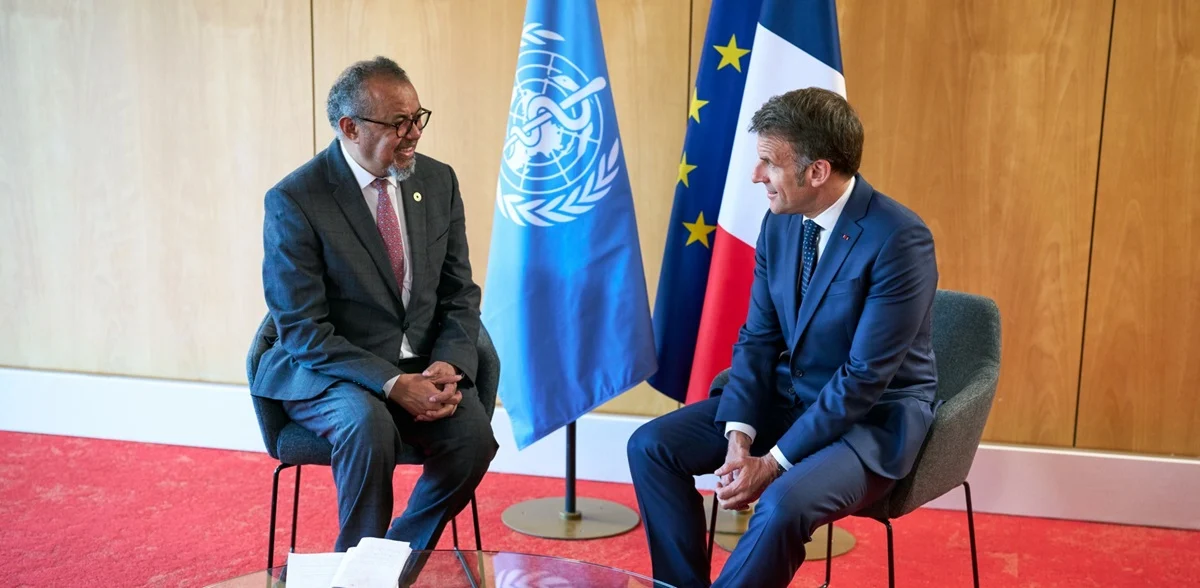
In a decisive move to reshape the global health architecture, heads of state, international health authorities, and scientific experts gathered in France on World Health Day for the inaugural One Health Summit. The landmark event, hosted by the French government in collaboration with the World Health Organization (WHO), served as the platform for a series of high-level announcements aimed at integrating human, animal, and environmental health into a single, cohesive strategy. This approach, known as "One Health," is designed to address the root causes of pandemics and environmental degradation by breaking down the traditional silos between medical science, veterinary medicine, and ecology.
The summit took place against the backdrop of the World Health Day theme, "Together for health. Stand with science," emphasizing a global commitment to evidence-based policy. As the world continues to navigate the long-term repercussions of the COVID-19 pandemic, the assembly in France signaled a shift from emergency response to proactive prevention. The primary objective of the summit was to translate the conceptual framework of One Health into a set of actionable, well-funded initiatives that can be implemented at both the national and international levels.
The Statistical Urgency: A World at Risk
The impetus for the One Health Summit is rooted in a sobering array of data regarding the intersection of human activity and biological threats. Scientific research indicates that the health of the planet is deteriorating at a rate that directly facilitates the emergence of new pathogens. Approximately 60% of known infectious diseases in humans are zoonotic, meaning they originate in animals. Even more concerning is the fact that 75% of all emerging infectious diseases—including Ebola, HIV, and various strains of influenza—are transmitted from animals to humans.
The economic and human costs of failing to address these connections are staggering. The COVID-19 pandemic, which most experts agree was a zoonotic spillover event, resulted in an estimated 15 million excess deaths globally. In economic terms, the pandemic caused trillions of dollars in losses during the 2020–2021 period alone, disrupting global supply chains and reversing decades of progress in poverty reduction. Beyond pandemics, the world faces the "silent" threats of antimicrobial resistance, water contamination, and food insecurity, all of which are exacerbated by climate change and biodiversity loss. By addressing these issues through a unified lens, the One Health approach seeks to mitigate risks before they escalate into global catastrophes.
Four Strategic Pillars for Global Health Security
To operationalize this vision, the WHO and its partners outlined four major actions during the summit. these initiatives are intended to provide the infrastructure, scientific rigor, and targeted interventions necessary to protect the global population.
1. The Global Network of One Health Institutions
The first major announcement involved the planned launch of a new Global Network of One Health Institutions. This network is designed to serve as the operational arm of the One Health Joint Plan of Action. By bringing together multidisciplinary expertise from across the globe, the network will provide technical support to countries as they attempt to integrate One Health principles into their domestic policies.
A key feature of this network is its focus on "on-the-ground" implementation. Rather than remaining a high-level theoretical body, the network will utilize the WHO Academy and other academic partners to provide specialized training for healthcare workers, veterinarians, and environmental scientists. This coordinated delivery model aims to ensure that global guidance is translated into practical tools, such as improved local surveillance systems and integrated laboratory networks that can detect pathogens in both livestock and human populations simultaneously.
2. Strengthening the Scientific Foundation: The OHHLEP Extension
Recognizing that policy must be guided by the most current scientific evidence, the WHO and the Quadripartite partners—the Food and Agriculture Organization of the United Nations (FAO), the United Nations Environment Programme (UNEP), and the World Organisation for Animal Health (WOAH)—announced the extension of the One Health High-Level Expert Panel (OHHLEP).
The panel’s mandate has been extended through 2027, with a subsequent phase planned for 2027–2029. The OHHLEP is tasked with three priority areas: shaping the global research agenda to identify gaps in our understanding of spillover events, supporting the implementation of the Joint Plan of Action, and driving high-level advocacy. By providing a centralized, authoritative scientific voice, the panel ensures that political leaders have access to the data needed to make informed decisions regarding land use, wildlife trade, and agricultural practices.
3. A Renewed Drive to Eliminate Rabies by 2030
In a move targeting one of the world’s oldest and most preventable zoonotic threats, the WHO, WOAH, and the Institut Pasteur launched a renewed global initiative to eliminate dog-mediated human rabies deaths by 2030. Despite the existence of effective vaccines for both humans and animals, rabies continues to claim nearly 60,000 lives annually, with a disproportionate impact on children in rural and underserved communities.
This initiative serves as a primary case study for the One Health approach. By focusing on mass dog vaccination and community-based surveillance, the program aims to eliminate the virus at its source. Success in rabies elimination is viewed as a blueprint for strengthening broader health systems, demonstrating how coordinated efforts between veterinary services and public health departments can eradicate a disease that has plagued humanity for millennia.
4. A Unified Strategy for Avian Influenza
The final pillar of the summit’s announcements addressed the escalating threat of avian influenza. With various strains of the virus increasingly appearing in non-avian species, including mammals, the risk of a human pandemic remains high. The WHO and its partners presented a new Strategic Framework for Collaboration on avian influenza, which moves away from fragmented, country-by-country responses toward a unified global strategy.
This framework focuses on integrated surveillance, risk assessment, and preparedness. It addresses the wider impacts of the virus not only on public health but also on food security and the livelihoods of millions of poultry farmers. By harmonizing data sharing and response protocols, the strategy aims to contain outbreaks before they can cross species barriers or disrupt the global food supply.
Leadership and Multilateral Cooperation
The summit also marked a significant shift in the governance of global health. The WHO has officially assumed the Chairmanship of the Quadripartite collaboration, taking on a lead role alongside the FAO, WOAH, and UNEP. Under the WHO’s leadership, the partnership will prioritize delivering measurable impact at the country level. This involves streamlining governance structures to avoid duplication of efforts and aligning global funding around high-impact priorities.
French President Emmanuel Macron, speaking at the summit, reaffirmed France’s commitment to this multilateral framework. Macron emphasized that One Health is not merely a medical strategy but a recognition of the planet as a single, interconnected system. "France is determined to move One Health from ambition to implementation," Macron stated. "Science must guide our action, and cooperation must be our strength."
The involvement of other major powers was also evident. The summit drew participation from ministers representing Germany, Indonesia, and South Africa, highlighting the geographical breadth of the commitment to One Health. These nations are expected to play a critical role in carrying the summit’s momentum into upcoming international forums, including the G7 and G20, where health security and climate resilience are high on the agenda.
The Global Forum of WHO Collaborating Centres
Parallel to the summit, the WHO launched the first Global Forum of WHO Collaborating Centres (CCs), held from April 7 to 9. This forum brought together representatives from over 800 institutions across 80 countries. These centers, which include leading universities and research institutes, are the backbone of the WHO’s scientific capacity.
The forum focused on deepening collaboration in areas such as data sharing, coordinated research, and capacity building. By fostering a global network of scientific excellence, the WHO aims to accelerate innovation in diagnostics, vaccines, and therapeutic treatments. The presence of high-level health ministers from various nations at the forum underscored the political importance of scientific diplomacy in the modern era.
Analysis: Implications for the Future of Global Health
The outcomes of the One Health Summit suggest a fundamental change in how the international community perceives health security. For decades, global health policy was largely reactive, focusing on containing outbreaks after they had already begun to spread. The One Health approach represents a transition toward a "prevention-at-source" model.
By investing in environmental conservation and animal health, the international community is effectively creating a "biological buffer" that reduces the likelihood of pathogens reaching human populations. However, the success of this transition depends on sustained financial investment and political will. The integration of environmental data into health surveillance requires significant technological upgrades in many developing nations, and the regulation of wildlife markets and industrial farming remains a politically sensitive issue.
Furthermore, the summit’s emphasis on the "human-animal-ecosystem interface" aligns with broader efforts to combat climate change. As rising temperatures shift the habitats of disease-carrying insects and animals, the intersection of ecology and epidemiology becomes inseparable. The One Health framework provides a structured way for climate policy and health policy to work in tandem.
A Chronology of the One Health Movement
The One Health Summit is the culmination of a decades-long evolution in scientific thought. While the link between human and animal health has been recognized since the 19th century—most notably by Rudolf Virchow, who coined the term "zoonosis"—the modern One Health movement gained traction in the early 2000s following the outbreaks of SARS and H5N1 avian influenza.
- 2004: The Wildlife Conservation Society organized a conference that resulted in the "Manhattan Principles," which first laid out the modern One Health concept.
- 2010: The FAO, OIE (now WOAH), and WHO released a tripartite concept note, formalizing their collaboration.
- 2021: In the wake of COVID-19, the One Health High-Level Expert Panel (OHHLEP) was established to provide scientific guidance.
- 2022: The One Health Joint Plan of Action (2022–2026) was launched, providing a five-year roadmap for the Quadripartite.
- 2024: The One Health Summit in France marks the transition from planning to large-scale international implementation.
As the summit concluded, the message from global leaders was clear: the era of treating human health in isolation is over. The actions announced in France—from the elimination of rabies to the creation of a global scientific network—represent the first concrete steps toward a more resilient and integrated global health system. The success of these initiatives will be measured not just by the absence of the next pandemic, but by the flourishing of the ecosystems and animal populations upon which all human life depends.
