
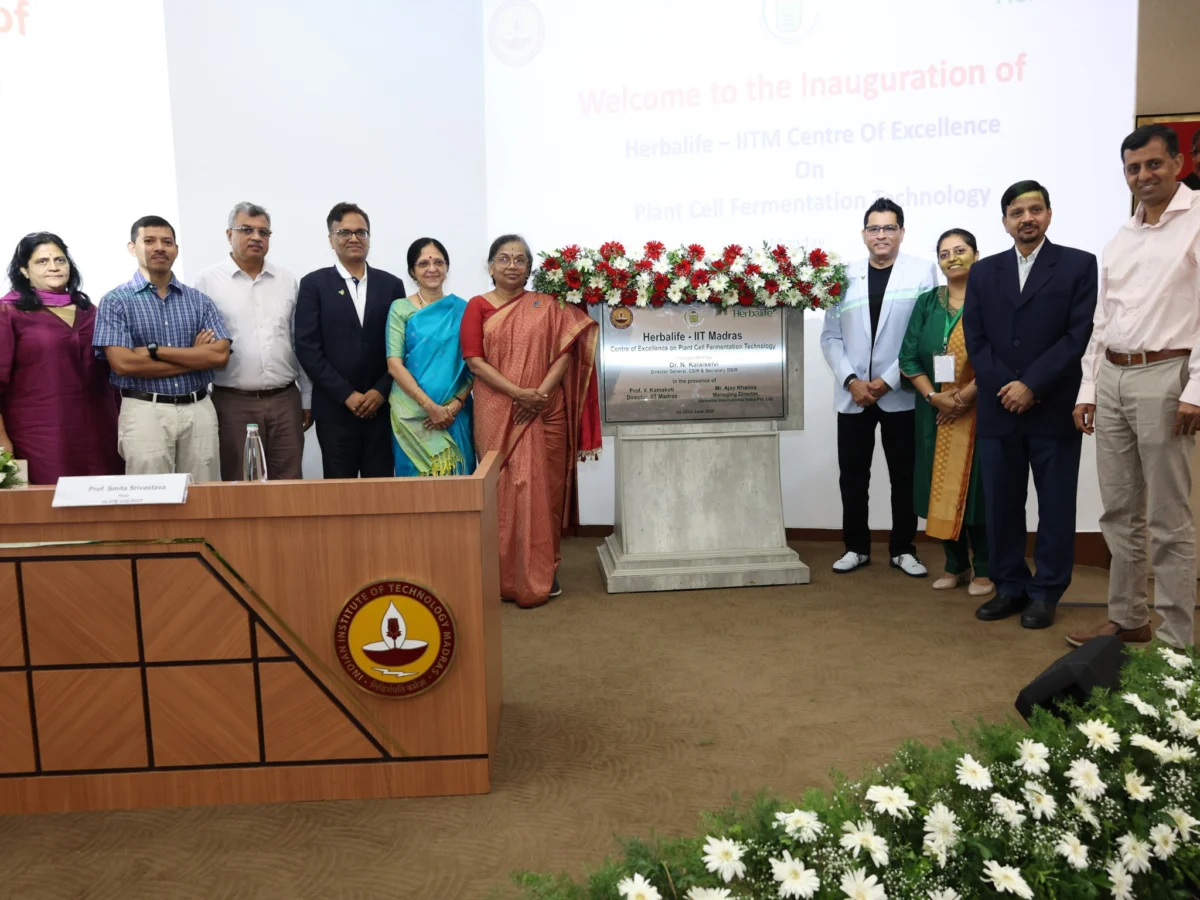
India’s ambitious drive to establish itself as a global leader in biomanufacturing has received a significant impetus with the inauguration of a cutting-edge plant cell fermentation hub. This pioneering initiative is the result of a strategic collaboration between US-based global nutrition company Herbalife and the prestigious Indian Institute of Technology (IIT) Madras. This facility marks India’s first dedicated center for translational research and innovation in plant cell fermentation, a technology poised to revolutionize the production of high-value ingredients for the health and wellness sectors. The hub aims to solidify India’s position as a frontrunner in biomanufacturing and the development of next-generation, plant-derived health products.
The establishment of this Centre of Excellence on Plant Cell Fermentation is a testament to the growing synergy between academia and industry in India. It signifies a concerted effort to harness the potential of advanced biotechnologies for commercial applications, aligning with national policies designed to foster innovation and self-reliance in critical sectors.
Advancing Biomanufacturing Through Plant Cell Fermentation
Plant cell fermentation is a sophisticated process that involves cultivating plant cells in a controlled liquid environment within bioreactors, a departure from traditional agricultural methods. This technique offers a sustainable and highly efficient way to produce valuable compounds found in plants, such as phytochemicals, bioactive ingredients, and specialized proteins. Unlike conventional cultivation, which is subject to seasonal variations, geographical constraints, and potential contamination, plant cell fermentation allows for precise control over growth conditions, leading to consistent yields and higher purity of desired compounds. This method minimizes land and water usage, reduces pesticide requirements, and offers a more predictable supply chain, addressing key sustainability challenges in the production of natural ingredients.
The Herbalife and IIT Madras collaboration is specifically geared towards leveraging this technology for scalable production of herbal biomass. The center will focus on developing enriched herbal extracts and high-value phytochemicals, effectively bridging the critical gap between laboratory-scale scientific discoveries and their viable industrial applications. This translational research approach is crucial for transforming scientific breakthroughs into tangible products that benefit consumers and industries alike.
The state-of-the-art facility, located at IIT Madras in Chennai, is equipped with advanced upstream cultivation systems designed for optimal plant cell growth. Complementing these are sophisticated downstream processing capabilities and advanced metabolomics platforms. These integrated systems are designed to accelerate technology transfer, foster a vibrant ecosystem for innovation and entrepreneurship, and crucially, build a highly skilled workforce essential for the burgeoning biomanufacturing sector in India.
Professor Smita Srivastava, who heads the new hub, articulated the vision behind its establishment: "By combining cutting-edge science with translational research and strong industry partnerships, we aim to accelerate innovation, nurture talent, and develop sustainable technologies that will shape the future of plant-derived health and wellness products." This statement underscores the multifaceted objectives of the center, encompassing scientific advancement, human capital development, and the creation of environmentally responsible production methods.
The hub is outfitted with customized plant cell bioreactors, advanced analytical instrumentation, and pilot-scale processing facilities. These resources will empower researchers, aspiring entrepreneurs, and seasoned industry professionals to develop novel, future-ready plant-derived ingredients and innovative health and wellness products. The strategic aim is to not only drive scientific progress but also to cultivate a new generation of innovators capable of addressing the evolving demands of the global health and nutrition market.
Fostering Academia-Industry Synergy and National Goals
The establishment of this Centre of Excellence is expected to act as a powerful catalyst for national and international academia-industry collaborations. It is designed to facilitate the generation of intellectual property (IP), nurture promising startups in the biomanufacturing space, and contribute to reducing India’s import dependence by promoting sustainable domestic production systems. This initiative aligns perfectly with India’s broader strategy to become a self-reliant and globally competitive player in advanced manufacturing and biotechnology.
Professor Ashwin Mahalingam, Dean of Alumni and Corporate Relations at IIT Madras, highlighted the significance of this partnership: "IIT Madras’s partnership with Herbalife and the establishment of the Centre of Excellence on Plant Cell Fermentation is an exemplar of how industry and academia can work together to build enduring assets for the nation." He further emphasized the center’s potential to push the frontiers of plant cell bioprocessing, stating, "With the high-end research facilities at the Centre, we are now confident to push the boundaries of plant cell bioprocessing to translate into solutions for societal impact." This sentiment reflects the institution’s commitment to leveraging its research prowess for the greater good and national development.
The hub’s overarching goal is to prominently position India on the global commercial plant cell fermentation map. This will be achieved through a combination of strategic industry partnerships, ambitious blue-sky research projects, targeted training programs, and the incubation of entrepreneurial spin-offs. By fostering such a comprehensive ecosystem, the initiative aims to create a virtuous cycle of innovation, commercialization, and economic growth.
Furthermore, the establishment of this hub directly supports national policy objectives, including the BioE3 strategy. This strategy is designed to accelerate technological development and commercialization by establishing specialized biomanufacturing hubs and biofoundries across the country. The Herbalife-IIT Madras collaboration is a concrete step towards realizing these national ambitions, demonstrating a clear path for translating advanced research into industrial-scale solutions.
"We believe this centre will not only strengthen India’s self-reliance in sustainable bio-manufacturing but also create new opportunities for innovation, entrepreneurship, and global leadership in next-generation plant-derived products," added Professor Mahalingam, reinforcing the strategic importance of the project.
A Growing Biomanufacturing Landscape in India

The Herbalife and IIT Madras Centre of Excellence is not an isolated development but rather part of a broader, accelerating trend in India’s biomanufacturing sector. Over the past few years, the country has witnessed the establishment of numerous new biomanufacturing facilities and advanced research hubs, signaling a robust commitment to this field.
In 2024 alone, Bengaluru has emerged as a significant hub for innovation in the protein sector. The city saw the launch of the Centre for Smart Protein and Sustainable Material Innovation, an incubation hub designed to support early-stage ventures, and the Alternative Proteins Innovation Center, a dedicated facility for scaling up production. These initiatives reflect a growing focus on developing sustainable food systems and novel materials through biotechnology.
The previous year, 2023, saw the inauguration of the National Institute of Animal Biotechnology in Hyderabad. This institution, India’s first animal stem cell biobank, is poised to drive advancements in animal health, regenerative medicine, agricultural productivity, and the development of cultivated proteins. Its establishment highlights the government’s strategic investment in diverse areas of biotechnology.
More recently, in March of the current year, India formally launched the BIRAC-BioNest Incubation Centre in Mysore. This center is dedicated to assisting startups in advancing their research and achieving commercial viability for cutting-edge technologies such as precision fermentation and CRISPR gene editing. Following closely, in April, the foundation stone was laid for a new BioFoundry Centre, an ambitious project valued at ₹42 crore (approximately $4.5 million USD). This facility is specifically designed to bridge the crucial gap between laboratory research and industrial application, particularly in the rapidly evolving field of alternative proteins.
The private sector is actively contributing to this growth trajectory. This year, Swiss startup Planetary entered into a strategic partnership with DCM Shriram Bioseeds. This collaboration aims to introduce mycoprotein production capabilities at one of DCM Shriram’s sugar mills in India, demonstrating a novel approach to decentralized fermentation utilizing existing industrial infrastructure. Concurrently, Indian firm PreferCo has joined forces with German biotechnology giant Glatt to establish a precision fermentation scale-up center in Hyderabad, further expanding the country’s capabilities in this critical area.
Herbalife’s collaboration with IIT Madras represents the latest significant contribution to this dynamic landscape. Ajay Khanna, Managing Director of Herbalife India, expressed optimism about the future impact of the new hub: "We aim to create opportunities for researchers, students, and innovators to explore new applications of plant-based technologies and contribute to advancements in nutrition science." This statement underscores Herbalife’s commitment to fostering a collaborative environment that drives innovation and scientific progress in the field of plant-derived nutrition. The synergy between a global industry leader and a premier academic institution like IIT Madras is expected to yield significant advancements, solidifying India’s position as a global biomanufacturing powerhouse.
