
A pervasive misconception within the haircare industry, particularly amplified by social media and DIY beauty trends, posits that "hair porosity" is a key determinant for product selection and treatment efficacy. This concept, often assessed through simple at-home methods like the Float Test or Drop Test, has guided countless consumers toward specific product lines, promising tailored solutions for "low," "medium," or "high" porosity hair. However, recent scientific clarifications, notably from Dr. Michelle Wong of Lab Muffin Beauty Science, assert that these popular tests are fundamentally flawed, misinterpreting surface-level interactions for deep structural properties and leading to potentially misguided haircare advice. The scientific consensus reveals that healthy hair is not waterproof, and its interaction with water is far more nuanced than these rudimentary tests suggest.
The notion of hair porosity has become deeply ingrained in consumer understanding over the past decade, especially within communities focused on natural and textured hair. It describes the hair’s ability to absorb and retain moisture, with "low porosity" hair purportedly having tightly closed cuticles that resist water, "high porosity" hair having open or damaged cuticles that readily absorb but quickly lose water, and "medium porosity" falling somewhere in between. This framework provides an accessible, albeit inaccurate, diagnostic tool for individuals seeking to optimize their haircare routines. The appeal lies in its simplicity: a quick test in a glass of water or a single droplet on a hair strand seemingly offers a definitive answer, allowing consumers to categorize their hair and then choose products marketed specifically for their "porosity type."
The Fundamental Misconception: Hair as a Waterproof Barrier
A cornerstone of the porosity myth is the belief that undamaged hair, characterized by a smooth, intact cuticle, is ideally waterproof. Proponents of this theory suggest that the cuticle scales, when lying flat, create an impermeable barrier that seals out water. Conditioners, in this narrative, are thought to mimic this sealing function, especially for damaged hair. However, this premise is scientifically unsound. Human hair, regardless of its condition, is inherently hygroscopic, meaning it readily absorbs moisture from its environment.
Comprehensive studies on hair’s interaction with water unequivocally demonstrate its absorbent nature. Data presented by Robbins CR in "Chemical and Physical Behavior of Human Hair" illustrates that even undamaged hair can absorb a substantial amount of water—up to 30% of its own weight—within minutes of exposure. This absorption is not a slow process indicative of struggle but a rapid, natural phenomenon. Furthermore, the water content of undamaged, conditioned hair fluctuates significantly and quickly in response to changes in ambient humidity. For instance, hair at 0% relative humidity holds virtually no absorbed water, but this figure rises to 10.2% at 40% humidity, 22.6% at 86% humidity, and a remarkable 31.2% at 100% relative humidity. This direct correlation between environmental humidity and hair’s water content directly refutes the idea of hair being waterproof or hermetically sealed.
Beyond the Cuticle: Hair’s True Microstructure and Water Interaction
The architectural design of hair further explains its intrinsic absorbency. Each hair strand is comprised of several layers: the innermost medulla (not always present), the cortex (which provides strength and elasticity), and the outermost cuticle. The cuticle consists of overlapping, scale-like cells, much like shingles on a roof or, more accurately, a pinecone. On the surface of these cuticle scales is a natural conditioning layer known as the F-layer, a covalently bonded fatty acid layer (18-methyl eicosanoic acid, or 18-MEA) that contributes to hair’s natural hydrophobicity and smoothness.
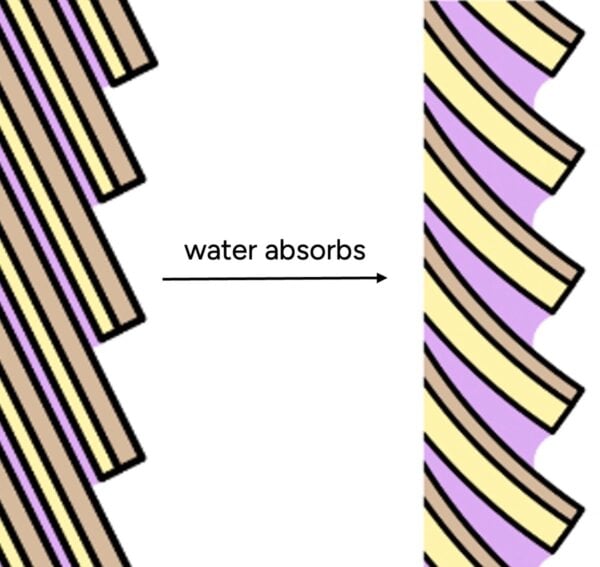
Despite the F-layer and the overlapping nature of the cuticle scales, there are microscopic gaps and edges where water molecules can penetrate. The "pinecone" analogy effectively captures this: while the scales offer protection, they don’t form a continuous, impenetrable seal. Water molecules, being incredibly tiny, can easily navigate these minute openings to enter the hair shaft.
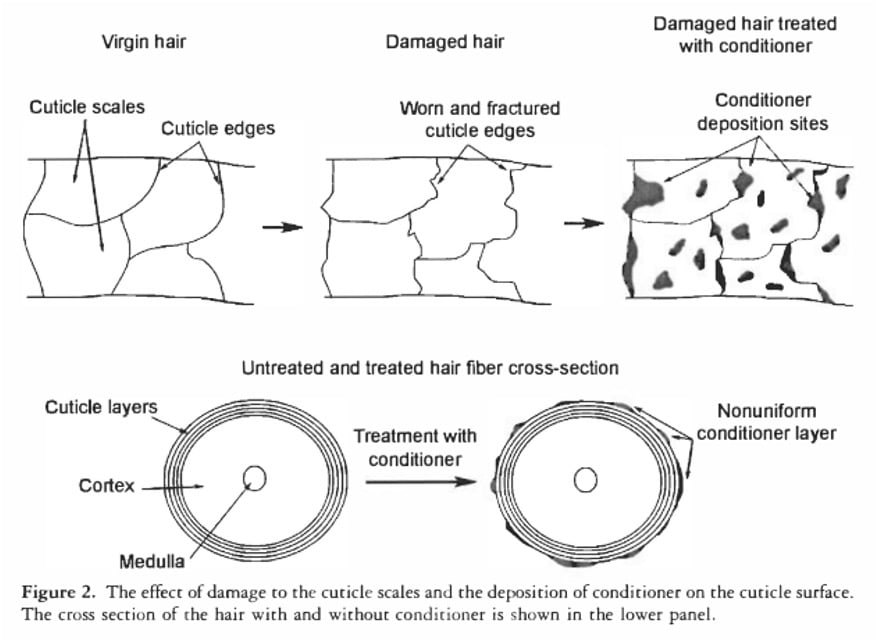
Similarly, the function of conditioners is often misrepresented. While conditioners are vital for improving hair’s manageability, softness, and shine, they do not create a continuous, waterproof film. Research, such as that by La Torre C and Bhushan B in the Journal of Cosmetic Science, utilizing atomic force microscopy, shows that conditioning agents, typically cationic surfactants and silicones, deposit on the hair surface in "blobs" or discrete patches rather than a uniform, unbroken layer. These microscopic deposits are sufficient to smooth the cuticle, reduce friction, and improve tactile feel, but they are ineffective at blocking individual water molecules. The sheer size disparity between a conditioner molecule and a water molecule means that water can readily bypass these deposits to interact with the hair.
Debunking the At-Home Porosity Tests: The Role of Surface Tension
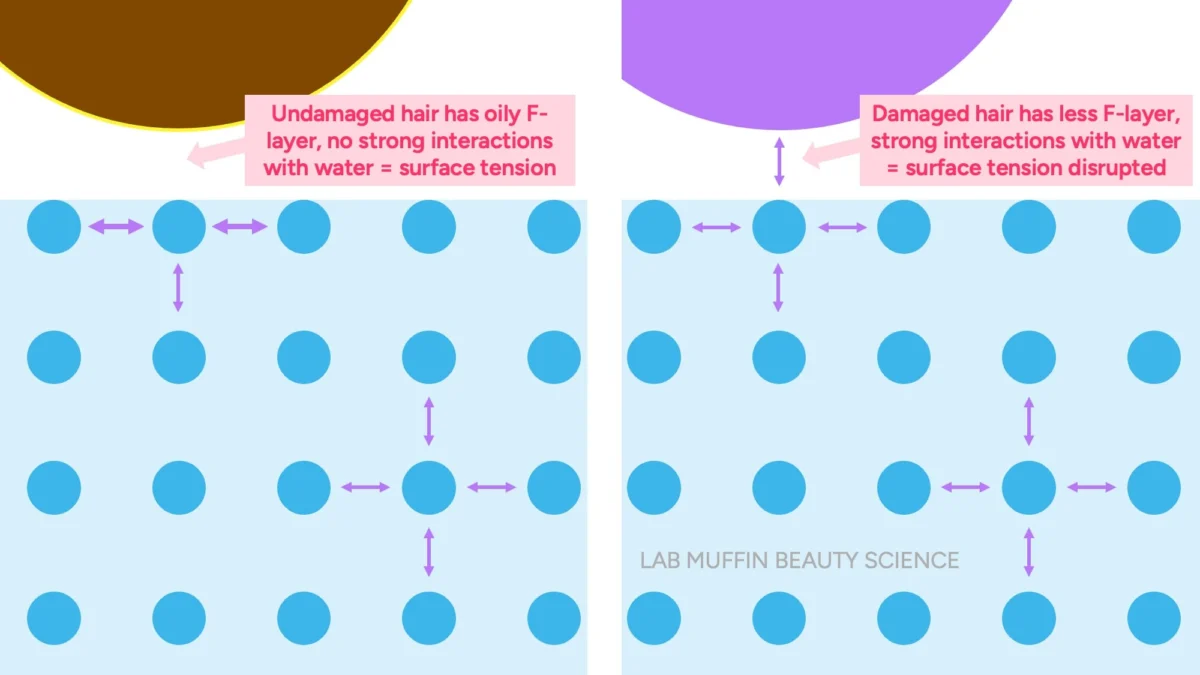
The widespread "porosity tests" are not indicators of hair’s internal water absorption capacity but rather phenomena governed by surface tension and the surface characteristics of the hair.
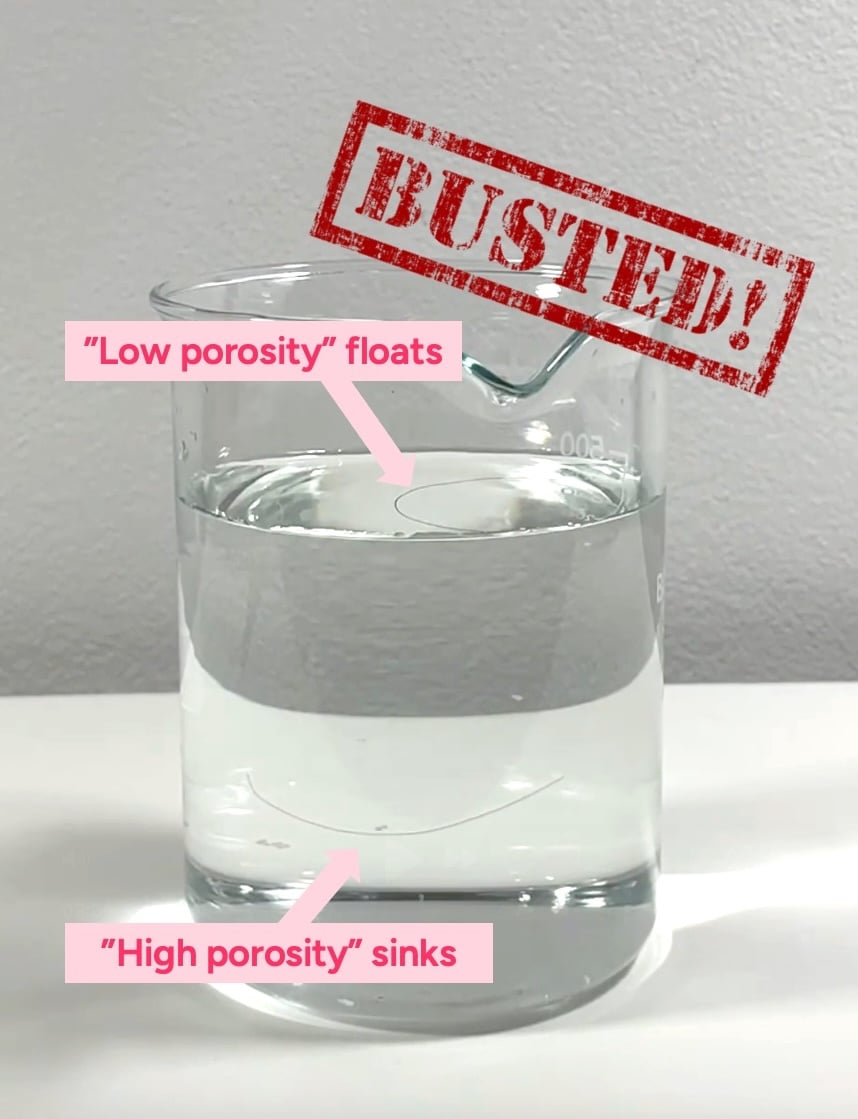
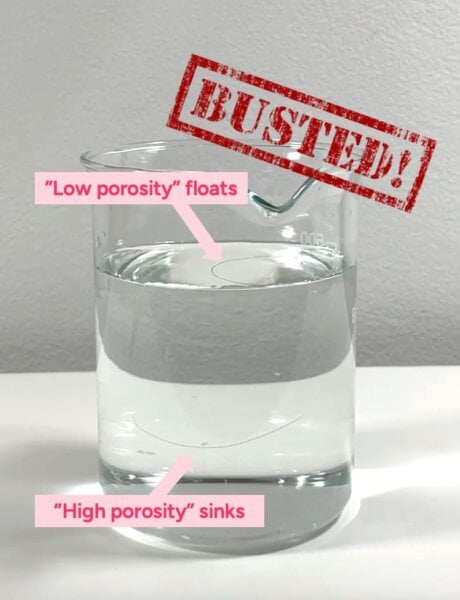
The Float Test Under Scrutiny: This test involves placing a strand of hair in a glass of water, with the hypothesis that "high porosity" (damaged) hair will sink due to rapid water absorption, while "low porosity" (undamaged) hair will float. The truth, however, lies in surface tension. Hair, like a paperclip or an insect, is denser than water and should sink. Its ability to float is a testament to water’s surface tension, which creates a strong, invisible "skin" on the liquid’s surface. This "skin" can support objects denser than water as long as their surface doesn’t disrupt the water’s cohesive forces. Undamaged hair, with its intact F-layer, is naturally hydrophobic (water-repelling). This hydrophobic surface interacts minimally with the water, allowing the hair to rest on the surface tension "skin." However, damaged hair often has a compromised or removed F-layer, exposing a more hydrophilic (water-attracting) keratin surface. When this hydrophilic surface contacts water, it forms hydrogen bonds with the water molecules, effectively disrupting the surface tension and allowing the hair to sink. The sinking is therefore not due to rapid internal water absorption but a change in the hair’s surface interaction with the water.
The Drop Test Re-evaluated: This test involves placing a droplet of water on a section of hair. It’s claimed that water will bead up on "low porosity" hair but flatten out and spread on "high porosity" hair, supposedly due to absorption into the "holes" of damaged hair. Again, this observation is primarily about surface tension and wettability. On undamaged hair, the hydrophobic F-layer repels the water, causing the droplet to maintain its spherical shape due to its own strong internal cohesive forces (surface tension). On damaged, hydrophilic hair, the water is attracted to the hair surface. This attraction overcomes the water’s internal surface tension, causing the droplet to spread out and "wet" the hair more effectively. This spreading is a surface phenomenon—the water is spreading along the hair and between strands, not necessarily soaking into it at a significantly different rate than undamaged hair would absorb water vapor.
The Science of Surface Tension: A Deeper Dive
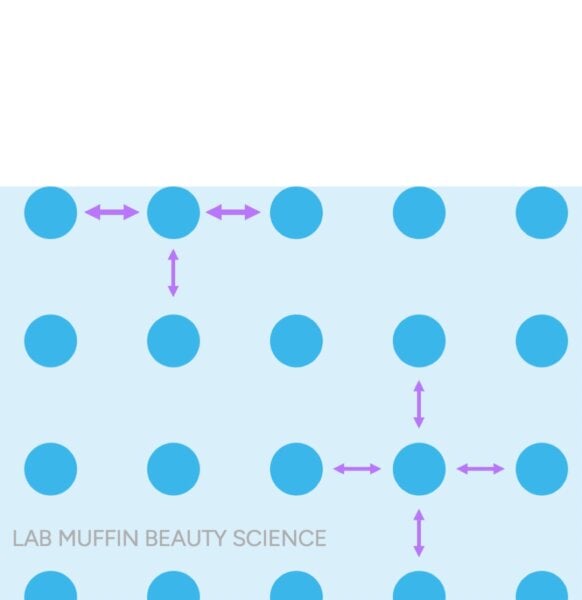
Surface tension is a crucial physical property of liquids, arising from the cohesive forces between molecules. In water, these forces are primarily hydrogen bonds. Water molecules within the bulk of the liquid are surrounded by other water molecules, forming a balanced network of hydrogen bonds in all directions. However, molecules at the surface of the liquid lack neighbors above them. Consequently, they form stronger bonds with their lateral and downward neighbors, resulting in a net inward force. This inward pull minimizes the surface area of the liquid, creating a tough, elastic-like "skin" on the surface. This "skin" is what allows light objects, or objects with surfaces that don’t easily break these cohesive forces, to seemingly defy gravity and float. When a substance like a detergent or a hydrophilic hair surface is introduced, it acts as a surfactant, reducing the water’s surface tension by disrupting the hydrogen bond network, thus allowing objects to sink or water to spread.
The Real Mechanism of Hair Hydration: Water Vapor Absorption
While liquid water interacts with hair primarily through surface phenomena, the primary mechanism by which hair gains internal moisture is through the absorption of water vapor from the atmosphere. Unlike liquid water, which is bound by strong surface tension, water vapor consists of individual, unbonded water molecules. These gaseous molecules are minuscule and can easily diffuse through the microscopic gaps in the cuticle layers, permeating the hair shaft and binding with the keratin protein within the cortex. This explains why hair’s weight changes with humidity—it’s absorbing gaseous water, not necessarily liquid water from immersion.
Why "Porosity" Advice Often Yields Positive Results (Despite Flawed Premise)
Despite the scientific inaccuracies of the porosity tests, many people report that following "porosity-based" advice has improved their hair. This apparent success is largely a coincidence, stemming from the fact that these tests do indirectly indicate the level of surface damage.
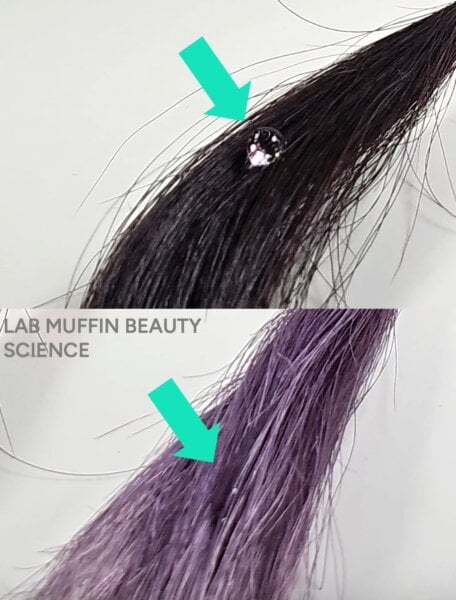
- "High Porosity" (Damaged Hair): Hair that sinks in the float test or causes water to spread in the drop test is often hair with significant surface damage. This damage can be caused by chemical treatments (coloring, perming, relaxing), heat styling, or mechanical friction. Such damaged hair typically has a compromised F-layer and a more hydrophilic surface. This type of hair does benefit from richer, heavier conditioners, leave-ins, and oils because these products help to smooth the roughened cuticle, reduce friction, and provide a protective layer, mimicking the function of the lost F-layer. The advice for "high porosity" hair often includes using protein treatments and heavier moisturizers, which are indeed beneficial for damaged hair.
- "Low Porosity" (Less Damaged Hair): Conversely, hair that floats or beads water is generally healthier, with a more intact F-layer and a more hydrophobic surface. This hair type tends to be more resilient and may be easily weighed down by heavy products. The advice for "low porosity" hair often suggests lighter products, heat to aid penetration (which can open the cuticle slightly, but more importantly, reduce product viscosity), and clarifying shampoos to prevent build-up. These recommendations are appropriate for healthy hair that doesn’t need intensive repair and can be easily overloaded.
Therefore, the tests correlate with the condition of the hair’s surface (damaged vs. relatively healthy), which in turn dictates what types of products will be most effective. The problem arises when this correlation is mistaken for a direct measurement of "porosity" and used to infer internal structural properties that are not actually being assessed.
Implications for Haircare Consumers and Professionals
The scientific clarification regarding hair porosity tests has significant implications for both consumers and professional hairdressers:
- For Consumers: Relying on these tests for product selection can lead to confusion and suboptimal results. Instead of focusing on a vague "porosity type," consumers should assess their hair’s actual needs: Is it dry? Damaged? Prone to frizz? Does it feel rough or smooth? Understanding that the tests reflect surface damage rather than inherent porosity can help in making more informed choices based on the hair’s visible and tactile condition. Products should be chosen based on ingredients and their known effects on hair surface and texture, rather than a "porosity" label.
- For Hair Professionals: This debunking is particularly critical for hairdressers who rely on these tests to gauge hair’s readiness for chemical treatments. Chemical processes like coloring, perming, or relaxing depend on the ability of chemicals to penetrate the cuticle and act on the cortex. While surface damage might make chemical penetration appear easier, these tests do not accurately measure the internal structural integrity or the precise rate of chemical uptake. Misjudging this can lead to uneven results, over-processing, or under-processing, causing further damage or ineffective treatments. The most reliable method for professionals remains a direct strand test using the actual chemical product, observing how the hair responds in real-time. This provides a far more accurate assessment of the hair’s internal state and its reaction to specific chemical agents.
A Call for Scientific Literacy in Beauty
The ongoing challenge to the "hair porosity" myth underscores the broader need for scientific literacy in the beauty industry. As Dr. Wong’s work highlights, many widely accepted beauty "facts" or DIY diagnostic methods lack rigorous scientific backing. The ease of sharing information (and misinformation) through digital platforms necessitates a more critical approach from both creators of beauty content and consumers. Moving forward, the industry must prioritize education grounded in scientific research, ensuring that advice given is accurate, transparent, and genuinely beneficial. This shift will empower consumers to make truly informed decisions about their hair health, moving beyond simplistic categorizations to a deeper understanding of hair biology and chemistry.
References
Robbins CR. Chemical and Physical Behavior of Human Hair. 5th ed. Springer Berlin Heidelberg 2012.
La Torre C, Bhushan B. Nanotribological effects of silicone type, silicone deposition level, and surfactant type on human hair using atomic force microscopy. J Cosmet Sci. 2006;57(1):37-56.
