
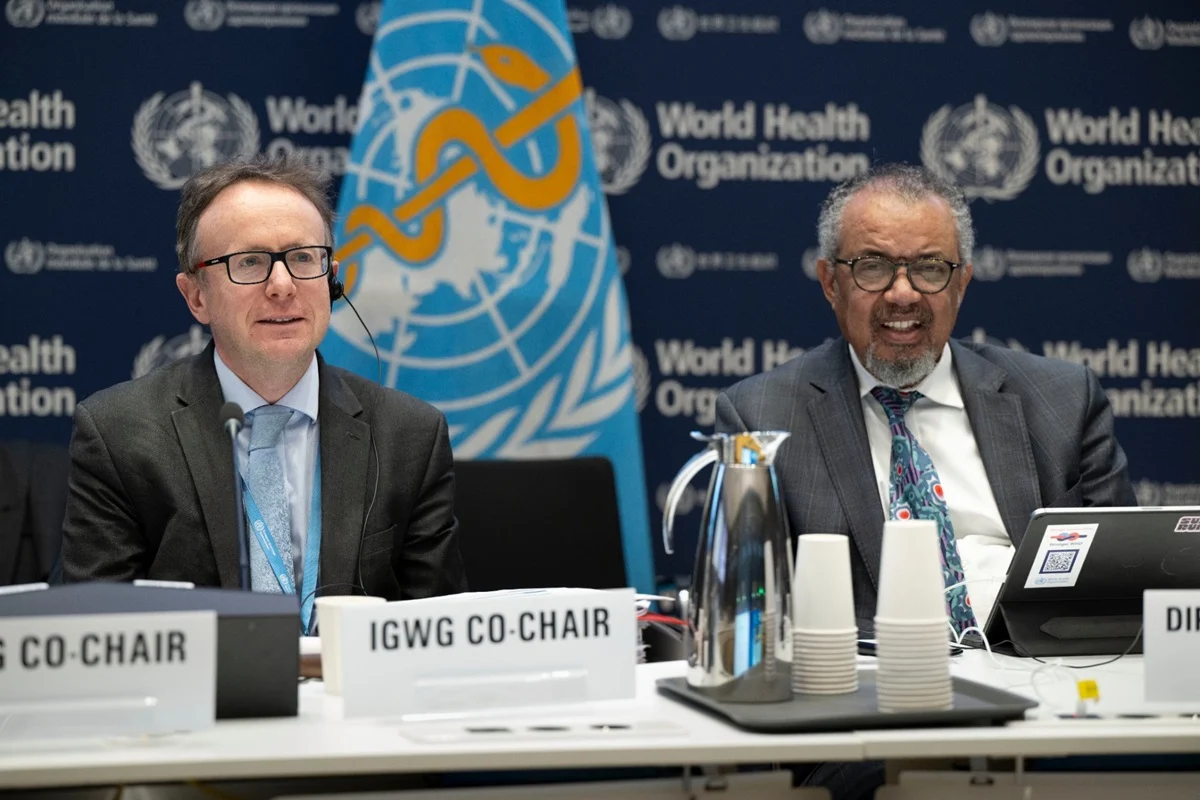
Member States of the World Health Organization (WHO) have reached a consensus to extend intensive negotiations regarding the Pathogen Access and Benefit Sharing (PABS) annex, a foundational element of the proposed WHO Pandemic Agreement. This decision, announced following a week of high-stakes discussions in Geneva, sets a new timeline for negotiations to resume from April 27 to May 1. The extension aims to bridge significant diplomatic and technical gaps before the final draft is presented for consideration at the 77th World Health Assembly (WHA) in late May 2024. The move underscores the complexity of creating a legally binding framework that balances the rapid sharing of biological materials with the equitable distribution of medical countermeasures, such as vaccines and therapeutics.
The PABS system is widely regarded as the "engine room" of the Pandemic Agreement. Its primary objective is to ensure that when a new pathogen with pandemic potential is identified, its genetic sequence data and physical samples are shared globally without delay. In exchange, the system seeks to guarantee that the benefits arising from such sharing—namely the resulting life-saving technologies—are distributed fairly, particularly to low- and middle-income countries that have historically been sidelined during global health emergencies.
A Legacy of Inequity: The Impetus for the Pandemic Agreement
The drive to establish a formal Pandemic Agreement stems directly from the systemic failures witnessed during the COVID-19 pandemic. Between 2020 and 2022, the world saw a stark "vaccine apartheid," where high-income nations secured the vast majority of initial vaccine supplies through advance purchase agreements, leaving developing nations with limited access. According to data from the United Nations Development Programme (UNDP), while some wealthy nations reached vaccination rates of over 70% by mid-2021, many low-income countries remained below 1% during the same period.
This disparity was not limited to vaccines; it extended to diagnostic kits, personal protective equipment (PPE), and antiviral treatments. The economic toll was equally lopsided, with the International Monetary Fund (IMF) estimating that the pandemic cost the global economy over $12.5 trillion through 2024. These experiences catalyzed a movement within the WHO to create a "new international instrument" under Article 19 of the WHO Constitution, which allows the Assembly to adopt conventions or agreements on any matter within the organization’s competence.
In December 2021, a Special Session of the World Health Assembly established the Intergovernmental Negotiating Body (INB) to draft and negotiate this landmark accord. Parallel to this, the Intergovernmental Working Group (IGWG) has been tasked with refining specific technical components, including the PABS annex, to ensure the agreement is both ambitious and operationally feasible.
The Core Conflict: Access vs. Benefit Sharing
The current negotiations revolve around a delicate "quid pro quo" arrangement. On one side, scientists and public health officials in the Global North emphasize the need for "Access"—the immediate sharing of pathogen samples and Digital Sequence Information (DSI). Rapid access is critical for the development of diagnostic tests and the commencement of vaccine research. Any delay in sharing these data points can result in thousands of preventable deaths.
On the other side, many nations in the Global South, led by blocs such as the Group of Equity, argue that "Access" cannot be decoupled from "Benefit Sharing." They contend that providing the raw data (the pathogens) without a legal guarantee of receiving the finished products (vaccines and medicines) is a continuation of colonial-era extractive practices. These nations are pushing for a mandatory contribution system where manufacturers who use the PABS system must reserve a specific percentage of their production—current proposals suggest 20%, with 10% as a donation and 10% at affordable prices—for distribution by the WHO during a declared pandemic.
Chronology of Recent Developments
The path to the upcoming April session has been marked by several key milestones:
- December 2021: The WHA Special Session mandates the creation of a pandemic treaty.
- 2022–2023: Multiple rounds of INB meetings take place, moving from a "conceptual zero draft" to a "negotiating text."
- Early 2024: Negotiations intensify as the May deadline approaches. Divergences remain on intellectual property, financing, and the specifics of the PABS system.
- March 2024: Member States engage in a week of marathon sessions under the IGWG. While progress is made on governance structures, the session concludes with the realization that more time is required to finalize the PABS annex.
- Late April 2024: Scheduled resumption of formal PABS negotiations, preceded by informal intersessional consultations intended to smooth over diplomatic friction.
Official Responses and Leadership Perspectives
The urgency of the situation has been echoed by top health officials. Dr. Tedros Adhanom Ghebreyesus, WHO Director-General, has been a vocal advocate for the agreement, framing it as a generational opportunity to protect future populations. "The Pathogen Access and Benefit Sharing system lies at the heart of the WHO Pandemic Agreement," Dr. Tedros stated following the decision to extend talks. He urged delegations to move beyond national interests, stating, "I urge all delegations to believe in the power of trust—trust in one another, in our institutions, and in our shared ability to transcend differences for the common public good, for solidarity and for equity."
The leadership of the IGWG Bureau also expressed cautious optimism. Ambassador Tovar da Silva Nunes of Brazil, serving as Co-Chair, highlighted the intensive nature of the work. "Member State negotiators are working intensively towards having an ambitious and equitable Pathogen Access and Benefits Sharing annex ready for adoption," he noted, emphasizing that the goal is not just any agreement, but one that is "equitable."
Similarly, Co-Chair Mr. Matthew Harpur of the United Kingdom acknowledged the commitment of the participating nations. "With less than two months until the World Health Assembly in May, I welcome the commitment shown this week by Member States towards finding consensus on outstanding areas," Harpur said. His comments reflect a growing recognition that the failure to reach an agreement would be a significant blow to the credibility of multilateral health governance.
Technical Stumbling Blocks: Contracts and Governance
One of the most complex issues being debated is the nature of the "contractual arrangements" that will underpin the PABS system. Negotiators are grappling with how to make these contracts legally enforceable across different jurisdictions. If a private pharmaceutical company uses a shared pathogen sequence to develop a multi-billion-dollar vaccine, what mechanism ensures they fulfill their benefit-sharing obligations?
Proposals include the use of Standard Material Transfer Agreements (SMTAs), which would be digitally tracked. However, industry representatives have expressed concerns that overly prescriptive requirements could slow down innovation or create bureaucratic hurdles during a crisis. The International Federation of Pharmaceutical Manufacturers & Associations (IFPMA) has argued that the private sector needs incentives to invest in risky research and development, and that the "sharing" aspect should not undermine intellectual property rights.
Conversely, civil society organizations and public health advocates argue that voluntary contributions have proven insufficient. They point to the COVAX initiative, which, despite its noble intentions, struggled to compete with wealthy nations for supply in 2021. For these advocates, the PABS annex must contain "hard" triggers and binding percentages to ensure that the WHO has the necessary tools to intervene in the market.
Broader Implications for Global Health Security
The outcome of the late-April negotiations will have profound implications for the future of global health security. If successful, the PABS system will represent the first time that the sharing of pathogens is legally linked to the sharing of benefits on a global scale. This would move the world away from an ad-hoc, charity-based model of pandemic response toward a predictable, rules-based system.
Furthermore, the PABS annex is a test case for "One Health"—an integrated approach that recognizes the link between the health of people, animals, and the environment. Since most emerging infectious diseases are zoonotic (jumping from animals to humans), the ability to monitor and share data on pathogens in animal populations is a critical early-warning system.
However, the stakes extend beyond public health. The negotiations are a litmus test for the future of multilateralism. In an era of increasing geopolitical fragmentation, the ability of 194 Member States to agree on a complex, binding treaty would be a significant victory for the United Nations system. Conversely, a failure to reach consensus could lead to a fragmented landscape where countries rely on bilateral deals, further deepening the divide between the "haves" and "have-nots" of global health.
The Road to May
As Member States prepare for the intersessional discussions, the focus remains on the "common public good." The negotiators are tasked with resolving technical definitions—such as what constitutes a "pathogen with pandemic potential"—while simultaneously navigating the high-level political demands of their respective governments.
The world is watching closely. The COVID-19 pandemic resulted in an estimated 7 million confirmed deaths, though excess mortality figures suggest the true toll may be closer to 20 million. The economic, social, and psychological scars remain fresh. The extension of the PABS negotiations is not merely a procedural delay; it is a final, concerted effort to ensure that when the next "Disease X" emerges, the global community is not caught in the same cycle of panic and neglect that defined the early 2020s.
The upcoming session from April 27 to May 1 will be the final opportunity for the IGWG to refine the text before the World Health Assembly convenes. The success of these talks will determine whether the Pandemic Agreement becomes a historic pillar of international law or a missed opportunity to rectify the inequities of the past. As Ambassador Nunes suggested, the goal remains an "ambitious" framework—one that recognizes that in a globalized world, no one is safe until everyone is safe.
