
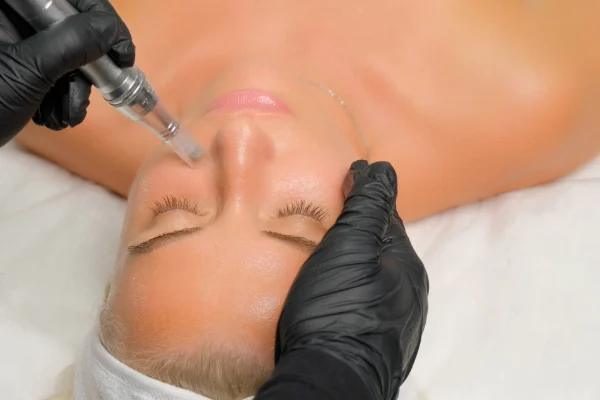
The landscape of modern aesthetic dermatology continues to evolve at a rapid pace, driven by patient demand for minimally invasive treatments that yield natural, long-lasting rejuvenation. Among the most prominent developments in clinical practice is the strategic pairing of traditional mechanical treatments with advanced pharmacological formulations. Recently, independent nurse prescriber Nina Prisk showcased clinical demonstrations highlighting the accelerated skin recovery and enhanced patient outcomes achieved when microneedling is combined with adjunctive topical regenerative therapies. This dual-modal approach leverages the controlled micro-injuries of needling to maximize the dermal absorption and efficacy of biologically active serums, marking a significant step forward in skin revitalization protocols.
Microneedling, formally known as collagen induction therapy, has established itself over the past two decades as a cornerstone of aesthetic medicine. The technique relies on the creation of thousands of microscopic vertical channels in the epidermis and dermis using fine, sterile needles. These controlled punctures trigger the body’s natural wound-healing cascade. This physiological response initiates an intricate sequence of events involving the release of growth factors, the stimulation of fibroblast proliferation, and the subsequent synthesis of new collagen and elastin fibers. Furthermore, this process promotes the remodeling of the extracellular matrix (ECM), which is essential for improving skin texture, minimizing the appearance of fine lines, reducing acne scarring, and restoring a more youthful dermal density.
However, while standalone microneedling remains a highly effective standalone procedure, practitioners and researchers have increasingly focused on optimizing the delivery systems used alongside it. The micro-channels created during the procedure temporarily disrupt the stratum corneum—the skin’s primary barrier—allowing topical agents to penetrate far deeper into the dermal layers than would otherwise be possible through standard topical application. By introducing regenerative compounds immediately post-procedure, clinicians can harness the skin’s heightened state of permeability to drive active ingredients directly to the cellular level where they are most needed.
Evolution of Aesthetic Protocols and Chronology of Combined Therapies
The integration of topical regenerative agents with mechanical skin rejuvenation has a rich historical trajectory within dermatological science. In the early stages of microneedling’s widespread clinical adoption during the 2000s, practitioners primarily used simple lubricants, saline, or basic hyaluronic acid formulations simply to reduce friction and facilitate the smooth gliding of the needle device across the treatment area. While these basic lubricants served a functional mechanical purpose, they offered limited direct biological enhancement to the wound-healing process.
As biotechnology advanced throughout the 2010s, the aesthetic market saw the introduction of specialized serums containing vitamins, antioxidants, and peptides designed specifically for post-procedure application. The milestone shift, however, occurred with the advent of regenerative medicine principles, which shifted the focus from merely hydrating the skin to actively signaling cellular repair. Over the last five years, the clinical consensus has steadily shifted toward utilizing advanced biological derivatives—such as growth factor concentrates, polynucleotides, exosomes, and bio-peptides—as standard adjunctive therapies during and immediately following microneedling sessions.
Nina Prisk’s recent clinical demonstrations form part of an ongoing professional dialogue among aesthetic practitioners seeking to standardize and refine these combination protocols. By documenting patient journeys from the immediate post-procedure erythema phase through the complete epithelialization and remodeling stages, these demonstrations provide valuable qualitative insights into how targeted topical therapy can mitigate downtime and amplify clinical efficacy.
Mechanisms of Action: Synergy Between Mechanical Injury and Biological Agents
To fully understand the clinical implications of combining microneedling with topical regenerative therapy, one must examine the distinct biological mechanisms at play and how they complement one another.
When a medical-grade microneedling device passes over the skin, the micro-injuries serve a dual purpose. Mechanically, they break down rigid, disorganized collagen bundles found in scars or photo-aged tissue, signaling the degradation of old matrix components. Biochemically, the trauma releases endogenous platelet-derived growth factors, transforming growth factor-beta (TGF-beta), and epidermal growth factor into the local tissue environment.
When a specialized regenerative topical solution is applied to these open micro-channels, a synergistic environment is created. The exogenous active ingredients do not merely sit on the surface of the skin; instead, they are ferried directly into the dermal conduits. For instance, if the topical agent contains bio-peptides or growth factors, these molecules act as chemical messengers that bind to receptor sites on resident fibroblasts, upregulating protein synthesis and accelerating tissue regeneration.
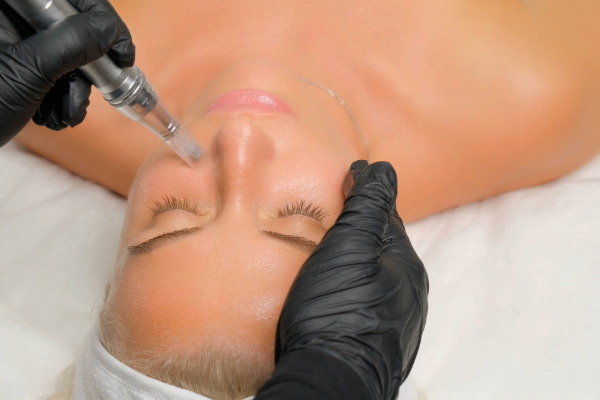
Moreover, because microneedling temporarily compromises barrier function, selecting the correct topical formulation is of paramount importance. Clinicians must use sterile, biocompatible, and non-immunogenic products specifically formulated for post-procedure application to avoid adverse inflammatory reactions or localized infections. The reduction in recovery time observed in advanced clinical demonstrations is largely attributed to this targeted delivery, which equips the newly stimulated cells with the precise nutritional and signaling building blocks required to repair the dermal matrix swiftly and efficiently.
Clinical Data, Patient Outcomes, and Recovery Dynamics
Evaluating the success of aesthetic interventions relies heavily on measurable clinical endpoints, patient satisfaction, and recovery timelines. Traditional microneedling alone typically requires a recovery period characterized by transient erythema, mild edema, and skin tightness lasting anywhere from 24 to 72 hours, depending on needle depth and treatment intensity.
Recent clinical observations and emerging dermatological data suggest that incorporating specific regenerative serums into the treatment protocol can significantly shorten this downtime. Patients undergoing the combined therapy often exhibit a faster reduction in post-procedural redness and a more rapid restoration of barrier integrity. This accelerated healing is driven by the anti-inflammatory and cellular-repair properties of the adjunctive ingredients, which help modulate the acute inflammatory phase of the wound-healing cascade, steering it efficiently into the proliferative and remodeling phases.
Furthermore, long-term assessments of skin quality—measured via cutometer readings for elasticity, ultrasound imaging for dermal thickness, and standardized 3D photography for texture and pigmentation—demonstrate superior outcomes when combination therapies are employed. Patients consistently report higher levels of satisfaction regarding overall skin radiance, firmness, and hydration compared to those treated with microneedling alone. These findings underscore the clinical value of moving beyond simple mechanical injury toward a comprehensive, multi-targeted regenerative approach.
Industry Perspectives and Professional Standards
The growing popularity of combining microneedling with advanced topical therapies has also prompted important discussions regarding professional standards, practitioner qualifications, and product safety within the aesthetics sector. Because the procedure involves breaking the skin barrier and introducing active biological compounds into the dermis, regulatory bodies and professional associations continually emphasize the necessity of clinical competence, strict infection control, and adherence to evidence-based protocols.
Independent nurse prescribers and other clinical practitioners play a vital role in upholding these standards. By combining clinical expertise in pharmacology with hands-on aesthetic training, professionals like Nina Prisk are well-positioned to assess individual patient skin types, select appropriate medical-grade regenerative agents, and manage any potential post-procedure complications. Industry leaders stress that as the technology and product formulations become more sophisticated, practitioner education must evolve in parallel to ensure patient safety remains paramount.
The shift toward personalized aesthetic medicine also means that treatment protocols are rarely one-size-fits-all. Clinicians must carefully evaluate patient history, skin thickness, Fitzpatrick skin phototype, and specific dermatological concerns—such as melasma, atrophic acne scarring, or generalized elastosis—before determining the optimal needle depth and corresponding topical serum. This tailored methodology ensures that the synergy between the mechanical stimulus and the regenerative topical agent is optimized for each individual’s unique biological response.
Broader Economic and Market Implications
The demonstrable efficacy of combining microneedling with advanced topical regenerative therapies has had a notable ripple effect on the global aesthetic device and skincare markets. As patients increasingly seek out non-surgical treatments that offer the restorative benefits of more aggressive interventions without the associated extended downtime, the demand for high-performance post-procedure formulations has surged.
Manufacturers of both medical-grade microneedling devices and specialized biological serums are investing heavily in research and development to create proprietary systems designed to work seamlessly together. This trend has fostered closer collaborations between device engineers and dermatological biochemists, resulting in products that meet rigorous clinical standards for sterility, shelf-life stability, and transdermal delivery efficiency.
For aesthetic clinics and practices, offering advanced combination treatments represents a valuable opportunity to elevate their service offerings, enhance clinical outcomes, and build long-term patient loyalty. As educational demonstrations and peer-reviewed studies continue to validate the benefits of pairing mechanical dermal stimulation with targeted topical agents, this comprehensive approach is poised to transition from an advanced specialty treatment to a widely accepted industry standard in modern skin rejuvenation.
