
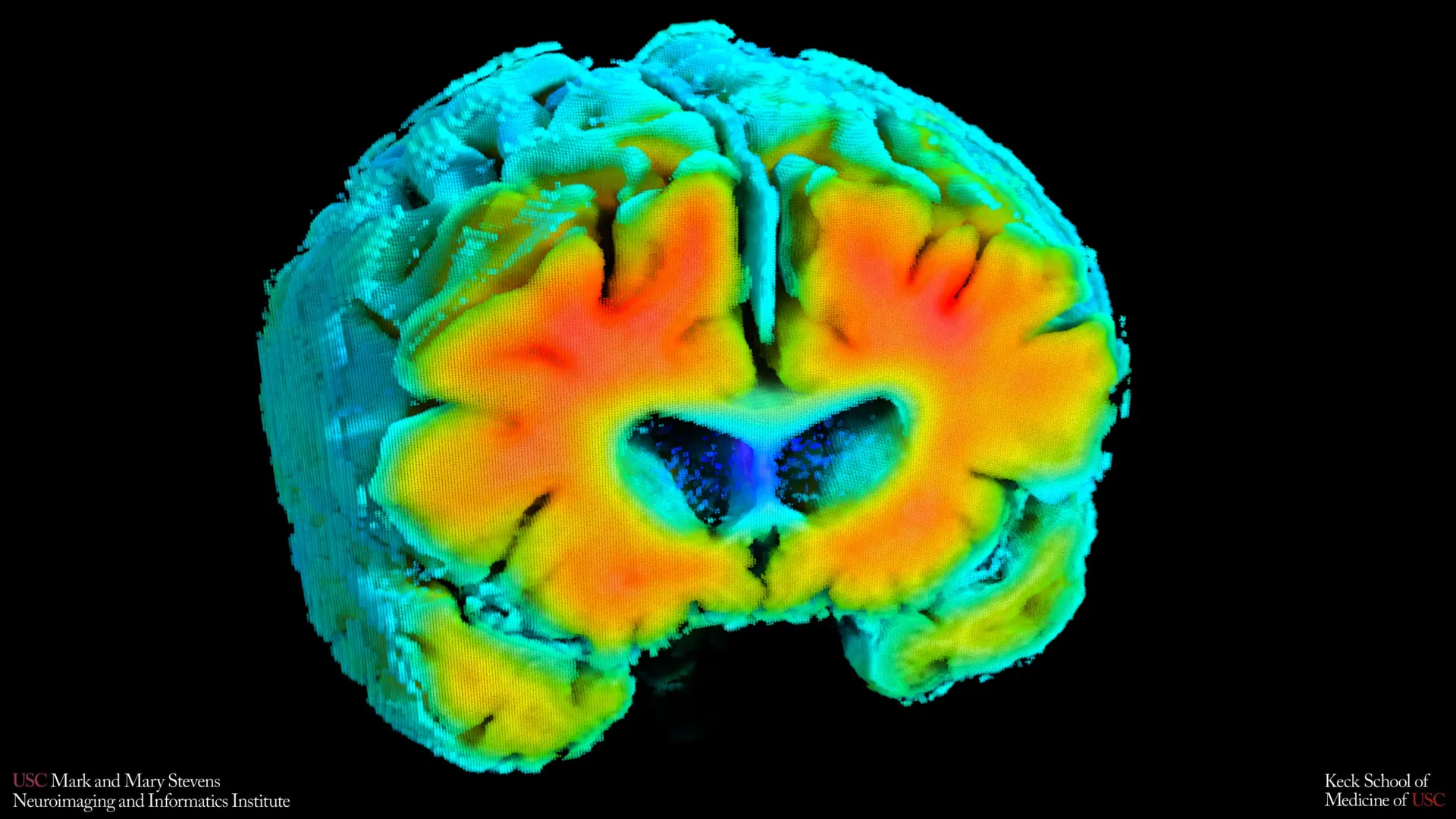
Small shifts in how blood moves through the brain and how brain cells receive oxygen may be closely connected to the risk of Alzheimer’s disease. This is the central conclusion of groundbreaking new research conducted by the Mark and Mary Stevens Neuroimaging and Informatics Institute (Stevens INI) at the Keck School of Medicine of USC. The study, published in the prestigious journal Alzheimer’s and Dementia: The Journal of the Alzheimer’s Association, introduces a novel perspective on the early mechanisms underlying this devastating neurodegenerative condition, suggesting that the health of the brain’s vascular system may play a more significant role than previously understood in the disease’s onset.
The research team meticulously examined a cohort of older adults, encompassing individuals both with and without diagnosed cognitive impairment. Through the application of simple, noninvasive measurement techniques, they were able to assess crucial aspects of brain blood flow and oxygenation. The findings revealed a compelling correlation between these vascular indicators and well-established hallmarks of Alzheimer’s disease. Specifically, the study identified a link between compromised cerebrovascular function and the presence of amyloid plaque buildup – a hallmark protein aggregate associated with neuronal damage in Alzheimer’s – as well as the shrinkage of the hippocampus. The hippocampus is a vital brain region critically involved in memory formation and retrieval, making its degeneration a significant indicator of cognitive decline.
These results carry profound implications, suggesting that the integrity of the brain’s blood vessels could influence the Alzheimer’s disease process at its earliest stages. This offers the tantalizing possibility of identifying individuals at risk long before the onset of noticeable symptoms, potentially opening new avenues for intervention and preventative strategies.
"Amyloid and tau are often considered the primary players in Alzheimer’s disease, but blood flow and oxygen delivery are also critical," stated Amaryllis A. Tsiknia, the lead author of the study and a PhD candidate at USC. "Our results show that when the brain’s vascular system functions more like it does in healthy aging, we also see brain features that are linked to better cognitive health." This sentiment underscores a potential paradigm shift in Alzheimer’s research, moving beyond a singular focus on protein pathologies to encompass the intricate interplay between vascular health and neurodegeneration.
Innovative Noninvasive Tools for Measuring Brain Circulation
The core of this research innovation lies in the utilization of advanced yet accessible noninvasive techniques. The study employed two painless methods that can be administered while participants are at rest, minimizing participant burden and enhancing the potential for widespread application.
The first technique is Transcranial Doppler (TCD) ultrasound. This noninvasive modality tracks the velocity of blood flow through the brain’s major arteries. By measuring the speed at which blood is moving, researchers gain insight into the patency and efficiency of these critical vascular pathways. The second technique, Near-Infrared Spectroscopy (NIRS), evaluates how effectively oxygen is being delivered to brain tissue, particularly focusing on the superficial layers of the cerebral cortex. NIRS works by emitting near-infrared light into the tissue and measuring the light that is absorbed and scattered back, allowing for an estimation of oxygenated and deoxygenated hemoglobin levels.
Crucially, the research team did not simply collect raw data from these instruments. They applied sophisticated mathematical modeling to integrate the readings from TCD and NIRS into comprehensive indicators of cerebrovascular function. These composite indicators were designed to reflect the brain’s dynamic capacity to adjust blood flow and oxygen delivery in response to natural physiological fluctuations, such as changes in blood pressure and carbon dioxide levels. This advanced analysis moves beyond static measurements to capture the functional resilience and adaptability of the brain’s circulatory system.
The Unveiling of Vascular Health’s Link to Amyloid and Memory Centers
The analysis of the collected data yielded significant correlations. Participants whose vascular indicators more closely resembled those of cognitively healthy individuals demonstrated a tendency towards lower levels of amyloid plaque accumulation. Furthermore, these individuals also exhibited a larger hippocampal volume. Both a reduction in amyloid burden and the preservation of hippocampal size are well-established biomarkers associated with a decreased risk of developing Alzheimer’s disease.
Dr. Meredith N. Braskie, PhD, the senior author of the study and an assistant professor of neurology at the Keck School of Medicine, commented on the significance of these findings. "These vascular measures are capturing something meaningful about brain health," she stated. "They appear to align with what we see on MRI and PET scans that are commonly used to study Alzheimer’s disease, providing important information about how vascular health and standard brain measures of Alzheimer’s disease risk may be related." This highlights the potential of these new vascular metrics to complement and potentially even precede the detection of structural changes typically observed with more established neuroimaging techniques.
The study’s insights were further reinforced by observations of participants diagnosed with mild cognitive impairment (MCI) or dementia. These individuals consistently displayed weaker vascular function when compared to their cognitively normal counterparts. This finding lends strong support to the burgeoning view that a decline in the health of the brain’s blood vessels is not an isolated phenomenon but rather an integral part of the broader Alzheimer’s disease continuum, potentially contributing to the cascade of neurodegenerative events.
Dr. Arthur W. Toga, PhD, director of the Stevens INI, emphasized the broader implications of this research. "These findings add to growing evidence that Alzheimer’s involves meaningful vascular contributions in addition to classic neurodegenerative changes," he remarked. "Understanding how blood flow and oxygen regulation interact with amyloid and brain structure opens new doors for early detection and potentially prevention." This statement positions the research as a crucial step forward in a more holistic understanding of Alzheimer’s pathology.
The Potential for Earlier and Broader Screening of Alzheimer’s Risk
A particularly exciting aspect of this research is the potential for these noninvasive vascular assessment methods to revolutionize Alzheimer’s screening. When compared to widely used neuroimaging techniques such as Magnetic Resonance Imaging (MRI) and Positron Emission Tomography (PET) scans, the TCD and NIRS methods offer distinct advantages. They are considerably less costly to implement, significantly easier to perform, and do not require the administration of radioactive tracers or contrast agents. This means no exposure to radiation and no need for invasive injections. Furthermore, these assessments are less demanding on participants, requiring them only to rest quietly, making them more accessible for individuals who may have difficulty with complex or prolonged medical procedures.
This inherent simplicity and accessibility could make these techniques invaluable for large-scale screening initiatives aimed at identifying individuals at high risk for Alzheimer’s disease within the general population. Moreover, they offer a viable alternative for individuals who are unable to undergo more intensive or expensive brain imaging due to medical contraindications, logistical challenges, or financial constraints.
However, the researchers are careful to temper enthusiasm with scientific rigor. They acknowledge that the current findings represent a "single snapshot in time" and, as such, do not definitively establish a cause-and-effect relationship between the observed vascular changes and the development of Alzheimer’s disease. To address this limitation and explore the predictive power of these vascular measures, ongoing long-term studies are actively tracking the same participants. The primary goal of these longitudinal studies is to determine whether observed shifts in these vascular indicators can reliably predict future cognitive decline or the efficacy of potential treatments.
"If we can track these signals over time, we may be able to identify people at higher risk earlier and test whether improving vascular health can slow or reduce Alzheimer’s-related brain changes," Tsiknia elaborated, highlighting the future direction of the research. This forward-looking perspective underscores the potential for these vascular markers to serve not only as diagnostic tools but also as indicators of treatment response and disease progression.
Background and Context of Alzheimer’s Disease Research
Alzheimer’s disease is a progressive neurodegenerative disorder that affects millions worldwide, characterized by the gradual loss of cognitive function, memory impairment, and behavioral changes. For decades, research has primarily focused on the accumulation of amyloid-beta plaques and tau tangles within the brain as the principal drivers of neuronal damage. While these protein pathologies remain central to understanding the disease, a growing body of evidence has pointed towards the significant, and often overlooked, role of vascular factors.
Conditions such as hypertension, diabetes, high cholesterol, and stroke are known risk factors for dementia, including Alzheimer’s disease. This epidemiological link has long suggested that the health of the brain’s blood vessels is intrinsically tied to cognitive well-being. However, pinpointing the precise mechanisms by which vascular dysfunction contributes to Alzheimer’s pathology and identifying early, noninvasive markers of this contribution has remained a significant challenge.
The USC study builds upon this existing foundation by offering a novel methodology to quantify cerebrovascular function in a way that directly correlates with established Alzheimer’s biomarkers. By integrating TCD and NIRS data with advanced modeling, the researchers have provided a more nuanced picture of how the brain’s circulatory system operates under various physiological conditions and how deviations from healthy function might predate or exacerbate the neurodegenerative processes associated with Alzheimer’s.
The timeline of Alzheimer’s research has seen a gradual shift from solely focusing on late-stage pathological hallmarks to investigating earlier, potentially modifiable risk factors. This USC study represents a significant step in this evolution, offering a promising avenue for early detection and intervention strategies that target vascular health.
Broader Impact and Implications for Public Health
The implications of this research extend far beyond the scientific community. If validated through ongoing longitudinal studies, these noninvasive vascular assessments could usher in a new era of proactive Alzheimer’s risk assessment. Imagine a future where a routine check-up includes a simple, quick assessment of brain blood flow and oxygenation, providing individuals with crucial information about their potential risk years or even decades before symptoms manifest.
This could empower individuals to make informed lifestyle choices aimed at improving vascular health, such as dietary modifications, regular exercise, and better management of chronic conditions like hypertension and diabetes. Furthermore, it could enable healthcare providers to initiate early interventions and monitor their effectiveness more closely.
The economic impact could also be substantial. Early detection and potential prevention or delay of Alzheimer’s onset could significantly reduce the immense healthcare and societal costs associated with this disease. The estimated global cost of dementia is projected to rise dramatically in the coming years, making any intervention that can mitigate this burden of critical importance.
The study’s authors and their institutions have consistently emphasized the collaborative nature of such research. The funding received from the National Institutes of Health (NIH) underscores the national importance of addressing Alzheimer’s disease and the recognition of the USC team’s innovative approach.
Future Directions and Ongoing Research
The scientific journey is far from over. The current findings serve as a powerful catalyst for future research. The USC team’s commitment to longitudinal studies is crucial for establishing causality and understanding the temporal relationship between vascular changes and Alzheimer’s progression. Future research will likely focus on:
- Predictive Validity: Further validating the ability of these vascular markers to predict future cognitive decline and Alzheimer’s diagnosis.
- Intervention Studies: Designing and conducting clinical trials to investigate whether interventions aimed at improving vascular health can indeed slow or reverse the progression of Alzheimer’s-related brain changes.
- Integration with Other Biomarkers: Combining vascular assessments with other emerging biomarkers, such as blood tests for amyloid and tau, to create a more comprehensive and accurate risk stratification profile.
- Diverse Populations: Expanding research to include more diverse demographic groups to ensure the generalizability of the findings.
The journey to understanding and combating Alzheimer’s disease is a complex and multifaceted endeavor. The work from the Stevens INI at USC offers a beacon of hope, suggesting that by looking at the intricate dance of blood flow and oxygen delivery within the brain, we may be able to unlock critical clues to preventing and treating this formidable disease. The simplicity and accessibility of the assessment tools employed hold the promise of democratizing early Alzheimer’s risk assessment, making proactive health management a reality for a broader segment of the population.
About the Study Authors
The research team behind this significant publication includes Amaryllis A. Tsiknia and Meredith N. Braskie from the Keck School of Medicine of USC. They were joined by other notable researchers: Peter S. Conti, Rebecca J. Lepping, Brendan J. Kelley, Rong Zhang, Sandra A. Billinger, Helena C. Chui, and Vasilis Z. Marmarelis. This collaborative effort highlights the interdisciplinary nature of modern neuroscience research.
This work was made possible through substantial support from federal agencies, including the Office of the Director, National Institutes of Health, under Award Number S10OD032285, and the National Institute on Aging through grant R01AG058162. Such funding is vital for advancing cutting-edge research into age-related diseases like Alzheimer’s.
