
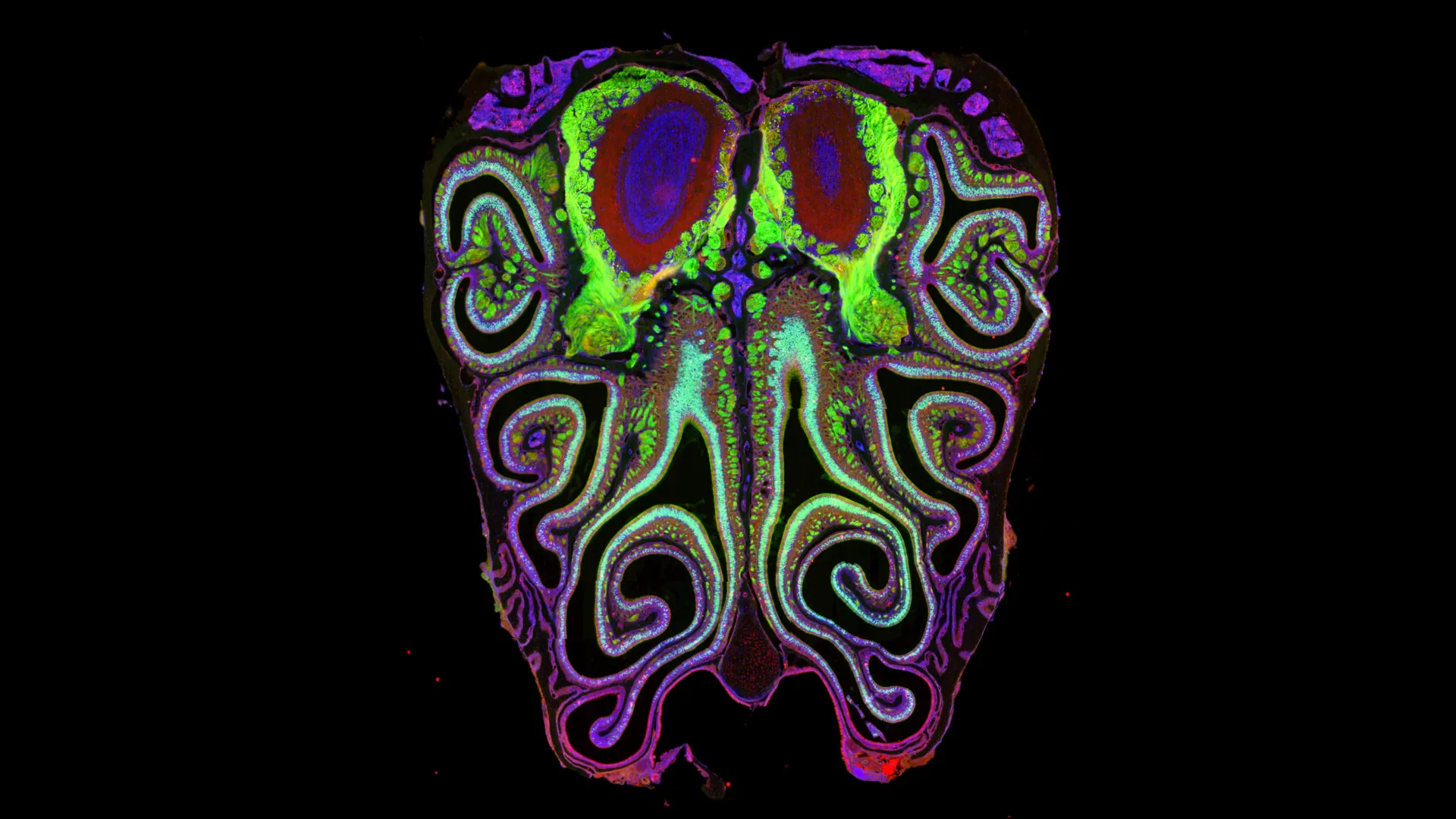
The intricate world of smell, a sense that profoundly shapes our daily experiences, has long remained one of science’s most persistent enigmas. From alerting us to danger and enhancing the pleasure of food to evoking powerful memories and emotions, olfaction plays a fundamental role in our lives. Yet, despite its pervasive influence, the biological underpinnings of how we detect and process odors have eluded complete scientific comprehension. This mystery is now beginning to unravel, thanks to a groundbreaking study that has produced the first detailed map of smell receptors within the mammalian nose, revealing an astonishing level of organization that challenges decades of scientific assumptions.
Unraveling the Olfactory Enigma
"Olfaction is super-mysterious," stated Sandeep (Robert) Datta, a professor of neurobiology at Harvard Medical School’s Blavatnik Institute. Compared to the well-understood biological mechanisms of vision, hearing, and touch, the fundamental workings of smell have remained comparatively obscure. For years, scientists have grappled with the sheer complexity of the olfactory system, a challenge amplified by the vast number of receptor types involved.
A Landmark Study: The First Detailed Map of Smell Receptors
In a significant advancement, published on April 28th in the prestigious journal Cell, Datta and his research team have meticulously charted the arrangement of over a thousand distinct types of smell receptors within the nose of mice. This comprehensive mapping effort has yielded findings that fundamentally alter our understanding of how this vital sense operates.
The study’s most striking revelation is that these olfactory receptors, far from being randomly distributed throughout the nasal cavity, are organized in a highly structured manner. The neurons responsible for expressing these receptors form distinct horizontal bands, or stripes, that run vertically from the top to the bottom of the nose. Crucially, these stripes are organized by receptor type, creating a sophisticated spatial code for odor detection.
"Our results bring order to a system that was previously thought to lack order, which changes conceptually how we think this works," explained Datta, the senior author of the study. This discovery reconfigures the prevailing scientific model, suggesting a far more intricate and deliberate design than previously imagined.
Furthermore, the researchers demonstrated a remarkable correlation between this meticulously organized map within the nose and the corresponding organizational patterns found in the olfactory bulb of the brain. This direct alignment provides crucial new insights into the pathways through which scent information is transmitted from the peripheral sensory organs to the central nervous system, forming the basis of our olfactory perception.
The Long and Winding Road to an Olfactory Map
The quest to map the olfactory system has been a protracted scientific endeavor, marked by significant hurdles. While the spatial organization of receptors in the eyes, ears, and skin has been understood for some time, olfaction has consistently presented an exception. "Olfaction has been the one exception; it’s the sense that has been missing a map for the longest time," Datta observed, highlighting the persistent challenge.
The primary reason for this long-standing gap in knowledge lies in the sheer complexity of the olfactory system. For instance, mice possess approximately 20 million olfactory neurons, with each neuron typically expressing only one of more than a thousand different receptor types. In stark contrast, human color vision, a highly sophisticated sensory modality, relies on just three primary types of photoreceptor cells. This vast diversity of receptors in olfaction means that each receptor is capable of detecting a specific spectrum of odor molecules, rendering the system exceptionally intricate and challenging to decipher.
The scientific journey toward understanding smell receptors began in earnest in 1991 with their initial identification. In the ensuing decades, researchers diligently sought to identify any discernible patterns in their arrangement. Early investigations, limited by the available technology, suggested that receptors were organized into only a few broad zones, fostering the prevailing notion that their placement was largely haphazard and random. This assumption, while understandable given the data at the time, ultimately proved to be an oversimplification.
Technological Advancements Unlock Hidden Patterns
The breakthrough achieved by Datta’s team was made possible by the advent of cutting-edge genetic and imaging technologies. By leveraging these advanced tools, the researchers were able to revisit the fundamental question of olfactory receptor organization with unprecedented precision and scale.
The study involved the comprehensive analysis of approximately 5.5 million neurons across more than 300 individual mice. This massive undertaking combined two powerful techniques: single-cell sequencing, which precisely identifies the specific receptor type expressed by each individual neuron, and spatial transcriptomics, which accurately determines the three-dimensional location of these neurons within the nasal cavity.
"This is now arguably the most sequenced neural tissue ever, but we needed that scale of data in order to understand the system," Datta emphasized, underscoring the necessity of such vast datasets to resolve the intricate architecture of the olfactory system.
The results of this extensive analysis were unequivocal. They revealed a consistent and highly organized pattern: neurons expressing the same type of smell receptor were clustered together, forming tightly packed, overlapping horizontal stripes. This precise arrangement was remarkably consistent across all the mice studied, and importantly, it mirrored the organizational layout observed in the brain’s olfactory bulb, the primary processing center for scent information.
The Developmental Genesis of the Smell Map
Beyond simply mapping the existing structure, the researchers also delved into the developmental processes that give rise to this precise olfactory organization. Their investigations identified retinoic acid, a naturally occurring molecule known to play a crucial role in regulating gene activity and developmental patterning, as a key orchestrator of this intricate arrangement.
The study suggests that a gradient of retinoic acid within the developing nose acts as a guiding cue for olfactory neurons. As neurons migrate and differentiate, their position within this gradient influences which specific smell receptor they will activate. This positional information, dictated by the retinoic acid gradient, is essential for ensuring that neurons are correctly sorted and integrated into the established receptor stripes.
To confirm the role of retinoic acid, the researchers experimentally manipulated its levels. When these levels were altered, the entire map of smell receptors shifted accordingly, either upwards or downwards, demonstrating the molecule’s critical influence on the precise positioning of receptor types.
"We show that development can achieve this feat of organizing a thousand different smell receptors into an incredibly precise map that’s consistent across animals," Datta commented on the elegance of this developmental mechanism. This finding also aligns with complementary research published concurrently in Cell by the laboratory of Catherine Dulac, the Xander University Professor in the Department of Molecular and Cellular Biology at Harvard University, further validating the discovery.
Implications for Treating Olfactory Disorders
The implications of this fundamental scientific discovery extend far beyond the realm of basic research, holding significant promise for the development of treatments for olfactory disorders. Loss of smell, a condition known as anosmia or hyposmia, can have profound and often overlooked consequences, impacting an individual’s safety, nutritional intake, and overall mental well-being. Currently, effective treatments for smell loss are limited, underscoring the urgent need for a deeper understanding of the underlying biological mechanisms.
"We cannot fix smell without understanding how it works on a basic level," Datta stated, highlighting the critical link between basic science and clinical application. This newly elucidated map provides a foundational blueprint for future therapeutic strategies.
The Datta lab is now focused on further unraveling the developmental cues that dictate the specific order of these receptor stripes and, crucially, investigating whether a similar organizational principle exists in humans. This knowledge could pave the way for novel therapeutic interventions, potentially including the development of stem cell-based therapies aimed at regenerating damaged olfactory tissues or advanced brain-computer interfaces designed to restore olfactory function.
"Smell has a really profound and pervasive effect on human health, so restoring it is not just for pleasure and safety but also for psychological well-being," Datta emphasized. He concluded, "Without understanding this map, we’re doomed to fail in developing new treatments." The intricate spatial coding of odorants, now revealed, offers a tangible target for interventions aimed at healing a sense that is integral to our experience of life.
Broader Scientific Context and Future Directions
This research represents a significant leap forward in the field of neuroscience, providing a tangible framework for understanding how the brain deciphers the vast array of airborne molecules that constitute our olfactory world. The discovery of organized receptor stripes suggests a highly efficient and robust system for initial odor processing in the nose, which then faithfully relays this information to the brain. This organized input likely simplifies the task for the olfactory bulb, enabling it to more effectively distinguish and interpret complex scent mixtures.
The consistency of the map across hundreds of mice also points to a conserved developmental program, suggesting that this organizational principle may be fundamental to mammalian olfaction. The parallel findings from the Dulac lab further strengthen this conclusion, indicating a consensus within the scientific community on the significance of these discoveries.
Future research will undoubtedly explore the functional consequences of this organization. How do these stripes contribute to the perception of specific odors? Can disruptions in this mapping lead to olfactory deficits? And critically, how does this organization compare to that found in humans, where the diversity of olfactory receptors and the complexity of scent perception are likely even greater? Addressing these questions will be paramount in translating this fundamental discovery into tangible benefits for individuals affected by smell disorders. The detailed map now provides neuroscientists with an unprecedented tool to probe the mysteries of smell, promising a new era of understanding and therapeutic innovation.
