
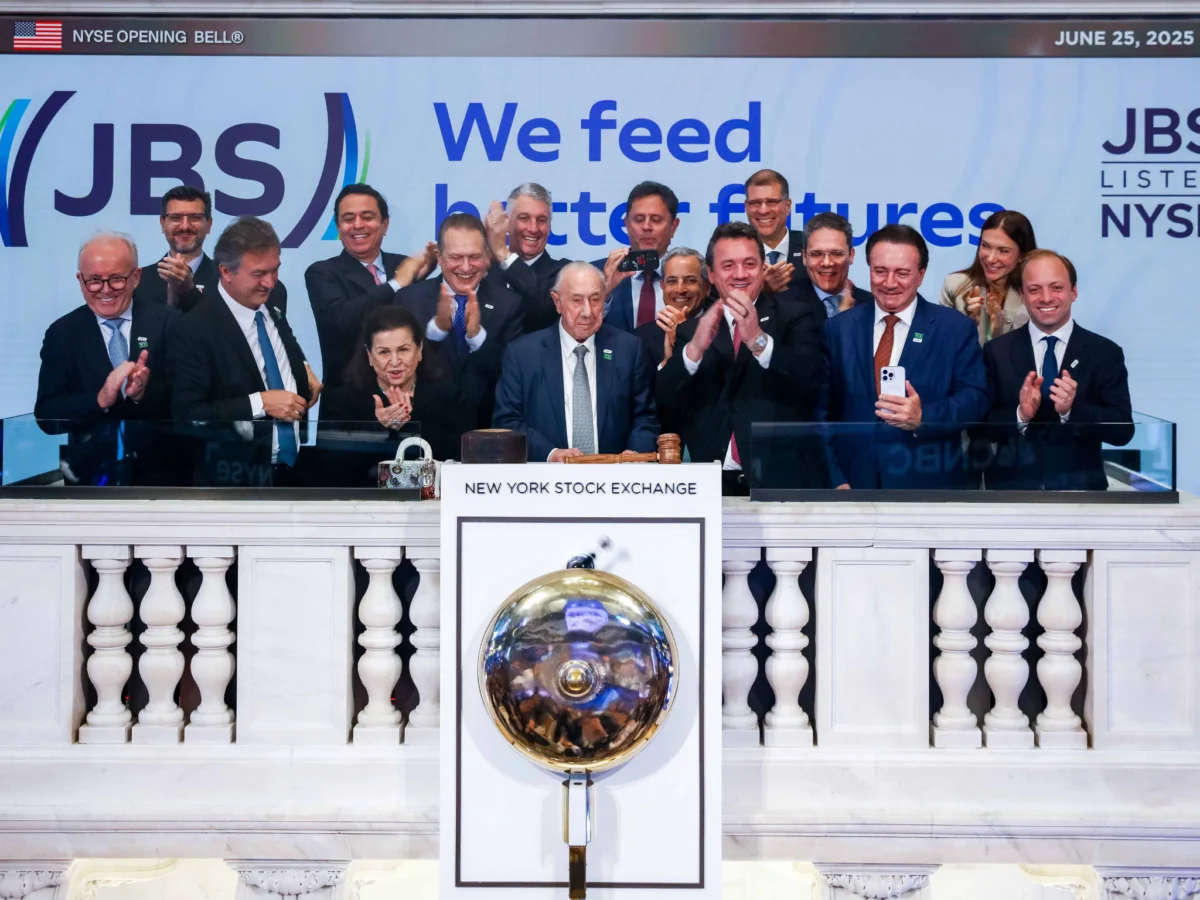
In a move that has drawn sharp criticism from environmental advocates and policymakers, Brazilian meat giant JBS has significantly scaled back its climate commitments, abandoning its previously stated goal of achieving net-zero emissions by 2040 and removing any mention of its earlier target to eliminate deforestation within its domestic supply chain. The company disclosed these revisions in its latest annual sustainability report, a decision that marks a stark departure from the environmental pledges that were instrumental in its journey to becoming a publicly traded entity. JBS, recognized as the world’s largest meat producer, generates a substantial portion of global greenhouse gas emissions, surpassing those of a significant majority of the world’s nations. This strategic shift has ignited concerns about corporate accountability and the future of sustainability efforts within the global livestock industry.
Retreat from Ambitious Climate Targets
The annual sustainability report, released by JBS, reveals the retraction of its ambitious 2040 net-zero emissions target. This objective was a cornerstone of the company’s sustainability narrative and was crucial in garnering support for its public listing aspirations. Furthermore, the report conspicuously omits any reference to previous commitments aimed at eradicating deforestation from its supply chain. This dual retraction is being characterized by critics as a "dangerous, laughable, and frankly unexpected move" from a company whose environmental footprint is under intense global scrutiny.
Jason Weller, JBS’s Chief Sustainability Officer, defended the company’s decision, asserting that JBS is "not walking away from challenges and opportunities in feeding a growing world in the face of a changing climate." He further elaborated that the company is instead "strengthening [its] framework" to ensure its goals "better reflect where we can take direct action, measure progress consistently, and hold ourselves accountable." This statement suggests a strategic pivot towards more tangible and directly controllable emission reduction strategies, away from broader, more complex value chain objectives.
Shift from Scope 3 Reductions to Emissions Intensity
The core of JBS’s revised strategy lies in its pivot away from aggressive Scope 3 emission reduction targets. Scope 3 emissions encompass the indirect emissions generated throughout a company’s entire value chain, including those from agriculture, transportation, and product use. For agrifood companies like JBS, Scope 3 emissions typically represent the overwhelming majority of their total greenhouse gas (GHG) footprint.
According to its own sustainability report, JBS’s overall emissions reached 191 million tonnes of CO2 equivalent (CO2e) in 2025, marking a significant 22% increase from 2023. This substantial output places JBS as a major contributor to global emissions. Independent analyses have highlighted that a significant portion of this footprint stems from methane emissions generated by its vast beef operations. Some reports suggest that JBS produces more methane than major fossil fuel companies like Shell and ExxonMobil combined.
The company’s emissions profile is heavily skewed towards Scope 3, accounting for over 97% of its total GHG emissions. Between 2023 and 2025, these Scope 3 emissions saw a considerable increase of 23%. It is precisely this category of emissions that JBS is now deemphasizing in its target setting. While the company will continue to report its Scope 3 emissions, it has explicitly abandoned its goal for their reduction.
Weller explained the rationale behind this shift: "The further we got into execution, the clearer it became that a Net Zero goal spanning hundreds of thousands of independent agricultural producers across tens of millions of hectares in dozens of countries – each with different practices, different baselines, and no standardized measurement infrastructure – is an immense challenge." He cited the reliance on developing data, producer adoption, technology, and measurement infrastructure across global agriculture as significant hurdles.
Instead of focusing on absolute Scope 3 reductions, JBS will now concentrate on reducing its Scope 1 and Scope 2 emissions intensity. Scope 1 emissions are direct emissions from owned or controlled sources, while Scope 2 emissions are indirect emissions from the generation of purchased energy. Emissions intensity, a metric often favored by the livestock industry, allows for an increase in absolute emissions as long as revenue or production grows proportionally faster. JBS aims to reduce its emissions intensity across its processing facilities by 30% by 2030 and by 70% by 2050.
Critics argue that focusing on emissions intensity can be a misleading accounting practice. While it may show improvements in efficiency, it can mask a company’s overall environmental impact if production volumes continue to rise. This strategy has been a recurring point of contention, with experts warning that it can enable companies to engage in "greenwashing" by presenting superficial progress while their absolute environmental footprint continues to expand. This approach, they contend, can easily be negated by an increase in overall meat and dairy production.
A History of Contested Commitments and Political Influence
JBS’s decision to backtrack on its climate and deforestation goals is not an isolated incident but rather appears to be part of a broader pattern of navigating environmental commitments amidst significant political and legal pressures. In 2019, the company controversially claimed minimal environmental impact from its meat production. This stance was starkly contrasted by its net-zero commitment made just a year later.
These environmental pledges, alongside promises to curb deforestation, were instrumental in JBS’s bid to list on the New York Stock Exchange. The proposed IPO faced substantial opposition from environmental organizations and political figures in both the United States and the United Kingdom, who raised concerns about the company’s sustainability practices.
Further complicating JBS’s environmental narrative, its U.S. arm faced a lawsuit in 2024 from New York Attorney General Letitia James. The lawsuit accused JBS of misleading consumers about its climate goals and engaging in "fraudulent and illegal environmental marketing practices." Specifically, the complaint targeted the 2040 net-zero goal, alleging that the company lacked a "viable plan" to achieve it despite making "sweeping representations" to consumers.
This legal challenge was settled in November of the same year. JBS, which reported record revenues of $86.2 billion in 2025, agreed to invest $1.1 million in climate-smart agriculture initiatives in New York. The settlement also stipulated that the company would frame its net-zero ambition as a "goal" rather than a firm pledge or commitment. This settlement came on the heels of the Securities and Exchange Commission’s approval of JBS’s IPO, which followed revelations that the company, through its subsidiary Pilgrim’s Pride, was a major corporate donor to President Donald Trump’s inauguration committee, contributing $5 million. This sum significantly dwarfed contributions from prominent tech companies.
The influence of JBS’s majority shareholders, the billionaire Batista brothers, Joesley and Wesley, extends beyond corporate donations. They have reportedly played a role in facilitating diplomatic engagements, including brokering a meeting between then-President Trump and Brazilian President Lula da Silva. This deep-seated influence in the highest echelons of U.S. politics, particularly during a period of perceived deregulation concerning environmental policies, raises questions about the company’s strategic decisions regarding its sustainability targets.
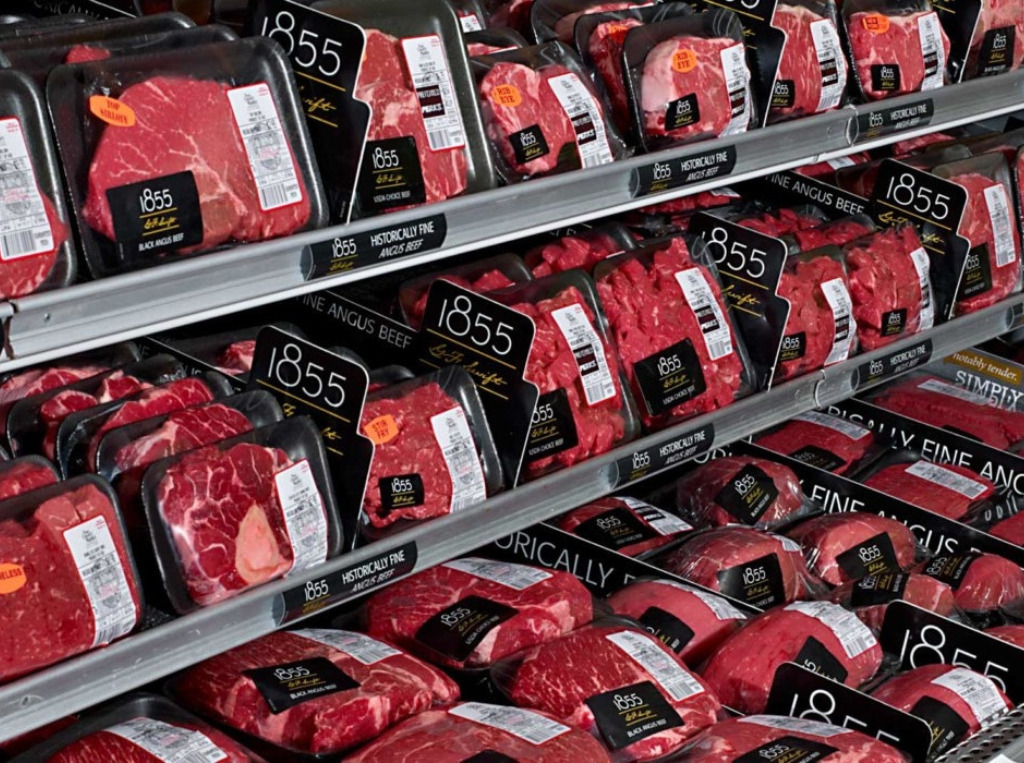
The abandonment of its climate goals is seen by some as consistent with these broader lobbying efforts. This move also casts a shadow over JBS’s investments in alternative protein sectors, such as its acquisition of The Vegetarian Butcher and the establishment of a $37 million "superprotein" facility dedicated to advanced food technologies. These investments suggest a strategic diversification, but the rollback on core environmental commitments raises doubts about the sincerity and long-term vision of the company’s sustainability agenda.
Broader Implications for the Livestock Industry and Climate Action
The decision by JBS to retract its net-zero and deforestation targets has significant implications for the broader livestock industry and the global fight against climate change. The company’s sheer size and market influence mean that its actions can set precedents and shape industry-wide practices.
The livestock sector is a major contributor to global GHG emissions, responsible for a substantial portion of the planet’s greenhouse gases and a significant driver of land use change. By backing away from ambitious climate goals, JBS signals a potential weakening of corporate resolve in addressing these critical environmental challenges. This could embolden other companies within the sector to similarly dilute their commitments, potentially undermining collective efforts to achieve climate targets.
Environmental organizations and climate scientists have expressed deep concern over JBS’s revised strategy. They argue that such moves risk eroding public trust and hindering progress towards a more sustainable food system. The emphasis on emissions intensity, as opposed to absolute reductions, is particularly problematic in an industry that continues to expand its global reach.
The financial markets and investors are also paying close attention. As environmental, social, and governance (ESG) factors become increasingly critical for investment decisions, companies that appear to be scaling back on sustainability commitments may face greater scrutiny and potential divestment. The legal challenges faced by JBS in the past highlight the growing risk of litigation and regulatory action for companies that make unsubstantiated or misleading environmental claims.
Ultimately, JBS’s retreat from its climate goals underscores the complex interplay between corporate interests, political influence, and the urgent need for effective climate action. The company’s assertion of adapting its framework for more direct action needs to be rigorously examined against its actual performance and the continued expansion of its global operations. The coming years will reveal whether JBS’s revised approach leads to meaningful environmental improvements or serves as a justification for reduced accountability in a critical sector for global sustainability.
