
Singapore-based agritech innovator Rize has successfully secured $31 million in Series B funding, signaling a significant boost to its mission of transforming rice production across Southeast Asia through sustainable, low-methane farming practices. This substantial investment is earmarked for the aggressive expansion of Rize’s agronomy platform, aiming to drastically reduce methane emissions from one of the world’s most crucial food crops.
The funding round comprises $20 million in equity, spearheaded by BNP Paribas Asset Management. Notable participation from influential entities such as the Rockefeller Foundation, Singapore’s state-owned investment firm Temasek, and Bill Gates’s Breakthrough Energy Ventures underscores the global recognition and strategic importance of Rize’s work. An additional $11 million has been secured in debt financing from UOB, BIDV, and the Temasek Foundation, providing a robust financial backbone for the company’s ambitious scaling plans.
In the relatively short period of its operation, Rize has demonstrated remarkable growth, expanding its reach tenfold over the past two years. The company now engages with 17,000 smallholder farmers across an impressive 50,000 hectares in Vietnam and Indonesia. This expansion has facilitated the export of 1,500 tonnes of low-emission rice to discerning international markets, including Europe, Canada, Australia, and Singapore, demonstrating the viability and demand for sustainably produced rice.
This latest funding infusion brings Rize’s total capital raised to $47 million. The company has set an ambitious target to extend its sustainable rice farming network to encompass over 150,000 farmers and more than 300,000 hectares by the end of the current decade. This expansion is projected to significantly contribute to global climate mitigation efforts by substantially reducing greenhouse gas emissions from the rice sector.
Alexandre Martin-Min, Head of Natural Capital and Impact Investments at BNP Paribas Asset Management, articulated the fund’s strategic alignment with Rize’s objectives. "Capital deployed into high-impact, durable platforms in underserved markets can deliver meaningful and measurable environmental outcomes to help address climate challenges," Martin-Min stated. He further emphasized, "Rize has positioned itself at the intersection of sustainable agriculture, carbon finance, and verified commodity trade, very much aligned to our strategy to protect, restore, and sustainably manage natural ecosystems while delivering competitive financial returns for investors." This statement highlights the dual objective of achieving both environmental impact and financial viability, a critical factor for long-term sustainability in the impact investment sector.
The Global Methane Challenge in Rice Cultivation
Rice, a dietary staple for over half the world’s population, is intrinsically linked to significant environmental challenges, primarily the emission of methane. Asia accounts for more than 90% of global rice production, making the region a focal point for efforts to decarbonize this vital agricultural sector. However, rice cultivation is a major contributor to global methane output, responsible for an estimated 9-12% of the total. This figure is comparable to the entire global aviation industry’s emissions and represents approximately 1.5% of all greenhouse gas emissions worldwide.
Methane, though present in the atmosphere for a shorter duration than carbon dioxide, possesses a far greater warming potential in the short term. Over a 20-year period, methane is approximately 86 times more potent than CO2 in trapping heat. Its impact extends beyond direct warming; methane is a primary precursor to ground-level ozone, a harmful air pollutant linked to an estimated one million premature deaths annually.
The urgency of addressing methane emissions is underscored by their rapid increase. Between 2000 and 2020, human-caused methane emissions grew by as much as 20%. Projections indicate that without concerted action, these emissions are set to rise by up to 13% between 2020 and 2030, directly counteracting global efforts to limit warming to 1.5°C.
The agricultural sector, particularly rice cultivation, is also increasingly vulnerable to the impacts of climate change itself. Rising global temperatures are projected to reduce rice yields by up to 40% by the end of the century. Furthermore, higher temperatures are contributing to increased arsenic levels in the rice crop, posing potential health risks. Climate-induced extreme weather events, such as intensified rainfall, have already led to reduced rice yields in regions like China over the past two decades. The Mekong Delta, a critical rice-producing region in Vietnam, is experiencing significant land loss due to climate change impacts, with nearly 250,000 acres taken out of production, further highlighting the existential threat posed by the climate crisis to global food security.
Rize’s Innovative Approach to Sustainable Rice Farming
Rize emerged in 2022 as a strategic initiative, a joint venture established by Temasek, Breakthrough Energy Ventures, 100%100, and GenZero. Its core objective is to tackle the significant methane emissions stemming from rice paddies. The company’s approach centers on promoting and facilitating the adoption of Alternative Wetting and Drying (AWD) techniques among smallholder farmers.
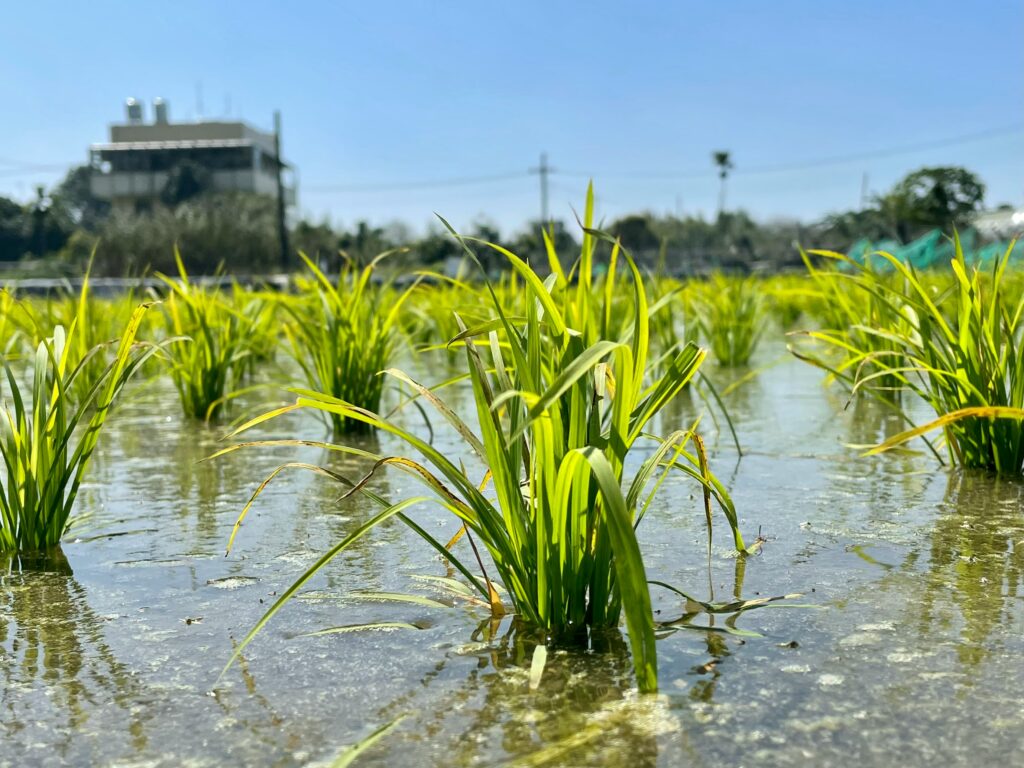
AWD involves managing water levels in rice paddies through cycles of wetting and draining, rather than maintaining continuous inundation. This practice is recognized as one of the most effective strategies for mitigating methane emissions from rice cultivation, capable of reducing them by up to 50%. Moreover, AWD can also lead to substantial water savings, up to 30%, without compromising crop yields.
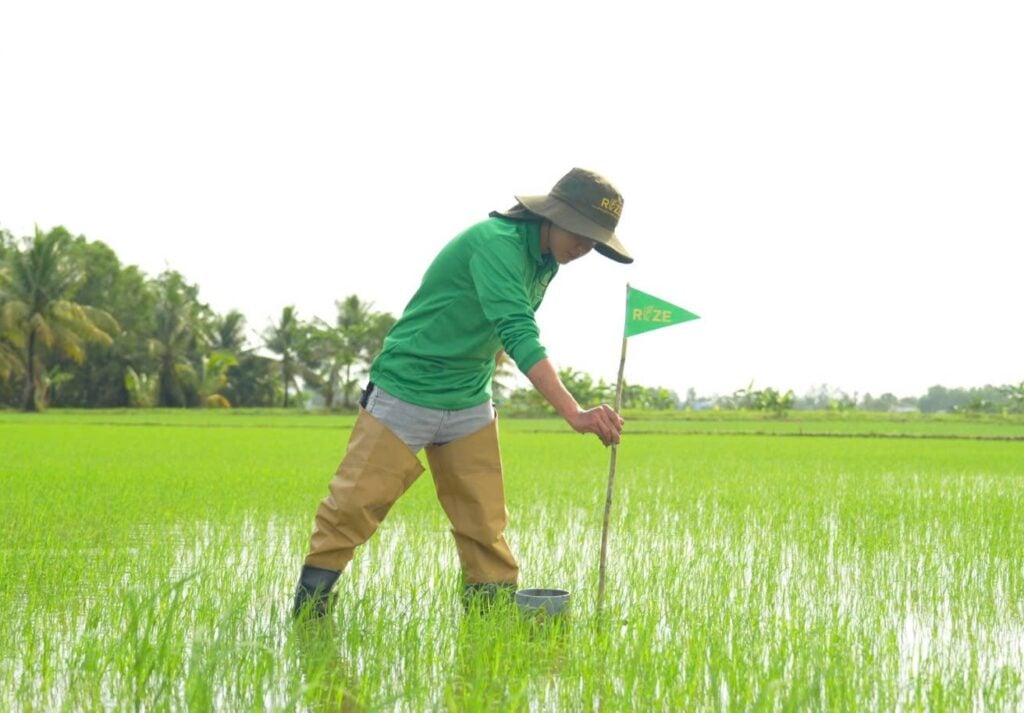
However, the widespread adoption of AWD faces significant barriers. According to the Climate & Clean Air Coalition, individual farmers often lack the financial incentives to change their long-standing practices, especially when they do not pay for water based on volume or receive a premium for producing low-emission rice. This is precisely where Rize intervenes.
The startup addresses these disincentives by creating a comprehensive ecosystem for farmers. Rize procures essential agricultural inputs such as seeds and fertilizers in bulk, leveraging economies of scale to offer them to farmers at competitive prices, thereby enabling the implementation of AWD. Crucially, Rize also works to ensure that the rice produced through these sustainable methods meets the stringent Maximum Residue Limit (MRL) standards required by premium export markets. This commitment to quality and compliance is vital for accessing higher-value markets and generating better returns for farmers.
The impact of Rize’s model is tangible. Studies and pilot programs have shown that its interventions can reduce methane emissions by half, cut water usage by up to 30%, and increase farmer incomes by approximately 30%, all while maintaining or even enhancing yields. The company has set an ambitious long-term goal to eliminate 500 million tonnes of CO2 equivalent (CO2e) emissions by 2040, a significant contribution to global climate action targets.
Strategic Expansion and Future Outlook
The newly acquired $31 million in Series B funding will be instrumental in Rize’s strategic expansion across Southeast Asia. The capital infusion will fuel the scaling of AWD adoption by enabling entry into new markets, enhancing the company’s carbon certification processes, and developing advanced Artificial Intelligence (AI) tools. These AI solutions are designed to empower both farmers and field teams with data-driven insights for improved decision-making and operational efficiency.
Rize plans to strengthen its market linkages to international export markets, further deepening the traceability of its supply chain from farm to fork. A key aspect of their strategy is to provide low-emission rice to consumers without imposing a price premium, making sustainable choices more accessible and competitive. The company will continue to invest in innovation and modern farming techniques to drive higher yields, further reduce emissions, and ensure better economic outcomes for its network of growers.
Furthermore, Rize intends to open its platform to a wider array of ecosystem partners. This collaborative approach will allow input suppliers, service providers, and other agritech companies to access Rize’s extensive farmer network. This integration aims to create a more holistic support system for producers, enabling them to enhance both the quantity and quality of their harvests.
Dhruv Sawhney, Co-founder and CEO of Rize, expressed his enthusiasm for the company’s next growth phase. "This investment allows us to unlock the next phase of growth by further expanding scale, investing in market linkage and exports, and cutting-edge technologies to deliver better decision-making, better productivity, and better outcomes across the whole value chain," Sawhney commented. He added, "This is more than just a funding milestone. It is recognition of the foundation Rize has built and a clear signal that we are ready to create a more connected, resilient, and sustainable food system for smallholder farmers."
Slav Gatchev, VP of Innovative Finance at the Rockefeller Foundation, highlighted the critical challenges faced by smallholder farmers in Asia, including issues related to resource management, financing, and market access. Gatchev stated, "We are proud to support Rize’s efforts to promote the adoption of tech-enabled regenerative practices, ultimately driving higher yields and increasing incomes for those who need help the most." This endorsement from a prominent philanthropic foundation underscores the social impact and developmental potential of Rize’s business model.
Rize is part of a growing cohort of startups dedicated to transforming rice cultivation towards climate-friendly practices. Competitors like AgriG8, another Singaporean firm, employ gamified digital platforms to guide rice farmers in adopting AWD and reducing emissions. In parallel, companies like India-based MittiLabs and France’s CarbonFarm are leveraging AI and satellite technology to develop carbon credit programs for agriculture. However, the efficacy and integrity of the voluntary carbon market, which these firms often tap into, have faced considerable scrutiny and criticism in recent years, with concerns about greenwashing and the actual environmental impact of credits frequently raised. Rize’s focus on direct emission reduction and verified commodity trade, coupled with its commitment to farmer income enhancement, positions it as a potentially more robust and impactful player in the sustainable agriculture landscape.
