

Chipotle Mexican Grill’s venture fund, Cultivate Next, has announced a significant expansion of its portfolio, investing in six innovative agrifood technology companies. The strategic move underscores Chipotle’s commitment to transforming the food system through technological advancements, with a particular emphasis on regenerative agriculture, supply chain transparency, and sustainability. Among the newly funded entities is Simpli, a company dedicated to producing whole-food, plant-based products sourced from regenerative farming practices. This investment signals a growing recognition within the corporate food sector of the critical role regenerative agriculture can play in building a more resilient and environmentally conscious food future.
The Cultivate Next fund, established with a $100 million commitment, has been actively seeking out and supporting companies that address pressing challenges across agriculture, supply chains, sustainability, food systems, and restaurant technology. The six latest additions to its investment roster – Simpli, Benchmark Labs, IMIO, Clean Crop Technologies, Athian, and PopID – represent a diverse range of solutions poised to create tangible value for stakeholders across the food ecosystem, from farmers to consumers. Curt Garner, President and Chief Strategy and Technology Officer at Chipotle, articulated the fund’s vision: "Their technologies have the potential to create meaningful value for farmers, suppliers, restaurant operators and guests alike."
Simpli: A Deep Dive into Regenerative Agriculture and Supply Chain Transparency
At the forefront of this new wave of investment is Simpli, a company founded in 2020 by Sarela Herrada and Matt Cohen. Simpli’s core mission is to establish a transparent and responsible supply chain built upon regeneratively farmed organic products. Herrada’s upbringing on an organic farm in Peru provided her with a profound understanding of the interconnectedness of agriculture, community, and food production. This experience highlighted the pervasive lack of transparency and the systemic challenges faced by producers, motivating her to create Simpli’s range of essential pantry staples.
Simpli differentiates itself by forging direct partnerships with farmers who are committed to regenerative and organic farming methods. These practices are crucial for rebuilding soil health, enhancing biodiversity, and restoring ecological systems. The company collaborates with producers in various regions, including Peru, Spain, Greece, Ukraine, and Argentina, among others. To ensure accountability and provide consumers with verifiable information, Simpli incorporates independent testing to confirm both the nutritional quality and the provenance of its food products.
The company’s operational model emphasizes a vertically integrated supply chain, focusing on key regenerative practices such as carbon sequestration, crop rotation, composting, and no-till or low-till farming techniques. The use of cover crops is also integral to their strategy for boosting soil vitality and increasing nutrient density in the harvested crops. Simpli’s product line includes a variety of regeneratively farmed pantry staples, such as legumes (beans, lentils), grains (quinoa, farro, amaranth), olive and avocado oils, seeds, and sea salts.

This focus on whole grains and legumes aligns perfectly with evolving consumer preferences. In the United States, there is a discernible trend towards reducing the consumption of ultra-processed foods in favor of nutrient-dense, fiber-rich whole foods. This shift is further influenced by growing awareness of health and wellness, including the increasing popularity of GLP-1 drugs and a desire for more natural, less processed dietary options.
Chipotle’s rationale for investing in Simpli is rooted in this consumer demand for greater visibility and authenticity in their food choices. "Consumers want greater visibility into where their food comes from and how it was produced," the company stated. "Simpli’s approach to sourcing and transparency through regenerative organic practices, third-party nutrient-density testing, and sustainability tracking aligns with growing demand for visibility throughout the supply chain." This sentiment suggests that Chipotle sees Simpli not just as a supplier but as a partner in building a more transparent and trustworthy food system, a key differentiator in today’s competitive market.
The Growing Momentum of Regenerative Agriculture
The principles of regenerative agriculture have gained significant traction in recent years, moving from niche farming circles into broader public discourse and policy discussions. Documentaries such as "Kiss the Ground" and its sequel "Common Ground," along with "Feeding Tomorrow," have played a pivotal role in raising public awareness about the environmental and ecological benefits of these farming methods. The appointment of Robert F. Kennedy Jr. as US Health Secretary also brought a renewed focus on food systems and their impact on public health, often intertwined with discussions on sustainable agriculture.
A notable development occurred in December when the Trump administration announced a $700 million Regenerative Pilot Program. This initiative aimed to support farmers in adopting practices that enhance soil health, improve water quality, and bolster long-term agricultural productivity. This program was notably aligned with RFK Jr.’s "Make America Healthy Again" (MAHA) campaign, indicating a bipartisan recognition of the importance of regenerative agriculture.
Despite the growing enthusiasm, the term "regenerative agriculture" has faced scrutiny, with some food companies being accused of using it as a marketing tool for "greenwashing" consumers. This criticism stems partly from the lack of a universally standardized definition for regenerative agriculture, leading to potential ambiguity in its application. However, the underlying benefits for soil health and environmental restoration, particularly when applied to crop production rather than intensive livestock farming, are increasingly well-documented.
Research has highlighted the profound potential of regenerative agriculture. One study, for instance, identified it as the most effective approach for a "just transition" of the global food system. The study emphasized its "enormous potential to contribute to climate-resilient, equitable and economically sustainable protein production systems." This underscores the multifaceted benefits of adopting such practices, extending beyond environmental remediation to encompass social equity and economic viability.
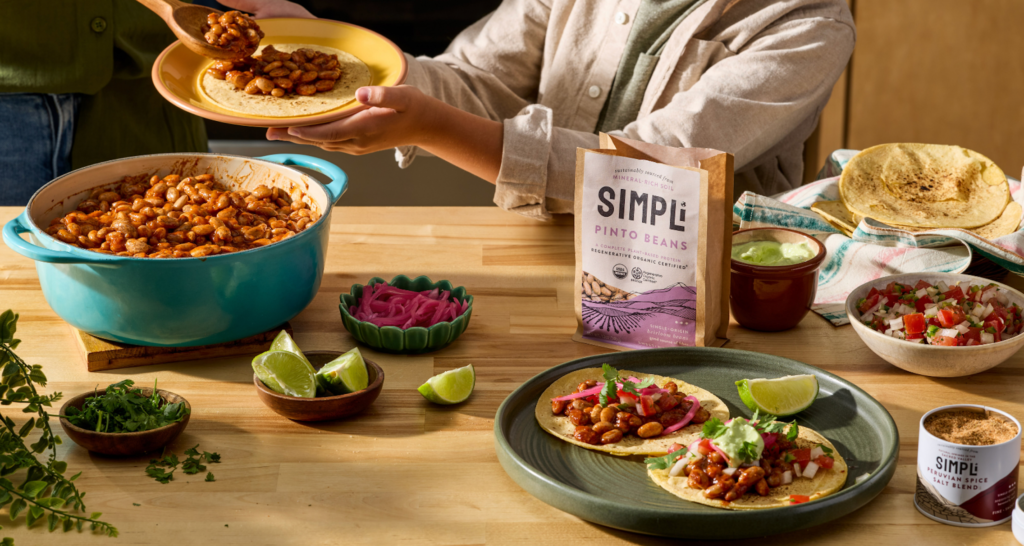
Simpli themselves articulate this vision clearly: "By partnering directly with farmers, investing in regenerative organic agriculture, measuring both nutrient density and environmental impact, and building fully traceable supply chains, we’re working to create a new gold standard for pantry staples," the company stated in a LinkedIn post. This ambitious goal positions Simpli as a leader in redefining quality and responsibility in the food industry.
Chipotle’s Cultivate Next: A Strategic Investment in the Future of Food
The Cultivate Next fund’s investment strategy extends beyond Simpli, encompassing a broader vision for transforming the food landscape. The recent cohort of six companies targets critical areas for innovation:
- Benchmark Labs: This company utilizes AI-led weather forecasting and climate intelligence technology. Its aim is to empower farm operators with data-driven insights, enabling them to make more informed decisions regarding crop management, resource allocation, and risk mitigation in the face of changing climate patterns.
- IMIO: IMIO develops microbial agricultural solutions. These innovative products are designed to enhance soil health, improve crop performance, and ultimately boost farm productivity, offering a biological approach to agricultural challenges.
- Clean Crop Technologies: This company focuses on improving food quality and reducing waste by addressing contamination challenges throughout the supply chain. Their technologies aim to ensure safer and more efficient food processing and distribution.
- Athian: While specific details are not provided in the original text, Athian is likely involved in supply chain transparency or emissions tracking, areas that Chipotle has identified as critical for its investments. Such companies often leverage blockchain or other digital ledger technologies to provide verifiable data on food origins and environmental impact.
- PopID: This company specializes in digital identity and payments, aiming to streamline the guest experience in restaurants. In a sector increasingly driven by technology, PopID’s solutions can enhance efficiency, personalize customer interactions, and improve operational workflows.
These investments collectively reflect Chipotle’s strategic focus on leveraging technology to build a more sustainable, transparent, and efficient food system. The company’s president, Curt Garner, emphasized this point: "These companies demonstrate how innovation is reshaping agriculture, sustainability, supply chains and the guest experience, creating new opportunities to build a more resilient food system."
Broader Implications and Future Outlook
Chipotle’s significant investment in agrifood tech, particularly through the Cultivate Next fund, carries several important implications for the wider industry. Firstly, it signals a strong endorsement of regenerative agriculture as a viable and necessary component of future food production. As more large corporations like Chipotle allocate capital to this sector, it can stimulate further innovation, attract additional investment, and accelerate the adoption of these practices by a broader range of agricultural producers.
Secondly, the fund’s focus on supply chain transparency and technology integration highlights the increasing demand from consumers for knowing where their food comes from and how it is produced. Companies that can provide verifiable data and demonstrate a commitment to ethical and sustainable sourcing are likely to gain a competitive advantage. Simpli’s model, with its emphasis on direct farmer partnerships and independent testing, serves as a potential blueprint for other food businesses looking to enhance their supply chain integrity.
Thirdly, the diversification of investments across areas like climate intelligence, food waste reduction, and digital restaurant solutions indicates a holistic approach to addressing the complex challenges facing the food industry. The convergence of agriculture, technology, and consumer experience is becoming increasingly pronounced, and companies that can navigate this intersection effectively are poised for growth.

The Chronology of these developments is also noteworthy. The establishment of the Cultivate Next fund itself, a $100 million commitment, marked a significant step by Chipotle in formalizing its engagement with food technology innovation. The subsequent announcements of investment cohorts, including the most recent group of six companies, demonstrate a consistent and strategic deployment of capital. This ongoing activity suggests that Chipotle views these investments not as one-off initiatives but as integral to its long-term business strategy and its vision for a more responsible food future.
The broader impact of these investments could extend to policy and regulation. As more corporate capital flows into areas like regenerative agriculture, it can influence governmental support and regulatory frameworks. A more robust and clearly defined landscape for regenerative practices could emerge, benefiting both farmers and consumers. Furthermore, the success of companies like Simpli could inspire a new generation of food entrepreneurs focused on ethical sourcing and sustainable production, fostering a more vibrant and responsible agrifood ecosystem.
In conclusion, Chipotle’s Cultivate Next fund’s investment in Simpli and five other agrifood tech companies represents a pivotal moment in the ongoing evolution of the food industry. By championing regenerative agriculture and investing in a suite of innovative solutions, Chipotle is not only bolstering its own supply chain and brand image but also actively contributing to the development of a more sustainable, transparent, and resilient global food system. The continued success and expansion of such initiatives will be crucial in addressing the environmental, social, and economic challenges of feeding a growing world population.
