
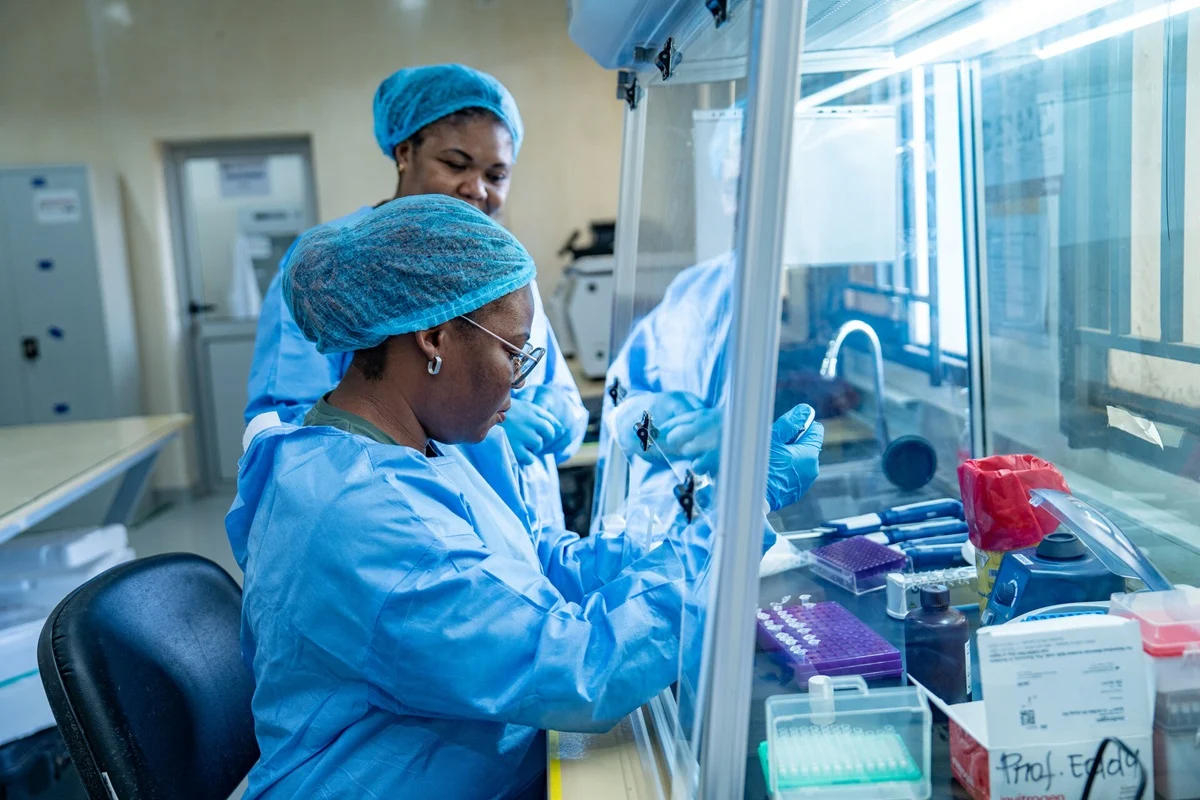
The World Health Organization (WHO) has officially expanded its arsenal against viral hemorrhagic fevers by adding the first molecular diagnostic test for the Bundibugyo virus (BDBV) to its Emergency Use Listing (EUL). This landmark decision aims to provide a critical technological advantage in the ongoing effort to contain a significant outbreak of Ebola disease in Central Africa. By identifying the genetic material of the virus in blood samples, the newly listed diagnostic tool allows for rapid and highly accurate confirmation of infection, which is a prerequisite for effective isolation and clinical intervention. This move follows a period of intense evaluation of the test’s quality, safety, and performance, ensuring it meets the rigorous international standards required for deployment in public health emergencies.
The inclusion of this diagnostic test under the EUL procedure is a strategic milestone for global health security. The EUL is a special procedure developed by the WHO to expedite the availability of medical products—including vaccines, therapeutics, and in vitro diagnostics—during public health emergencies of international concern (PHEIC). The mechanism is designed to assist United Nations procurement agencies and Member States in making informed decisions regarding the acquisition and use of essential health products when the usual full regulatory pathways may be too slow to address an urgent crisis. For low- and middle-income countries, which often face the brunt of Ebola outbreaks, the EUL provides a trusted "seal of approval" that bypasses some of the logistical and regulatory hurdles that can delay the arrival of life-saving technology.
The Significance of the Bundibugyo Virus and the 2026 Outbreak
The Bundibugyo virus is one of three species of ebolavirus known to cause large-scale outbreaks in human populations, alongside the Zaire and Sudan viruses. First identified in 2007 during an outbreak in the Bundibugyo District of Uganda, BDBV causes a severe, often fatal hemorrhagic fever. While it has historically been associated with lower mortality rates than the Zaire ebolavirus, its impact remains devastating. The virus is zoonotic, typically jumping from animals to humans through the handling of infected bushmeat, and subsequently spreads via direct contact with the blood, secretions, or other bodily fluids of infected individuals, or with surfaces contaminated by these fluids.
The current crisis reached a critical turning point on May 17, 2026, when WHO Director-General Dr. Tedros Adhanom Ghebreyesus declared the outbreak of Ebola disease caused by the Bundibugyo virus in the Democratic Republic of the Congo (DRC) a Public Health Emergency of International Concern. The outbreak, which has also seen cases cross the border into neighboring Uganda, has become the largest recorded instance of BDBV in history. As of the latest reports, 1,406 laboratory-confirmed cases have been recorded in the DRC alone, resulting in 438 deaths. The scale of this event necessitated a rapid shift in diagnostic strategy, as traditional laboratory methods were insufficient to keep pace with the expanding transmission chains.
Chronology of the Response and Diagnostic Expansion
The timeline of the international response highlights the urgency with which health authorities have acted. Following the May 17 declaration of a PHEIC, the WHO moved swiftly to address the diagnostic gap. Within less than two weeks, on May 29, 2026, the organization issued a formal call for manufacturers of in vitro diagnostics (IVDs) for the Bundibugyo virus to submit Expressions of Interest for the EUL procedure. This call catalyzed the global biotech industry to prioritize BDBV testing kits, leading to the rigorous review process that culminated in today’s listing.
Parallel to the regulatory advancements, there has been a massive physical expansion of testing infrastructure on the ground. At the onset of the 2026 outbreak, laboratory capacity in the region was highly centralized. Testing was primarily limited to the Institut National de Recherche Biomédicale (INRB) in Kinshasa and Goma. These facilities had an estimated combined capacity of approximately 200 to 400 tests per day—a volume that was quickly overwhelmed as the virus spread through the eastern provinces of the DRC.
Recognizing this bottleneck, the WHO, in coordination with the Africa Centres for Disease Control and Prevention (Africa CDC), initiated a decentralization strategy. This effort has successfully expanded the laboratory network to 10 sites across the affected provinces. Today, the reported capacity exceeds 2,000 tests per day. The addition of the newly listed molecular diagnostic test is expected to further enhance this capacity, allowing for "near-point-of-care" testing that reduces the time between sample collection and result delivery.
Technical Foundations and the Role of Molecular Testing
Molecular diagnostic tests, specifically those based on nucleic acid amplification technology such as Polymerase Chain Reaction (PCR), are considered the "gold standard" for detecting Ebola viruses. Unlike antigen-based rapid tests, which detect proteins on the surface of the virus, molecular tests detect the virus’s genetic blueprint. This makes them significantly more sensitive, particularly in the early stages of infection when viral loads may be low.
In the context of an Ebola outbreak, sensitivity is paramount. A false negative result can lead to an infected individual being sent back to their community, where they may continue to spread the virus. Conversely, rapid confirmation allows for the immediate commencement of contact tracing and the administration of supportive care, which significantly improves survival rates. The newly listed BDBV test has undergone performance evaluations to ensure it can reliably distinguish the Bundibugyo strain from other ebolaviruses, a distinction that is vital for epidemiological tracking and clinical management.
Official Perspectives on the Global Health Impact
The listing has drawn praise from global health leadership, who emphasize the dual necessity of speed and reliability. Dr. Yukiko Nakatani, WHO Assistant Director-General for Health Systems, Access and Data, underscored the importance of trust in medical products during a crisis. "Public health emergencies require not only speed, but also confidence that the health products being used meet standards for quality, safety and performance," Dr. Nakatani stated. "During a fast-moving outbreak, timely access to quality-assured diagnostic tests can make a critical difference in containing transmission. Through this Emergency Use Listing, WHO is helping countries access trusted diagnostic tools more rapidly so that they can respond more effectively."
The Africa CDC has also played a pivotal role in this achievement. By fostering regional cooperation and providing technical expertise, the Africa CDC has ensured that the diagnostic tools are not just available, but also integrated into the broader public health response. The collaboration between the WHO and Africa CDC represents a strengthened framework for African health sovereignty, allowing for a more localized and robust response to endemic threats.
Collaborative Platforms and Future Diagnostic Horizons
The listing of the first molecular test is not the end of the diagnostic roadmap for the Bundibugyo virus. The WHO continues to review additional applications for BDBV diagnostics submitted through the EUL procedure. To streamline this process, a joint validation platform has been established involving the WHO, Africa CDC, and several international partners, including PATH, FIND (the Foundation for Innovative New Diagnostics), and the Clinton Health Access Initiative (CHAI).
Supported by Unitaid, this platform is designed to rapidly evaluate the performance of a wide range of products, including laboratory-based molecular tests, near-point-of-care molecular tests, and antigen rapid diagnostic tests. The goal is to generate high-quality clinical evidence from the field, which is often difficult to obtain during the chaos of an outbreak. By validating these tools in real-world settings, the platform ensures that the global community has a diversified portfolio of diagnostics suited for different environments—from high-tech urban laboratories to remote rural clinics.
Analysis of Implications for Global Health Security
The listing of a BDBV-specific diagnostic test carries implications that extend beyond the current borders of the DRC and Uganda. It signals a shift toward a more proactive stance in managing "neglected" Ebola strains. While much of the global investment in vaccines and diagnostics over the last decade has focused on the Zaire ebolavirus—responsible for the catastrophic 2014-2016 West Africa outbreak—the 2026 BDBV outbreak serves as a reminder that other strains possess significant epidemic potential.
Furthermore, the successful implementation of the EUL for this diagnostic test reinforces the importance of science as a foundation for health policy. This aligns with the theme of World Health Day 2026, "Together for health. Stand with science." The campaign emphasizes that scientific rigor is not an obstacle to rapid response but rather its most essential component. By adhering to international standards even in the midst of an emergency, health organizations ensure that the interventions they deploy are effective, thereby maintaining public trust and saving lives.
Economically, the rapid containment enabled by improved diagnostics prevents the long-term disruption of trade and travel. Ebola outbreaks frequently lead to the stigmatization of affected regions and the collapse of local economies. By providing the tools to end the outbreak faster, the WHO and its partners are not only protecting health but also safeguarding the economic stability of the Great Lakes region of Africa.
As the response continues, the focus remains on reaching the "last mile"—ensuring that these new diagnostic tools are available in the most remote areas where the virus first emerges. With 1,406 cases already confirmed, the window for containment is narrowing, but the addition of the first EUL-listed molecular test for Bundibugyo virus provides a much-needed surge in the global effort to bring the outbreak under control. The WHO, along with its global partners, remains committed to expanding access to these life-saving technologies, ensuring that science continues to lead the way in the fight against infectious diseases.
