
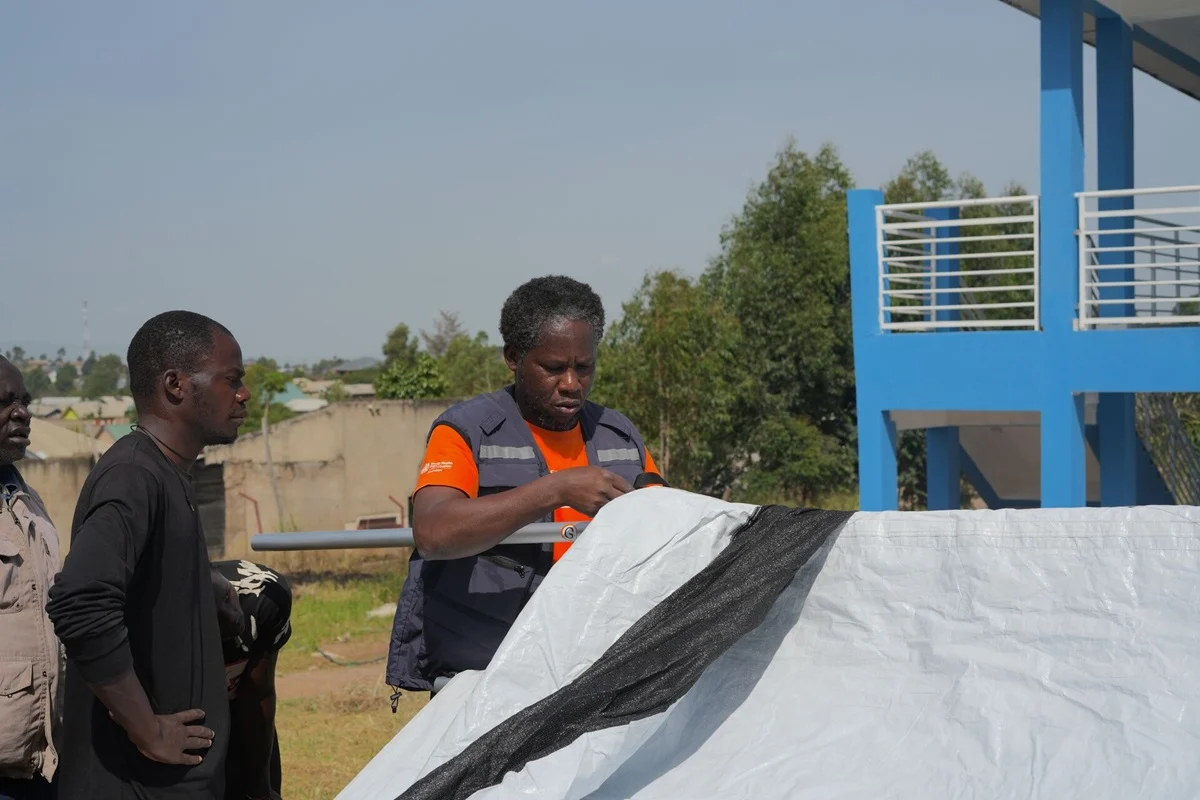
The Democratic Republic of the Congo (DRC) is currently grappling with its 17th recorded outbreak of the Ebola virus, a crisis that has prompted a direct and personal intervention from the World Health Organization (WHO). Dr. Tedros Adhanom Ghebreyesus, the Director-General of the WHO, has issued a stark warning regarding the unique dangers of the current situation in Ituri province. Unlike previous outbreaks dominated by the Ebola Zaire strain, this resurgence involves the Ebola Bundibugyo virus, for which there are currently no approved vaccines or specific therapeutic treatments. The convergence of a highly infectious disease with a deteriorating security situation in eastern DRC has created what international health experts describe as a "perfect storm" of humanitarian risk.
The Epicenter of a Resurgent Threat
The current outbreak is heavily concentrated in Ituri province, a region that has long struggled with ethnic conflict, displacement, and systemic poverty. According to epidemiological data provided by the WHO and the DRC Ministry of Health, more than 90% of all confirmed and suspected cases are located within Ituri, with sporadic transmissions reported in the neighboring provinces of North Kivu and South Kivu. The geographic concentration in Ituri presents significant logistical hurdles for health responders, as the province is a hub of vibrant commerce and high population mobility, which facilitates the rapid spread of the virus across porous borders and local markets.
Dr. Tedros, who famously adopted the local name "Dr. Paluku" during his frequent visits to the region during the 2018–2020 North Kivu outbreak, has announced a high-level mission to Bunia, the provincial capital of Ituri. His visit aims to bolster the front-line response and evaluate the local health infrastructure. The Director-General’s presence underscores the severity of the Bundibugyo strain, which was first identified in 2007 in Uganda and has historically shown a case fatality rate ranging from 25% to 40%. While this is statistically lower than the Zaire strain—which can exceed 60% to 90% without treatment—the lack of a vaccine makes the Bundibugyo variant a formidable challenge to containment efforts.
A Scientific and Logistical Deficit: The Bundibugyo Strain
The primary concern for global health authorities is the absence of the medical "toolbelt" that was instrumental in ending the 2018–2020 outbreak. During that period, the Ervebo vaccine and various monoclonal antibody treatments proved highly effective against the Zaire virus. However, these medical interventions do not offer cross-protection against the Bundibugyo species.
"We must be honest with the people of Ituri," Dr. Tedros stated in a recent address to the region. "This is serious. Early supportive care—rehydration, electrolyte monitoring, and symptom management—is currently our only line of defense in treatment centers."
The WHO is currently working with international pharmaceutical partners to fast-track candidate vaccines into clinical trials, but the immediate response relies heavily on traditional public health measures: contact tracing, safe and dignified burials, and community-led surveillance. The reliance on these "boots-on-the-ground" tactics makes the security environment the most critical variable in the success or failure of the intervention.
Chronology of Ebola in the DRC: A History of Crisis and Recovery
The DRC has a long and painful history with Ebola, dating back to the virus’s discovery near the Ebola River in 1976. Understanding the current crisis requires a look at the timeline of recent outbreaks:
- 2018–2020 (North Kivu/Ituri/South Kivu): The 10th outbreak was the second-largest in history, resulting in over 3,400 cases and 2,280 deaths. It was during this period that the WHO established a permanent presence in the east, and Dr. Tedros made 14 separate visits to the region.
- 2020 (Équateur Province): The 11th outbreak occurred in the western part of the country, proving that the DRC remains a natural reservoir for the virus.
- 2021–2022: Multiple smaller outbreaks (12th through 14th) were successfully contained through rapid ring vaccination and community engagement.
- Present (2024): The 17th outbreak marks a shift back to the volatile east, but with the added complexity of the Bundibugyo strain.
The historical data suggests that while the DRC’s Ministry of Health has developed world-class expertise in managing Ebola, each outbreak occurs in a unique socio-political context. The current crisis in Ituri is inextricably linked to the province’s internal displacement crisis, with over 1.5 million people currently living in temporary camps due to ongoing violence between rival militia groups.
The Security Impasse: A Call for a Humanitarian Ceasefire
Perhaps the most significant enrichment to the current response strategy is the WHO’s direct appeal for a cessation of hostilities. Eastern DRC is currently a patchwork of territories controlled by the national army (FARDC) and various armed groups, including CODECO and the Allied Democratic Forces (ADF). These groups frequently target health infrastructure and humanitarian convoys.
In a rare move for a public health official, Dr. Tedros has called upon all warring parties to declare a ceasefire. "No cause, no conflict, no grievance is worth condemning innocent people to death from a preventable disease," he remarked. The appeal for a "humanitarian window" is based on the reality that health workers cannot perform contact tracing or deliver essential supplies in active combat zones. In 2019, several health workers were killed in attacks on treatment centers in Butembo and Biakato, events that significantly set back containment efforts.
The international community has reacted with cautious support for this call. Analysts suggest that a ceasefire would not only facilitate the Ebola response but also allow for the delivery of aid to combat the concurrent crises of malaria, measles, and acute malnutrition that plague Ituri’s displaced populations.
Community Trust and the "Dr. Paluku" Legacy
A major hurdle in any Ebola response is the "trust gap" between international organizations and local communities. In previous years, rumors and misinformation led some residents to believe that Ebola was a manufactured crisis or a political tool. To combat this, the WHO is leveraging the personal rapport Dr. Tedros built during his previous visits.
By identifying as "Dr. Paluku"—a name given to him by the Nande community in North Kivu to signify his status as a "firstborn son"—Tedros is attempting to bridge the cultural divide. This strategy emphasizes that the response is not a foreign imposition but a collaborative effort. The WHO has also focused on empowering local youth and religious leaders in Ituri to act as "health ambassadors." These individuals are vital in dispelling myths and encouraging symptomatic individuals to seek care early, which significantly improves survival rates even in the absence of a specific vaccine.
Broader Impact and Global Health Implications
The implications of the Ituri outbreak extend far beyond the borders of the DRC. Ituri shares a direct border with Uganda and is close to the borders of South Sudan and Rwanda. The high volume of cross-border trade means that an uncontained outbreak in Bunia could quickly become a regional public health emergency.
The WHO’s Regional Office for Africa has already placed neighboring countries on high alert, increasing surveillance at points of entry and conducting simulation exercises. The global health community is also watching the Bundibugyo response closely as a test case for "Pathogen X" preparedness—the ability to respond to a deadly virus when no medical countermeasures are readily available.
Furthermore, the situation in the DRC highlights the ongoing need for "health system strengthening" rather than just "emergency response." Dr. Tedros has committed that the WHO will not "quietly disappear" once the current outbreak is over. The goal is to build a resilient healthcare framework in Ituri that can withstand future shocks, whether they be from Ebola, COVID-19, or the next emerging zoonotic disease.
Conclusion: The Path Forward in Bunia
As Dr. Tedros prepares for his arrival in Bunia, the focus remains on three pillars: security, science, and solidarity. The success of the intervention depends on the ability of the DRC government to secure the region, the speed with which researchers can adapt to the Bundibugyo strain, and the willingness of the local population to trust the medical advice provided.
The people of Ituri have shown remarkable resilience in the face of decades of conflict. Their entrepreneurial spirit and vibrant social fabric are the foundations upon which the WHO hopes to build a successful containment strategy. However, without a temporary ceasefire and a surge in international support, the 17th Ebola outbreak threatens to become one of the most challenging chapters in the DRC’s long struggle with the virus. The world’s eyes are now on Bunia, waiting to see if humanity’s collective expertise can overcome a virus that thrives on silence, fear, and the chaos of war.
