
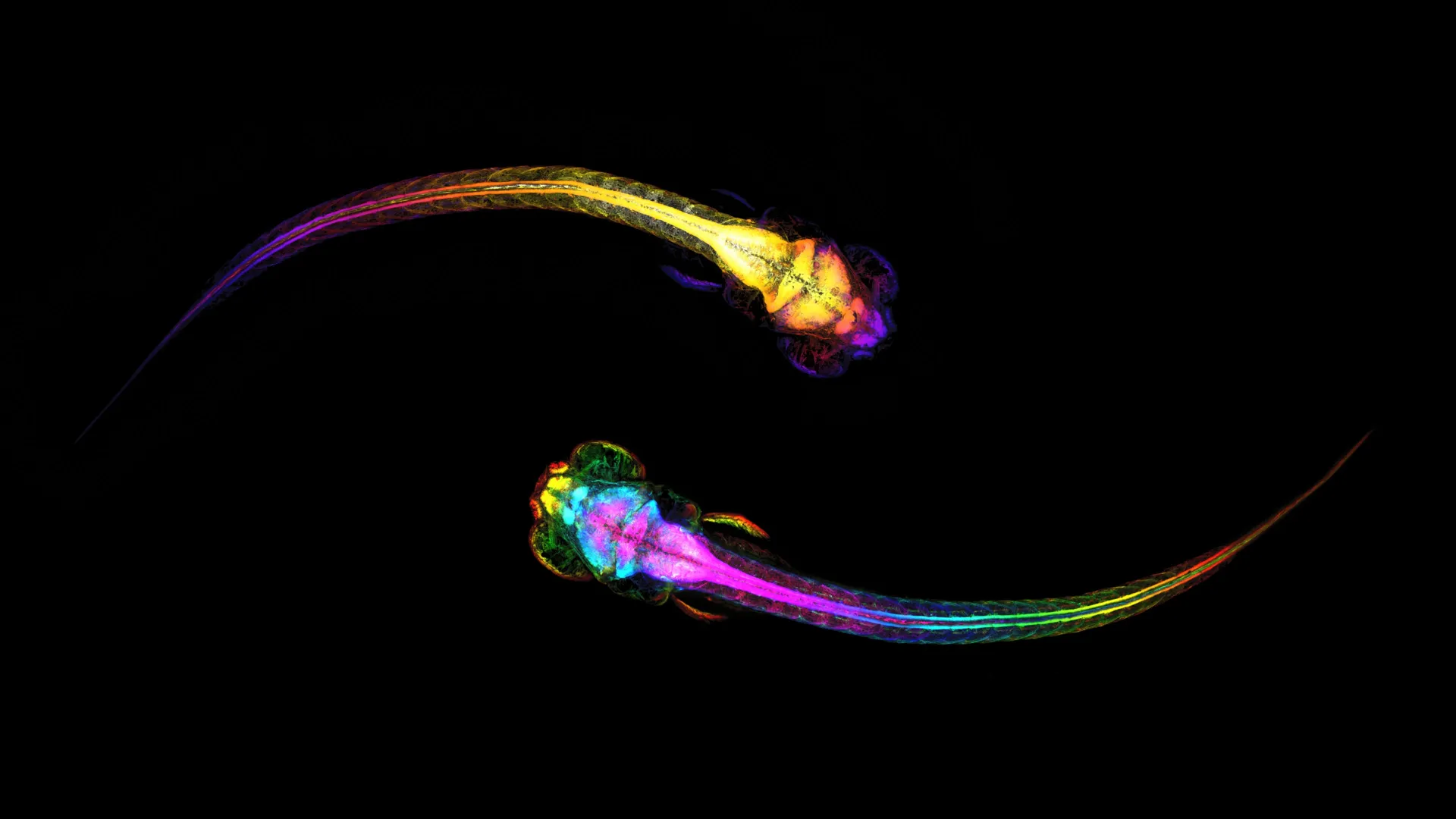
New research from the Hebrew University of Jerusalem is shedding light on the intricate neural processes that precede our decision to approach others, revealing a distinctive brain-wide activity pattern that emerges seconds before any observable movement. This groundbreaking study, published in a leading scientific journal, suggests that our inclination towards social interaction is orchestrated by a complex neural symphony, with the strength of this pre-movement signal directly correlating with an individual’s innate social drive. The findings, led by Dr. Lilah Avitan and her team at the Edmond and Lily Safra Center for Brain Sciences (ELSC), utilize the zebrafish model organism to meticulously track and analyze neural activity in real-time, offering unprecedented insights into the biological underpinnings of social behavior.
The Genesis of Social Engagement: A Neural Prelude
For decades, scientists have grappled with understanding the fundamental question of what prompts us to seek out the company of others. While behavioral observations have long indicated a predisposition for social interaction in many species, including humans, the precise neural mechanisms initiating these approaches have remained largely elusive. This new research, however, provides compelling evidence that the brain actively prepares for social engagement well in advance of any physical action. The study’s core discovery is the identification of a widespread neural signature that emerges across multiple brain regions simultaneously, signaling an impending social decision. This "pre-decision state," as the researchers term it, acts as a neural herald, anticipating and preparing the organism for interaction.
The implications of this finding are profound. It challenges a simplistic view of social behavior being solely reactive to external stimuli. Instead, it posits an active, internal process where the brain, through a coordinated cascade of neural activity, primes itself for social engagement. This neural preparation appears to be remarkably efficient, commencing several seconds before the actual movement to approach another individual.
A Novel Experimental Design for Unraveling Social Decisions
To investigate this complex phenomenon, Dr. Avitan’s laboratory developed an innovative experimental system specifically designed to monitor brain activity in response to social cues. The researchers chose zebrafish (Danio rerio) as their model organism due to their well-characterized neurobiology and the availability of advanced techniques for observing neural activity at the single-cell level. Zebrafish are known for their complex social behaviors, making them an ideal candidate for studying the neural basis of social interaction.
The experimental setup involved placing an "observer" fish in a controlled environment where it could visually perceive and respond to a "model" fish swimming in its vicinity. Crucially, the researchers employed cutting-edge neuroimaging techniques to record the electrical activity of neurons throughout the observer fish’s entire brain in real-time. This allowed them to capture a comprehensive snapshot of neural dynamics as the observer fish processed the social information presented by the model fish.
This meticulously designed system enabled the team to overcome previous limitations in studying neural precursors to behavior. By monitoring brain activity continuously, they could pinpoint the exact moment when neural patterns began to shift in anticipation of a social approach, and then follow these patterns as they evolved into overt action. This chronological tracking of neural events is central to understanding the causal relationship between brain activity and behavior.
A Brain-Wide Neural Pattern Signals Impending Social Approach
The results of the study were striking. The researchers observed a consistent and distinctive pattern of neural activity that consistently preceded any outward movement by the observer fish towards the model fish. This pre-movement neural activity was not confined to a single, isolated brain region. Instead, it was characterized by coordinated changes across a distributed network of brain areas.
Specifically, the study revealed a significant increase in activity within the pallium, a brain region in fish that is homologous to higher cognitive centers in mammals, including the cerebral cortex. The pallium is known to be involved in complex behaviors such as learning, memory, and social cognition. Simultaneously, researchers observed a decrease in activity in other brain areas. This intricate interplay of increased and decreased neural firing across different regions created what the researchers have described as a "pre-decision state."
This brain-wide neural signature served as a robust predictor of an upcoming social action. The strength and characteristics of this pattern allowed the researchers to anticipate, with remarkable accuracy, whether the observer fish would indeed initiate an approach towards the model fish, and even the timing of that approach, several seconds before it occurred. This predictive power underscores the active role the brain plays in preparing for social engagement.
Social Drive Modulates Neural Preparation
One of the most significant discoveries of this research is the direct link between the strength of this pre-decision neural pattern and an individual fish’s inherent social drive. The study found that fish exhibiting a more pronounced and robust brain-wide neural signature prior to social interaction tended to be more socially inclined in general. This suggests that the intensity of this neural preparation is not merely a generic response to the presence of another individual, but rather a reflection of the organism’s underlying motivation to engage in social behaviors.
This finding has crucial implications for understanding individual differences in sociality. It posits that variations in how strongly our brains prepare for social interactions could be a biological basis for why some individuals are naturally more outgoing and gregarious than others. The pallium, in particular, emerged as a key player in this process, with the research suggesting it plays a central role in generating the motivation to approach and interact with others.
Dr. Avitan commented on the significance of these findings, stating, "This study identifies a brain-wide neural signature of social approach that emerges before movement begins. This signature predicts not only whether an upcoming action will be social, but also how strongly socially driven the individual is." This statement emphasizes the dual predictive power of the neural signal: it foretells the occurrence of social behavior and quantifies the intensity of the individual’s social motivation.
Chronology of a Social Decision
The research timeline, though not explicitly detailed in its entirety, can be inferred through the experimental design. The process of neural preparation for social approach can be broken down into several key stages:
- Perception and Initial Processing (Milliseconds to Seconds): The observer fish detects the presence and movement of the model fish. Initial visual information is processed by sensory areas of the brain.
- Emergence of the Pre-Decision State (Several Seconds Before Movement): This is the critical period identified by the study. Coordinated changes in neural activity begin to spread across the brain, notably involving an increase in pallial activity and a decrease in other regions. This widespread neural signature signifies the brain’s preparation for a social decision.
- Decision Formation and Motor Planning (Seconds Before Movement): The pre-decision state likely evolves into a more refined decision-making process, integrating internal states and external cues. Neural pathways involved in motor planning begin to activate in anticipation of the intended action.
- Initiation of Movement (O Seconds): The observer fish begins to swim towards the model fish.
This chronological breakdown highlights that the neurological groundwork for social interaction is laid well before the physical act of approaching.
Supporting Data and Methodological Rigor
The study’s conclusions are underpinned by rigorous experimental methodology and quantitative analysis. While the specific statistical measures are not detailed in the provided excerpt, the researchers’ ability to predict behavior based on neural activity suggests high statistical significance. The use of zebrafish, a model organism with a relatively simpler yet functionally relevant brain structure, allows for a detailed mapping of neural circuits.
The "distinctive pattern of activity" refers to quantifiable changes in neuronal firing rates and connectivity across multiple brain regions. The "strength of this neural pattern" likely corresponds to metrics such as the amplitude of neural signals, the extent of brain regions involved, or the synchrony of activity within the network. The correlation between these neural metrics and behavioral measures of sociality (e.g., time spent in proximity to other fish, frequency of social initiations) would have been statistically analyzed to establish the link between neural preparation and social drive.
The researchers likely employed techniques such as calcium imaging or electrophysiology in awake, behaving zebrafish to achieve this real-time monitoring. These methods provide high spatial and temporal resolution, essential for capturing the rapid and distributed nature of neural activity associated with social decisions.
Potential Reactions and Expert Commentary
While direct quotes from other researchers are not available in the provided text, the implications of this study are likely to be met with significant interest from the neuroscience and ethology communities. Researchers studying social cognition, decision-making, and neurodevelopmental disorders would find these findings particularly relevant.
One might anticipate reactions such as:
- Confirmation and Extension: Experts in zebrafish behavior might confirm that the observed neural patterns align with known behavioral propensities in the species and may seek to replicate or extend these findings to more complex social scenarios.
- Comparative Neuroscience: Neuroscientists studying social behavior in other species, including primates and rodents, will be keen to investigate if similar brain-wide pre-decision states exist and if analogous neural structures are involved. This could lead to cross-species comparisons and a deeper understanding of conserved neural mechanisms.
- Clinical Relevance: Clinicians and researchers focused on conditions characterized by altered social behavior, such as autism spectrum disorder or social anxiety, may see these findings as a potential avenue for identifying early neural biomarkers and developing targeted interventions.
Broader Impact and Future Directions
The implications of this research extend far beyond the laboratory, offering a glimpse into the fundamental biological drivers of social connection. Understanding how the brain generates social behavior is crucial for addressing a wide range of societal challenges and advancing our knowledge of human psychology.
- Individual Differences in Sociality: The study provides a potential neurobiological explanation for why individuals vary in their sociability. This could lead to a more nuanced understanding of personality traits and social preferences, moving beyond purely environmental or experiential explanations.
- Neurological and Psychiatric Conditions: Many neurological and psychiatric disorders are characterized by disruptions in social behavior. Conditions like autism spectrum disorder, schizophrenia, and depression often involve difficulties in social interaction, recognition, and motivation. By elucidating the fundamental neural mechanisms of social approach, this research could pave the way for identifying early diagnostic markers and developing more effective therapeutic strategies. For instance, if altered pre-decision states are found in individuals with social deficits, this could offer a target for interventions aimed at modulating neural activity.
- The Evolution of Social Behavior: The conserved nature of brain structures across species suggests that these findings in zebrafish could offer insights into the evolutionary origins of social behavior. Understanding how these neural circuits evolved could shed light on the adaptive advantages of sociality throughout evolutionary history.
- Artificial Intelligence and Robotics: As AI continues to advance, understanding the biological underpinnings of social interaction could inform the development of more socially intelligent robots and AI systems capable of more nuanced and naturalistic engagement with humans.
Future research stemming from this study will likely focus on several key areas:
- Identifying Specific Neural Circuits: While the study highlights the pallium, further research will aim to pinpoint the precise neural circuits and neurotransmitter systems involved in generating and propagating this pre-decision state.
- Investigating the Role of Different Brain Regions: A deeper exploration into the function of other brain regions that show decreased activity during this pre-decision state is warranted to understand their contribution to the overall process.
- Translational Studies: Efforts will likely be made to investigate whether similar pre-decision neural signatures can be detected in mammals, particularly in humans, using non-invasive neuroimaging techniques.
- Manipulating Social Drive: Future experiments could involve manipulating factors that influence social drive in zebrafish to observe how these manipulations affect the observed neural patterns, further solidifying the link between neural preparation and social motivation.
In conclusion, the research from the Hebrew University of Jerusalem offers a compelling and significant advancement in our understanding of social behavior. By uncovering a brain-wide neural signature that precedes social approach, the study reveals the intricate and proactive nature of our social brains, offering a deeper appreciation for the biological foundations of connection and interaction. This work not only expands our knowledge of fundamental neuroscience but also holds considerable promise for addressing complex challenges related to social cognition and neurological health.
