
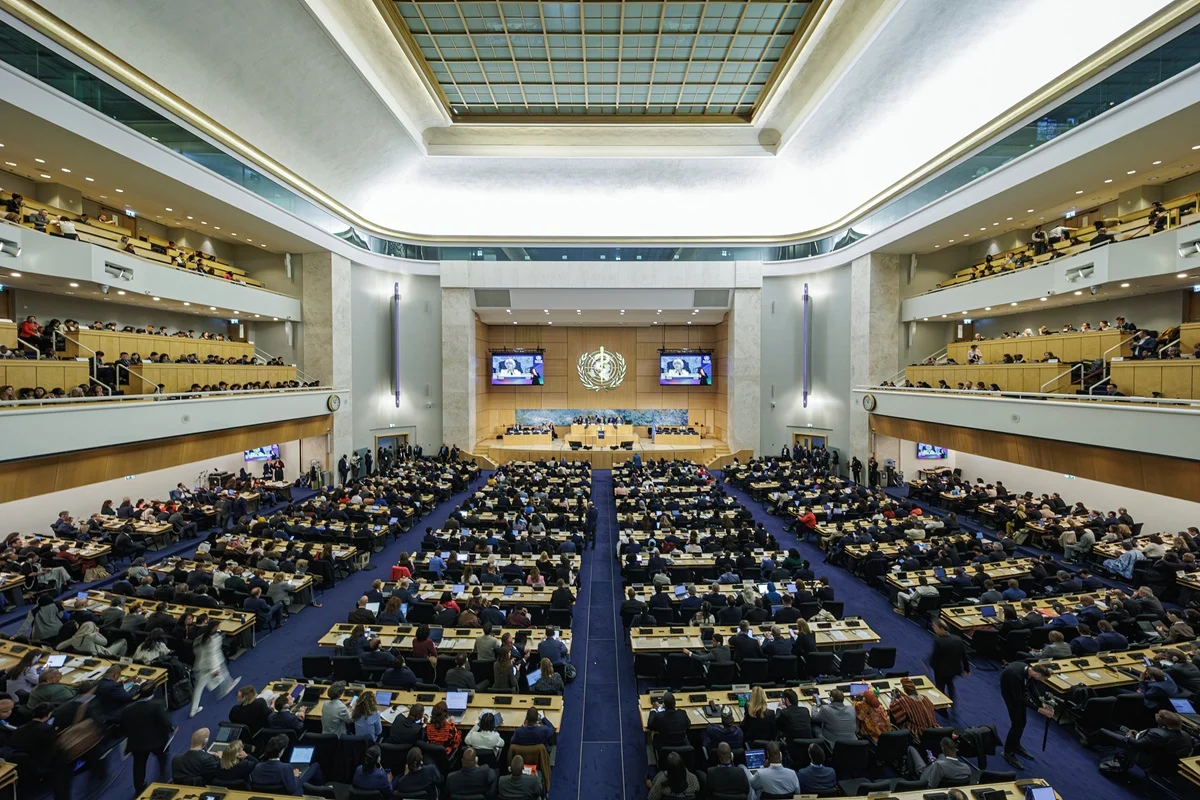
The Seventy-ninth session of the World Health Assembly (WHA79) officially commenced today at the Palais des Nations in Geneva, Switzerland, marking a pivotal moment for international health policy and governance. The assembly, which serves as the supreme decision-making body of the World Health Organization (WHO), opened with a high-level plenary session attended by health ministers, heads of state, and international delegates from the WHO’s 194 Member States. The primary order of business for the opening day included the election of the Assembly’s leadership, the delivery of high-level addresses from global dignitaries, and the presentation of the prestigious Awards for Global Health.
In a unanimous show of support, the Assembly elected Dr. Víctor Elías Atallah Lajam of the Dominican Republic as the President of the Seventy-ninth World Health Assembly. Dr. Atallah Lajam, a distinguished physician and public health advocate, assumes the presidency at a time when the global health community is navigating the complexities of post-pandemic recovery, the escalating health impacts of climate change, and the ongoing challenge of achieving Universal Health Coverage (UHC). In his acceptance remarks, Dr. Atallah Lajam emphasized the importance of international solidarity and the need for resilient health systems that can withstand future shocks while addressing the immediate needs of vulnerable populations.
To support the President in his duties, the Assembly also elected five Vice-Presidents, ensuring broad geographical representation in the leadership of the session. The elected Vice-Presidents are Dr. Mohamed Ali Al-Ghouj of Libya, Dr. Assa Badiallo Touré of Mali, Mrs. Katarzyna Drążek-Laskowska of Poland, Mrs. Neesha Mehta of Nepal, and Mr. Elias Kapavore of Papua New Guinea. Furthermore, the governance structure of the Assembly was solidified with the appointment of Dr. Timur Sultangaziyev of Kazakhstan as the Chair of Committee A and Dr. Kwabena Mintah Akandoh of Ghana as the Chair of Committee B. Committee A is traditionally tasked with the deliberation of technical and health matters, including the WHO’s General Programme of Work and specific disease-related resolutions, while Committee B focuses primarily on administrative, financial, and legal issues.
High-Level Welcome and Diplomatic Addresses
The opening ceremony featured a series of high-level addresses that underscored the geopolitical significance of health in the contemporary era. H.E. Elisabeth Baume-Schneider, Federal Councillor of the Swiss Confederation, welcomed the delegates on behalf of the host country. Switzerland’s role as a neutral ground for international diplomacy remains central to the function of the WHA, and Baume-Schneider highlighted the necessity of maintaining open channels of communication and multilateral cooperation to solve cross-border health crises.
Following the host country’s welcome, H.E. John Dramani Mahama, President of Ghana, addressed the Assembly as the Special Guest of Honour. President Mahama’s presence highlighted the critical role of African leadership in the global health landscape. His remarks focused on the necessity of localizing pharmaceutical manufacturing and ensuring that the Global South is not merely a recipient of aid but an active partner in the innovation and production of medical countermeasures.
The plenary also received video messages from several prominent world leaders. United Nations Secretary-General António Guterres provided a sobering assessment of the intersection between global health, conflict, and the climate emergency. Guterres called for a "renewed social contract" centered on health as a fundamental human right. Messages were also delivered by H.E. Ahmad Al Sharaa, President of the Syrian Arab Republic, and H.E. Mia Mottley, Prime Minister of Barbados. Prime Minister Mottley, a vocal advocate for climate justice, reiterated her call for a fundamental restructuring of the international financial architecture to allow developing nations to invest in climate-resilient health infrastructure.
Recognition of Excellence: The Awards for Global Health
A centerpiece of the opening day was the presentation of the WHO Director-General’s Awards for Global Health. Dr. Tedros Adhanom Ghebreyesus, WHO Director-General, took the stage to honor four individuals whose lifetime achievements have fundamentally altered the trajectory of public health.
The recipients of the 2026 awards included:
- Dr. Tore Godal: Recognized for his decades of leadership in immunization and global health research. Dr. Godal was instrumental in the founding of Gavi, the Vaccine Alliance, and has been a tireless advocate for the use of evidence-based interventions to reduce child mortality.
- Dr. Merceline Dahl-Regis: A pioneer from the Bahamas, Dr. Dahl-Regis was honored for her transformative work in the elimination of vaccine-preventable diseases in the Americas. Her leadership led to the region being the first in the world to be declared free of measles and rubella.
- Dr. Mike Ryan: The Executive Director of the WHO Health Emergencies Programme was recognized for his unwavering commitment to frontline crisis response. From Ebola outbreaks to the COVID-19 pandemic, Dr. Ryan has become a global symbol of scientific integrity and emergency preparedness.
- Dr. Heba El Sewedy: An Egyptian humanitarian and founder of the Ahl Masr Foundation, Dr. El Sewedy was honored for her work in providing specialized care for burn victims and her efforts to build the first non-profit burn hospital in the Middle East and Africa, addressing a frequently overlooked area of public health.
In his address to the Assembly, Dr. Tedros noted that these awards serve not only to honor individuals but to inspire the next generation of health workers. He emphasized that the successes of these leaders demonstrate that progress is possible even in the most challenging environments.
The Strategic Context of WHA79
The 79th World Health Assembly occurs against a backdrop of significant institutional reform within the WHO. As the organization moves deeper into the implementation of its 14th General Programme of Work (GPW 14), the focus in Geneva this week will be on sustainable financing. The "Investment Round," a new mechanism designed to ensure more predictable and flexible funding for the WHO, is expected to be a major point of discussion in Committee B. Currently, the WHO relies heavily on earmarked voluntary contributions, which can limit its ability to respond to emerging priorities.
Data from the previous fiscal cycles indicate that while global health funding has increased in absolute terms, the "funding gap" for essential primary healthcare in low-income countries remains at approximately $200 billion annually. Delegates at WHA79 are tasked with reviewing progress toward the Sustainable Development Goals (SDGs), particularly Goal 3, which aims to ensure healthy lives and promote well-being for all at all ages. Recent reports suggest that while maternal mortality rates have declined globally, the pace of progress has stalled in several regions, necessitating a renewed focus on reproductive and maternal health services.
Chronology of the Assembly and Procedural Roadmap
The WHA79 is scheduled to run for several days, with a structured agenda designed to facilitate both high-level political commitments and technical consensus.
- Day 1: Opening of the session, election of officers, and high-level speeches.
- Days 2-4: Concurrent sessions of Committee A and Committee B. Committee A will begin reviewing the draft Pandemic Accord, a landmark treaty intended to strengthen global prevention, preparedness, and response to future pandemics. Committee B will review the WHO’s proposed budget for the 2026-2027 biennium.
- Day 5: Technical briefings on the health impacts of climate change and the rise of antimicrobial resistance (AMR).
- Final Days: Approval of resolutions, closing remarks from the President and Director-General, and the formal adoption of the Assembly’s report.
At the conclusion of the first afternoon session, H.E. Pedro Sanchez, Prime Minister of Spain, addressed the Plenary. Prime Minister Sanchez emphasized Spain’s commitment to "Global Health Solidarity," highlighting the country’s contributions to vaccine equity and its domestic success in integrating mental health services into primary care—a model that many Member States are keen to emulate.
Implications and Global Impact
The decisions made during the 79th World Health Assembly will have far-reaching implications for the global health architecture. One of the most anticipated outcomes is the potential finalization of the Pandemic Accord. The negotiations, which have been ongoing for several years, aim to establish a legally binding framework for sharing pathogens and benefits, ensuring equitable access to vaccines and treatments, and strengthening the International Health Regulations (IHR).
The presence of leaders like Mia Mottley and Pedro Sanchez signals that health is no longer viewed as a siloed issue but as a central pillar of economic stability and national security. The analysis of current trends suggests that the WHA79 will likely result in new resolutions regarding the digitalization of health records, the ethical use of artificial intelligence in diagnostics, and a ramped-up strategy to combat the "silent pandemic" of non-communicable diseases (NCDs), which now account for over 70% of deaths worldwide.
As the delegates move into the technical sessions of the coming days, the world will be watching to see if the spirit of cooperation expressed during the opening ceremonies can be translated into concrete, enforceable policies. The election of Dr. Atallah Lajam and the diverse leadership team reflects a commitment to a multipolar approach to health governance, where the voices of small island states and developing nations carry equal weight in the halls of the Palais des Nations.
The Seventy-ninth World Health Assembly is not merely a meeting of bureaucrats; it is a vital forum where the future of human longevity and well-being is debated and decided. With the world facing unprecedented environmental and social challenges, the outcomes of this session in Geneva will be a barometer for the international community’s ability to act in the collective interest of humanity.
