
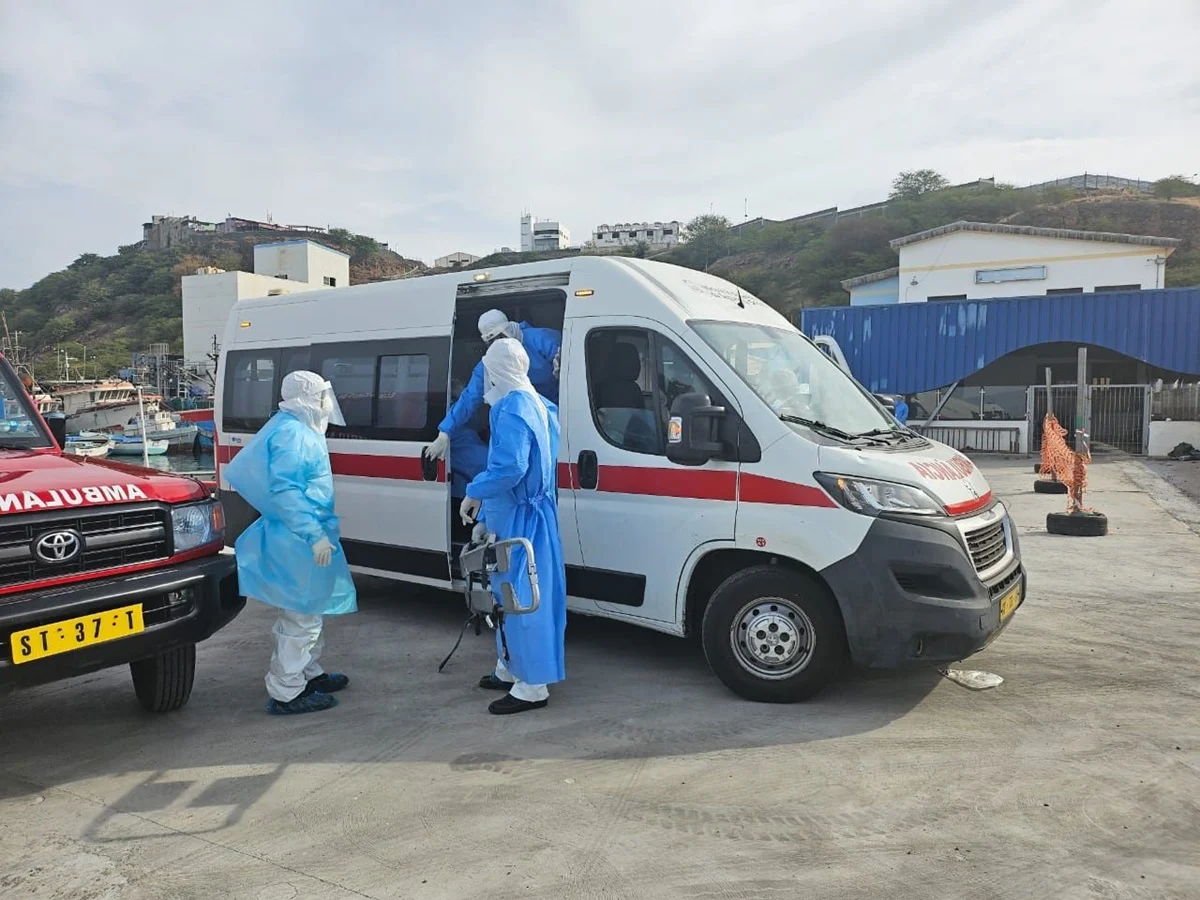
The World Health Organization (WHO) has officially confirmed a cluster of hantavirus cases originating from the MV Hondius, an expedition cruise ship currently operating in international waters. During a press briefing held at the WHO headquarters in Geneva, Director-General Dr. Tedros Adhanom Ghebreyesus provided a detailed account of the epidemiological situation, revealing that eight cases have been identified to date, resulting in three fatalities. Of the eight reported cases, five have been laboratory-confirmed as the Andes virus, a specific strain of hantavirus that presents unique challenges to public health officials due to its capacity for person-to-person transmission.
The notification of the outbreak first reached the WHO on Saturday, May 2, 2026, prompting an immediate activation of international health protocols. While the mortality rate within this small cluster is high, Dr. Tedros emphasized that the broader public health risk remains low, though he cautioned that the nature of the virus’s incubation period means additional cases could emerge in the coming days. The WHO is currently working in tandem with maritime authorities, national health ministries, and the ship’s operators to contain the spread and ensure the safety of all individuals on board.
Epidemiology and the Andes Virus Strain
The identification of the Andes virus (ANDV) as the causative agent in this cluster is a significant detail in the ongoing investigation. Unlike most other hantaviruses, which are typically transmitted to humans through contact with the excreta of infected rodents, the Andes virus—native to South America—is the only species within the hantavirus family known to be capable of limited human-to-human transmission. This transmission usually occurs in settings of close and prolonged contact, making the confined environment of a cruise ship a primary area of concern for epidemiologists.
Hantavirus Pulmonary Syndrome (HPS), the disease caused by the Andes virus, is characterized by a high case-fatality rate, often ranging between 30% and 40% in documented outbreaks. Symptoms typically begin with fever, fatigue, and muscle aches, which can rapidly progress to severe respiratory distress as the lungs fill with fluid. Because the initial symptoms are non-specific and mimic many other viral illnesses, early diagnosis is often difficult but remains critical for patient survival. The three deaths recorded in the MV Hondius cluster underscore the virulence of the pathogen and the necessity for rapid medical intervention.
Chronology of the MV Hondius Outbreak
The timeline of the incident began in late April 2026, as the MV Hondius was conducting its scheduled itinerary. While the exact source of the primary infection is still under investigation, the WHO was formally notified of the situation on May 2, 2026. This notification triggered the International Health Regulations (IHR), a legal framework that requires member states to report specific public health events to the WHO to facilitate a coordinated global response.
Following the initial report, the WHO and its regional partners moved to verify the cases. By May 4, laboratory results from regional reference centers confirmed that five of the patients were indeed suffering from the Andes virus. During this period, the ship’s medical team implemented isolation protocols for symptomatic individuals. On May 5, the WHO announced the deployment of a senior infectious disease expert to board the vessel. This expert is tasked with conducting a comprehensive medical assessment of all passengers and crew, as well as gathering environmental samples to determine if there was a rodent-borne point of origin on the ship or if the virus was introduced by a passenger who had been exposed prior to boarding.
Logistics of the International Response
A central component of the WHO’s response has been the mobilization of diagnostic resources. To ensure that the five countries most likely to be affected by the ship’s itinerary or the repatriation of its passengers have the necessary tools, the WHO has facilitated the shipment of 2,500 diagnostic kits. These kits were sourced from Argentina, a country with extensive experience and specialized laboratories dedicated to hantavirus research and surveillance.
The distribution of these kits to laboratories in five different nations is intended to decentralize testing and reduce the turnaround time for results. This is particularly important given the "incubation window" mentioned by Dr. Tedros. Hantaviruses generally have an incubation period of one to eight weeks, meaning individuals who appear healthy today could develop symptoms weeks after their initial exposure. Strengthening regional laboratory capacity ensures that any secondary or tertiary cases can be identified and isolated immediately upon the ship’s arrival at its next port of call.
Furthermore, the WHO is in the process of finalizing operational guidance for the disembarkation of the MV Hondius. This guidance focuses on three pillars: safety, dignity, and prevention. The Organization is working to ensure that the process of moving passengers from the ship to land-based facilities does not inadvertently facilitate further spread into the local community, while also ensuring that the rights and well-being of the passengers—many of whom have been in a state of high stress—are respected.
The Role of International Health Regulations (IHR)
The management of the MV Hondius cluster serves as a modern case study for the effectiveness of the International Health Regulations (2005). Dr. Tedros noted during his briefing that this event highlights exactly why these rules exist. The IHR provides a standardized set of obligations for 196 countries to detect, assess, and report public health threats. By operating under this framework, the WHO can act as a central hub for information, preventing the kind of fragmented response that can lead to panic or the unnecessary disruption of international travel and trade.
The cooperation shown by Argentina in providing diagnostic kits and the transparency of the ship’s flag state and the countries involved in the itinerary reflect a commitment to "global solidarity," a term frequently used by the Director-General. This cooperation is essential in maritime health, where jurisdictional complexities often arise when a ship carries passengers of various nationalities through the waters of multiple sovereign states.
Broader Implications for the Cruise and Travel Industry
The outbreak on the MV Hondius raises important questions regarding biosecurity and health protocols within the cruise industry, particularly for expedition vessels that frequent remote or ecologically sensitive areas. Unlike large-scale commercial cruise ships, expedition vessels like the MV Hondius often bring passengers into closer proximity with diverse wildlife environments where zoonotic diseases—those that jump from animals to humans—may be present.
Industry analysts suggest that this incident may lead to a review of "pre-boarding" health screenings and "on-board" pest control measures. While cruise lines already maintain rigorous sanitation standards, the specific threat of hantavirus requires unique environmental controls to prevent rodent ingress. Furthermore, the capacity for human-to-human transmission in the Andes strain necessitates a higher level of respiratory isolation capability on board ships than is typically required for more common maritime illnesses like norovirus.
The economic impact on the cruise sector is also a point of consideration. While the WHO has assessed the risk as low, the memory of the COVID-19 pandemic remains a significant factor in how the public perceives outbreaks on ships. By taking swift, transparent action and involving international experts, the WHO and the ship’s operators are attempting to maintain public confidence and prevent a wider panic that could affect the maritime travel industry.
Risk Assessment and Future Outlook
As of the latest briefing, the WHO’s assessment remains that the outbreak is a "cluster" rather than a widespread epidemic. The limited nature of Andes virus transmission—requiring close, prolonged contact—suggests that with proper isolation and quarantine of contacts, the chain of infection can be broken. However, the high mortality rate among the initial cases remains the most concerning aspect of the event.
The expert currently on board the MV Hondius is expected to provide a detailed report within the next 48 hours. This report will be instrumental in determining the timing and location of the ship’s disembarkation. In the interim, the WHO continues to monitor the health of all individuals on the vessel.
The Organization has also called for increased investment in hantavirus research. Despite its high fatality rate, hantavirus remains a relatively neglected disease in terms of vaccine development and specialized antiviral treatments. The MV Hondius incident may serve as a catalyst for a more robust global research agenda into New World hantaviruses, ensuring that the international community is better prepared for future zoonotic events.
Dr. Tedros concluded his briefing by reiterating the WHO’s priorities: "Our priorities are to ensure the affected patients receive care, that the remaining passengers on the ship are kept safe and treated with dignity, and to prevent any further spread of the virus." As the situation evolves, the WHO has pledged to provide regular updates to the media and the international community, maintaining the transparency required to manage a complex public health event in an interconnected world.
