
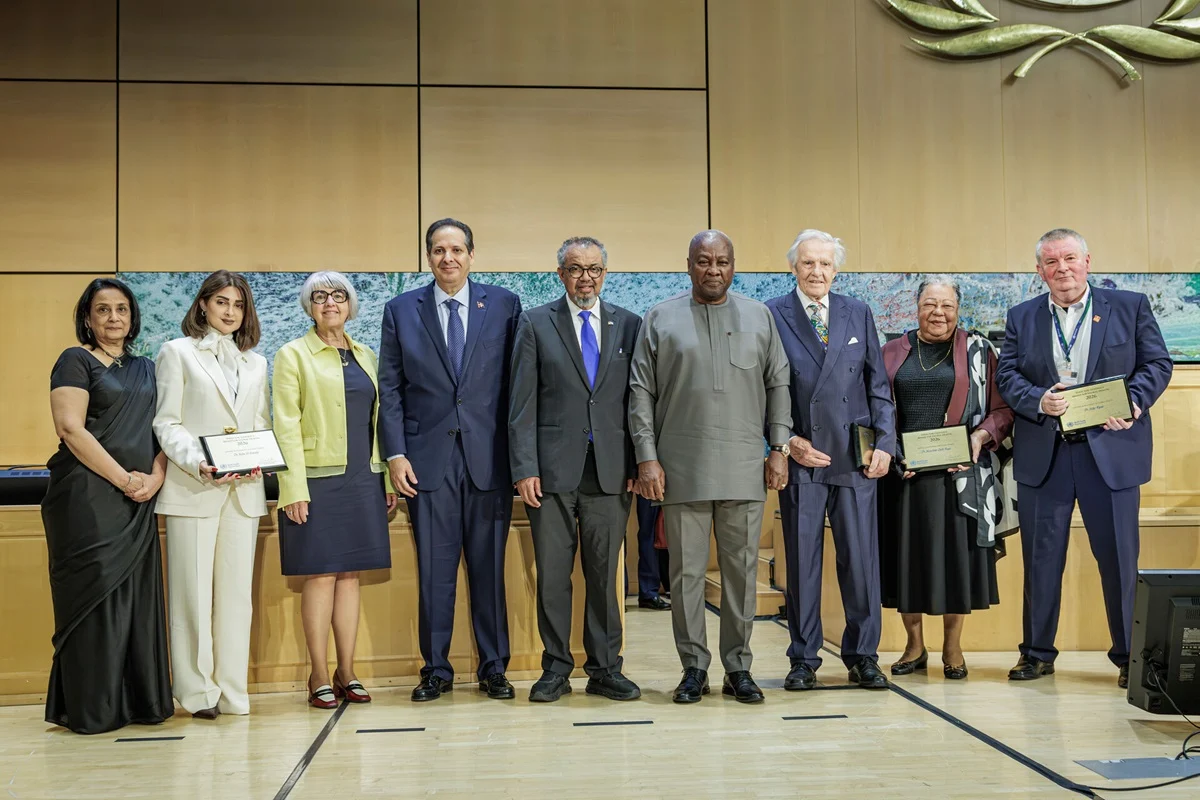
The Seventy-ninth World Health Assembly (WHA) convened this week in Geneva, Switzerland, marking a significant milestone in the international community’s ongoing efforts to harmonize global medical standards and emergency response protocols. Against the backdrop of the Palais des Nations, World Health Organization (WHO) Director-General Dr. Tedros Adhanom Ghebreyesus presented the prestigious Director-General’s Award for Global Health to four distinguished recipients. This year’s laureates—Dr. Tore Godal, Dr. Merceline Dahl-Regis, Dr. Mike Ryan, and Dr. Heba El Sewedy—were recognized for their career-long dedication to public health, scientific innovation, and humanitarian service. The ceremony took place during the High-Level Welcome of the WHA, an event centered on the timely theme of "Reshaping global health: a shared responsibility."
The Director-General’s Awards for Global Health were established in 2019 to honor individuals who have demonstrated exceptional leadership and a commitment to delivering tangible improvements in health outcomes. In his keynote address, Dr. Tedros emphasized that the 2026 awardees represent the multifaceted nature of modern public health, ranging from high-level policy architecture to frontline emergency management and specialized humanitarian care. The awards serve as a reminder that while global health is often discussed in terms of statistics and policy frameworks, its success is fundamentally driven by the courage and vision of individual leaders.
Dr. Tore Godal: The Architect of Global Immunization Infrastructure
Dr. Tore Godal was honored for his transformative leadership in the fields of immunization and infectious diseases. His career spans several decades, during which he shifted the paradigm of how the international community approaches vaccine distribution and disease control. Dr. Godal is perhaps most recognized for his instrumental role in establishing Gavi, the Vaccine Alliance. Since its inception in 2000, Gavi has helped vaccinate more than 1 billion children in the world’s poorest countries, preventing more than 17 million future deaths.
Before the turn of the millennium, vaccine equity was a secondary concern in global development. Dr. Godal’s advocacy helped elevate vaccines as a primary development priority, leading to the creation of not only Gavi but also the Roll Back Malaria partnership and CEPI (the Coalition for Epidemic Preparedness Innovations). His tenure as the head of WHO’s Tropical Diseases Programme (TDR) was marked by significant advancements in the fight against neglected tropical diseases (NTDs). Under his guidance, work on leprosy and malaria was expanded, and he championed community-based ivermectin distribution. This strategy was critical in the control of onchocerciasis, commonly known as river blindness, protecting millions of people in sub-Saharan Africa from permanent disability. Dr. Godal’s ability to translate complex scientific research into large-scale, actionable public health programs remains a gold standard in the field.
Dr. Merceline Dahl-Regis: A Legacy of Disease Elimination in the Americas
The recognition of Dr. Merceline Dahl-Regis highlights a lifetime of service dedicated to expanding immunization and achieving disease elimination milestones. A native of the Bahamas and a former Chief Medical Officer, Dr. Dahl-Regis’s influence extended far beyond the Caribbean. She was a central figure in the Region of the Americas becoming the first in the world to be certified free of measles and rubella. These achievements were not merely administrative; they required the coordination of diverse health systems across North, Central, and South America, as well as the Caribbean.
Dr. Dahl-Regis also spearheaded the regional Dual Elimination Initiative, which targeted the mother-to-child transmission of syphilis and HIV. Her approach emphasized the integration of primary healthcare with specialized disease control programs, ensuring that the most vulnerable populations—mothers and newborns—were not left behind. By combining rigorous research with community engagement, she demonstrated that disease elimination is possible even in resource-constrained environments when there is a unified political and medical will. Her work continues to serve as a blueprint for other WHO regions striving to reach similar elimination goals.
Dr. Mike Ryan: Leading the Frontline of Global Health Security
Dr. Mike Ryan, the Executive Director of WHO’s Health Emergencies Programme, was honored for his leadership in strengthening global preparedness and response to health crises. Dr. Ryan’s career has been defined by his presence in some of the world’s most challenging environments, from active conflict zones to the epicenters of viral outbreaks. As a founder of the Global Outbreak Alert and Response Network (GOARN), he helped create the international infrastructure necessary for the rapid detection and containment of infectious threats.
Throughout his career, Dr. Ryan has led operational responses to a litany of modern health threats, including SARS, cholera, Ebola, polio, and COVID-19. During the 2014-2016 West Africa Ebola outbreak and the subsequent COVID-19 pandemic, he became a familiar face of scientific integrity and operational transparency. His leadership is characterized by an unwavering commitment to health security, advocating for the protection of health workers and the fortification of local health systems as the first line of defense against global pandemics. His recognition at the 79th WHA underscores the critical importance of experienced operational leadership in an era of increasing biosecurity risks.
Dr. Heba El Sewedy: Humanitarian Action and the Restoration of Dignity
Dr. Heba El Sewedy received the Global Health Leaders Award for her pioneering work in humanitarian action and social justice. In 2013, she founded the Ahl Masr Foundation, an organization that has revolutionized the treatment and prevention of burn injuries in Egypt and the broader Middle East. Burn injuries are often a neglected aspect of public health, despite being a leading cause of disability and social ostracization in developing nations.
Through the foundation, Dr. El Sewedy established the first non-profit burn hospital in the region, providing comprehensive medical and psychological support to survivors. Her work goes beyond physical healing; it focuses on the reintegration of survivors into society, promoting awareness and dignity for those who have suffered traumatic injuries. Furthermore, her foundation has been active in providing humanitarian aid to those affected by the conflict in Gaza, demonstrating a commitment to health as a fundamental human right regardless of political borders. Dr. El Sewedy’s model of compassionate, people-centered care has become an inspiration for a new generation of public health advocates focused on equity and specialized humanitarian response.
Chronology of Global Health Milestones Linked to the Awardees
The achievements of this year’s laureates are deeply intertwined with the timeline of global health progress over the last four decades:
- 1980s – 1990s: Dr. Tore Godal leads WHO’s Tropical Diseases Programme, expanding ivermectin distribution to combat river blindness.
- 2000: The launch of Gavi, the Vaccine Alliance, with Dr. Godal as its first CEO, marking a new era of public-private partnerships in health.
- 2000: Dr. Mike Ryan helps establish GOARN, formalizing international collaboration for outbreak response.
- 2013: Dr. Heba El Sewedy founds the Ahl Masr Foundation, addressing the critical gap in burn injury care.
- 2015: The Region of the Americas is declared the first to eliminate rubella and congenital rubella syndrome, following the strategies championed by Dr. Merceline Dahl-Regis.
- 2016: The Americas become the first region to eliminate measles, a milestone validated by a commission chaired by Dr. Dahl-Regis.
- 2019: The WHO Health Emergencies Programme, under Dr. Ryan, navigates the complexities of the Kivu Ebola epidemic in the Democratic Republic of the Congo.
- 2020 – 2023: Dr. Ryan and the WHO leadership manage the global response to the COVID-19 pandemic.
- 2026: The 79th WHA recognizes these four leaders for their cumulative impact on global health equity and security.
Supporting Data: The Impact of Coordinated Global Health Action
The work of these four individuals is reflected in significant global health data. For instance, the elimination of measles in the Americas led to a drastic reduction in childhood mortality; before the vaccination campaigns of the 1990s, measles was responsible for thousands of deaths annually in the region. Similarly, the efforts of Dr. Godal through Gavi have contributed to a 70% reduction in child mortality from vaccine-preventable diseases in supported countries.
In the realm of health emergencies, the systems developed by Dr. Ryan have drastically shortened the time between the detection of an outbreak and the deployment of international aid. In the early 2000s, response times could be measured in months; today, through GOARN, expert teams can often be on the ground within 48 to 72 hours. Regarding burn care, the Ahl Masr Foundation reports that burn injuries affect approximately 250,000 people annually in Egypt alone, with children making up a significant portion of victims. The foundation’s specialized interventions have improved survival rates for severe burns from less than 30% to over 60% in treated cases.
Official Responses and Implications for Future Policy
The presentation of these awards has elicited strong reactions from the international diplomatic and medical communities. Dr. Tedros noted that the collective work of the awardees "serves as a source of inspiration for current and future generations working for a healthier, safer, and more equitable world." Delegates at the WHA expressed that the recognition of Dr. Ryan, in particular, signals a continued institutional commitment to the WHO’s emergency mandates, despite the geopolitical challenges that have surfaced in the post-pandemic era.
Health ministers from the Americas lauded the recognition of Dr. Dahl-Regis, viewing it as a validation of regional cooperation. They noted that her success in disease elimination provides a template for the "Shared Responsibility" theme of this year’s assembly. Meanwhile, humanitarian observers pointed to Dr. El Sewedy’s award as a vital acknowledgment of the role of non-governmental organizations (NGOs) in filling gaps where state healthcare systems may falter, particularly in specialized trauma care and conflict zones.
Analysis: Reshaping Global Health Through Individual and Collective Action
The theme of the 79th World Health Assembly, "Reshaping global health: a shared responsibility," reflects a shift in the global health architecture. The 2026 laureates exemplify this shift by moving away from siloed medical interventions toward integrated, partnership-based models. Dr. Godal’s work with Gavi and CEPI showed that the private sector, governments, and international agencies must work in tandem to solve supply chain and funding issues. Dr. Dahl-Regis and Dr. Ryan demonstrated that scientific expertise must be paired with diplomatic acumen to navigate the complexities of international borders and diverse political landscapes.
As the WHA continues its sessions in Geneva, the focus will remain on the "Pandemic Accord" and the revision of International Health Regulations. The achievements of the four awardees provide a historical and moral framework for these discussions. Their careers suggest that while policy is essential, the "tangible improvements" cited by Dr. Tedros are achieved through persistent, localized action and the courage to innovate in the face of skepticism.
The legacy of the 2026 Global Health Leaders is not found solely in the awards they received but in the millions of lives saved through vaccination, the regions cleared of debilitating diseases, the emergency responses successfully managed, and the trauma survivors reintegrated into their communities. As the global health community looks toward the 2030 Sustainable Development Goals, the work of Godal, Dahl-Regis, Ryan, and El Sewedy stands as a testament to what can be achieved through a lifelong commitment to the well-being of humanity.
