
Israeli food technology innovator Phytolon has successfully closed a $23.6 million Series B funding round, signaling a significant step forward in its mission to commercialize precision fermentation-derived alternatives to synthetic food dyes. The substantial investment, led by an undisclosed strategic investor and bolstered by existing partners, will primarily fuel the company’s expansion into the U.S. market and beyond, beginning with its flagship natural red dye. This development arrives at a pivotal moment, as regulatory bodies and consumer demand increasingly push the food industry away from artificial colorants.
The funding round, which spanned three stages, saw the majority of capital secured in April through contributions from existing investors including Millennium Foodtech, NextGen Nutrition, Colorcon Ventures, and Yossi Ackerman. This continued confidence from established partners underscores the perceived strength of Phytolon’s technology and market potential. The company’s core innovation lies in its use of baker’s yeast and precision fermentation to produce high-quality, cost-effective natural pigments, offering a sustainable and safe alternative to petroleum-based dyes.
Phytolon’s immediate focus is on the commercialization of its natural beetroot red colorant, a product that received a significant regulatory endorsement in February with its approval for use in the United States by the Food and Drug Administration (FDA). This approval marks a crucial milestone, allowing food and beverage companies to leverage Phytolon’s ingredient and potentially make "no artificial colors" claims on their labels, a capability previously restricted to products with no added colorants at all.
"This new funding will be allocated to support sales and supply to CPG [companies] and to distribution partners in the US and beyond," stated Halim Jubran, co-founder and CEO of Phytolon. "I am excited to see our portfolio of strategic investors increase, enabling us to grow our business and establish our footprint in the market." Jubran’s statement highlights the company’s strategic intent to rapidly scale its operations and capture market share in response to burgeoning demand.
The "Make America Healthy Again" movement, as referenced by the article’s initial framing, broadly reflects a growing public and governmental push for cleaner labels and healthier food options. This trend is not confined to the United States, with international markets also showing a clear preference for natural ingredients. Phytolon’s technology positions it at the forefront of this shift, addressing concerns about the potential health implications of artificial dyes.
Phytolon’s technological approach is rooted in precision fermentation, a sophisticated biotechnological process. This involves genetically engineering microorganisms, such as baker’s yeast, with specific DNA sequences. These engineered microbes are then cultivated in controlled fermentation environments, where they are programmed to produce targeted molecules – in Phytolon’s case, natural pigments. Once the desired pigment is synthesized, the production organism is separated from the fermentation broth, yielding a pure, natural colorant. This method offers significant advantages in terms of scalability, consistency, and cost-effectiveness compared to traditional extraction methods from plant sources, which can be subject to agricultural variability and higher costs.
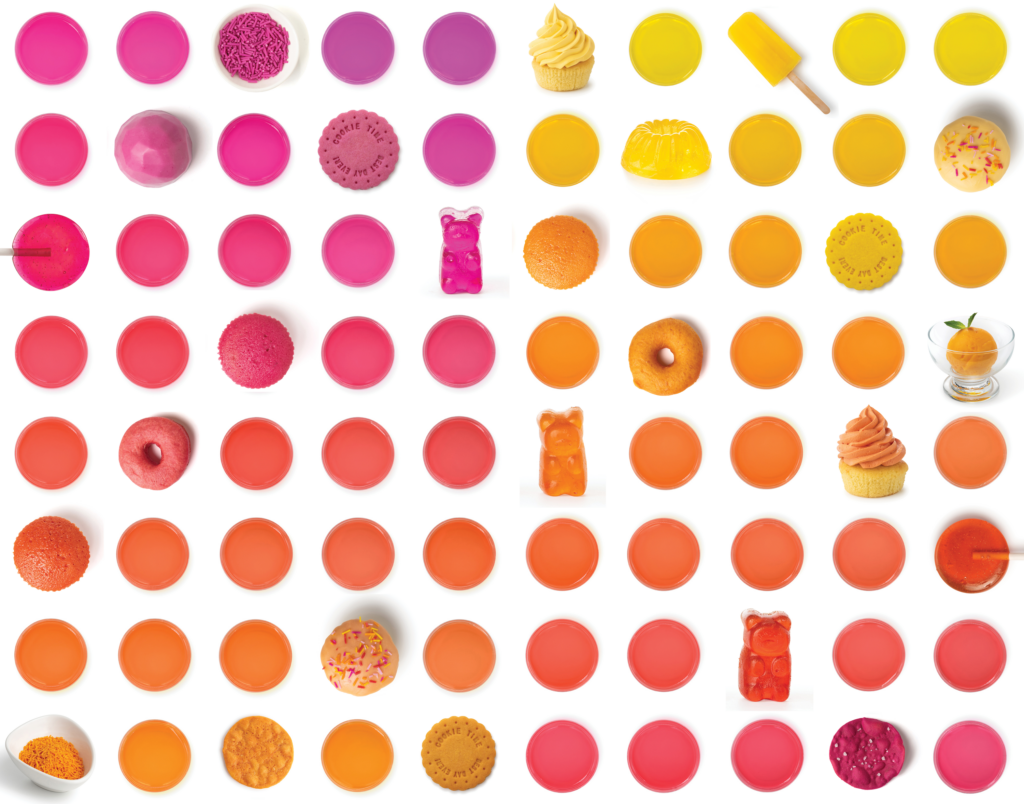
The company has developed a versatile portfolio based on two foundational pigments: yellow and purple. By skillfully combining and modifying these core colors, Phytolon can create a broad spectrum of hues, including yellow, orange, pink, purple, and red. This adaptability allows them to serve a wide range of food industry needs.
Their initial commercial offering, the beetroot red colorant, is derived from betanin, a prominent pigment found in red beets. Phytolon’s precision fermentation process effectively replicates and enhances the production of betanin, creating a heat- and pH-stable ingredient. This stability is critical for food applications, ensuring the color remains vibrant and consistent throughout processing and storage. It offers a direct alternative to widely used synthetic dyes like Red Dye No. 3 and Red Dye No. 40, which have faced increasing scrutiny. The beetroot red colorant is available in both liquid and powdered forms, making it suitable for diverse product categories such as bakery goods, savory dishes, frozen foods, dairy products, and confectionery.
The FDA’s recent amendment to its color additive regulations, recognizing the safe use of beetroot red, aligns with a broader regulatory trend towards natural ingredients. This regulatory shift, coupled with the agency’s decision to allow "no artificial colors" claims for products free from petroleum-based dyes, creates a fertile ground for companies like Phytolon. "With a strong network of strategic partners and recent FDA approval, Phytolon is well-positioned to capitalize on the transition toward natural dyes across food and supplement products," commented James Cali, general partner at NGN. He further elaborated, "Phytolon is at the nexus [of] two mega-trends – consumer and regulatory demand to remove artificial dyes and advances in fermentation to offer natural ingredients with better functionality, cost, and sustainability." This statement underscores the dual drivers of innovation in the food tech sector: market demand and technological advancement.
The broader context for Phytolon’s success is the increasing global awareness and regulatory action against artificial food dyes. In November of the previous year, the FDA announced its ban on Red Dye No. 3, a petroleum-derived colorant, citing potential health risks, including carcinogenicity in animal studies. This ban, set to take effect in January, has intensified scrutiny on other synthetic dyes, particularly Red Dye No. 40. Red Dye No. 40, prevalent in an estimated over 36,000 food products across the U.S., is synthesized from petroleum and has been linked to adverse health effects, including hyperactivity in children and potential carcinogenicity. Its widespread use makes it a prime target for reformulation efforts by food manufacturers.
The international landscape for artificial food dyes is also evolving. Red Dye No. 3 is already banned or heavily restricted in regions like Europe, Japan, Australia, and New Zealand. The European Union, for instance, has mandated warning labels on products containing Red Dye No. 40 since 2010, signaling a long-standing concern about its impact.
The prevalence of artificial food dyes in the U.S. market remains significant, with nearly one-fifth of packaged food and beverage products containing them. Data from Innova Market Insights indicates that in 2025, 28% of new product launches from major food companies included artificial dyes, highlighting the scale of the challenge and the opportunity for alternatives.
This shift is being driven by a confluence of factors, including advocacy from public health figures like Robert F. Kennedy Jr., who has actively encouraged food manufacturers to move away from synthetic dyes. Public opinion strongly supports this transition, with approximately two-thirds of Americans backing the move towards natural ingredients. In response, major food conglomerates such as Nestlé, Mars, Kellogg’s, and General Mills have committed to reformulating products and eliminating these artificial ingredients. The FDA even maintains a public tracker to monitor these industry pledges, demonstrating the official commitment to transparency and change.
Phytolon’s beetroot red coloring is versatile, suitable for most food applications with the exception of infant formula and certain products regulated by the U.S. Department of Agriculture. The company is also actively developing a prickly pear yellow hue, further expanding its natural color palette.

Phytolon is not alone in attracting significant investment in the natural food colorant space. The sector has witnessed a surge in funding for innovative startups leveraging biotechnology. In November, Chromologics secured $8 million to launch its microbial-derived red dye in the U.S. and Europe. Following this, Octarine Bio raised $5.8 million in January to commercialize its precision-fermented pigments for various industries, including food, textiles, and personal care. More recently, Sparxell, a spinout from the University of Cambridge, closed a $5 million funding round for its plant-based colorants designed to replace fossil-fuel-derived pigments across a wide array of sectors, from textiles and cosmetics to food and automotive.
These investments collectively signal a robust and growing market for natural and bio-based colorants, driven by increasing regulatory pressure, heightened consumer awareness regarding health and sustainability, and significant advancements in biotechnology. Phytolon’s substantial Series B funding positions it as a key player poised to meet this escalating demand and redefine the future of food coloring. The company’s ability to produce cost-effective, stable, and regulatory-approved natural dyes through precision fermentation offers a compelling solution for the global food industry’s transition to cleaner labels and healthier ingredients. The successful commercialization of its beetroot red dye is expected to pave the way for further innovation and market penetration, potentially reshaping how food products are colored worldwide.
