
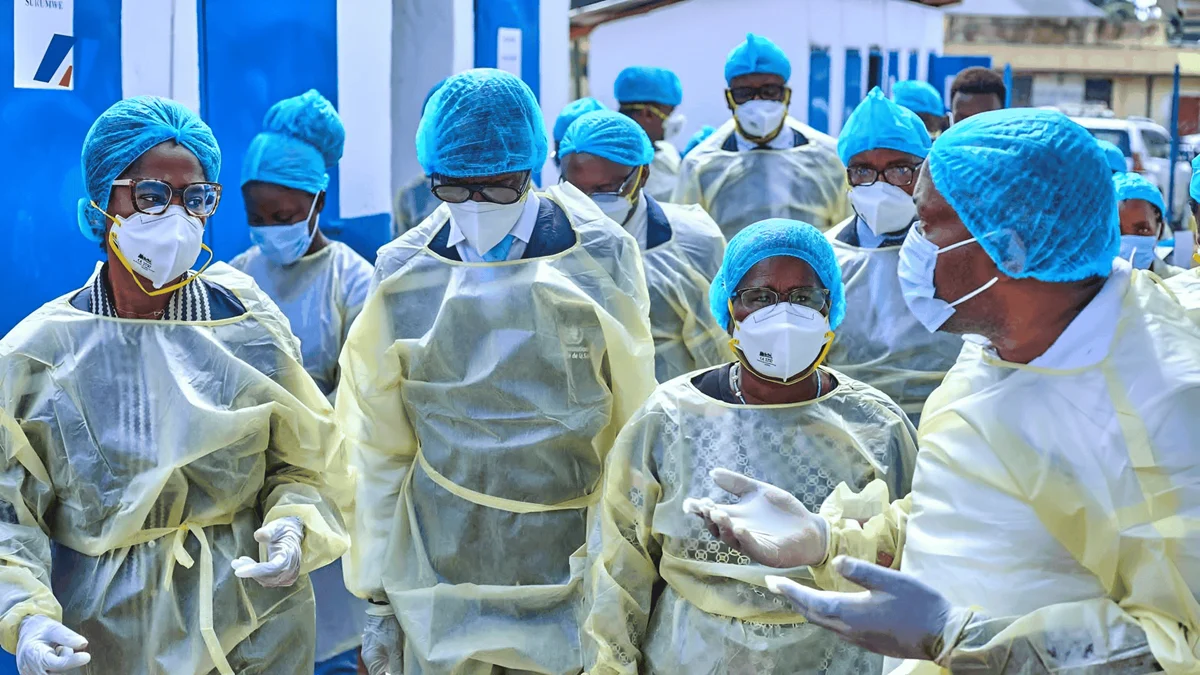
The World Health Organization (WHO) has successfully concluded Exercise Polaris II, a high-intensity, two-day simulation designed to stress-test global responses to a hypothetical bacterial pandemic. Held on April 22 and 23, 2026, the exercise convened a massive coalition of 26 countries and territories, 600 health emergency experts, and more than 25 international partners. The simulation served as a critical milestone in the operationalization of the Global Health Emergency Corps (GHEC), a framework established to ensure that the world is never again caught unprepared by a fast-moving pathogen.
Based on a scenario involving a fictional, highly transmissible new bacterium spreading across international borders, Polaris II required participating nations to activate their emergency coordination structures under real-time pressure. The exercise focused on the rapid flow of information, the alignment of cross-border health policies, and the ability to surge a specialized workforce to the front lines of an outbreak. By recreating the chaotic conditions of a burgeoning pandemic, the WHO aimed to move beyond theoretical planning and into the practical application of global health security protocols.
The Evolution of HorizonX: A Chronology of Preparedness
Exercise Polaris II is a cornerstone of HorizonX, the WHO’s multi-year simulation initiative designed to build a continuous cycle of readiness rather than relying on periodic or reactive measures. The timeline of this initiative reflects a strategic, step-by-step strengthening of global defenses over the past two years.
In April 2025, the WHO conducted Polaris I, which focused on a fictional viral pathogen. That exercise laid the groundwork for international cooperation, identifying gaps in how countries share genomic data and coordinate travel advisories. Following the lessons of Polaris I, the WHO published the Global Health Emergency Corps (GHEC) framework in June 2025. This document established the principles of sovereignty, equity, and solidarity as the bedrock of international health workforce deployments.
The momentum continued into October 2025 with the release of the National Health Emergency Alert and Response Framework. This provided a blueprint for local and national governments to synchronize their internal response mechanisms with international standards. Polaris II, occurring in April 2026, represents the first time these two comprehensive frameworks have been tested simultaneously in a global, multi-country simulation.
This chronological progression demonstrates a shift in global health strategy: moving from the ad-hoc responses seen during the COVID-19 pandemic toward a standardized, pre-vetted system of mutual aid and expert mobilization.
Technical Foundations: GHEC and AI Integration
At the heart of Polaris II was the testing of the Global Health Emergency Corps (GHEC). Unlike previous iterations of emergency response, GHEC is designed to be a "network of networks," connecting existing health workforces across the globe. The simulation evaluated how effectively countries could request and receive surge support—expert personnel ranging from epidemiologists to logistics specialists—without compromising national sovereignty.
A significant addition to the 2026 exercise was the exploration of AI-enabled tools for workforce organization. As the fictional bacterium spread in the simulation, participants utilized artificial intelligence to model workforce shortages and optimize the deployment of regional personnel. These tools allowed coordinators to visualize where the highest demand for medical expertise would occur 72 hours in advance, enabling a proactive rather than reactive "surge."
The National Health Emergency Alert and Response Framework also played a pivotal role. This framework ensures that the "last mile" of health delivery is connected to the global "first mile" of detection. During the exercise, countries practiced how local health alerts in a sub-national province would trigger a cascade of actions leading to a national emergency declaration and, eventually, a notification to the WHO under International Health Regulations.
A Global Coalition: Participating Nations and Partners
The diversity of the participants in Polaris II highlights the universal nature of the bacterial threat. The exercise included a broad spectrum of economies and healthcare systems, ensuring that the frameworks were tested in varied environments. Participating countries and territories included Bangladesh, Brazil, Brunei, Colombia, Egypt, El Salvador, France, Georgia, Ghana, India, Indonesia, Jordan, Kenya, Kosovo (under UNSC Resolution 1244), Libya, Malaysia, Nepal, Oman, Paraguay, Philippines, Qatar, the Republic of Congo, Rwanda, Suriname, Thailand, and Yemen.
The collaboration extended beyond national governments to include over 25 major health agencies and emergency networks. These organizations provided the technical backbone for the simulation, practicing how they would integrate their specific expertise into a unified global response. Key partners included:
- Regional Bodies: Africa Centres for Disease Control and Prevention (Africa CDC) and the recently launched Health Emergency Leaders Network for Africa and the Eastern Mediterranean.
- International Organizations: UNICEF and the International Federation of Red Cross and Red Crescent Societies (IFRC).
- Non-Governmental Organizations: Médecins Sans Frontières (MSF) and UK-Med.
- Technical Institutes: The Robert Koch Institute (RKI) and the International Association of National Public Health Institutes (IANPHI).
- Specialized Networks: The Global Outbreak Alert and Response Network (GOARN), the Emergency Medical Teams (EMT) initiative, and various Standby Partners.
The inclusion of the Health Emergency Leaders Network for Africa and the Eastern Mediterranean was particularly noteworthy. This new network facilitated faster communication between regional directors, allowing for a more localized but coordinated management of the fictional outbreak before it reached a global scale.
Official Perspectives: Turning Plans into Action
The leadership of the WHO and participating nations emphasized that the value of Polaris II lies in its ability to reveal friction points in international cooperation. Dr. Tedros Adhanom Ghebreyesus, WHO Director-General, remarked on the essential nature of this collective action.
"Exercise Polaris II showed what is possible when we act together. It demonstrated that global cooperation is not optional—it is essential," Dr. Tedros stated. "This is the purpose of the Global Health Emergency Corps: coordination across the emergency workforce, building trust, strengthening connections, and working as one across borders."
This sentiment was echoed by Dr. Chikwe Ihekweazu, Executive Director of the WHO’s Health Emergencies Programme, who noted that the exercise reflected the "spirit" of a modern emergency workforce. He described the ideal state as a "well-organized, trained, coordinated and connected" body that is ready to respond "wherever and whenever it is needed."
From a national perspective, Edenilo Baltazar Barreira Filho, Director of the Public Health Emergencies Department at the Ministry of Health in Brazil, highlighted the necessity of these simulations for national security. "By simulating the spread of a dangerous pathogen under real-life conditions, Exercise Polaris II helped us turn existing plans into action. It is not enough to have plans on paper—what matters is how they perform in practice," he said. His comments underscore a growing consensus among health ministers that preparedness is an active, ongoing process rather than a static set of documents.
Analysis: Implications for Global Health Security
The transition from a viral scenario in Polaris I to a bacterial scenario in Polaris II carries significant implications. In the real world, the rise of antimicrobial resistance (AMR) has made bacterial outbreaks increasingly difficult to manage. By choosing a bacterium for this simulation, the WHO forced participants to consider not just vaccine distribution, but also the complexities of antibiotic supply chains, laboratory diagnostics for bacterial identification, and hospital-based infection control.
The success of Polaris II suggests several key shifts in the global health landscape:
- Normalization of Interdependence: The exercise reinforced that no single country, regardless of wealth or infrastructure, can manage a pandemic in isolation. The participation of 26 diverse nations suggests a growing acceptance of the GHEC’s collaborative model.
- Technological Integration: The use of AI in workforce planning marks a new era in emergency management. If these tools can be successfully scaled, the "brain drain" often seen during emergencies—where experts are pulled from one crisis to another—could be mitigated through more efficient resource allocation.
- Regional Empowerment: By utilizing networks like the Africa CDC and the Health Emergency Leaders Network, the WHO is decentralizing the response. This allows for quicker decision-making that is culturally and logistically appropriate for specific regions.
- Continuous Readiness: As part of the HorizonX program, Polaris II signals that the WHO is moving away from the "panic and neglect" cycle of the past. The goal is to make health security a permanent fixture of national defense and public policy.
As the world marks World Health Day 2026 under the theme "Together for health. Stand with science," the conclusion of Exercise Polaris II serves as a tangible example of that science in action. The data gathered during these two days will now be analyzed to refine the GHEC and National frameworks further, ensuring that the global community remains one step ahead of the next real-world threat. The investment in these simulations represents a commitment to the idea that collective readiness is not a periodic effort, but a fundamental requirement for a safe and healthy global population.
