
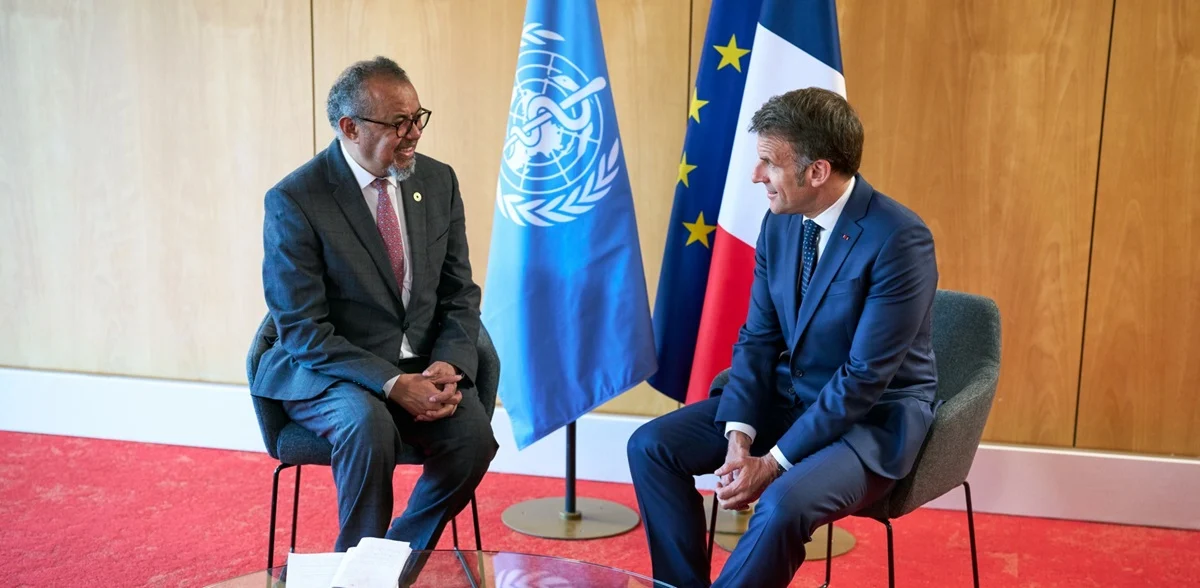
The convergence of global heads of state, scientific pioneers, and international health authorities in France has resulted in a transformative shift in global health policy, as the World Health Organization (WHO) and its partners formalize a series of strategic commitments under the "One Health" framework. This milestone summit, coinciding with World Health Day, serves as a critical pivot point in the global effort to synchronize human, animal, and environmental health strategies. Amidst a landscape of escalating climate instability and the lingering economic shadows of the COVID-19 pandemic, the summit’s theme, "Together for health. Stand with science," underscores a move away from reactive crisis management toward a proactive, integrated defense system for the planet.
The Paradigm Shift: Understanding the One Health Imperative
The One Health approach is predicated on the fundamental scientific reality that the health of humans is inextricably linked to the health of animals and the integrity of the ecosystems they share. This concept, while discussed in academic circles for decades, has gained unprecedented political momentum following the catastrophic global disruptions of the early 2020s. Data presented at the summit highlights the staggering stakes of this integration: approximately 60% of known infectious diseases in humans originate in animals, and 75% of all emerging infectious diseases are zoonotic in nature.
The urgency of the summit is further bolstered by the economic and human costs of failing to address these interfaces. The COVID-19 pandemic resulted in an estimated 15 million deaths and triggered a global economic contraction valued in the trillions of dollars. Beyond viral pandemics, the summit addressed the "silent" threats of environmental degradation, water contamination, and biodiversity loss. Experts at the event noted that the destruction of natural habitats forces wildlife into closer proximity with human settlements, creating "spillover" opportunities for pathogens that the global health infrastructure is currently ill-equipped to contain.
A Chronology of Global Health Integration
The One Health Summit in France represents the culmination of several years of intensified multilateral cooperation. The trajectory toward this event began in earnest following the 2004 "Manhattan Principles," which first clearly articulated the link between human and animal health. However, the true acceleration occurred in 2022 when the United Nations Environment Programme (UNEP) formally joined the existing "Tripartite" (consisting of the WHO, the Food and Agriculture Organization of the United Nations (FAO), and the World Organisation for Animal Health (WOAH)) to form the "Quadripartite."
This evolution reflects a growing consensus that environmental health is not a secondary concern but a primary driver of disease emergence. In late 2022, the Quadripartite launched the One Health Joint Plan of Action (2022–2026), providing a five-year blueprint for integrated action. The current summit in France serves as the implementation milestone for this plan, moving from theoretical frameworks to localized, operationalized tools.
The Four Pillars of the New Global Health Architecture
To address the identified gaps in global preparedness, the WHO and its Quadripartite partners announced four major initiatives during the summit, each designed to dismantle the "silos" that traditionally separate medical, veterinary, and environmental sciences.
1. Launch of the Global Network of One Health Institutions
The WHO announced plans to establish a new Global Network of One Health Institutions. This network is designed to serve as the technical engine for the One Health Joint Plan of Action. By mobilizing multidisciplinary expertise, the initiative aims to provide coordinated support to individual nations. A key component of this network is the translation of high-level global guidance into practical, on-the-ground tools for local health workers and farmers. The WHO Academy will play a central role in this, offering specialized training and peer-learning platforms to ensure that the workforce in developing nations is equipped with the latest scientific protocols for zoonotic surveillance.
2. Extension of the One Health High-Level Expert Panel (OHHLEP)
Recognizing the need for a permanent scientific advisory body, the WHO and its partners confirmed the extension of the One Health High-Level Expert Panel (OHHLEP) through 2027, with a subsequent phase planned through 2029. The panel’s mandate is to shape the global research agenda and ensure that political decisions are grounded in rigorous evidence. By driving high-level advocacy, the OHHLEP acts as a bridge between laboratory findings and legislative action, ensuring that policy does not lag behind scientific discovery.
3. A Renewed Global Push to Eliminate Dog-Mediated Rabies
In a specific application of the One Health model, the WHO, WOAH, and the Institut Pasteur launched a renewed initiative to eliminate human deaths from dog-mediated rabies by 2030. Despite being a 100% vaccine-preventable disease, rabies continues to claim nearly 60,000 lives annually, a disproportionate number of whom are children in underserved regions. This initiative uses rabies elimination as a blueprint for broader health systems strengthening. By improving community-based surveillance and dog vaccination programs, countries can simultaneously build the infrastructure needed to detect more complex emerging threats.
4. Strategic Framework for Avian Influenza Collaboration
The summit also saw the introduction of a new Strategic Framework for Collaboration on avian influenza. With H5N1 and other strains increasingly impacting poultry, wild birds, and increasingly mammals, the threat to food security and public health has reached a critical level. The new framework shifts the focus from fragmented, reactive culling of livestock to a unified strategy involving risk assessment, preparedness, and response that considers the impact on biodiversity and the livelihoods of small-scale farmers.
Political Leadership and the Role of France
As the host nation, France has positioned itself at the vanguard of the One Health movement. President Emmanuel Macron, addressing the assembly of Heads of State and ministers, emphasized that One Health is a philosophy of governance rather than just a medical strategy. Macron noted that the well-being of humans is inseparable from the system in which they live, advocating for a science-led approach to international cooperation.
France’s leadership is particularly relevant given its historical contributions to microbiology and public health through the Institut Pasteur. By championing this summit, France is catalyzing a movement to integrate One Health into the agendas of the G7 and other influential international bodies. This political backing is seen as essential for securing the long-term financing required to sustain global surveillance networks.
Dr. Tedros Adhanom Ghebreyesus, Director-General of the WHO, echoed these sentiments, thanking France for its hospitality and leadership. He highlighted that the WHO is now assuming the Chairmanship of the Quadripartite collaboration, signaling a period of enhanced leadership where the organization will prioritize delivering measurable impacts at the country level.
The Global Forum of WHO Collaborating Centres
Parallel to the summit, the inaugural Global Forum of WHO Collaborating Centres (CCs) commenced, bringing together more than 800 institutions from over 80 countries. This forum includes high-level participation from health ministers of Germany, Indonesia, and South Africa. These collaborating centres represent the world’s leading academic and research institutions, and the forum is designed to accelerate data sharing and coordinated research.
The significance of the Global Forum lies in its ability to decentralize health expertise. By fostering direct lines of communication between a laboratory in Jakarta and a research institute in Berlin, the WHO aims to create a more resilient and responsive global scientific community. This network is vital for the rapid identification of new pathogens and the development of diagnostics and vaccines.
Analysis: Implications for Future Global Stability
The outcomes of the One Health Summit suggest a fundamental change in how the international community perceives risk. Traditionally, health, agriculture, and environment ministries operated with separate budgets and competing priorities. The initiatives launched in France represent an attempt to merge these interests under a single strategic umbrella.
For the private sector, particularly the pharmaceutical and agricultural industries, the One Health approach implies a more regulated but predictable environment. Stronger surveillance systems reduce the likelihood of sudden, catastrophic market disruptions caused by livestock epidemics or human pandemics. For the public, these measures promise a more robust defense against the "spillover" events that have become more frequent in the 21st century.
However, the success of these initiatives depends heavily on sustained funding and the willingness of nations to share data transparently. Critics have often pointed out that during the COVID-19 pandemic, national interests frequently overrode global cooperation. The One Health framework seeks to mitigate this by institutionalizing cooperation through the new Global Network of One Health Institutions and the expanded OHHLEP.
Looking Ahead: From Ambition to Implementation
The road from the summit in France to the year 2030 is marked by ambitious targets, including the elimination of rabies and the stabilization of avian influenza threats. The transition of the Quadripartite Chairmanship to the WHO marks a phase of accountability, where the focus will shift from high-level declarations to measurable improvements in local health outcomes.
As the summit concluded, the message from the global leaders was clear: the era of treating human health as an isolated variable is over. The "One Health" approach is now the standard by which future pandemic preparedness and environmental stewardship will be measured. By standing with science and fostering multilateral cooperation, the WHO and its partners aim to ensure that the world is never again caught unprepared by a crisis that was, in hindsight, entirely predictable.
