
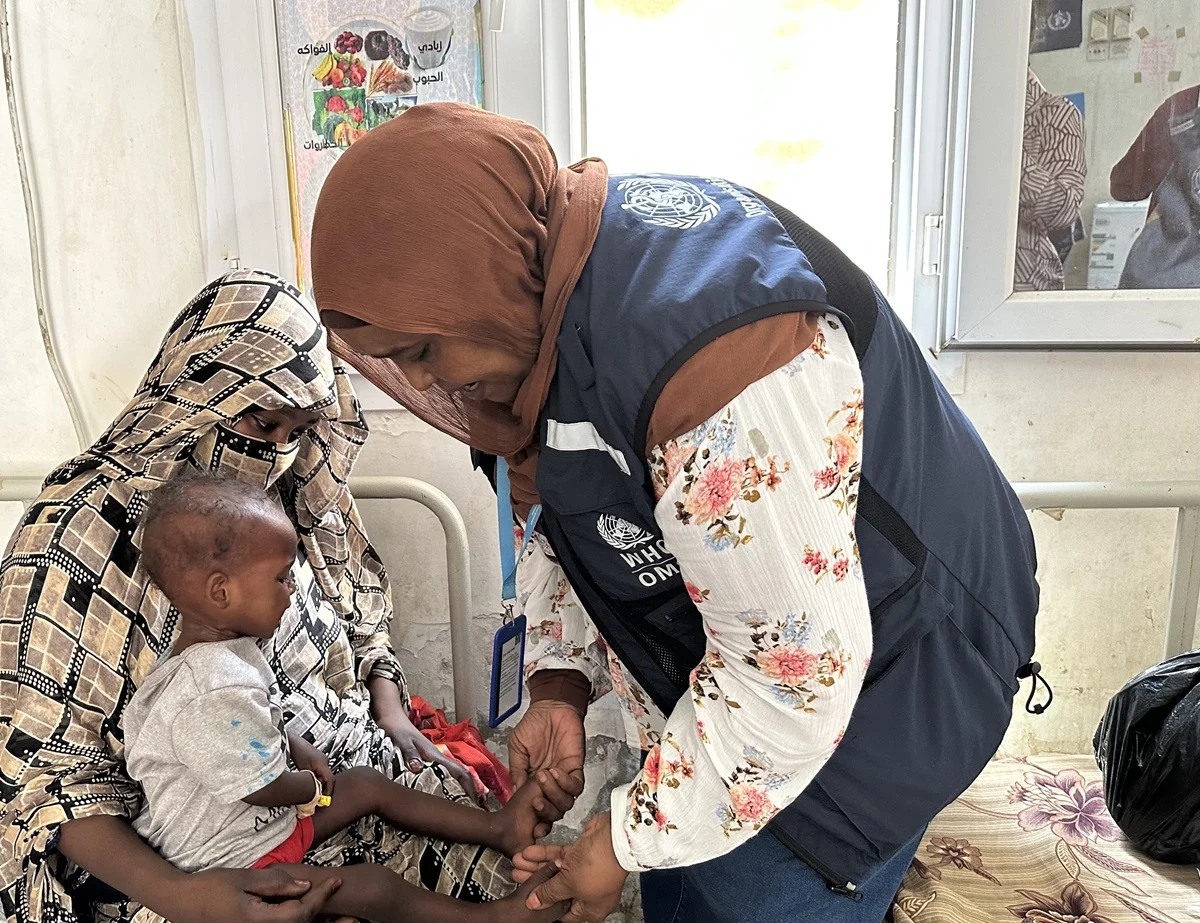
The Republic of Sudan has officially descended into the world’s most severe humanitarian catastrophe, with new data from the World Health Organization (WHO) revealing that 34 million people—roughly 70% of the population—now require urgent life-saving assistance. After three years of unrelenting warfare between the Sudanese Armed Forces (SAF) and the Rapid Support Forces (RSF), the nation’s social and physical infrastructure has reached a point of near-total collapse. Currently, 21 million citizens are living without access to basic health services, as a systematic campaign of violence continues to target medical facilities, personnel, and transport.
While some regions have seen marginal improvements in stability, the health crisis is aggressively deepening in active combat zones. In these areas, the intersection of rising malnutrition, spreading disease outbreaks, and a shrinking window for humanitarian access has created a "perfect storm" of mortality. Funding for the international response remains critically below the required thresholds, leaving millions of civilians trapped in a cycle of displacement and deprivation.
The Evolution of a Crisis: A Three-Year Chronology
The current conflict began on April 15, 2023, following months of escalating tensions regarding the integration of the RSF into the national military. What started as a localized power struggle in Khartoum rapidly metastasized into a nationwide civil war, drawing in various ethnic militias and destabilizing peripheral regions that were already reeling from decades of intermittent violence.
By late 2023, the conflict had effectively bifurcated the country, with the Darfur and Kordofan regions becoming primary theaters of high-intensity urban warfare. Throughout 2024 and 2025, the nature of the crisis shifted from a purely military engagement to a systemic destruction of civilian life. Agricultural cycles were disrupted, leading to the current food insecurity crisis, and the deliberate targeting of water and power infrastructure became a hallmark of the fighting.
Entering the second quarter of 2026, the WHO reports that the humanitarian landscape is characterized by "protracted fragility." The initial emergency phase has transitioned into a long-term collapse of the state’s ability to provide for its citizens. Despite numerous ceasefire attempts brokered by international mediators, the fighting has remained persistent, forcing over 10 million people to flee their homes, making Sudan the site of the world’s largest internal displacement crisis.
Systematic Destruction of the Healthcare Architecture
The impact on the medical sector has been particularly devastating. According to verified WHO data, there have been 217 documented attacks on healthcare facilities, personnel, and assets since the outbreak of hostilities in April 2023. these attacks have resulted in at least 2,052 deaths and 810 injuries among patients and staff.
Across Sudan’s 18 states, approximately 37% of all health facilities are non-functional. In conflict-heavy regions like Khartoum, Darfur, and the Kordofans, the percentage of operational hospitals is significantly lower, with many facilities operating at only partial capacity due to a lack of electricity, clean water, and essential medicines.
A poignant example of this destruction occurred recently at the El Daein Teaching Hospital in East Darfur. As a critical referral hub for hundreds of thousands of people, the hospital was a lifeline for the region. A targeted attack on the facility resulted in 64 deaths—including children and medical professionals—and rendered the building completely inoperable. The loss of such a facility does not just result in immediate casualties; it creates a "medical vacuum" where treatable conditions such as obstructed labor, appendicitis, or infected wounds become death sentences.
The Convergence of Malnutrition and Infectious Disease
The health crisis is further exacerbated by a burgeoning nutritional emergency. The Integrated Food Security Phase Classification (IPC) Alert issued in February 2026 estimates that over 4 million people are acutely malnourished. Malnutrition functions as a physiological force multiplier, weakening the immune systems of the most vulnerable—particularly children and the elderly—making them significantly more susceptible to infectious diseases.
Disease outbreaks are now widespread and multi-faceted. The WHO has confirmed active transmission of malaria, dengue, measles, polio (cVDPV2), hepatitis E, meningitis, and diphtheria across several states, including Al Jazirah, Gedaref, Khartoum, and the White Nile. The collapse of sanitation systems and the lack of access to clean water have turned displaced person camps into breeding grounds for waterborne pathogens.
While a major cholera outbreak was declared over in March 2026 after a year-long response, the threat of resurgence remains high. The successful containment of cholera, which involved reaching 24.5 million people with oral vaccines, demonstrates that humanitarian intervention can work even in high-conflict environments, provided there is sufficient funding and access.
International Leadership and Official Responses
World health leaders have expressed profound alarm at the trajectory of the Sudanese crisis. Dr. Tedros Adhanom Ghebreyesus, WHO Director-General, emphasized the fundamental link between security and health. “The war in Sudan is devastating lives and denying people their most basic rights, including health, water, food, and safety," Dr. Tedros stated. "Doctors and health workers can save lives, but they must have safe places to work and the medicines and supplies they need. Ultimately, the best medicine is peace.”
This sentiment was echoed by Dr. Hanan Balkhy, WHO Regional Director for the Eastern Mediterranean, who highlighted the scale of the suffering. “Three years in conflict have turned Sudan into the world’s largest ongoing health crisis," she noted. "With millions lacking basic medical care, facing hunger, and at risk of disease, Sudan’s health crisis continues to deepen, emphasizing the urgent need for humanitarian support and long-term solutions.”
On the ground, the logistical challenges are immense. Dr. Shible Sahbani, the WHO Representative to Sudan, noted that the organization has been forced to adapt to a constantly shifting security landscape. “WHO has been on the ground since the start of the conflict, with supplies, disease surveillance, training, and coordination,” Dr. Sahbani said. He added that as some areas become accessible, the focus is shifting toward "early recovery and rehabilitation" of the health system to ensure that the response is not merely reactive but sustainable.
Humanitarian Operations and Triage in a War Zone
Despite the security risks, the WHO and its partners have maintained a massive logistical operation. Since the start of the war, the WHO has delivered over 3,300 metric tons of medicines and medical supplies. These shipments include trauma kits for the war-wounded, supplies for cholera and malaria treatment, and specialized nutritional supplements for severely malnourished children.
Key achievements of the humanitarian response include:
- Primary Care: Providing essential healthcare to more than 4.1 million people through a network of primary health centers, mobile clinics, and surviving hospitals.
- Nutritional Intervention: Supporting the treatment of over 118,000 children suffering from complicated severe acute malnutrition.
- Immunization: Executing massive vaccination campaigns that have reached more than 46 million people with vaccines for cholera, polio, measles, and rubella.
- Pioneering Health Measures: Sudan became the first country in the region to include malaria vaccines in its routine immunization program, a landmark achievement despite the ongoing hostilities.
Analysis of Broader Implications and Future Risks
The long-term implications of the Sudanese conflict extend far beyond the immediate casualty counts. The "brain drain" of medical professionals—many of whom have fled the country or been killed—threatens to leave Sudan without a functional healthcare workforce for a generation. Furthermore, the interruption of education and routine childhood vaccinations creates a "lost generation" whose health and economic prospects are severely diminished.
The regional stability of East Africa and the Sahel is also at stake. The exodus of millions of refugees into neighboring Chad, Egypt, South Sudan, and Ethiopia is placing immense pressure on the resources of those nations, potentially triggering secondary crises.
From an epidemiological perspective, the breakdown of disease surveillance in Sudan creates a "blind spot" for global health security. With pathogens like polio and measles circulating unchecked in conflict zones, the risk of cross-border transmission increases, threatening to undo decades of progress in global disease eradication efforts.
A Call for Unrestricted Access and Sustained Funding
The WHO concludes its latest assessment with a dual appeal to the warring factions and the international community. First, there is an urgent requirement for unrestricted and safe access to all regions of Sudan, particularly the besieged areas of Darfur and the Kordofans. Without "humanitarian corridors," aid cannot reach the populations most in need.
Second, the international community must address the "funding fatigue" that often plagues protracted conflicts. While the generosity of donors has saved millions of lives over the past three years, the scale of the 2026 crisis requires a renewed commitment to both emergency relief and the long-term reconstruction of the state’s health architecture.
As the conflict enters its fourth year, the consensus among humanitarian agencies is clear: while medical supplies and vaccines are vital, they are only "stop-gap" measures. The restoration of health in Sudan is inextricably linked to a political resolution. Without a permanent ceasefire and a transition to stable governance, the nation’s health system will continue to erode, leaving tens of millions of people in a state of perpetual peril. Peace, as the WHO notes, remains the only definitive cure for the suffering of the Sudanese people.
