
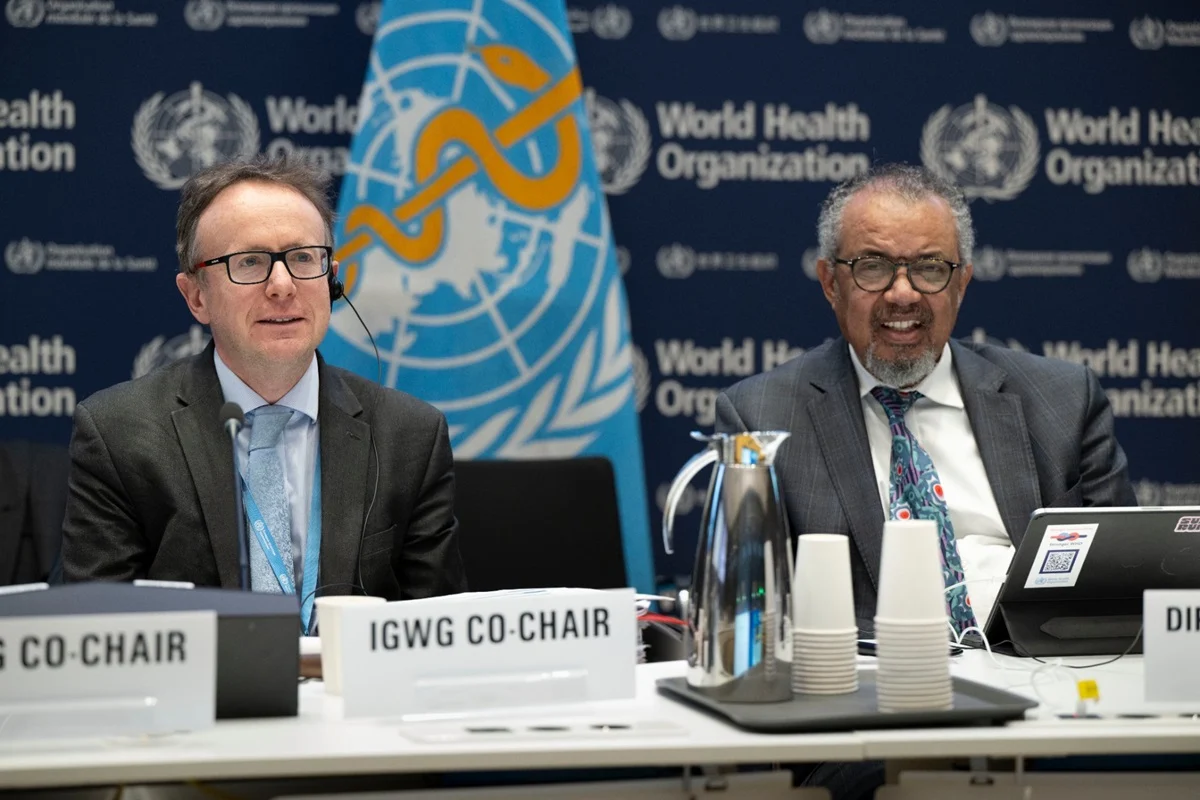
World Health Organization (WHO) Member States have reached a consensus to extend high-level negotiations regarding the Pathogen Access and Benefit Sharing (PABS) annex, a cornerstone of the proposed WHO Pandemic Agreement. This decision, announced following intensive deliberations in Geneva, sets a new timeline for discussions to resume from April 27 to May 1. The extension aims to bridge significant gaps between member nations before the final text is presented for consideration at the 77th World Health Assembly (WHA) in May 2024. This strategic delay reflects the profound complexity of the issues at hand, as well as a collective determination to ensure that the final framework is both robust and equitable.
The PABS system is designed to rectify the systemic failures observed during the COVID-19 pandemic, specifically the delays in sharing critical viral data and the subsequent "vaccine nationalism" that left many low- and middle-income countries without access to life-saving medical countermeasures. By establishing a formal, legally binding mechanism, the WHO seeks to ensure that the rapid sharing of pathogens with pandemic potential is met with a reciprocal and guaranteed sharing of benefits, such as vaccines, diagnostics, and therapeutics.
The Evolution of the Pandemic Agreement: A Chronological Context
The journey toward a global pandemic treaty began in the wake of the catastrophic social and economic disruptions caused by SARS-CoV-2. In December 2021, during a rare Special Session of the World Health Assembly, Member States agreed to establish an Intergovernmental Negotiating Body (INB) to draft and negotiate a WHO convention, agreement, or other international instrument on pandemic prevention, preparedness, and response.
Throughout 2022 and 2023, the INB held multiple rounds of meetings, evolving from conceptual frameworks to a "Bureau’s draft" and eventually a "negotiating text." By early 2024, the focus shifted toward the Intergovernmental Working Group (IGWG) and the specific technical annexes that would give the agreement its legal and operational teeth. The PABS annex emerged as the most contentious and vital component of these discussions.
The current extension of negotiations represents the final stretch of a multi-year diplomatic marathon. The intersessional period leading up to the April 27 restart will involve informal discussions intended to resolve technical disagreements on intellectual property, data sovereignty, and the logistics of global supply chains.
Understanding the PABS System: Access vs. Benefit Sharing
At its core, the PABS annex addresses a fundamental tension in global health: the "quid pro quo" of biological resource sharing. For decades, the global scientific community has relied on the voluntary sharing of pathogen samples and genetic sequence data (GSD) to develop vaccines. However, the benefits of these innovations have historically been distributed unevenly.
The PABS framework proposes a dual-track approach:
- Pathogen Access: Ensuring that whenever a new virus with pandemic potential is detected, samples and digital sequences are uploaded to public or WHO-coordinated databases without delay. This is essential for the rapid development of diagnostic tests and early-stage vaccine candidates.
- Benefit Sharing: Mandating that manufacturers who utilize these shared materials contribute to a global pool. Current proposals under discussion include a requirement for manufacturers to reserve a specific percentage (often cited as 20% in draft documents—10% as a donation and 10% at affordable prices) of their production of pandemic-related products for distribution by the WHO to countries in need.
Supporting Data and the Economic Imperative for Equity
The urgency of these negotiations is underscored by the stark data from the COVID-19 era. According to the WHO, as of early 2024, the pandemic has caused nearly 7 million confirmed deaths, though excess mortality estimates suggest the true toll could be closer to 20 million. Economically, the International Monetary Fund (IMF) estimated that the pandemic would cost the global economy over $12.5 trillion through 2024.
Data regarding vaccine equity further highlights the need for the PABS system. By mid-2022, while many high-income nations had achieved vaccination rates exceeding 80%, several low-income countries remained below 10%. This disparity not only resulted in preventable loss of life but also allowed the virus to continue circulating and mutating, leading to variants like Omicron that eventually bypassed initial vaccine protections globally.
Furthermore, a study by the Airfinity health analytics firm suggested that if vaccines had been shared more equitably and earlier in 2021, over a million lives could have been saved in the first year of the rollout alone. These figures serve as a primary motivator for Member State negotiators who argue that the status quo is both morally indefensible and epidemiologically dangerous.
Official Responses and Diplomatic Perspectives
The leadership of the WHO and the chairs of the negotiating bodies have emphasized that while the road to consensus is difficult, the progress made thus far is historic. Dr. Tedros Adhanom Ghebreyesus, WHO Director-General, praised the commitment of the delegates, stating that the PABS system "lies at the heart" of the entire agreement. He urged a move toward "solidarity and equity," calling on nations to trust in the collective benefit of a unified system over individual national interests.
Ambassador Tovar da Silva Nunes of Brazil, serving as the IGWG Bureau Co-Chair, noted the intensity of the recent week of negotiations. He characterized the efforts as "working towards an ambitious and equitable" outcome. Brazil, representing many voices from the Global South, has been a vocal advocate for ensuring that "benefit sharing" is not merely an afterthought but a legally enforceable obligation for the private sector and wealthy nations.
Conversely, Mr. Matthew Harpur of the United Kingdom, also a Bureau Co-Chair, highlighted the "constructive engagement" seen in the most recent rounds. His comments reflected the perspective of many G7 nations that are focused on ensuring the system is functional, transparent, and does not inadvertently stifle innovation or infringe upon intellectual property rights—a major concern for the pharmaceutical industries based in the Global North.
Critical Issues and Remaining Points of Contention
Despite the optimistic tone of official statements, several "red line" issues remain. These include:
- The Nature of Contracts: Negotiators are debating whether the PABS system should rely on standardized, pre-negotiated contracts between the WHO and manufacturers, or if a more flexible, voluntary framework should be adopted.
- Genetic Sequence Data (GSD): There is significant debate over whether the "benefit sharing" obligations should apply only to physical biological samples or also to digital sequence information. Developing nations argue that excluding GSD would create a loophole, as modern vaccine technology (like mRNA) often only requires the digital code of a virus to begin production.
- Governance and Accountability: How the system will be monitored and what penalties, if any, will exist for non-compliance remains a subject of intense negotiation. The goal is to create a system that functions "in the public interest" while remaining attractive enough for private industry to participate.
Broader Implications for Global Health Security
The outcome of the late-April negotiations will have implications far beyond the walls of the WHO headquarters in Geneva. A successful PABS annex would represent a paradigm shift in international law, moving global health from a model of charity to a model of justice and shared responsibility.
If an agreement is reached, it will likely influence other international treaties, such as the Nagoya Protocol on Access to Genetic Resources and the Fair and Equitable Sharing of Benefits Arising from their Utilization. It would also set a precedent for how the world handles "common concern" issues, including climate change and biodiversity loss.
However, failure to reach a consensus by the May deadline could result in a fragmented global landscape. Some experts warn that without a centralized WHO system, countries may resort to bilateral "pathogen sovereignty" deals, where they only share virus samples with nations that guarantee them vaccines in return. Such a "patchwork" system would likely be slower and less effective during a fast-moving pandemic.
Looking Toward the 77th World Health Assembly
As the international community looks toward the April 27 deadline, the stakes could not be higher. The intersessional period will be characterized by "shuttle diplomacy," where negotiators will attempt to find middle ground on the percentage of vaccine production to be set aside and the legal triggers for activating the PABS system.
The 77th World Health Assembly in May is expected to be a landmark event. Whether it will be celebrated as the moment the world finally learned the lessons of COVID-19 or remembered as a missed opportunity depends largely on the ability of Member States to transcend historical divisions in favor of a "common public good."
The commitment to continue negotiations into late April signals that while the issues are divisive, the appetite for a total collapse of the talks is low. All parties recognize that in the face of a future "Disease X," no nation can be truly safe until a global, equitable, and transparent system for sharing both the risks and the rewards of pathogen research is firmly in place.
