
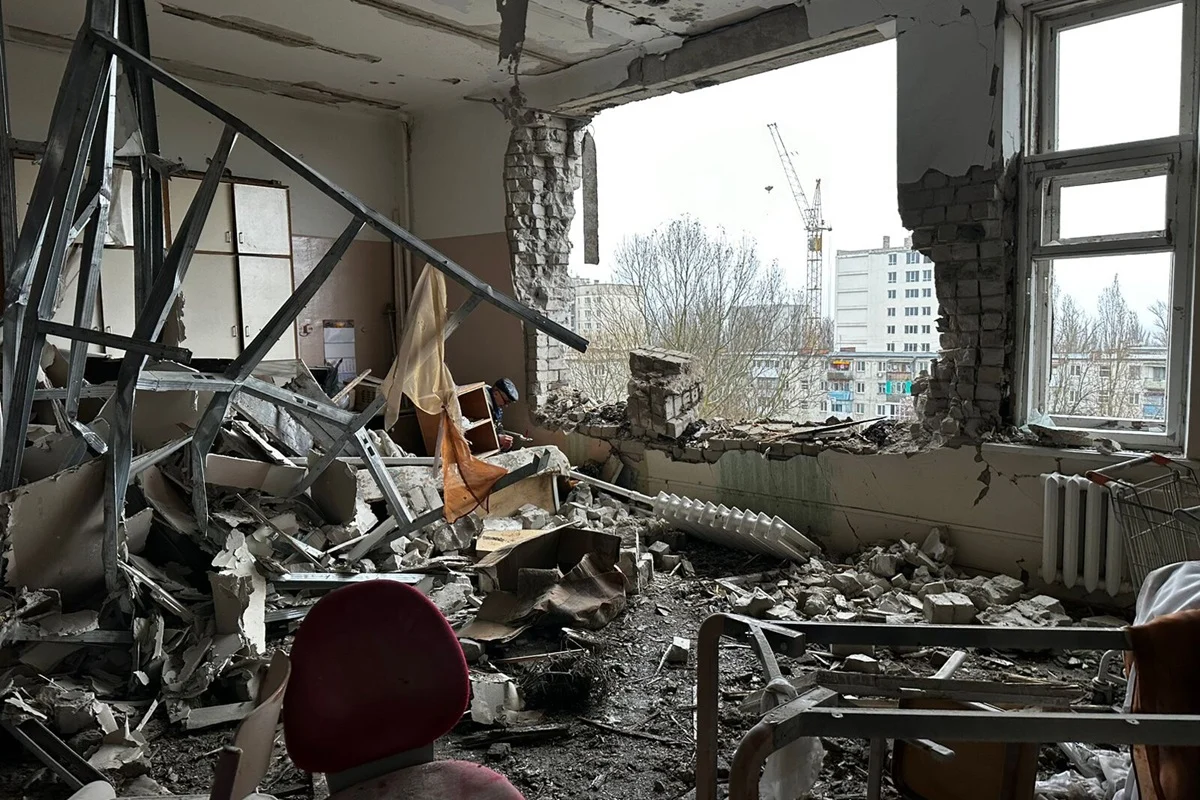
The humanitarian landscape in Ukraine has reached a critical inflection point as the full-scale war enters its fifth year. Data released by the World Health Organization (WHO) reveals that 2025 marked the most violent year for the country’s healthcare system since the invasion began on February 24, 2022. Attacks on medical facilities, personnel, and supply chains increased by nearly 20% over the previous year, creating a compounding crisis that threatens the long-term viability of public health in the region. As the conflict transitions into 2026, the systematic degradation of infrastructure combined with the psychological and physical exhaustion of the population has created a healthcare deficit of unprecedented proportions.
Since the initial escalation of hostilities nearly four years ago, the WHO has documented a staggering 2,881 verified attacks on healthcare services in Ukraine. these incidents are not limited to the crossfire of the frontlines; they encompass a deliberate and sustained pattern of destruction affecting hospitals, primary care clinics, ambulances, and medical warehouses. The toll on human life within the medical community is equally grave, with 233 healthcare workers and patients confirmed killed and 930 injured since February 2022. International observers and legal experts note that these targeted strikes constitute clear violations of international humanitarian law, specifically the Geneva Conventions, which mandate the protection of medical personnel and facilities during armed conflict.
A Chronology of Escalation: 2022–2026
The trajectory of the conflict’s impact on health has evolved from acute trauma in the early months of 2022 to a systemic siege on the nation’s survival infrastructure by 2026. In the first year of the war, the primary challenge was managing mass casualty events and the displacement of millions. However, by 2024 and 2025, the strategy shifted toward the systematic targeting of the energy grid and logistical hubs.
In 2025, the violence reached a fever pitch during the third quarter, which saw 184 distinct attacks on healthcare infrastructure. This three-month period alone resulted in 12 deaths and 110 injuries among health workers and patients. Simultaneously, a disturbing trend emerged regarding the destruction of medical supply chains; attacks on medical warehouses tripled in 2025 compared to 2024. This tactical shift has crippled the distribution of essential medicines, particularly in the eastern and southern oblasts where the need is most acute.
The winter of 2025–2026 has proven to be the most difficult for the civilian population. In January 2026, a massive strike on energy infrastructure in Kyiv left approximately 6,000 buildings without heat or electricity during subzero temperatures. The resulting humanitarian fallout saw an estimated 600,000 residents flee the capital in a single month, seeking warmth and functioning medical services elsewhere. This mass movement has placed additional strain on the healthcare systems of western Ukraine and neighboring European nations.
The Dual Front: Direct Attacks and Cascading Failures
Ukraine’s healthcare system is currently battling on two distinct but interconnected fronts. The first is the direct physical destruction of medical assets. When a hospital is struck, the loss is immediate and visible. The second front is the "cascading effect" of strikes on civilian infrastructure, particularly thermal power plants and the electrical grid.
Modern healthcare is entirely dependent on stable power. Without electricity, surgeons cannot operate, life-support systems fail, and temperature-sensitive medications—including insulin and vaccines—become useless. Dr. Jarno Habicht, the WHO Representative to Ukraine, described this as a "devastating cycle." When heating stations are struck in temperatures as low as -20°C, water pipes in surrounding buildings freeze and burst, leading to flooding and the structural ruin of clinics. Even when repairs are made, subsequent attacks often reset the progress, leading to a state of permanent emergency.
This infrastructure collapse extends the crisis into the homes of the vulnerable. Patients recovering from complex surgeries, cancer treatments, or childbirth are often discharged into apartments that lack basic utilities. The medical progress achieved within the walls of a functioning hospital is frequently undone when a patient returns to a freezing, dark environment where they cannot maintain hygiene or store their medications properly.
Public Health Metrics and the Surge in Non-Communicable Diseases
The prolonged nature of the war has fundamentally altered the health profile of the Ukrainian population. While war-related trauma and shrapnel injuries remain a priority, there is a burgeoning crisis of non-communicable diseases (NCDs) and mental health disorders.
According to WHO assessments conducted in late 2025, 59% of individuals living in frontline areas now categorize their health as "poor" or "very poor." This is a significant increase from the 47% reported in non-frontline regions, highlighting the disparate impact of the conflict on those in proximity to active combat.
Cardiovascular disease, exacerbated by chronic stress and the lack of preventive care, has surged. Currently, one in four Ukrainians suffers from dangerously high blood pressure. The implications for the future are dire, as untreated hypertension leads to a higher incidence of strokes and heart attacks, further burdening a system already struggling to provide emergency care.
Mental health remains one of the most significant challenges. Surveys indicate that 72% of the population experienced symptoms of anxiety or depression over the past year. Despite the ubiquity of these conditions, only one in five individuals has sought professional help. The stigma surrounding mental health, combined with a shortage of specialists and the physical danger of traveling to clinics, has created a "silent epidemic" of psychological trauma that experts fear will persist for generations.
Barriers to Access: The Pharmaceutical and Rehabilitation Crisis
Access to essential medicine has become a primary hurdle for eight out of ten Ukrainians. While some pharmacies remain open in urban centers, the cost of medication has skyrocketed, with 71% of people citing high prices as the reason they cannot fill prescriptions. In frontline regions, the situation is even more dire; pharmacies are often closed due to security risks or a lack of stock, leaving patients with chronic conditions like diabetes or heart disease without life-saving treatment.
The need for rehabilitation services has also grown exponentially. The influx of amputees and individuals with complex trauma requires a robust network of physical therapy and assistive technology. However, the current infrastructure is insufficient. Only 4% of hospitals in Ukraine are equipped to provide inpatient rehabilitation, and only 3% of facilities offer assistive technologies such as prosthetics. This gap has left thousands of people, including young soldiers and civilians, waiting months for the devices and training necessary to regain their independence.
Official Responses and the Call for International Support
World leaders and health officials have expressed profound concern over the deteriorating situation. Dr. Tedros Adhanom Ghebreyesus, WHO Director-General, emphasized that while medical supplies are critical, they are merely a temporary fix. "After four years of war, health needs are increasing, but many people are unable to get the care they need," Dr. Tedros stated. "WHO is working alongside Ukraine’s dedicated health workers to keep hospitals supplied… Ultimately, the best medicine is peace."
Dr. Hans Henri P. Kluge, the WHO Regional Director for Europe, echoed these sentiments, noting that the crisis is no longer an abstract set of statistics but a daily struggle for survival for millions. He pointed to the specific cases of heart patients unable to find medication and teenagers too traumatized to leave their homes as evidence of a system under total duress.
To combat these challenges, the WHO has intensified its service delivery. In 2025, the organization reached 1.9 million people across Ukraine with medical supplies, referrals, and capacity-building programs. A key component of this support has been the provision of 284 industrial-grade generators to health facilities across 23 oblasts, ensuring that critical departments can remain operational during grid failures.
Looking ahead to the remainder of 2026, the WHO has launched an appeal for $42 million in additional funding. these resources are intended to sustain access to care for at least 700,000 of the most vulnerable people, focusing on frontline areas where the formal healthcare system has largely collapsed.
Strategic Analysis of Long-term Implications
The systematic degradation of Ukraine’s healthcare system carries implications that extend far beyond the duration of the current conflict. The "brain drain" of medical professionals, many of whom have fled the country or been killed, creates a vacuum of expertise that will take decades to fill. Furthermore, the rise in antimicrobial resistance (AMR) due to suboptimal infection control in war-torn hospitals poses a global health threat.
The destruction of medical warehouses and the tripling of attacks on the supply chain suggest a deliberate attempt to undermine the social fabric of the nation. By making life unsustainable through the denial of healthcare and heat, the conflict creates a secondary wave of displacement and instability.
Furthermore, the lack of rehabilitation and mental health support suggests that even when the kinetic conflict ends, the "hidden" costs of the war will continue to mount. A population with high rates of untreated cardiovascular disease and psychological trauma will face significant challenges in the eventual rebuilding of the national economy and society.
In conclusion, as Ukraine navigates its fifth year of full-scale war, the healthcare system stands as both a target and a symbol of resilience. The data from 2025 and early 2026 paints a picture of a nation under extreme physiological and structural stress. While international aid continues to provide a lifeline, the sustained targeting of medical infrastructure remains the single greatest obstacle to the health and survival of the Ukrainian people. The international community faces a critical window to bolster support before the cumulative damage to the nation’s health becomes irreversible.
