
In a significant advancement for South Africa’s burgeoning alternative protein sector, Immobazyme, a Stellenbosch-based startup, has achieved a major milestone by successfully scaling the production of a crucial growth factor for cultivated meat. This breakthrough, accomplished in close collaboration with the Council for Scientific and Industrial Research (CSIR), a federal government research organization, promises to dramatically lower the cost of producing cell-based meat, a key hurdle for widespread adoption. The successful large-scale production of fibroblast growth factor 2 (FGF-2) in a 50-litre bioreactor marks a first for the nation, positioning South Africa as a potential leader in this innovative field.
The Genesis of a Cultivated Meat Revolution
The journey to this achievement began with Immobazyme’s development of a genetically modified bacterial strain designed for the efficient production of FGF-2. This protein is fundamental to the process of cultivated meat, acting as a signaling molecule that instructs mammalian cells to multiply and proliferate. Without these vital growth factors, the delicate process of transforming a single cell into a complex food product would be impossible. However, historically, growth factors have represented a substantial portion of the overall cost in cultivated meat production, often accounting for the majority of the expenses associated with the culture media.
Immobazyme approached the CSIR with their innovative bacterial strain, seeking to leverage the organization’s extensive expertise in biomanufacturing. Veshara Ramdas, a biotechnology expert at the CSIR, recognized the immense potential of Immobazyme’s technology and envisioned a powerful synergy. "It is a huge achievement for the CSIR, and this opens doors to other novel and unique technologies to localise, particularly fibroblast growth factors and others such as insulin growth factors," Ramdas stated, highlighting the broader implications of this successful collaboration.
A Collaborative Endeavor: From Lab Bench to Bioreactor
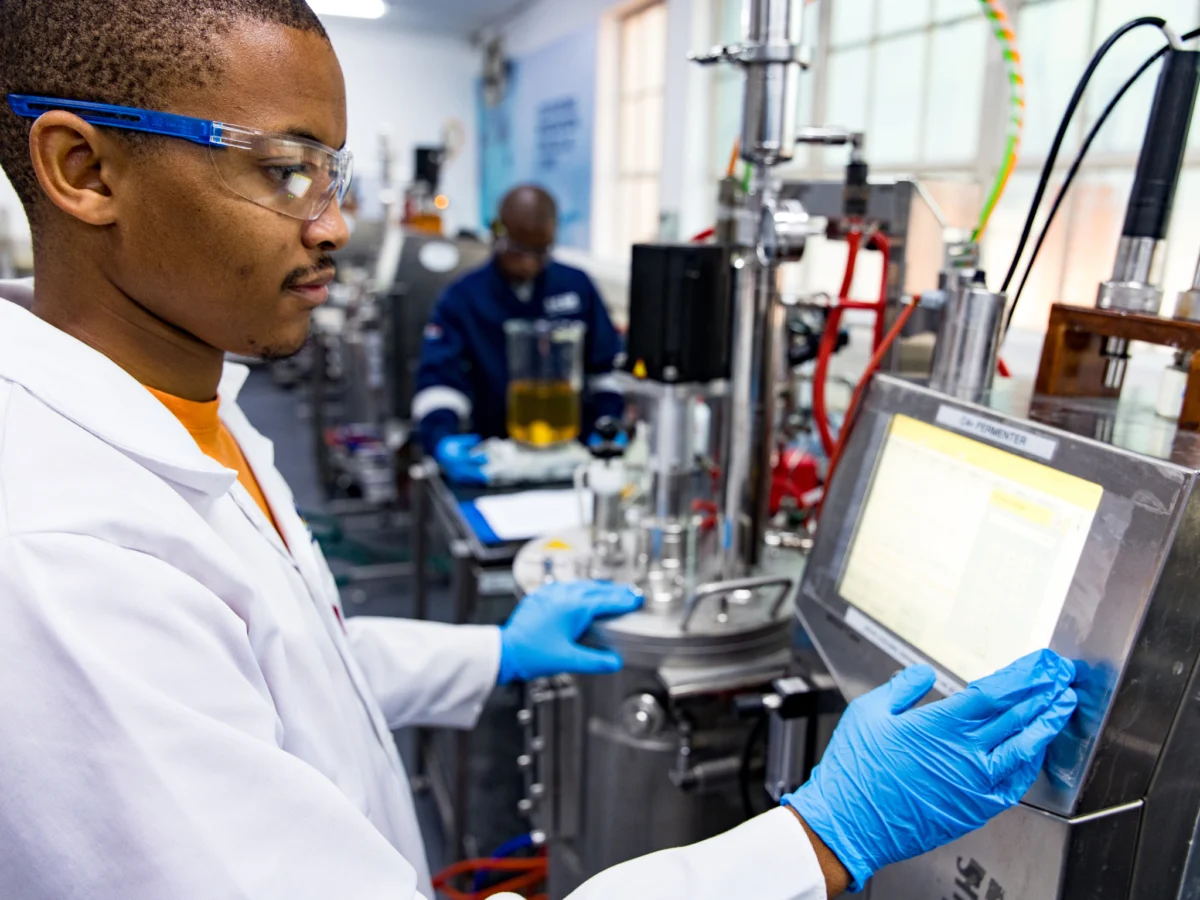
The partnership between Immobazyme and the CSIR’s Biomanufacturing Industry Development Centre (BIDC) was strategically designed to create a cost-effective and highly efficient production process. This involved the meticulous application of precision microbiology and advanced bioreactor technology. The CSIR team established rigorously sterile and stable environmental conditions within their state-of-the-art facilities. This meticulous control ensured that only Immobazyme’s genetically modified E. coli strain would thrive, producing the target FGF-2 protein.
The process commenced in a controlled laboratory setting, with the bacterial culture initially growing in petri dishes. From there, it was carefully transferred to flasks containing optimized nutrient broths, fostering robust growth. The critical scaling phase involved transferring this culture to large-scale bioreactors, where parameters such as temperature, pH, and nutrient levels were precisely monitored and regulated to maximize protein yield. This transition from laboratory-scale experimentation to industrial-scale production is a testament to the robust scientific methodologies employed by both organizations.
"Companies specialising in cell-cultivated meat take a cell from a cow, or a fish, or a chicken. They take it to the laboratory and then they make that one cell become many cells, and eventually, those many cells become a food product," explained Nick Enslin, co-founder and chief commercial officer of Immobazyme. He elaborated on the challenges of growth factor production: "While they’re essential for producing cultivated meat, they are traditionally very expensive and account for the bulk of culture media costs."
The Science Behind the Scale-Up: Harvesting and Purification
Once the bioreactor reached optimal production levels, the complex process of harvesting and purifying the FGF-2 protein began. Ramdas detailed the intricate steps involved: "When we harvest the bioreactor, that whole broth then goes through a separation process." The initial separation involves isolating the liquid component from the E. coli biomass. Since Immobazyme’s FGF-2 is an intracellular protein, meaning it is produced within the bacterial cells, the next crucial step is to break open these cells. This is achieved through a process of mechanical disruption, effectively releasing the target protein.
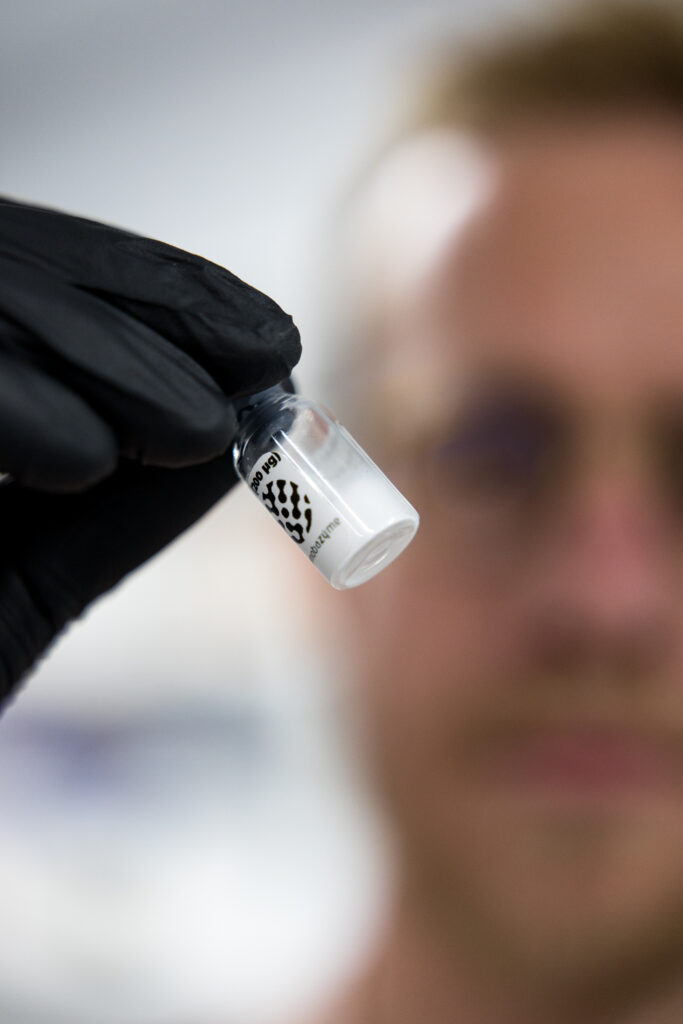
Following cell lysis, centrifugation is employed to separate the cellular debris from the protein-rich liquid. This powerful technique forces the heavier bacterial material to settle at the bottom, leaving a clear supernatant containing the purified FGF-2. This clarified lysate then undergoes further rigorous purification steps to yield a high-purity FGF-2 protein powder. This powder is then ready to be incorporated into the culture media used by cultivated meat companies, providing the essential signals for cell growth and proliferation.
A Foundation for Future Growth and Innovation
The scale-up initiative was significantly bolstered by financial support from the Department of Science, Technology, and Innovation and the Technology Innovation Agency, as part of the broader Biomanufacturing Industry Development Programme. This governmental backing underscores a national commitment to fostering innovation in the alternative protein space.
Both Immobazyme and CSIR officials expressed profound satisfaction with the outcomes of their collaboration. Enslin lauded the BIDC as a "world-class facility" but emphasized that the true value extended beyond the physical infrastructure. "But I would almost say beyond the facility itself, the equipment and the machinery, there was this flow of ideas; it was a collaborative effort," he remarked, highlighting the synergistic exchange of knowledge and expertise.
This successful partnership has not only validated Immobazyme’s proprietary technology but has also provided the startup with invaluable industrial insight and practical training. The ability to produce FGF-2 at a significantly reduced cost positions Immobazyme and, by extension, South Africa’s cultivated meat industry, in a highly competitive international landscape. "Our product is based intracellularly, so we have to pop those cells open or break them open, in a process of mechanical disruption," Ramdas explained. "The broken E. coli are then removed from the mixture by centrifugation, which forces the heavier cell material to sink to the bottom while the target protein remains in a clear liquid at the top. This clarified lysate is then purified, yielding a pure FGF-2 protein powder ready for cell culture in the cultivated meat industry."
The Broader Implications for Food Security and Sustainability
The cultivated meat industry, while still in its nascent stages globally, holds immense promise for addressing some of the most pressing challenges of the 21st century, including food security and environmental sustainability. In South Africa, a continent projected to nearly double its population to 2.5 billion by 2050, the demand for protein is set to surge. Traditional animal agriculture faces significant limitations in meeting this escalating demand sustainably, given its substantial land and water footprint, as well as its contribution to greenhouse gas emissions.
Cultivated meat offers a compelling alternative. By producing meat directly from cells, it requires significantly less land and water compared to conventional livestock farming. Furthermore, the controlled environment of bioreactors minimizes the risk of zoonotic diseases and reduces the ethical concerns associated with animal welfare.
The breakthrough by Immobazyme and CSIR is not merely a technological achievement; it is a strategic step towards building a more resilient and sustainable food system for South Africa and potentially the wider African continent. By lowering the cost of production, this development makes the prospect of widespread cultivated meat availability more tangible, offering a pathway to enhance food security and reduce reliance on traditional, resource-intensive meat production methods.
Immobazyme is now focused on further scaling its FGF-2 manufacturing capabilities and plans to leverage the extensive facilities at CSIR to expand its product pipeline, which includes other essential proteins for cultivated meat production. "At the end of the day, we got [a] commercially viable product through this relationship, which is really cool to see," Enslin concluded. Ramdas added, "The fact that Immobazyme took a unique and new construct that they had developed and produced this FGF-2 in a cost-effective manner puts them in a competitive position compared to what is available internationally."
The collaboration between Immobazyme and CSIR serves as a powerful model for public-private partnerships aimed at driving innovation and addressing critical societal needs. As the cultivated meat industry continues to evolve, this South African achievement underscores the nation’s growing capacity to contribute significantly to global advancements in sustainable food production. The ripple effects of this successful scale-up are likely to be felt across the alternative protein landscape, inspiring further investment and research in the region and beyond.
