
British supermarkets are on the cusp of a multi-billion-pound opportunity to boost profits, meet ambitious climate targets, and address national dietary deficiencies by actively promoting plant-based protein alternatives. A new report from Systemiq and ProVeg International reveals that current retail strategies are significantly underestimating the potential of this growing market, particularly concerning the development and marketing of own-label plant-based products.
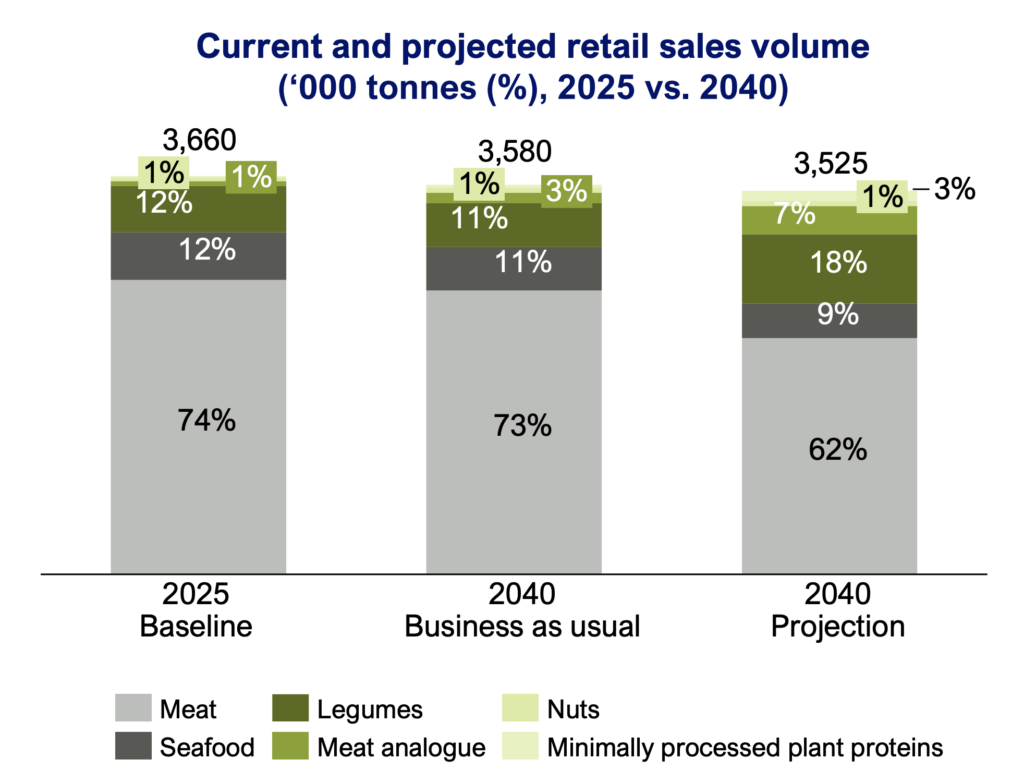
The analysis projects that the share of protein sales derived from plant-based foods in the UK is set to double, climbing from 14% in 2025 to a substantial 29% by 2040. This trajectory highlights a significant shift in consumer preferences and dietary habits, driven by increasing awareness of environmental sustainability, health benefits, and ethical considerations. Despite this clear market trend, the report identifies a critical gap in how retailers are approaching the plant-based sector, particularly in contrast to their established dominance in the processed meat market.
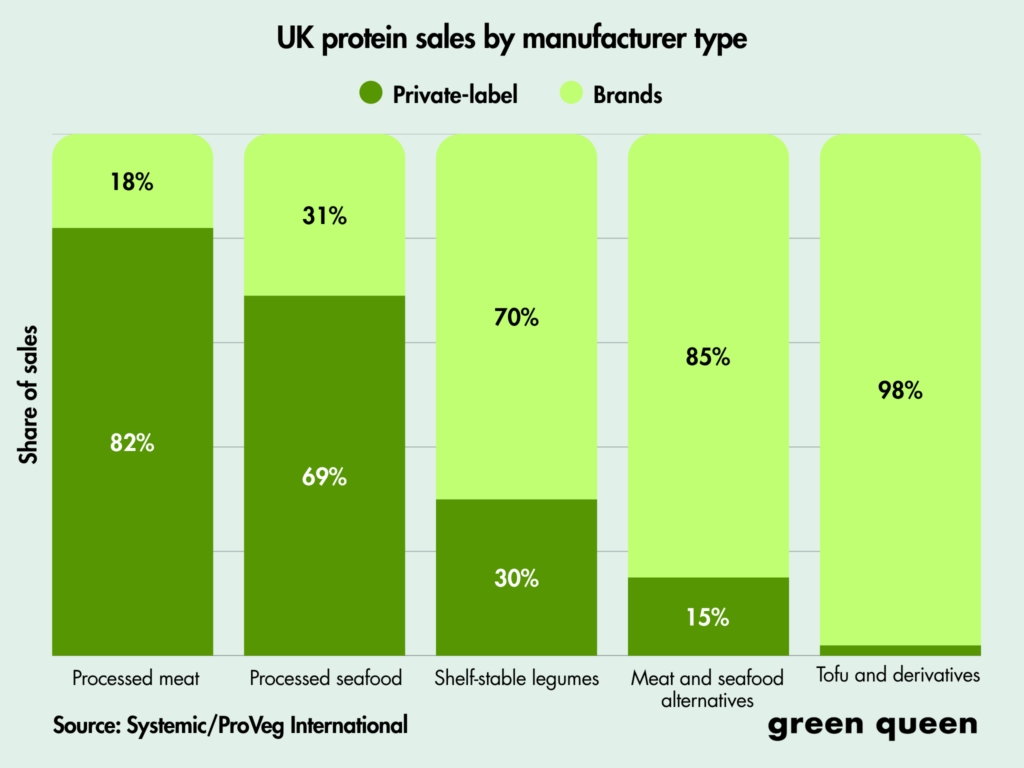
Currently, retailers’ own-label brands account for an overwhelming 85% of all processed meat sales. However, this dominance dramatically falters when it comes to plant-based alternatives. Their market share for plant-based meat and seafood stands at a mere 15%, plummeting even further to just 2% for tofu and its derivatives. This disparity represents a significant missed opportunity for retailers to leverage their brand recognition, pricing power, and category control to capture a larger share of the rapidly expanding plant-based market.

Jeremy Oppenheim, co-founder and managing director of Systemiq, emphasized the urgency of this strategic oversight. “The current protein model is exposed on cost, volatility, emissions and health,” he stated in a LinkedIn post, directly questioning retailers’ commitment. “Are retailers ready to treat plant-based protein as a core business, rather than a peripheral experimentation?” This sentiment underscores the report’s core argument: that a fundamental shift in retail strategy is required to unlock the full potential of protein diversification.
The report, titled "Taking Root: The Case for Plant-Based Proteins in UK Retail," outlines a clear path for supermarkets to not only enhance profitability but also contribute significantly to broader societal goals. By strategically investing in and promoting plant-based options, retailers can align their business practices with increasing consumer demand for sustainable and healthier food choices.
The Maturing Plant-Based Market and Price Parity
The UK plant-based market, after experiencing a surge in popularity in the early 2020s, followed by a period of market correction, is now demonstrating robust signs of recovery and maturation. This resurgence is evidenced by strong performance data from major retailers. For instance, Lidl has significantly surpassed its own ambitious targets, reporting a staggering 694% increase in alternative meat and dairy sales since 2020, far exceeding its 2025 goal of a 400% rise. Similarly, Tesco has noted a return to growth within the sector, with sales of vegan mince rising by nearly 25% and whole-food proteins by 12%.
Even as whole-food plant-based options gain traction, the market for plant-based meat and seafood alternatives continues to show resilience, with retail sales experiencing a 5% growth between 2024 and 2025. The projected growth of the vegan market through to 2040 is expected to be propelled by both meat analogues and legumes. Notably, plant-based meat alternatives are on track to achieve price parity with processed meat by 2028, with some products having already reached this milestone in the past year, driven in part by food inflation. The report identifies private-label expansion as the most significant commercial avenue for retailers within this segment.
Legumes, already cost-effective, present substantial growth potential in terms of absolute volume. However, consumer adoption is currently constrained by limited awareness, highlighting a need for greater emphasis on convenience formats and the development of own-brand offerings. Minimally processed proteins like tofu are cost-competitive with, and in some cases cheaper than, meat, yet their in-store presence and promotion remain underleveraged. Furthermore, the consumption of nuts in the UK remains significantly below recommended levels, suggesting an opportunity to position them beyond snacking and integrate them more prominently into daily cooking occasions.
The economic rationale for retailers is compelling. While plant-based proteins may have a lower revenue per kilogram compared to their animal-based counterparts, they typically offer higher and more stable profit margins. This inherent profitability, coupled with increasing consumer demand, presents a dual advantage for retailers willing to embrace the transition.
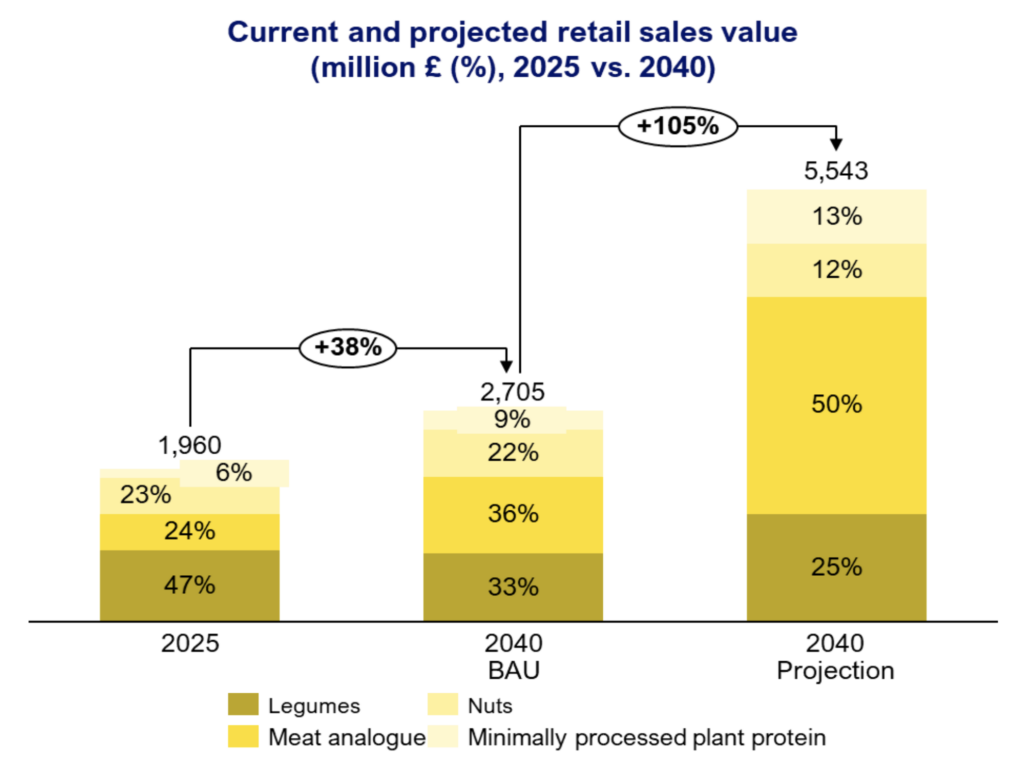
Under a business-as-usual scenario, plant-based food sales are forecast to grow by 38% over the next 15 years, reaching an estimated £2.7 billion. However, the report conservatively estimates that if supermarkets proactively champion protein diversification, this figure could more than double, potentially exceeding £5.5 billion by 2040. This substantial financial uplift underscores the significant commercial incentive for retailers to recalibrate their strategies.
Broader Implications: Environmental and Health Benefits
The advantages of a widespread shift towards a more plant-rich protein portfolio extend far beyond financial gains. Systemiq’s analysis quantifies the significant environmental benefits, projecting that protein diversification could lead to a 16% reduction in greenhouse gas emissions, a 14% decrease in land use, and a 13% decrease in water consumption. These reductions are crucial for retailers aiming to meet their scope 3 emissions targets and contribute to national climate goals.
Moreover, the health implications of such a transition are substantial. A diet richer in plant-based proteins is expected to drive a 71% increase in fibre intake compared to a business-as-usual scenario by 2040. This would help to close approximately 11% of the UK’s current dietary fibre gap, a deficiency linked to various chronic health conditions. The public health benefits are also considerable, with an estimated £108 million in associated public healthcare costs potentially being saved.
Systemiq identifies retailer action as the most direct and controllable driver of growth in this sector. They propose three key strategic levers for supermarkets to capitalize on the plant-based opportunity:
- Increasing Private-Label Plant-Based Products: Expanding own-brand offerings in the plant-based category allows retailers to control quality, pricing, and product development, thereby capturing a larger share of the market and enhancing profit margins.
- Strategic Product Placement: Placing plant-based alternatives alongside their animal-derived counterparts, accompanied by clear communication of value propositions (such as price, health benefits, and environmental impact), can encourage trial and adoption among consumers.
- Measuring and Reporting Protein Split: Implementing a standardized method for tracking and reporting the ratio of plant-based to animal-based protein sales can create a level playing field, allowing for better performance analysis and informed strategic decision-making.
A Call for Coordinated Action and Policy Support
The call for protein diversification is resonating across Europe, with a growing number of civil society groups advocating for greater retailer responsibility. Last week, 25 European organizations urged supermarkets to measure, disclose, set targets, and actively promote a shift towards plant-based proteins, with a collective aspiration for 60% of sales to originate from plant-based sources.
Systemiq is urging UK retailers to adopt a recognized and shared methodology for measuring the plant-to-animal food sales ratio, similar to practices already underway in the Netherlands. This measurement is a crucial first step towards implementing ambitious actions, both individually and sector-wide, to rebalance protein consumption in line with global dietary recommendations, such as those outlined by the Eat-Lancet Commission’s Planetary Health Diet.
Industry-wide collaboration is highlighted as a critical factor in mitigating the risks associated with being an early adopter and in building shared infrastructure for the plant-based sector. The report suggests that retailers should explore opportunities to share pre-competitive best practices, utilize industry platforms to coordinate sector-wide actions that extend beyond individual initiatives, and engage in joint advocacy with the government. Such collaborative efforts could lead to policy reforms, including updated dietary guidelines and the implementation of tax and subsidy reforms that favor plant-based protein production and consumption.
Brian Shaw, a senior director at Systemiq, emphasized the significant commercial advantage that protein diversification offers. "The commercial case for protein diversification is stronger than most British retailers currently recognise," Shaw stated. He further added, "We have heard from multiple British retailers that there is no climate action without protein diversification, and our analysis validates that. For retailers serious about reaching net zero, rebalancing their protein portfolio is one of the most powerful levers available."
The implications of this report are clear: British supermarkets face a pivotal moment. By strategically embracing plant-based protein diversification, they have the potential to unlock billions in revenue, significantly contribute to environmental sustainability, improve public health outcomes, and solidify their position as forward-thinking businesses in an evolving consumer landscape. Failure to act decisively risks leaving substantial economic and societal benefits on the table, while continued reliance on traditional protein models becomes increasingly untenable in the face of mounting environmental and health challenges.
