

Japanese food and biotechnology giant Ajinomoto has announced a significant breakthrough in the burgeoning cultivated meat industry with the development of a novel, plant-derived alternative to transferrin, a critical and often prohibitively expensive component in cell culture media. This innovation, derived from hinokitiol—a compound found in cypress trees—promises to dramatically reduce the cost of producing cultivated meat, potentially accelerating its path to mainstream consumer adoption. The company aims to bring this cost-effective solution to market at the earliest opportunity, underscoring a strategic commitment to addressing global food security and sustainability challenges through advanced bio-science.
The Costly Bottleneck: Transferrin in Cultivated Meat Production
The production of cultivated meat, often referred to as lab-grown or cell-based meat, involves growing animal cells in a controlled laboratory environment. This process relies heavily on cell culture media, a complex cocktail of nutrients, growth factors, and other essential components that provide the optimal conditions for cell proliferation and differentiation. While crucial for cellular growth, these media formulations represent the largest single cost driver in cultivated meat production, often accounting for as much as 95% of the total manufacturing expense.
Among the most significant contributors to this high cost is transferrin. Transferrin is a glycoprotein that plays a vital role in cell culture by transporting iron, an essential element for cell viability, growth, and proliferation. It works in conjunction with other proteins like albumin to support cellular functions. Historically, transferrin used in cell culture has been derived from animal sources or produced recombinantly. However, the production of recombinant transferrin at the scale required for industrial cultivated meat manufacturing presents substantial challenges. Establishing new infrastructure capable of producing thousands of metric tons of such proteins is a time-consuming and capital-intensive undertaking. Furthermore, recombinant proteins can be subject to batch-to-batch variability in quality, impacting the consistency of the final cultivated meat product.

The economic viability of cultivated meat hinges on its ability to compete with conventional meat on price. Consumers have consistently indicated a reluctance to purchase cultivated meat if it is priced higher than its traditional counterpart. A recent four-country survey in Europe, for instance, found that 59% of respondents would not buy cultivated meat if it were more expensive. Therefore, identifying and implementing cost-effective, non-recombinant alternatives for key media components like transferrin is paramount to closing this price gap and enabling widespread adoption.
Ajinomoto’s Hinokitiol Solution: A Natural Approach to Cost Reduction
Ajinomoto’s innovative solution leverages hinokitiol, a naturally occurring, low-molecular-weight compound extracted from the wood of cypress trees. Hinokitiol possesses potent iron-binding properties, allowing it to effectively deliver iron to cells, thereby mimicking the essential function of transferrin. This natural compound offers several key advantages over traditional transferrin.
Firstly, its natural origin and low-molecular-weight structure suggest a potentially more scalable and cost-effective production pathway compared to recombinant protein manufacturing. By replacing expensive, high-molecular-weight transferrin with an affordable, plant-derived alternative, Ajinomoto’s technology directly addresses the primary cost barrier in cultivated meat media.
Secondly, hinokitiol’s chemical stability is a significant advantage. Unlike complex glycoproteins like transferrin, which can be prone to degradation or variations in quality between production batches, hinokitiol is expected to offer greater consistency. This stability is crucial for ensuring the reliable performance of cell culture media and, consequently, the quality and uniformity of the cultivated meat produced. Ajinomoto’s research has confirmed that hinokitiol can effectively maintain high cell proliferation rates in serum-free media, a critical benchmark for efficient cultivated meat production.
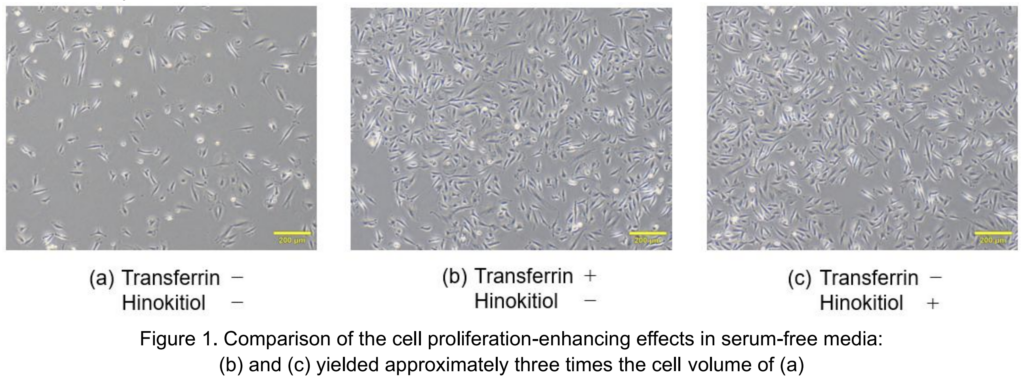
Furthermore, the safety of hinokitiol for human consumption is already established. It is listed on Japan’s list of existing food additives, providing a crucial regulatory advantage and reassuring potential consumers about the safety of the final product. This existing safety profile simplifies the regulatory approval process for products utilizing this ingredient.
A Strategic Move: Ajinomoto’s AminoScience Approach and Market Opportunities
Ajinomoto’s development of the hinokitiol-based transferrin alternative aligns with its broader "AminoScience" strategy, which aims to resolve social issues and improve human well-being through novel materials and technologies rooted in amino acid research. The company’s 2030 roadmap prioritizes high-potential growth areas, including the development of low-carbon food ingredients to bolster its Green Food business. The cultivated meat sector, with its potential to significantly reduce the environmental footprint of meat production, is a natural fit for this strategy.
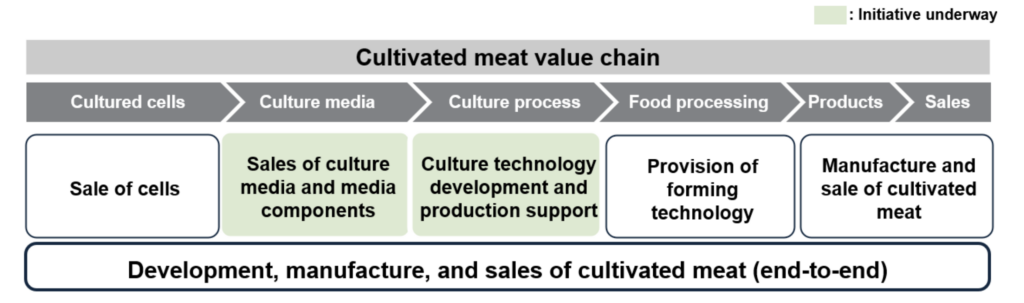
The company views the cultivated meat value chain as presenting a wide array of business opportunities. This chain encompasses various stages, from the sale of cells, culture media, and growth factors to the development of advanced culture technologies, production support services, and ultimately, the processing and manufacturing of finished food products. Ajinomoto plans to leverage its extensive expertise in biopharmaceutical and regenerative medicine culture media to initially focus on the media component sales, culture technology development, and production support segments.
This strategic entry into the cultivated meat market allows Ajinomoto to capitalize on its existing strengths while contributing to a transformative industry. The company has already conducted prototype testing of its hinokitiol-based technology and is working towards its market introduction within the next few years. This proactive approach demonstrates a clear vision for how Ajinomoto can become an integral supplier and enabler of cultivated meat production.
Broader Implications for the Cultivated Meat Industry
The development by Ajinomoto represents a significant leap forward for the entire cultivated meat ecosystem. For years, the industry has been striving to overcome the cost hurdles that prevent widespread commercialization. While substantial progress has been made – with production costs reportedly falling by 99% from their initial levels a decade ago – innovations like Ajinomoto’s are essential for reaching price parity with conventional meat.
The impact of this breakthrough extends beyond just cost reduction. By providing a stable, scalable, and safe ingredient, Ajinomoto’s hinokitiol alternative can contribute to:
- Increased Investor Confidence: Demonstrating tangible solutions to long-standing cost challenges can attract further investment into cultivated meat startups and infrastructure development.
- Accelerated R&D: Lower media costs free up resources for companies to invest in other critical areas, such as optimizing cell lines, improving texture, and developing diverse product lines.
- Enhanced Consumer Trust: The use of a naturally derived, safety-approved ingredient can help build consumer confidence in the safety and integrity of cultivated meat products.
- Environmental Sustainability: By making cultivated meat more accessible, the technology can contribute to a reduction in the environmental impact associated with traditional animal agriculture, such as land use, water consumption, and greenhouse gas emissions.
Ajinomoto’s initiative is not happening in a vacuum. The cultivated meat sector has seen a surge of innovation in recent years, with numerous startups announcing breakthroughs in reducing culture media costs. Companies such as Gourmey (now part of Parima), Meatly, and BioCraft Pet Nutrition have also been at the forefront of developing cost-effective media solutions, indicating a collective industry drive towards making cultivated meat economically viable. Ajinomoto’s entry, with its established reputation and significant R&D capabilities, adds considerable weight to these efforts and signals a maturing of the cultivated meat supply chain.
The company’s commitment to bringing this technology to market "at the earliest opportunity" suggests a focused effort to overcome any remaining development and regulatory hurdles. This proactive stance positions Ajinomoto as a key player in shaping the future of food production, contributing to a more sustainable and resilient global food system. The successful integration of plant-derived ingredients like hinokitiol into cultivated meat production processes is a testament to the power of scientific innovation in addressing complex global challenges.
