

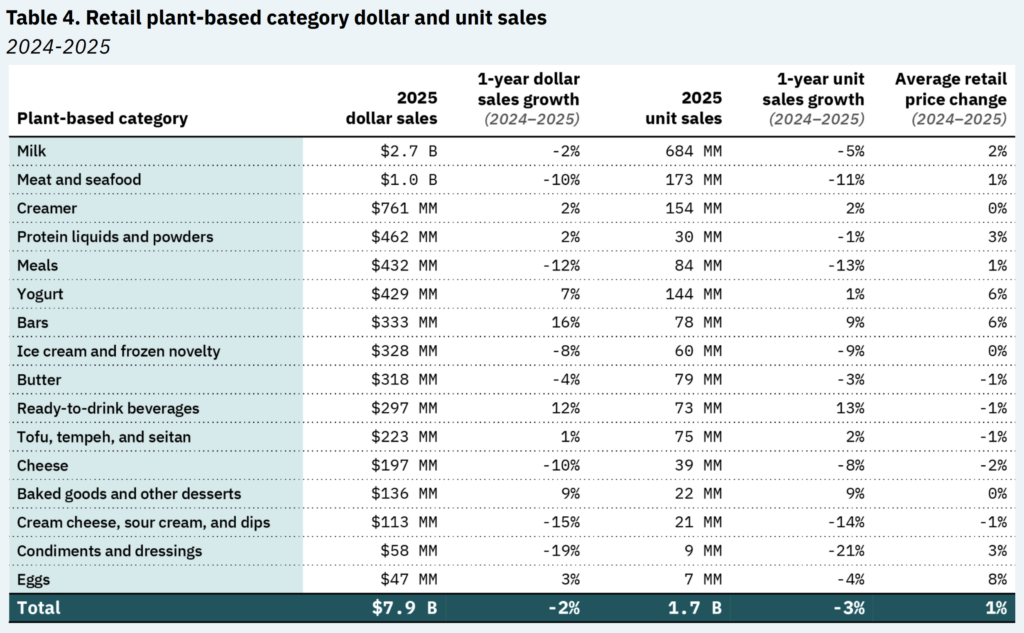
For over a decade, the term “vegan” served as a powerful clarion call within the food industry, signifying a conscious ethical stance and a definitive departure from industrial animal agriculture. This moral imperative initially propelled significant commercial growth. However, recent years have witnessed a discernible slowdown, with retail sales of plant-based meat experiencing a decline in several key global markets. In the United States, dollar sales saw a further decrease in 2025, accompanied by a more than 10% drop in unit sales, a trend echoed in softening volumes across parts of Europe. While concerns surrounding climate change and animal welfare remain potent, the context of consumer purchasing decisions has shifted.
Households are currently navigating a landscape of persistent economic pressure. Food inflation has remained stubbornly high, energy bills continue to strain budgets, and wage growth has struggled to keep pace with the rising cost of living. Consequently, the weekly grocery shop has, for many, transformed from an expression of values into a meticulous financial calculation. In this environment, premium-priced products are often the first to be deprioritized, especially when perceived as non-essential. This perception is particularly relevant for a significant portion of the plant-based category, which is frequently relegated to separate aisle sections, framed in direct contrast to conventional animal-based products, and positioned as a mere substitute rather than an integral part of a daily diet.

This perspective is shared by Annamari Jukkola, who herself grew up on a traditional dairy farm in Finland, where food was intrinsically linked to family life and livelihood. Her experience underscores a fundamental principle: movements may originate from identity-driven convictions, but enduring success hinges on practical viability. Foods that are deeply ingrained in a person’s upbringing possess a unique weight. They are familiar, trusted, and seamlessly integrated into daily routines, and consumers are reluctant to abandon them without compelling reasons. For widespread adoption of alternative food choices, the offerings must not merely be different; they must demonstrably equal or surpass the quality and appeal of the established alternatives. This is the core argument for the plant-based food movement to transition into a “post-vegan” era, not as an abandonment of ethical principles, but as a normalization and mainstreaming of plant-based eating.
The Ascendancy of the Flexitarian Majority
The initial surge of plant-based food innovation was largely fueled by a sense of urgency and robust investor optimism. This led to some products being fast-tracked to market, while others may have over-promised on their capabilities. Many were predominantly marketed under “vegan” or “vegetarian” labels. While these terms signaled positive intentions, they gradually became associated with products that were perceived as more expensive, less satisfying, or inconsistent in quality. This created a scenario where some consumers felt misled, leading others to revert to familiar dietary habits. The most consistent buyers often belonged to groups whose identities already aligned with these labels, namely vegetarians and vegans.
The fundamental challenge lies in the demographic reality: the number of individuals who strictly identify as vegan remains relatively small. Globally, fewer than 1% of the population identifies as vegan, and even when vegetarians are included, this group constitutes a minority in most Western markets. In contrast, a significantly larger demographic, estimated by some to be over 40%, identifies as flexitarian. These individuals are actively reducing their meat consumption without entirely abstaining from it. From the perspective of achieving large-scale impact on emissions, land use, and animal welfare, widespread adoption by millions, even through partial shifts, carries greater weight than complete adherence by a smaller segment of the population. This approach meets consumers where they are, lowering the barrier to participation and focusing on behavioral change at a global scale rather than on ideological purity.

The Shift from Identity to Impact
Every product category that transitions from niche to mainstream faces a similar critical test. Early adopters may tolerate initial inconveniences due to their commitment to a particular mission or cause. However, the broader consumer base requires more. For widespread acceptance, alternative products must stand on their own merits and integrate seamlessly into the fabric of daily life. This pattern has been observed in other sectors. Renewable energy sources gained traction as they became more cost-competitive. Electric vehicles have seen increased adoption as their range improved and prices decreased. Similarly, the organic produce market expanded with wider availability and stabilized quality.
The plant-based food sector is already exhibiting signs of this evolutionary trajectory. While plant-based meat sales have faltered in certain markets, plant-based milk has maintained a robust market share. In the US, it accounts for well over 10% of total retail milk sales, and in parts of Europe, this figure is even higher. Where functionality is reliable, familiarity is high, and price discrepancies have narrowed, adoption rates have stabilized. However, product performance alone is insufficient. The critical question is for whom these products are designed. For plant-based food to move beyond its current positioning and achieve broader market penetration, its performance must be defined in practical, everyday terms.
The Discipline of the Mainstream
The vast majority of grocery purchasing decisions are made in the fleeting moments spent in front of a supermarket shelf, often within a 10 to 15-second window. During this brief period, familiarity and convenience tend to outweigh ideological considerations. Price is a primary determinant. In an era marked by escalating food costs, few households can afford to treat sustainability as a discretionary premium. Taste and functionality are equally crucial. Drawing from experiences on traditional farms, consumers place significant value on subtle aspects like texture, consistency, and the predictability of a product’s performance. Any deviation from expected standards can lead shoppers to seek alternatives.
These are not superficial concerns but foundational requirements for repeat purchases. Consumers expect cheese to melt effectively, milk to froth for coffee, and meat alternatives to hold their own as integral components of family meals. Performance also necessitates transparency. Environmental claims can no longer rely solely on branding. As consumer awareness of climate issues grows, there is an increasing expectation for verifiable data regarding emissions, land use, and supply chain practices. If plant-based foods genuinely offer environmental benefits, these advantages should be quantifiable and readily accessible.
This transition phase will inevitably present challenges, and not all brands will successfully navigate it. Investment in the sector has already tightened, and in some European regions, public opinion and policy continue to favor established agricultural systems. Nevertheless, industries typically mature through periods of correction, and those that endure often emerge stronger and more resilient.
When Plant-Based Stops Being Oppositional
For many years, the plant-based food sector defined itself in direct opposition to conventional meat and dairy products. While this confrontational framing was perhaps necessary in the nascent stages of the movement, opposition alone does not equate to transformation. True impact is achieved through scale, and paradoxically, scale is most effectively attained when a product becomes unremarkable, seamlessly integrated into routine shopping lists without requiring special consideration or fanfare.

The future trajectory of plant-based food will likely be determined not by ideological labels but by a series of small, ordinary substitutions. This could involve an oat-based chèvre paired with wine, a plant-based milk that perfectly complements a morning coffee, or a meat alternative effortlessly incorporated into a weeknight pasta dish. When these choices feel natural and habitual rather than driven by a conscious ideological statement, the shift from a statement to an ingrained habit occurs. This gradual evolution is how movements mature and achieve lasting, widespread influence.
