
The pervasive notion of "hair porosity" has become a cornerstone of modern haircare advice, influencing countless consumers in their product choices. While the concept itself — referring to the hair’s ability to absorb and retain moisture — holds scientific validity, the popular, at-home tests widely used to diagnose it are fundamentally flawed. These widely circulated diagnostic methods, such as the "float test" and the "drop test," do not accurately measure hair porosity but rather gauge the surface condition of the hair, leading to widespread misconceptions and potentially misdirected haircare routines. Scientific evidence underscores that all hair, regardless of its perceived porosity, readily absorbs water, particularly from ambient humidity, challenging the core premise of these DIY assessments.
The popularity of "hair porosity" as a guiding principle in haircare surged with the rise of personalized beauty and the natural hair movement, where understanding individual hair characteristics became paramount. Online communities and beauty influencers frequently promote these simple, at-home tests as definitive ways to determine whether one’s hair is "low porosity," "medium porosity," or "high porosity." The allure lies in their apparent simplicity and the promise of tailored product recommendations. Consumers are often advised that "low porosity" hair, characterized by a tightly closed cuticle, struggles to absorb moisture but retains it well, requiring lightweight products. Conversely, "high porosity" hair, with an open or damaged cuticle, absorbs moisture easily but loses it quickly, necessitating heavier, sealing products. While these product suggestions might coincidentally align with what damaged or undamaged hair needs, the underlying diagnostic premise of the tests is scientifically unsound.
Deconstructing "Hair Porosity": A Scientific Perspective
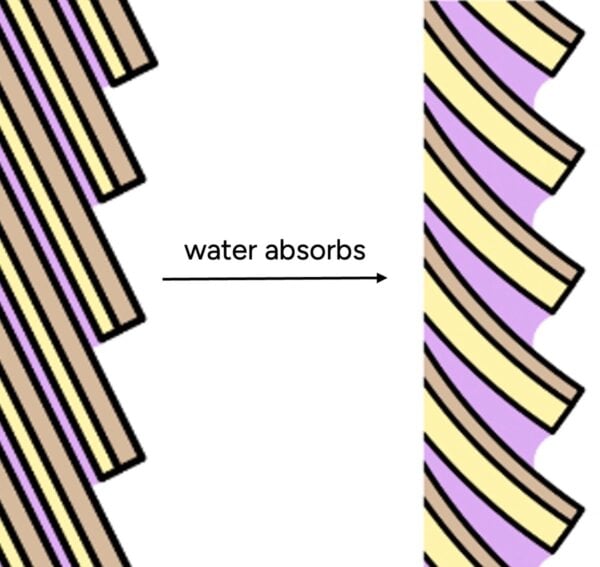
From a scientific standpoint, hair porosity refers to the ease with which moisture penetrates and exits the hair shaft. This characteristic is primarily governed by the integrity and structure of the hair’s outermost layer, the cuticle. The hair shaft is composed of three main layers: the medulla (innermost core, not always present), the cortex (the bulk of the hair, containing keratin proteins and responsible for strength and elasticity), and the cuticle (an overlapping layer of scales, much like shingles on a roof). In healthy, undamaged hair, these cuticle scales lie relatively flat, providing a protective barrier. However, factors such as chemical treatments (coloring, perming, relaxing), heat styling, mechanical damage (brushing, friction), and environmental exposure can lift, chip, or erode the cuticle scales, creating pathways for substances to enter and exit the hair more readily. This alteration in cuticle integrity is often what is mistakenly interpreted by popular porosity tests.
The Flawed Diagnostics: Unveiling the Truth Behind Popular Tests
Two tests commonly cited for determining hair porosity are the float test and the drop test. Both are widespread in consumer haircare circles, yet both fail to provide an accurate assessment of true porosity.
-
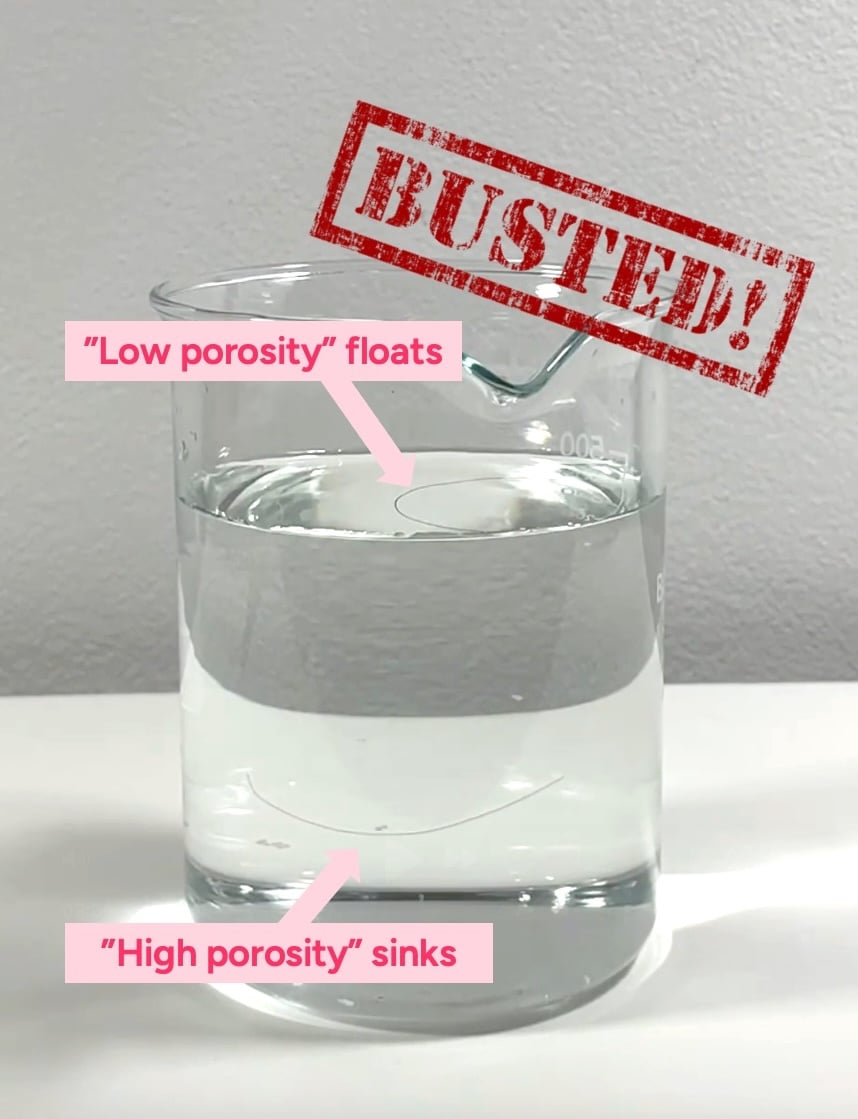
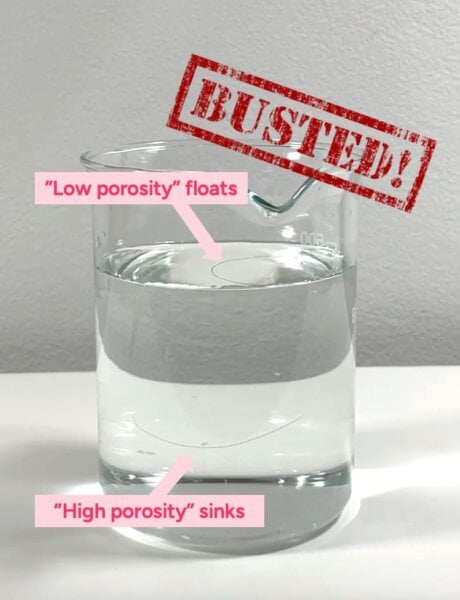
The Float Test: This test instructs individuals to place a single strand of clean hair into a glass of water and observe whether it floats or sinks. The popular interpretation suggests that hair that floats is "low porosity" because its cuticle is supposedly sealed, repelling water. Hair that sinks quickly is labeled "high porosity," implying it rapidly absorbs water due to an open cuticle. However, this interpretation overlooks fundamental principles of physics. All human hair is inherently denser than water. Consequently, given enough time, any hair strand will eventually sink once it becomes fully saturated and any surface air bubbles or hydrophobic coatings are overcome. The initial floating or sinking behavior is predominantly dictated by the interaction between the water’s surface tension and the hair’s surface properties, not its internal water absorption capacity.
-
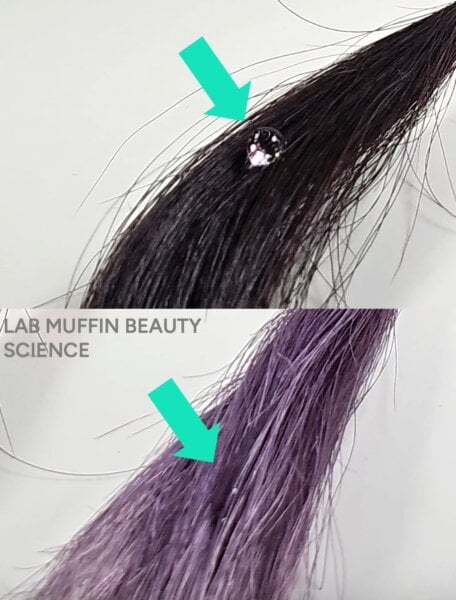
The Drop Test: In this test, a drop of water is placed onto a small section or strand of hair. If the water beads up and sits on the surface, the hair is deemed "low porosity." If the water flattens out and appears to be absorbed quickly, it’s labeled "high porosity." Similar to the float test, this observation is primarily a measure of the hair’s wettability or hydrophobicity, which relates to its surface chemistry and how it interacts with liquid water, rather than its internal porosity.
Surface Tension: The Unsung Hero of Hair Behavior
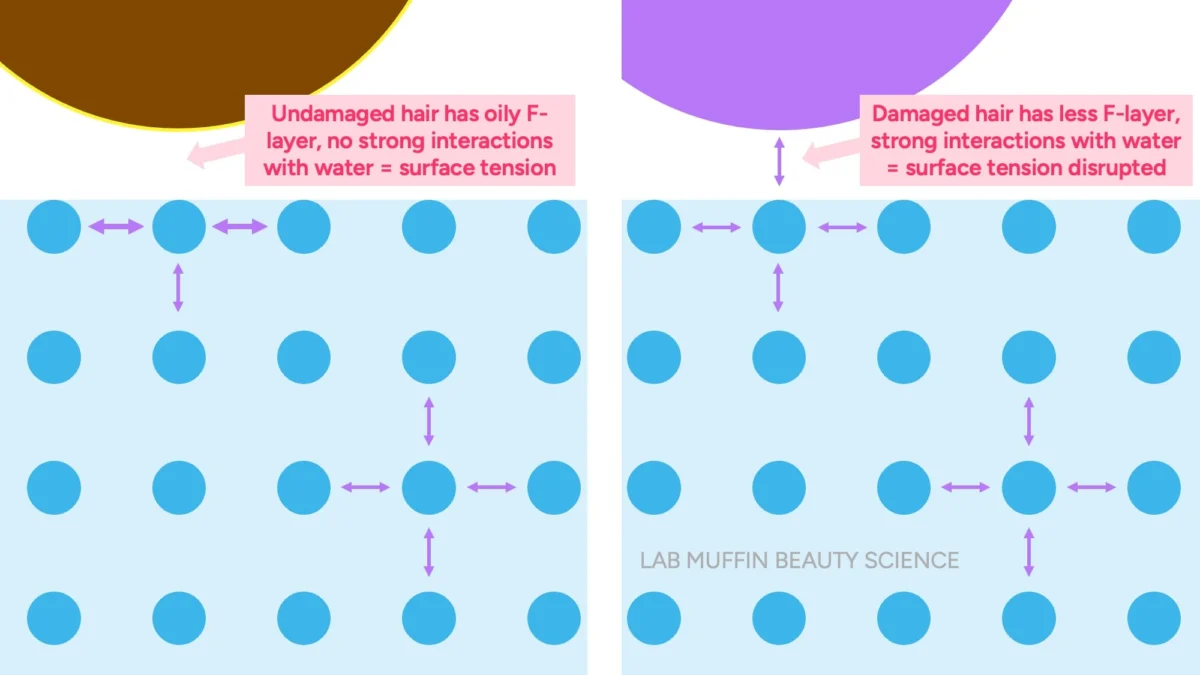
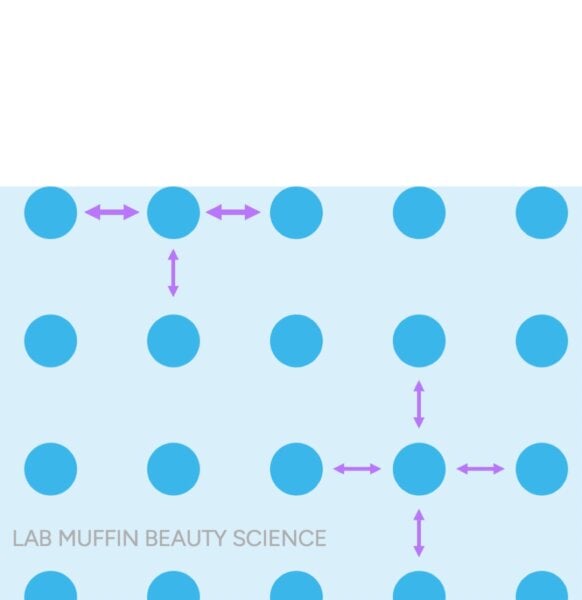
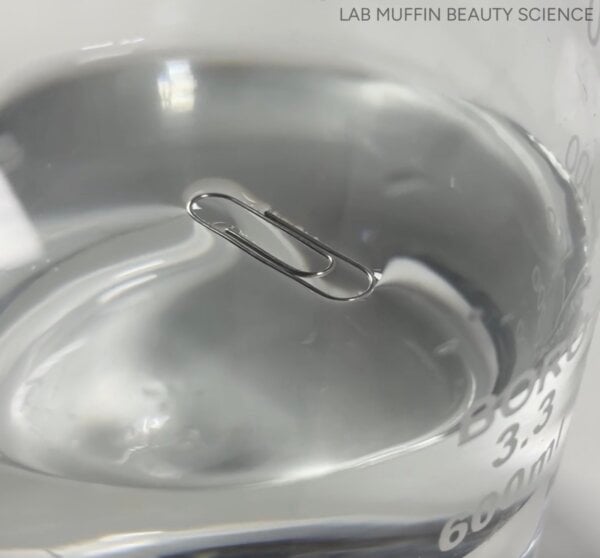
The key to understanding why these tests are misleading lies in the concept of surface tension. In any body of liquid water, the water molecules are strongly attracted to each other through hydrogen bonds. Molecules within the bulk of the liquid are pulled equally in all directions by their neighbors. However, molecules at the surface experience a net inward pull, as there are no water molecules above them to exert an upward force. This creates a strong, elastic-like "skin" on the surface of the water, known as surface tension. This "skin" is strong enough to support objects denser than water, such as insects, paperclips, or even a human hair, provided the object’s weight is distributed evenly and it doesn’t break through the surface film.
When an undamaged hair strand is placed on water, its natural protective layer, known as the F-layer (a covalently bonded lipid layer primarily composed of 18-methyleicosanoic acid), provides a hydrophobic (water-repelling) surface. This hydrophobic surface minimizes the interaction between the hair and the liquid water, allowing the hair to rest on the water’s surface tension. It’s akin to a paperclip floating on water – the steel itself is denser than water, but surface tension prevents it from sinking until disrupted.
Conversely, hair that has been chemically treated, exposed to excessive heat, or otherwise damaged often has a compromised F-layer. This exposes the more hydrophilic (water-attracting) keratin proteins beneath. When this damaged, hydrophilic surface encounters water, it readily forms hydrogen bonds with the water molecules, effectively "breaking" the surface tension’s grip. With the surface tension disrupted, the hair, being denser than water, sinks. Therefore, the float test primarily measures the integrity of the F-layer and the hair’s surface hydrophobicity, rather than its internal ability to absorb moisture. The same principle applies to the drop test: an intact F-layer causes water to bead due to reduced surface interaction, while a damaged, hydrophilic surface allows the water to spread and flatten.
The Reality of Hair Hydration: Gas vs. Liquid Water Absorption
A critical distinction often overlooked in the popular "porosity" narrative is the difference between liquid water absorption and water vapor absorption. While the float and drop tests focus on liquid water interaction, the bulk of hair’s moisture absorption occurs from the humidity in the air.
Scientific studies confirm that undamaged, conditioned human hair is far from waterproof. As detailed in research by C.R. Robbins in "Chemical and Physical Behavior of Human Hair," hair can absorb a substantial amount of water vapor, rapidly changing its water content depending on ambient humidity. For instance, at 0% relative humidity, hair contains virtually no absorbed water, but this figure rises dramatically:
- At 8% RH: 3.9% absorbed water by weight
- At 40% RH: 10.2% absorbed water by weight
- At 63% RH: 14.8% absorbed water by weight
- At 86% RH: 22.6% absorbed water by weight
- At 100% RH: 31.2% absorbed water by weight
This data illustrates that even in undamaged hair, nearly one-third of its weight can be water absorbed from the atmosphere within minutes. This absorption occurs because individual water molecules in their gaseous state (vapor) are extremely small. They can easily "wiggle in" between the overlapping cuticle scales and penetrate into the cortex, bypassing the surface tension barrier that liquid water might encounter. In contrast, while damaged hair can absorb slightly more liquid water (e.g., up to 45% of its weight), the significant difference between "low" and "high" porosity, as implied by the tests, is often exaggerated or misattributed. The primary mechanism for hair swelling and hydrating is the absorption of water vapor, not the rapid soaking in of liquid water through large "holes" in the cuticle.
Conditioners: Not a Waterproof Seal
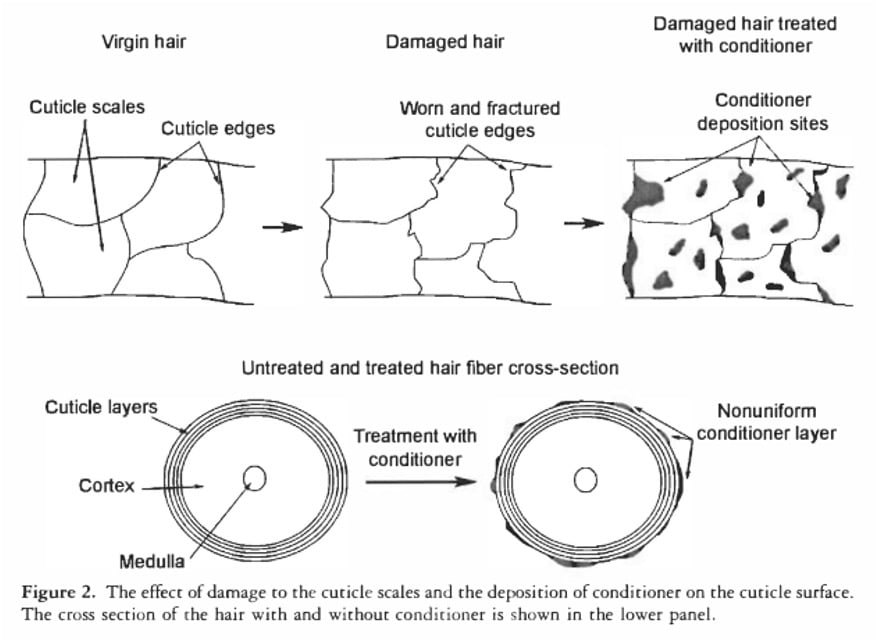
Another common misconception perpetuated by the porosity narrative is that conditioners "seal" the hair cuticle, making it waterproof or impermeable to moisture. While conditioners are crucial for hair health, their function is not to create a continuous, waterproof barrier. Research, such as that by La Torre and Bhushan (2006) on the nanotribological effects of silicones, shows that conditioning agents, including silicones, deposit on the hair surface in "blobs" or patches, rather than forming a uniform, impenetrable film.
These microscopic deposits are highly effective at smoothing the hair’s surface, reducing friction between individual strands, improving combability, and imparting a soft, slippery feel. This is why conditioned hair feels smoother and looks shinier. However, these "blobs" are far too large and discontinuous to prevent the entry of tiny water molecules, especially water vapor, into the hair shaft. Therefore, while conditioners certainly help manage moisture and protect the hair, they do not "seal out" water in the way often imagined by the popular porosity model.
Implications and Broader Impact
The widespread reliance on flawed porosity tests carries significant implications for both consumers and professional hairdressers.
-
For Consumers: Misdiagnosing hair porosity can lead to misguided product choices. A consumer whose hair floats due to an intact F-layer might incorrectly believe they have "low porosity" hair that struggles to absorb moisture. They might then avoid deeply hydrating treatments, fearing product buildup, when in reality, their hair is absorbing moisture effectively from the air. Conversely, someone with damaged hair that sinks might correctly identify it as needing extra care, but attribute it to "high porosity" rather than simply "surface damage." While the prescribed products for "high porosity" often align with the needs of damaged hair (e.g., richer formulations, more sealing ingredients), the underlying scientific rationale for the diagnosis is incorrect. This can lead to confusion and frustration when products marketed for a specific "porosity type" don’t deliver the expected results because the initial diagnosis was flawed.
-
For Hairdressers and Professionals: The consequences of misinterpreting these tests can be more severe in a professional setting. Hairdressers who rely on float or drop tests to assess hair porosity before chemical treatments (such as coloring, perms, or relaxers) risk serious errors. The time required for chemical solutions to penetrate the hair and achieve the desired effect depends on the actual internal porosity and the structural integrity of the cortex, not merely the surface’s interaction with liquid water. Using these tests to determine processing times can lead to over-processing (resulting in severe damage, breakage, and irreversible texture changes) or under-processing (leading to ineffective results). Experts in cosmetic science and trichology unequivocally advise against using these unscientific tests for such critical professional judgments. The only reliable method for determining chemical processing time is a direct strand test with the actual product, carefully observing the hair’s response.
Expert Consensus and Recommendations
Leading trichologists, cosmetic chemists, and hair scientists consistently emphasize the limitations of DIY porosity tests. They advocate for a more holistic and scientifically informed approach to hair assessment. Instead of relying on misleading indicators, they recommend focusing on observable characteristics and understanding the true needs of the hair based on its overall health and condition.
Key factors to consider include:
- Degree of Damage: Assess signs of damage from heat, chemical treatments, and mechanical stress (split ends, breakage, dullness).
- Hair Type and Texture: Fine, coarse, curly, straight, or wavy hair types have inherent differences in structure and needs.
- Hair’s Feel: Does the hair feel dry, rough, smooth, or gummy?
- Drying Time: Does the hair take a very long time to dry (suggesting good water retention or internal swelling) or dry quickly (suggesting evaporation or less internal water)?
- Response to Products: How does the hair react to different types of ingredients (e.g., protein, humectants, oils)?
For instance, hair that feels rough, tangles easily, and quickly absorbs water from the environment (even if it floats in a glass of water) likely has compromised cuticle scales and would benefit from products rich in conditioning agents, proteins, and occlusives to smooth the cuticle and reinforce the hair shaft. Conversely, hair that feels smooth, repels water droplets (due to an intact F-layer), and takes longer to fully saturate in liquid water might still need hydration but could benefit from lighter formulations to avoid weighing it down.
Moving Towards Informed Haircare
The journey to healthy, vibrant hair is best navigated with accurate information. While the popular "porosity" tests have served to raise awareness about hair characteristics, they have simultaneously propagated significant scientific inaccuracies. Consumers and professionals alike are encouraged to adopt a critical perspective, seeking knowledge from credible scientific sources and focusing on the underlying chemistry and biology of hair.
Effective haircare is not about labeling hair as "low" or "high porosity" based on misleading float or drop tests. It is about understanding the hair’s actual structural integrity, its surface condition, and its response to various environmental factors and product ingredients. By prioritizing science-backed understanding over simplistic, unverified diagnostics, individuals can make truly informed decisions that lead to healthier, more manageable hair, free from the constraints of pseudoscience.
