
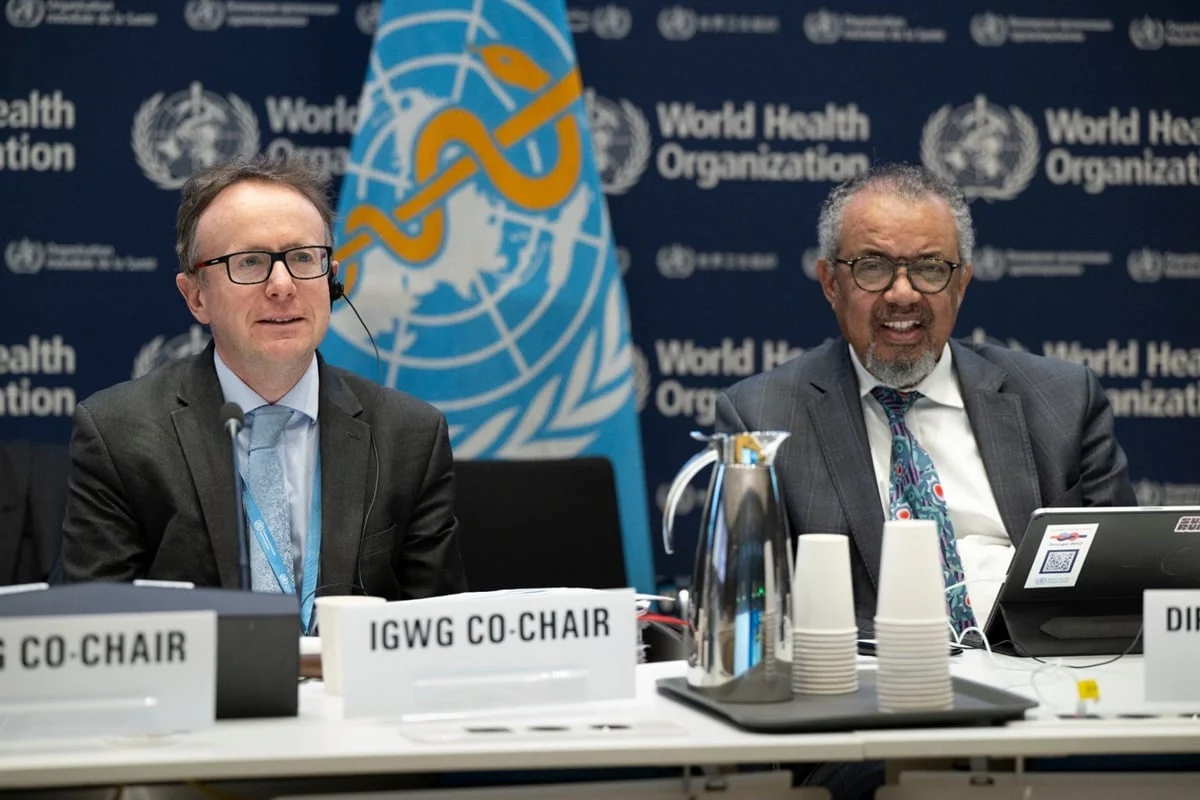
In a decisive move to bridge the remaining gaps in global health security, World Health Organization (WHO) Member States have officially agreed to extend intensive negotiations on the Pathogen Access and Benefit Sharing (PABS) annex. This critical component of the broader WHO Pandemic Agreement will now undergo an additional round of scrutiny and refinement from April 27 to May 1, 2024. The decision comes after a week of high-stakes discussions in Geneva, where negotiators acknowledged that while significant progress has been made, the complexities of creating a fair and equitable system for sharing biological materials and their subsequent benefits require further diplomatic effort. This extension is strategically timed to conclude just weeks before the 77th World Health Assembly (WHA), scheduled for late May, where the final Pandemic Agreement is expected to be presented for adoption.
The PABS Annex: The "Grand Bargain" of Global Health
The Pathogen Access and Benefit Sharing system is frequently described as the "heart" or the "engine room" of the proposed WHO Pandemic Agreement. At its core, the PABS system seeks to resolve a long-standing tension in international public health: the imbalance between the rapid sharing of pathogen data by countries where outbreaks occur and the subsequent access those countries have to the medical countermeasures developed from that data.
During the COVID-19 pandemic, the world witnessed a technological triumph in the rapid development of mRNA vaccines, yet this was marred by what many have termed "vaccine apartheid." While high-income nations secured enough doses to vaccinate their populations multiple times over, many low- and middle-income countries (LMICs) were left waiting for months or years. The PABS annex aims to codify a "grand bargain" wherein Member States agree to share pathogen samples and genetic sequence data (GSD) through a WHO-coordinated system. In exchange, the manufacturers of vaccines, diagnostics, and therapeutics who utilize this data would be required to provide a percentage of their production to the WHO for equitable distribution during emergencies.
The current negotiations are focused on the "how" of this exchange. Critical points of contention include the specific percentages of products to be set aside—currently drafted as 10% free of charge and 10% at affordable, non-profit prices—and the legal nature of the contracts between the WHO and private sector entities.
A Chronology of the Pandemic Accord Negotiations
The journey toward a legally binding pandemic treaty began in the wake of the catastrophic global failures of 2020 and 2021. The timeline reflects a sense of urgency tempered by the inherent difficulties of multilateral diplomacy.
December 2021: During a rare Special Session of the World Health Assembly, Member States agreed to establish an Intergovernmental Negotiating Body (INB) to draft and negotiate a WHO convention, agreement, or other international instrument on pandemic prevention, preparedness, and response.
2022–2023: The INB held multiple sessions, moving from conceptual outlines to a "Zero Draft" of the agreement. During this period, the Intergovernmental Working Group (IGWG) was tasked with refining specific technical elements, including the PABS system.
Early 2024: Negotiations intensified as the May 2024 deadline approached. Despite consensus on several articles regarding prevention and "One Health" surveillance, the PABS annex remained a major sticking point, leading to the recent decision to hold intersessional discussions and an additional formal negotiating block in late April.
May 2024: The 77th World Health Assembly represents the "finish line" for the current mandate, where the 194 Member States will vote on the adoption of the finalized text.
Supporting Data: The High Cost of Inequity
The drive for a robust PABS system is supported by sobering data from the COVID-19 era. According to studies published in The Lancet, nearly 15 million "excess deaths" were associated with the pandemic globally by the end of 2021. Economic analysis from the International Monetary Fund (IMF) estimated that the pandemic would cost the global economy over $12.5 trillion through 2024.
The equity gap is even more stark when looking at vaccine distribution data. By mid-2022, while over 75% of people in high-income countries had received at least one dose of a COVID-19 vaccine, that figure was less than 15% in low-income countries. Proponents of the PABS annex argue that if a mandatory benefit-sharing mechanism had been in place in 2020, thousands of lives could have been saved by ensuring a more immediate and predictable supply of medical tools to the Global South.
Furthermore, the "Value of Information" (VOI) in pathogen sharing is immense. The rapid sharing of the SARS-CoV-2 genetic sequence in early January 2020 allowed for the development of diagnostic tests within days and the commencement of vaccine trials within weeks. Negotiators from the Global South argue that this information is a "sovereign resource" and that its use by the multi-billion dollar pharmaceutical industry must come with guaranteed public health returns.
Official Responses and Diplomatic Perspectives
The leadership of the WHO and the co-chairs of the negotiating bodies have emphasized the historical significance of the current deliberations. Dr. Tedros Adhanom Ghebreyesus, WHO Director-General, has been a vocal advocate for the "spirit of solidarity" needed to finalize the PABS annex.
“The Pathogen Access and Benefit Sharing system lies at the heart of the WHO Pandemic Agreement and I thank WHO Member States for their commitment to work to bring it to life,” Dr. Tedros stated following the decision to extend talks. He urged delegations to look beyond narrow national interests, adding, “I urge all delegations to believe in the power of trust—trust in one another, in our institutions, and in our shared ability to transcend differences for the common public good.”
The Bureau Co-Chairs, representing the diverse interests of the Member States, also highlighted the intensity of the process. Ambassador Tovar da Silva Nunes of Brazil, representing the IGWG Bureau, noted that negotiators are working toward an "ambitious and equitable" framework. Meanwhile, Mr. Matthew Harpur of the United Kingdom, also a Bureau Co-Chair, welcomed the commitment shown by Member States to find consensus on the "outstanding areas" of the PABS system, acknowledging that the clock is ticking.
However, outside the official halls of the WHO, the reactions are more varied. Civil society organizations, such as the Third World Network and Médecins Sans Frontières (MSF), have expressed concern that the benefit-sharing requirements might be watered down under pressure from the pharmaceutical lobby. Conversely, industry groups like the International Federation of Pharmaceutical Manufacturers & Associations (IFPMA) have cautioned that overly stringent requirements on pathogen sharing could inadvertently slow down research and development during a crisis.
Key Obstacles and the North-South Divide
The extension of negotiations is primarily necessitated by a few "thorny" issues that have persisted throughout the INB process. These can be categorized into three main areas:
- Intellectual Property (IP) and Technology Transfer: Many developing nations are calling for the agreement to include provisions for the waiver of IP rights during pandemics and the mandatory transfer of technology to regional manufacturing hubs. High-income nations, where the majority of pharmaceutical giants are headquartered, generally prefer voluntary and mutually agreed-upon terms for tech transfer.
- The "20% Requirement": The proposal for the WHO to receive 20% of pandemic-related production (10% free, 10% at cost) is a major point of debate. Some developed nations argue this could interfere with existing bilateral contracts, while some developing nations argue 20% is the absolute minimum required to ensure global safety.
- Governance and Compliance: Ensuring that the PABS system is transparent and that both parties (those sharing pathogens and those sharing benefits) are held accountable is a significant hurdle. Negotiators are debating whether the system should be governed by a new body or integrated into existing WHO structures like the Global Influenza Surveillance and Response System (GISRS).
Broader Impact and Global Implications
The outcome of the PABS negotiations will have profound implications for the future of global health architecture. If successful, the PABS annex will create the first-ever legally binding global system that links the sharing of pathogens to the sharing of benefits. This would move the world away from the "charity-based" model of pandemic response—exemplified by the COVAX facility, which struggled with funding and supply—toward a "rights-and-obligations-based" model.
A successful agreement would also strengthen the "One Health" approach, which recognizes the interconnection between human, animal, and environmental health. By incentivizing countries to monitor and report zoonotic spillovers without fear of economic sanctions or being "locked out" of the resulting medicines, the PABS system acts as a frontline defense against the next "Disease X."
Conversely, a failure to reach consensus could lead to a fragmented global landscape. Without a unified WHO system, countries may resort to bilateral "Material Transfer Agreements" (MTAs), which could slow down the speed of scientific research during an outbreak. Furthermore, a failure would likely deepen the mistrust between the Global North and South, potentially undermining other international collaborations on climate change, trade, and security.
The Road to May: Finalizing the Text
As Member States prepare for the informal intersessional discussions and the final April 27 – May 1 negotiating block, the pressure is immense. The world is watching to see if the lessons of COVID-19 have truly been learned or if the "cycle of panic and neglect" will continue.
The goal for the upcoming sessions is to produce a "clean text"—a document with no remaining bracketed (disputed) language—that can be presented to the World Health Assembly. This will require significant compromises on both sides of the economic divide. Developed nations will likely need to offer more concrete guarantees on equity and financing, while developing nations may need to provide assurances on the speed and transparency of data sharing.
In the words of the IGWG Bureau, the commitment to "multilateralism and the shared goal of making the world safer" remains the guiding light. Whether this commitment can be translated into a functional, legally binding annex in the next few weeks remains the most critical question for global public health in the 21st century. The upcoming late-April sessions will not just be about technicalities; they will be a test of global solidarity in the face of a common, inevitable threat.
