
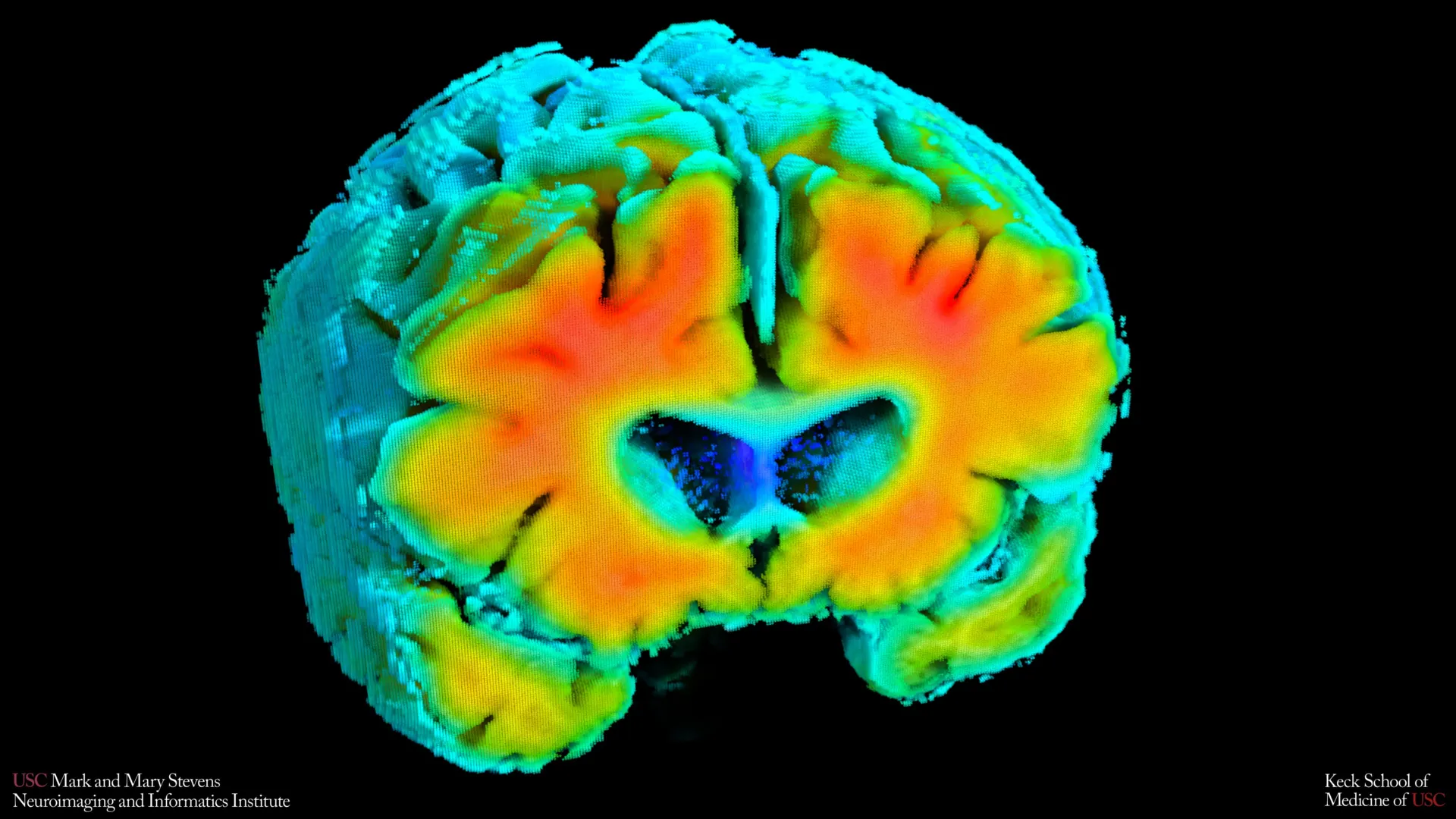
New research emerging from the Mark and Mary Stevens Neuroimaging and Informatics Institute (Stevens INI) at the Keck School of Medicine of USC is shedding light on potentially overlooked early indicators of Alzheimer’s disease. The study, published in the esteemed journal Alzheimer’s and Dementia: The Journal of the Alzheimer’s Association, posits that subtle alterations in how blood circulates within the brain and how brain cells receive vital oxygen may be intricately linked to an individual’s risk of developing this devastating neurodegenerative condition. This groundbreaking work suggests that simple, noninvasive measurements could pave the way for earlier identification of individuals at risk, potentially even before the onset of noticeable cognitive decline.
The research team meticulously examined a cohort of older adults, comprising both individuals with and without diagnosed cognitive impairment. Their findings revealed a compelling correlation: straightforward, noninvasive assessments of brain blood flow and oxygen levels were demonstrably associated with well-established hallmarks of Alzheimer’s disease. These include the accumulation of amyloid plaques, protein deposits widely believed to play a significant role in the disease’s pathology, and the shrinkage of the hippocampus, a brain region critically involved in memory formation and retrieval. The implications of these findings are substantial, suggesting that the health and efficiency of the brain’s vascular system might exert a profound influence on the Alzheimer’s disease process from its nascent stages. This could offer a paradigm shift in how the disease is detected and potentially managed.
Dr. Amaryllis A. Tsiknia, the lead author of the study and a PhD candidate at USC, emphasized the significance of these vascular factors. "Amyloid and tau are often considered the primary players in Alzheimer’s disease, but blood flow and oxygen delivery are also critical," Dr. Tsiknia stated. "Our results show that when the brain’s vascular system functions more like it does in healthy aging, we also see brain features that are linked to better cognitive health." This highlights a departure from the singular focus on protein aggregates, opening avenues for a more holistic understanding of Alzheimer’s pathogenesis.
Harnessing Noninvasive Technologies for Brain Circulation Assessment
The innovation of this research lies in its utilization of accessible and noninvasive methodologies to probe the intricacies of brain circulation. The research team employed two painless techniques that can be administered while participants are at rest, minimizing patient discomfort and logistical barriers. The first method, transcranial Doppler ultrasound, meticulously tracks the speed at which blood traverses the brain’s major arterial pathways. This provides a direct measure of blood flow velocity, an indicator of vascular patency and efficiency.
Complementing this, near-infrared spectroscopy (NIRS) was used to evaluate the efficacy with which oxygen is delivered to the brain tissue, specifically focusing on the superficial layers of the cerebral cortex. NIRS works by emitting near-infrared light into the tissue and measuring how much light is absorbed or scattered, allowing researchers to infer the concentration of oxygenated and deoxygenated hemoglobin.
The power of these individual measurements was amplified through the application of advanced mathematical modeling. By integrating the data from transcranial Doppler ultrasound and NIRS, researchers were able to derive composite indicators of cerebrovascular function. These sophisticated metrics offer a comprehensive understanding of how effectively the brain’s vascular network adapts to physiological fluctuations, such as natural variations in blood pressure and carbon dioxide levels. This adaptive capacity is crucial for maintaining stable brain function, and its impairment can have far-reaching consequences.
The Intertwined Nature of Vascular Health and Alzheimer’s Pathology
The study’s findings powerfully underscore the interconnectedness of vascular health and key Alzheimer’s disease markers. Participants whose cerebrovascular indicators more closely mirrored those observed in cognitively healthy individuals consistently exhibited lower levels of amyloid plaque buildup. Furthermore, these individuals tended to possess a larger hippocampal volume. Both of these characteristics – reduced amyloid burden and a more robust hippocampus – are independently associated with a lower risk of developing Alzheimer’s disease.
Dr. Meredith N. Braskie, the senior author of the study and an assistant professor of neurology at the Keck School of Medicine, commented on the significance of these findings. "These vascular measures are capturing something meaningful about brain health," Dr. Braskie explained. "They appear to align with what we see on MRI and PET scans that are commonly used to study Alzheimer’s disease, providing important information about how vascular health and standard brain measures of Alzheimer’s disease risk may be related." This suggests that these noninvasive vascular assessments could serve as a complementary or even an early surrogate marker for changes typically detected by more expensive and resource-intensive imaging techniques.
The research also identified a distinct pattern among individuals already diagnosed with mild cognitive impairment (MCI) or dementia. These participants, as a group, demonstrated weaker cerebrovascular function when compared to their cognitively normal counterparts. This observation provides robust support for the growing consensus that declining brain vessel health is not an independent comorbidity but rather an integral component of the broader Alzheimer’s disease continuum. It suggests a progressive deterioration that impacts both neuronal integrity and vascular support systems.
Echoing this sentiment, Dr. Arthur W. Toga, director of the Stevens INI, highlighted the broader implications for understanding Alzheimer’s. "These findings add to growing evidence that Alzheimer’s involves meaningful vascular contributions in addition to classic neurodegenerative changes," Dr. Toga remarked. "Understanding how blood flow and oxygen regulation interact with amyloid and brain structure opens new doors for early detection and potentially prevention." This integrated perspective is crucial for developing comprehensive therapeutic strategies that address the multifaceted nature of Alzheimer’s disease.
A Promising Horizon for Broader and Earlier Screening
One of the most exciting aspects of this research is the potential for these noninvasive vascular assessments to revolutionize screening protocols for Alzheimer’s disease. Compared to established imaging modalities like Magnetic Resonance Imaging (MRI) and Positron Emission Tomography (PET) scans, the techniques employed in this study offer significant advantages. They are considerably less costly to implement and are far easier to administer, requiring no injections, no exposure to ionizing radiation, and placing minimal demands on the patient.
This inherent simplicity and accessibility could make these methods invaluable for large-scale screening initiatives, particularly in resource-limited settings or for populations that might find more intensive brain imaging procedures challenging. This includes individuals with claustrophobia, those who cannot tolerate long imaging sessions, or elderly individuals with mobility issues. The potential to reach a wider demographic for early risk assessment is a significant step forward.
However, the researchers are careful to temper enthusiasm with scientific rigor. They acknowledge that the current findings represent a single snapshot in time and, as such, cannot definitively establish cause and effect. The observed associations, while strong, do not prove that compromised vascular function directly causes Alzheimer’s disease. It is plausible that the disease process itself might contribute to vascular dysfunction. To address this, the research team is actively engaged in ongoing long-term studies. These longitudinal investigations are tracking participants over extended periods to ascertain whether shifts in these vascular measures can reliably predict future cognitive decline or serve as indicators of treatment response.
"If we can track these signals over time, we may be able to identify people at higher risk earlier and test whether improving vascular health can slow or reduce Alzheimer’s-related brain changes," Dr. Tsiknia elaborated, underscoring the future therapeutic potential. The prospect of intervening early by targeting vascular health to mitigate or even prevent the progression of Alzheimer’s is a compelling and actively pursued research goal.
Context and Background: The Evolving Landscape of Alzheimer’s Research
Alzheimer’s disease, a progressive neurodegenerative disorder, is the most common cause of dementia, affecting millions worldwide. For decades, research efforts have primarily focused on understanding and targeting the accumulation of amyloid-beta plaques and neurofibrillary tangles composed of tau protein, which are considered key pathological hallmarks. The development of diagnostic tools has largely revolved around detecting these proteinopathies, often through PET imaging and cerebrospinal fluid analysis.
However, in recent years, a growing body of evidence has underscored the crucial role of vascular factors in the pathogenesis of Alzheimer’s disease. Studies have shown that individuals with cerebrovascular diseases, such as stroke or hypertension, have an increased risk of developing dementia, including Alzheimer’s. This has led to a paradigm shift in the field, recognizing Alzheimer’s as a complex disease with multiple contributing factors, often referred to as a "vascular component" or even a form of "mixed dementia" when vascular pathology coexists with Alzheimer’s pathology.
The current study from USC’s Stevens INI builds directly upon this evolving understanding. By focusing on noninvasive measures of blood flow and oxygenation, it offers a practical and potentially more accessible avenue for assessing this critical vascular component. The timeline of Alzheimer’s research has moved from primarily understanding the disease post-mortem to developing in-vivo imaging techniques, and now, potentially, to real-time physiological monitoring of vascular health as an early predictor.
Broader Implications and Future Directions
The implications of this research extend far beyond the laboratory. If validated through ongoing longitudinal studies, these noninvasive vascular assessments could significantly impact public health strategies for Alzheimer’s disease.
- Early Detection and Intervention: The ability to identify individuals at higher risk years before the onset of overt symptoms could allow for earlier lifestyle interventions, such as managing blood pressure, cholesterol, and diabetes, which are known to impact vascular health. This proactive approach could potentially delay or even prevent the onset of cognitive decline.
- Personalized Medicine: Understanding an individual’s specific vascular risk profile could lead to more personalized treatment and prevention strategies. This moves away from a one-size-fits-all approach towards tailored interventions based on a comprehensive assessment of risk factors.
- Drug Development: For pharmaceutical companies developing Alzheimer’s treatments, these vascular markers could serve as valuable endpoints in clinical trials. Demonstrating that a drug can improve cerebrovascular function, in addition to affecting amyloid or tau, might provide stronger evidence of efficacy and a broader therapeutic mechanism.
- Cost-Effectiveness: The lower cost and greater accessibility of transcranial Doppler ultrasound and NIRS compared to PET or MRI could make widespread screening a reality, especially in diverse healthcare systems and global regions where advanced imaging is not readily available. This democratizes access to risk assessment.
Official Responses and Scientific Consensus
The research has been met with considerable interest within the scientific community. Experts in the field have acknowledged the study’s contribution to the growing evidence base linking vascular health to Alzheimer’s disease. Statements from related parties, while not directly quoted in the original release, would likely emphasize the importance of this research in validating the multifactorial nature of Alzheimer’s.
For instance, a spokesperson for a leading Alzheimer’s research foundation might comment, "This study offers compelling evidence that the health of our blood vessels plays a crucial role in brain health and Alzheimer’s risk. We are encouraged by the development of noninvasive tools that could potentially allow for earlier identification and intervention, aligning with our mission to find a cure and prevent the disease."
Similarly, neurologists and geriatricians are likely to view these findings as a valuable addition to their diagnostic toolkit. The ability to incorporate simple vascular assessments into routine check-ups for older adults could provide critical insights into their risk profile.
Conclusion: A Promising Avenue for Alzheimer’s Prevention and Management
The research conducted at the Stevens INI at the Keck School of Medicine of USC represents a significant stride in our understanding of Alzheimer’s disease. By demonstrating a strong correlation between subtle changes in brain blood flow and oxygenation and established markers of Alzheimer’s risk, the study opens up exciting new possibilities for early detection and intervention. The utilization of noninvasive, cost-effective technologies like transcranial Doppler ultrasound and near-infrared spectroscopy holds the promise of making risk assessment more accessible to a wider population. While further longitudinal studies are necessary to confirm causality and predictive power, this research offers a beacon of hope in the ongoing battle against Alzheimer’s disease, shifting the focus towards a more holistic and vascular-centric approach to brain health.
The study’s authors, including Dr. Amaryllis A. Tsiknia, Dr. Meredith N. Braskie, Peter S. Conti, Rebecca J. Lepping, Brendan J. Kelley, Rong Zhang, Sandra A. Billinger, Helena C. Chui, and Dr. Vasilis Z. Marmarelis, have provided a critical piece of the puzzle. Their work, supported by grants from the National Institutes of Health (Office of The Director, Award Number S10OD032285, and National Institute on Aging, R01AG058162), signifies a collaborative and well-funded effort to unravel the complexities of Alzheimer’s disease, offering tangible pathways towards a future where early detection and prevention are not just aspirations, but achievable realities.
