
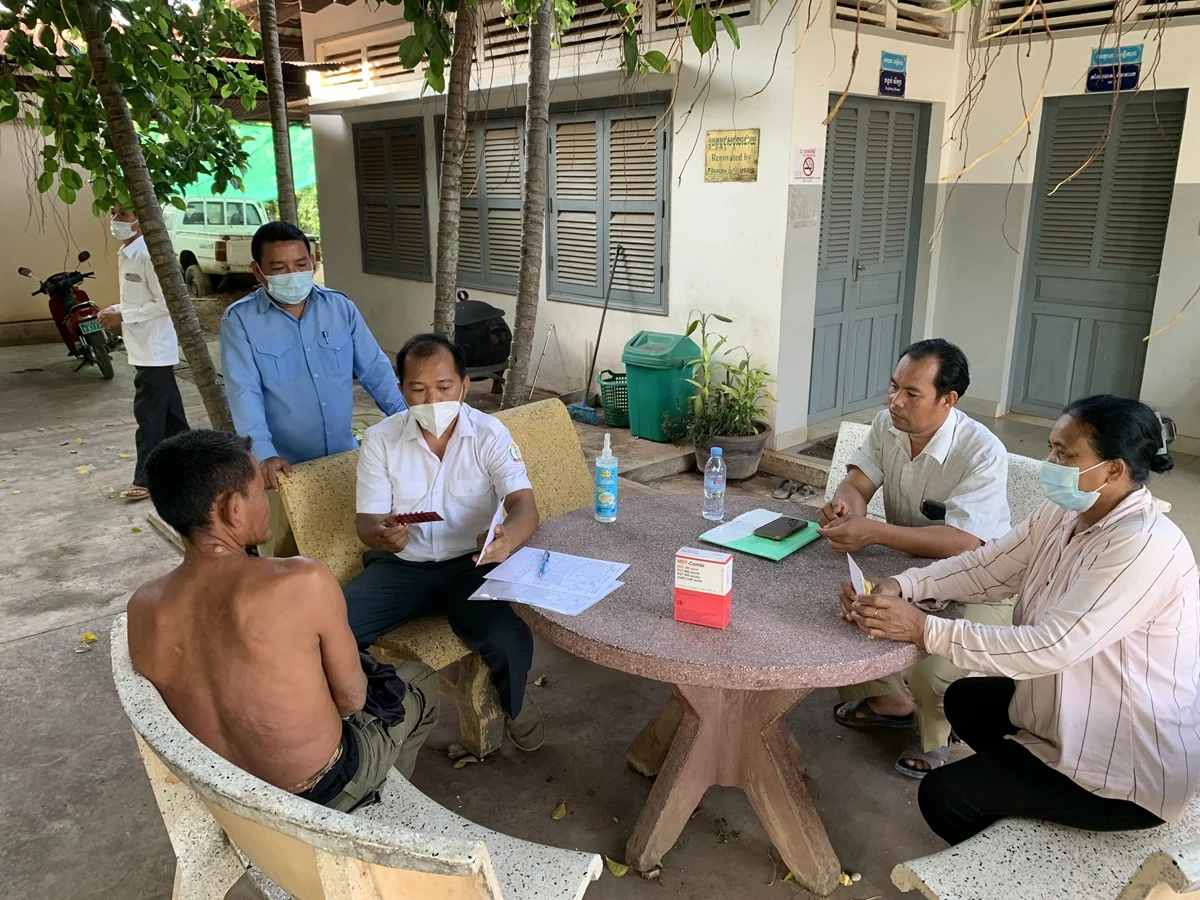
The World Health Organization (WHO) and the multinational pharmaceutical company Novartis have announced a five-year extension of their long-standing partnership, ensuring the continued supply of essential medicines to combat leprosy through 2030. This renewal, formalized through a new Memorandum of Understanding (MoU), marks the 25th anniversary of a collaboration that has redefined the global response to one of the world’s oldest and most stigmatized diseases. The announcement comes ahead of World Leprosy Day, observed annually on January 25, under the theme “Leprosy is curable, the real challenge is stigma.”
The extension of this partnership is a cornerstone of the WHO’s "Global Leprosy Strategy 2021–2030," which aims to move beyond merely managing the disease as a public health problem toward achieving the total interruption of transmission. Under the terms of the renewed agreement, Novartis will continue to provide multidrug therapy (MDT) and clofazimine free of charge to all leprosy patients worldwide. Furthermore, the 2026–2030 phase of the partnership introduces dedicated funding for the procurement and distribution of single-dose rifampicin (SDR), a critical component of post-exposure prophylaxis (PEP) intended to prevent the onset of the disease in individuals who have been in close contact with infected patients.
A Legacy of Pharmaceutical Philanthropy and Global Health Impact
The collaboration between the WHO and Novartis began in 2000, creating one of the most sustained and impactful drug donation programs in the history of global health. For a quarter of a century, this initiative has bridged the gap between medical innovation and the world’s most vulnerable populations. Leprosy, also known as Hansen’s disease, is a chronic infectious condition caused by the slow-growing bacteria Mycobacterium leprae. While the disease has been known since antiquity, the development of MDT in the 1980s transformed it from a lifelong sentence of disability and isolation into a curable condition.
Dr. Jeremy Farrar, WHO Assistant Director-General for Health Promotion, Disease Prevention and Care, emphasized the transformative nature of this alliance. He noted that the unwavering commitment of partners has been foundational to the progress made against leprosy over the last 25 years. According to Dr. Farrar, ensuring free access to treatment has not only saved millions from permanent disability but has also exemplified the power of global solidarity. By aligning science with equity, the international community is now closer than ever to eradicating a disease that has plagued humanity for millennia.
Echoing this sentiment, Dr. Lutz Hegemann, President of Global Health at Novartis, highlighted the company’s historical connection to the disease. Novartis played a pivotal role in discovering the first effective cures for leprosy, and Dr. Hegemann reaffirmed the company’s vision of a world finally free of the ailment. The partnership has reached millions of patients to date, but both organizations acknowledge that the final mile of elimination requires even greater precision and sustained political will.
The Current State of Leprosy: 2024 Data and Global Trends
Despite the availability of a free cure, leprosy remains a persistent challenge in several regions. The WHO’s 2024 data highlights a complex landscape of progress and remaining hurdles. Of the 188 countries and territories that submitted data to the WHO in 2024, 55 reported zero new cases, suggesting that elimination at the national level is achievable. However, the global burden remains significant, with 172,717 new cases detected worldwide in the same reporting period.
The distribution of these cases is highly concentrated. High-burden countries, including India, Brazil, and Indonesia, account for a substantial majority of the global caseload. The persistence of the disease in these areas is often linked to factors such as population density, limited access to primary healthcare, and the long incubation period of Mycobacterium leprae, which can range from five to twenty years. This long latency means that individuals can unknowingly carry and transmit the bacteria for years before symptoms appear, making early detection and contact tracing essential.
The 2024 statistics also reveal a concerning trend regarding late diagnosis. A significant percentage of new cases are still diagnosed only after visible deformities or permanent nerve damage have occurred. This "Grade 2 Disability" (G2D) rate is a key metric for the WHO, as it indicates the effectiveness of active case-finding efforts. A high G2D rate suggests that cases are being missed by the health system until they reach an advanced stage, highlighting the need for more aggressive community outreach and education.
Advancements in Prevention and the Role of Post-Exposure Prophylaxis
One of the most significant additions to the renewed WHO-Novartis MoU is the focus on single-dose rifampicin (SDR) for post-exposure prophylaxis (PEP). While MDT is used to treat those already suffering from the disease, PEP is a preventive strategy. Scientific studies have shown that administering a single dose of rifampicin to the "contacts" of a leprosy patient—such as family members, neighbors, and close social circles—can reduce their risk of developing the disease by up to 60%.
The inclusion of funding for SDR procurement signals a shift in the global strategy from reactive treatment to proactive prevention. By scaling up PEP, health authorities hope to break the chain of transmission at the community level. This strategy is particularly vital in "hotspots" where the disease remains endemic. The logistical challenge of identifying and reaching all contacts of a new patient is substantial, but it is considered a necessary step for achieving the 2030 goal of zero new indigenous cases.
Furthermore, the continued supply of clofazimine remains essential for managing "lepra reactions." These are sudden, severe inflammatory episodes that can occur before, during, or after treatment. Lepra reactions are the primary cause of nerve damage and subsequent disability in leprosy patients. Without access to clofazimine and other anti-inflammatory agents, even patients who are bacteriologically "cured" of the infection may still suffer from debilitating physical impairments.
The Psychological Front: Stigma as a Barrier to Elimination
The theme of World Leprosy Day this year—"Leprosy is curable, the real challenge is stigma"—addresses the social and psychological dimensions of the disease. For many, the fear of social exclusion is more daunting than the physical symptoms of the disease. This stigma often prevents individuals from seeking medical help at the first sign of skin patches or numbness, leading to delayed treatment and permanent disability.
Mr. Yohei Sasakawa, the WHO Goodwill Ambassador for Leprosy Elimination, recently marked his 25th year in this role. His travels to endemic regions have highlighted the enduring nature of social exclusion. Sasakawa has pointed out that stigma often persists long after a patient has been medically cured. In many societies, discriminatory laws and deep-seated cultural prejudices continue to deny former patients their rights to education, employment, and marriage.
"One of the most stubborn challenges that I encounter is the social stigma attached to leprosy," Sasakawa stated. He noted that people left with residual disabilities face various forms of discrimination, including forced divorce and unfair dismissal. The WHO’s strategy for 2021–2030 places a heavy emphasis on human rights, urging governments to repeal discriminatory laws and implement programs that promote the social inclusion of persons affected by leprosy.
Strategic Framework: The NTD Roadmap 2021–2030
Leprosy is classified as one of the Neglected Tropical Diseases (NTDs), a group of conditions that primarily affect the world’s poorest populations and have historically received less attention and funding than diseases like HIV/AIDS or malaria. The "NTD Roadmap 2021–2030" provides a comprehensive framework for the elimination of these diseases, emphasizing cross-sectoral collaboration and integrated health systems.
The Roadmap’s goals for leprosy are ambitious:
- A 70% reduction in the annual number of new cases detected.
- A 90% reduction in the rate of new cases with Grade 2 Disability per million population.
- A 90% reduction in the rate of new pediatric cases with leprosy.
- The total interruption of transmission in 120 countries.
To achieve these targets, the WHO is advocating for a "One Health" approach that considers the environmental and social determinants of health. This includes improving water and sanitation, enhancing nutritional standards, and ensuring that primary healthcare workers are trained to recognize the early signs of leprosy.
Broader Implications and the Path Forward
The extension of the WHO-Novartis partnership is more than a logistical agreement; it is a signal of continued international commitment in an era where global health priorities are often stretched thin by emerging pandemics and economic instability. The economic impact of eliminating leprosy is profound. By preventing disability, the program allows individuals to remain productive members of their communities, reducing the long-term burden on social welfare systems and families.
However, experts warn against complacency. As the number of cases drops, there is a risk that political interest and funding may wane. Maintaining the expertise of health workers in diagnosing a rare disease is also a challenge; in many countries where leprosy has become uncommon, doctors may no longer recognize the symptoms, leading to misdiagnosis.
The road to 2030 requires a dual focus: maintaining high-quality treatment services for those currently affected and aggressively pursuing preventive measures like PEP to stop new infections. The collaboration between the WHO, Novartis, and local health ministries serves as a model for how public-private partnerships can address entrenched health challenges.
As World Leprosy Day approaches, the global health community is called to not only celebrate the medical milestones achieved over the last 25 years but also to double down on efforts to dismantle the social barriers that remain. With the continued provision of free medication and a renewed focus on community-level prevention, the vision of a leprosy-free world is no longer a distant aspiration, but a tangible goal within the reach of this generation. The international community is reminded that the end of this ancient disease will be achieved not just through the science of medicine, but through the persistent application of equity, dignity, and global solidarity.
