

The capital of the United Arab Emirates has officially instituted a groundbreaking regulatory pathway that permits food technology companies to conduct public tasting events and sensory evaluations for novel foods—including cultivated meat and precision-fermented proteins—prior to securing full commercial market authorization. Unveiled at the PALT 2026 Conference during Global Food Week UAE, this strategic initiative positions Abu Dhabi at the forefront of the global alternative protein sector by bridging the critical gap between early-stage laboratory development and eventual commercialization.
The comprehensive framework was collaboratively developed by the Abu Dhabi Quality and Conformity Council (ADQCC), the Abu Dhabi Agriculture and Food Safety Authority (ADAFSA), and the Abu Dhabi Investment Office (ADIO). By drawing on the expertise of international food tech startups, academic institutions, and regulatory specialists, the government has designed a controlled, highly secure environment that fosters scientific research, drives technological innovation, and attracts substantial foreign investment into the regional food tech ecosystem.
A Structured Approach to Novel Food Testing and Safety
Under the newly established guidelines, alternative protein enterprises are granted permission to host sensory evaluation studies and public tasting trials within strictly monitored research settings. This mechanism is designed to address a persistent bottleneck in the food technology industry, where innovators often struggle to gather actionable consumer feedback and sensory data without complete, formal market clearance.
Rigorous oversight remains a cornerstone of the policy. The framework outlines explicit prerequisites concerning product safety assessments, mandatory laboratory testing, and robust participant protection protocols during all tasting trials. The ADQCC’s Central Testing Laboratory has been designated to provide vital technical evaluation and lab verification services, ensuring that every product meets stringent benchmarks before reaching any testing audience. Meanwhile, the ADAFSA retains the authority to meticulously review trial applications and issue the necessary permits required to execute these public evaluation events.
Government officials emphasize that this streamlined, transparent pathway maintains public safety as its absolute priority. By formalizing the evaluation process, regulators are offering alternative protein developers a predictable, legally sound environment to refine their product offerings while actively engaging with prospective consumers.
Leveraging Cultural Diversity as a Strategic Testbed
One of the most distinct advantages highlighted by Abu Dhabi authorities is the city’s extraordinary demographic composition. As a cosmopolitan hub home to residents from more 200 nationalities and diverse cultural backgrounds, Abu Dhabi offers an unmatched testing ground for novel foods.

Food technology companies operating within this framework can leverage the city’s multicultural population to gauge consumer acceptance across a wide spectrum of palates, dietary preferences, and cultural traditions. This access to rich, diverse demographic data enables startups and established food giants alike to fine-tune their formulations, ensuring that upcoming products possess broad appeal across both regional Middle Eastern markets and international export destinations. Furthermore, the insights gathered from these trials will serve as critical empirical evidence for future commercialization strategies and investor presentations.
Chronology of Policy Development and Strategic Milestones
The launch of the public tasting framework is the culmination of a multi-year strategy executed by Abu Dhabi’s key governmental agencies to diversify the economy and cement the UAE’s leadership in food and water security.
The groundwork for this initiative began in earnest when the ADQCC, ADAFSA, and ADIO initiated a collaborative effort to overhaul novel food regulations, aiming to compress traditional approval timelines by six to nine months. This regulatory streamlining was designed to accelerate the time-to-market for next-generation foods, making the UAE an increasingly attractive destination for international innovators seeking jurisdictions with progressive regulatory frameworks.
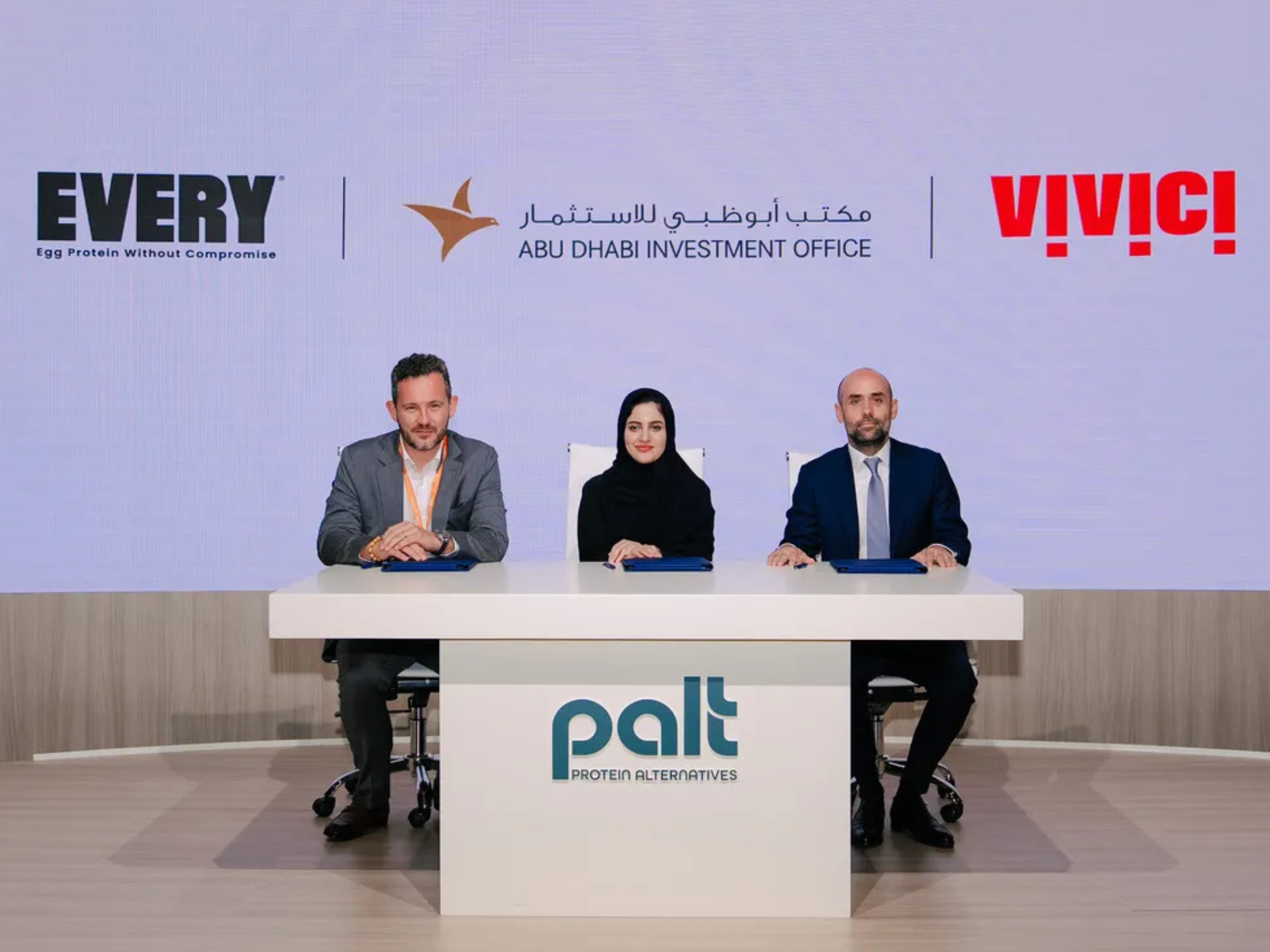
In parallel with regulatory reforms, the ADIO has actively forged strategic partnerships with major global players in the alternative protein space. Notably, the investment office previously teamed up with precision fermentation leaders Vivici and The Every Company to explore the establishment of a massive four-million-litre precision fermentation production facility in the capital. These coordinated actions underscore a deliberate policy trajectory: pairing supportive manufacturing infrastructure with progressive regulatory frameworks to build a self-sustaining alternative protein ecosystem.
Integration with the AGWA Cluster and Economic Projections
The introduction of the tasting framework is closely tied to the broader objectives of the AgriFood Growth and Water Abundance (AGWA) cluster. Launched in 2024 under the purview of the ADIO, the AGWA cluster serves as Abu Dhabi’s dedicated economic engine for driving advancements in sustainable food and water technologies.
Economic projections for the AGWA cluster are substantial. Government models estimate that the initiative will contribute approximately Dhs 90 billion ($24.5 billion) in cumulative added value to Abu Dhabi’s Gross Domestic Product by 2045. Additionally, the cluster is projected to generate roughly 60,000 new employment opportunities, backed by an anticipated total investment influx of Dhs 128 billion ($34.8 billion).
By integrating the new novel food testing guidelines into the existing AGWA infrastructure, Abu Dhabi is creating a comprehensive economic cluster that connects research institutions, venture capitalists, manufacturing facilities, and regulatory bodies into a single, cohesive ecosystem.

Official Statements and Leadership Perspectives
Key architects of the initiative have underscored its significance for both local economic diversification and global food sustainability.
Abdulla Al Yazeedi, acting secretary-general of the ADQCC, stressed that the future of the food industry relies on turning academic and scientific discoveries into safe, reliable, and commercially viable market solutions.
"The future of food will be determined not by innovation alone, but by our ability to turn scientific discoveries into solutions that are safe, reliable and commercially viable," Al Yazeedi stated. "Through this initiative, we are creating an environment where new food technologies can be developed and evaluated with confidence."
Al Yazeedi further emphasized the broader economic implications of the policy, noting that strengthening the region’s quality infrastructure directly supports industrial competitiveness and long-term food security.
Echoing these sentiments, Tariq Ahmed Al Ameri, acting director-general of the ADAFSA, pointed out that the guidelines strike a vital balance between encouraging technological disruption and maintaining consumer protection.
"This initiative provides a clear and responsible pathway for developing novel foods, supporting a more diverse, resilient and sustainable food system," said Al Ameri. "It also affirms Abu Dhabi’s commitment to advancing innovation while keeping consumer safety at the heart of food technology development."
Badr Salim Sultan Al-Olama, director-general of the ADIO, highlighted how the new guidelines integrate seamlessly into the overarching strategy of the AGWA cluster.
"Through the AGWA cluster, and in collaboration with regulatory authorities, we are developing an integrated ecosystem in Abu Dhabi that supports the growth of innovative food companies, enabling them to advance their research towards commercial application," Al-Olama explained. "The new guideline represents an important addition to this ecosystem, providing a clear and structured pathway for testing and developing products in line with international best practices."
Broader Economic and Global Market Implications
The implementation of this framework carries significant implications for the global alternative protein landscape. As traditional regulatory bottlenecks in major Western jurisdictions often lead to protracted approval cycles for cultivated meat and precision-fermented goods, forward-thinking regulatory hubs like Abu Dhabi are positioning themselves as premier destinations for international agrifood startups.
By allowing companies to generate vital consumer data, conduct sensory studies, and secure early-stage validation within a supportive regulatory climate, Abu Dhabi is mitigating the financial and operational risks typically associated with scaling novel food ventures. This proactive posture is expected to stimulate international research partnerships, increase domestic demand for specialized laboratory and testing services, and attract a wave of global venture capital into the region.
Ultimately, by fusing regulatory flexibility with rigorous safety standards and targeted economic incentives, Abu Dhabi is systematically constructing a future-proof food value chain designed to ensure long-term nutritional security and economic resilience in an era of rapid technological transformation.
