
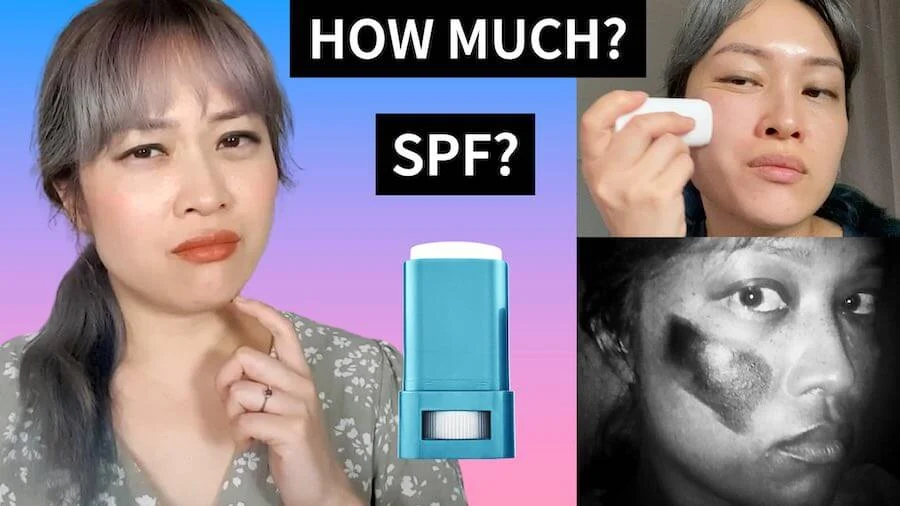
Sunscreen sticks have rapidly captured a significant share of the global personal care market, lauded by consumers and beauty influencers alike for their portability, mess-free application, and perceived ease of reapplication throughout the day. Despite their widespread popularity, dermatological researchers and cosmetic scientists have long questioned whether users apply a sufficient quantity of product to achieve the sun protection factor (SPF) stated on the label. To address this ambiguity, cosmetic chemist and science communicator Michelle Wong conducted a comprehensive, data-driven investigation into sunscreen stick application mechanics, measuring mass, coverage area, and time spent on skin to evaluate real-world efficacy.
Background Context and Regulatory Standards
The standard protocol for determining the labeled SPF of any sunscreen—whether lotion, spray, or stick—relies on a standardized application density of two milligrams per square centimeter ($2text mg/cm^2$) of skin. Previous baseline measurements established that an average adult face requires approximately $0.76text grams$ of sunscreen to meet this threshold. While standard liquid lotions are typically measured out in fractions of a teaspoon or defined finger-length quantities, sunscreen sticks lack intuitive volumetric guidelines for consumers.
Official guidance from organizations such as the American Academy of Dermatology (AAD) has historically suggested applying approximately four passes of a sunscreen stick to achieve adequate coverage. However, independent dermatological experts have frequently debated the scientific validity of this directive, noting that variations in facial topography, stroke pressure, and product formulation could render a generalized swipe count entirely inadequate for proper ultraviolet (UV) protection.
Chronology and Experimental Methodology
To evaluate actual application volumes, Wong initiated a multi-phase empirical investigation utilizing three popular Korean SPF 50+ sunscreen sticks: the Tocobo Cotton Soft Sun Stick, the Abib Quick Sunstick Protection Bar, and the Benton Mineral Sun Stick. The study utilized high-precision jewelry scales calibrated to track mass variations down to $0.01text grams$, alongside high-definition video recording and specialized UV camera imaging to capture product transfer rates and missed facial zones.
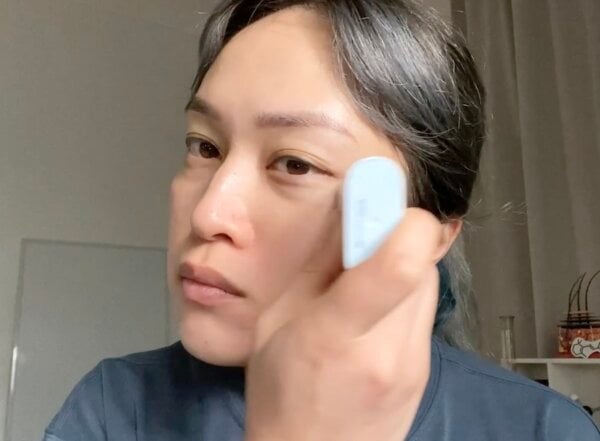
The initial phase of the experiment tested facial application. Wong weighed each sunscreen stick before application, recorded a generous application layer while filming in selfie mode to mimic real-world usage, and subsequently reweighed the stick to determine the precise mass transferred to the face. Because initial applications consistently fell short of the required $0.76text gram$ threshold, consecutive second and third layers were applied until the skin reached a point of saturation where additional product failed to transfer effectively.

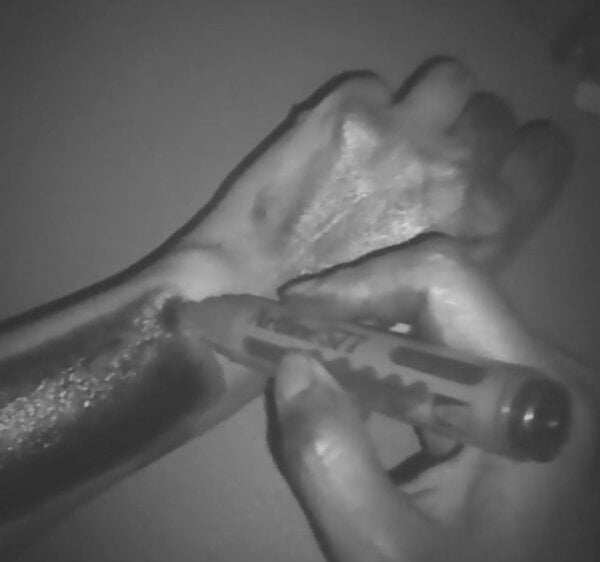
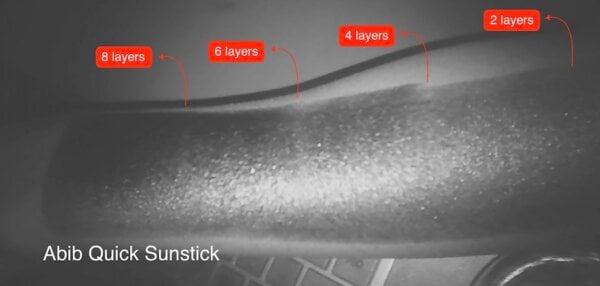
To provide an accessible reference point for consumers lacking precision scales, Wong also tracked application duration by analyzing video footage frame-by-frame. Segments where the stick lifted off the skin were eliminated to calculate cumulative time spent in direct contact with the face. A secondary arm test was subsequently conducted on a flat, controlled surface using up to 60 passes to analyze coverage density relative to mechanical pressure and surface area.
Empirical Findings and Quantitative Data
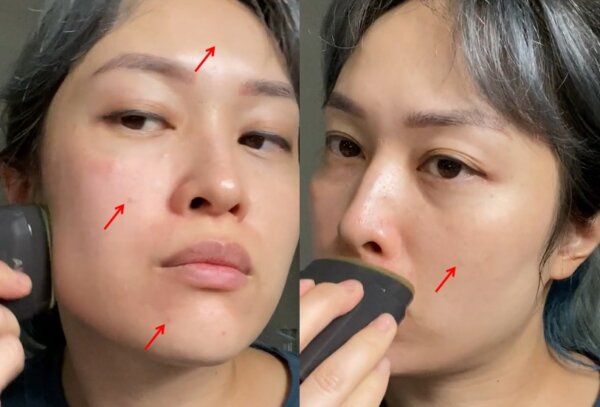
The experimental results revealed a substantial disparity between perceived generous application and the scientific mass required for stated SPF protection.
For the first layer, across all three tested products, the average mass applied was roughly $0.29text grams$ for Tocobo, $0.25text grams$ for Abib, and $0.33text grams$ for Benton. Translating these figures into estimated SPF equivalents—assuming a linear relationship between mass applied and protection level—the first layer achieved only about one-third of the labeled SPF 50 protection, yielding estimated SPF values between 16.4 and 21.7.
Achieving these insufficient first layers required an average of 43 to 78 seconds of active contact time per stick. By contrast, applying a full $0.76text grams$ of a traditional lightweight lotion sunscreen typically takes approximately 60 seconds. Even after applying three consecutive layers of stick sunscreen—which required nearly four times the application time of a lotion—the total mass transferred averaged only $0.64text grams$, falling short of the required benchmark while creating a heavy, viscous layer on the skin.
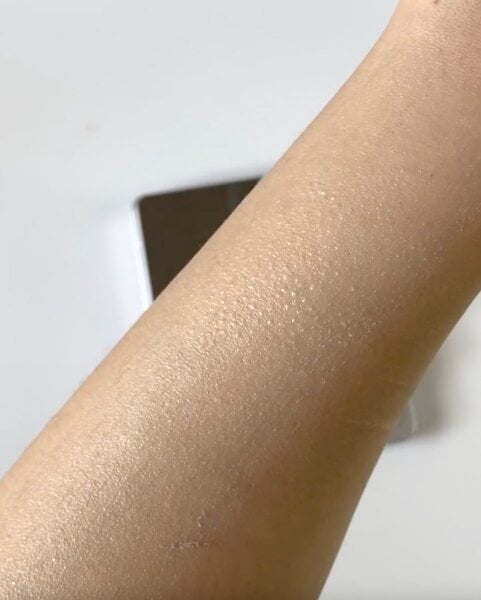
The arm trials further substantiated these findings, indicating that achieving a full $2text mg/cm^2$ density required approximately 16 to 21 passes with the Tocobo stick under firm pressure, and up to 40 to 64 passes with the Abib stick. The data demonstrated that slicker formulations suffer from diminishing product transfer after initial passes, making high-pass requirements practically burdensome for everyday users.
Analysis of Coverage Uniformity and Missed Zones
Beyond quantitative mass deficits, UV camera imaging exposed significant vulnerabilities regarding coverage uniformity. Despite conscious efforts to ensure thorough application while monitoring progress in real time, the rigid geometry of sunscreen sticks consistently resulted in missed anatomical zones.
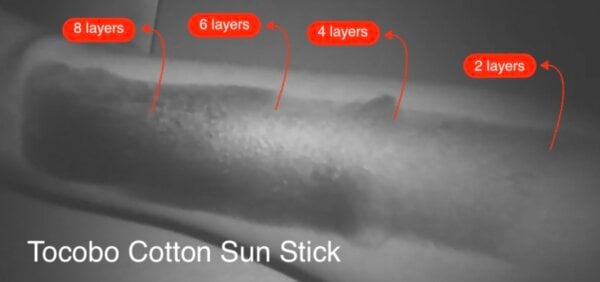
Key areas frequently left unprotected included the nasal bridge, the nasolabial folds, the inner brow bones, and the hairline contours. Unlike human fingers, which possess natural tactile feedback and flexibility to navigate facial contours, solid sticks cannot effortlessly conform to complex topographical ridges without deliberate secondary blending. Consequently, reliance on a stick without a subsequent manual rub-in step leaves substantial microscopic gaps vulnerable to UV radiation, regardless of how many times the stick is passed across the skin.
Industry and Expert Implications
The findings carry significant implications for dermatological public health messaging and consumer sun safety practices. Experts analyze that while sunscreen sticks offer undeniable convenience for midday touch-ups over makeup or reapplication on exposed body parts during outdoor activities, relying on them as a primary, standalone source of sun protection is highly impractical.
The data indicates that achieving adequate sun protection via a stick format demands excessive product consumption, prolonged application times, and an uncomfortably heavy, greasy cosmetic finish that compromises wearability. Furthermore, the common consumer assumption that a brief, casual swipe provides full SPF protection is mathematically and visually disproven by weight and UV imaging metrics.

Regulatory bodies and skincare professionals may need to refine application guidelines to emphasize that sunscreen sticks require significantly more passes—coupled with manual blending—than previously communicated, or recommend them strictly as supplementary adjuncts to fluid sunscreens rather than primary shields against ultraviolet radiation.
