
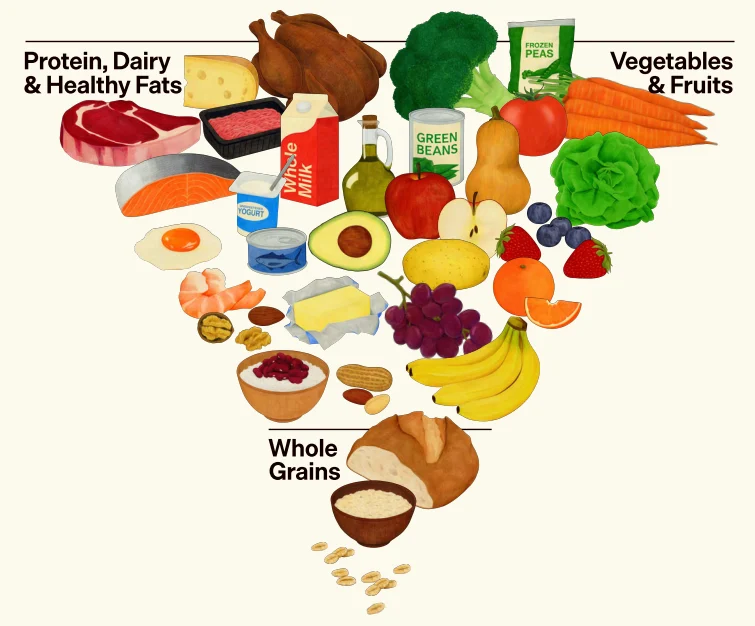
The United States Department of Agriculture (USDA) and the Department of Health and Human Services (HHS) have officially released the 2025–2030 Dietary Guidelines for Americans (DGAs), a federal policy document intended to steer the nutritional habits of the nation. While the document attempts to modernize public health messaging with a focus on “real food” and a stringent stance against ultra-processed items, its publication has been overshadowed by significant controversy regarding the methodologies used to compile the recommendations and a visual hierarchy that appears to contradict the government’s own scientific guidance on saturated fat.
A Departure from Established Scientific Review
The release of these guidelines follows a tumultuous two-year development cycle. Historically, the DGAs are the product of a rigorous, multi-year process led by an independent Dietary Guidelines Advisory Committee (DGAC), a panel of preeminent nutrition scientists and epidemiologists. This committee spends years conducting systematic reviews of the latest peer-reviewed literature, holding public meetings, and publishing a comprehensive scientific report that serves as the foundation for the final policy document.
For the 2025–2030 cycle, however, the process deviated from established norms. While the independent committee completed its exhaustive scientific review, the current administration ultimately bypassed key portions of their findings. In an unprecedented move, the government commissioned a "supplemental scientific analysis" conducted by a group of individuals selected through a private federal contracting process rather than the traditional public advisory board.
Critics, including members of the original committee, have raised alarms regarding the lack of transparency in this supplemental review. Dr. Deirdre Tobias, an assistant professor in the Department of Nutrition at the Harvard T.H. Chan School of Public Health and a member of the 2025-2030 DGAC, has publicly questioned the rigor of this secondary analysis. The concern centers on the fact that the methodologies used to "relitigate" certain nutritional topics lack the replicability and peer-review transparency that have long been the hallmark of federal health policy. Furthermore, reports have emerged noting that several contributors to the supplemental analysis disclosed financial ties to the beef and dairy industries, raising questions about potential conflicts of interest in a document that now places increased visual emphasis on animal-based proteins.
Visual Contradictions and Nutritional Misalignment
The most immediate point of contention for health experts is the inclusion of a new "food pyramid" graphic. While the written text of the DGAs maintains the long-standing scientific recommendation that saturated fat should account for no more than 10% of total daily caloric intake, the visual representation tells a different story. The pyramid is inverted, placing foods like steak, full-fat cheese, butter, and whole milk in prominent positions.
This juxtaposition creates a "mixed messaging" problem. From a public health perspective, visual aids are often more influential than the underlying technical text. When consumers see a government-sanctioned graphic prioritizing animal fats, it can undermine efforts to encourage the consumption of heart-healthy unsaturated fats found in olive oil, nuts, and seeds.
Dr. Frank Hu, chair of the Department of Nutrition at Harvard, notes that the math simply does not support the visual guidance. For an average 2,000-calorie diet, the 10% saturated fat limit equates to approximately 22 grams. A single serving of whole milk, a serving of Greek yogurt, and a small portion of cheddar cheese—all staples of the new pyramid—can bring a consumer to 17 grams of saturated fat before the day’s main meals are even accounted for. Adding a tablespoon of butter or beef tallow, both suggested as cooking fats in the guidelines, pushes the consumer well over the threshold. This leaves little room for other essential foods, potentially leading to increased LDL cholesterol levels and long-term cardiovascular risk across the population.
The War on Ultra-Processed Foods
Despite the controversies surrounding the fat recommendations, the 2025-2030 edition does mark a significant milestone: it is the first set of guidelines to explicitly categorize and target "highly processed foods." The document advises a significant reduction in the intake of sugar-sweetened beverages, ready-to-eat meals, and packaged snacks.
This shift reflects a growing scientific consensus that the quality of food—not just its macro-nutrient content—is a primary driver of metabolic health. The guidelines prioritize whole, fiber-rich grains over refined carbohydrates like white bread. By narrowing the focus on added sugars, the DGAs have also adopted a stricter stance for younger populations, now recommending that children avoid added sugars entirely until the age of 10, a substantial increase from the previous age-2 threshold.
However, nutrition advocates argue that these recommendations lack practical implementation strategies. While the goal of reducing added sugars is scientifically sound, the guidelines offer minimal guidance on how to navigate a food environment where sugar is ubiquitous in packaged goods. Without concrete policy shifts—such as improved food labeling or limitations on marketing to children—the burden remains entirely on the individual consumer.
Protein Consumption and the "Protein Package"
The 2025-2030 DGAs also introduce a notable increase in recommended protein intake, suggesting between 1.2 and 1.6 grams of protein per kilogram of body weight per day. This represents a 50% to 100% increase over previous minimum intake recommendations. While protein is essential for muscle maintenance and satiety, nutritionists warn that the guidelines fail to distinguish between protein sources.
When an individual consumes protein, they are also consuming the "package" that comes with it: fiber, sodium, saturated fats, and micronutrients. The guidelines encourage a "variety of protein foods," but they do not provide clear instruction on prioritizing plant-based proteins or fish over processed meats or high-fat cuts of beef. Excessive protein consumption, particularly from animal sources, has been linked to weight gain and chronic disease. By raising the target quantity without sufficiently emphasizing the necessity of protein quality, the guidelines may inadvertently encourage the consumption of more saturated fat, further complicating the goal of lowering cardiovascular disease rates.
The Alcohol and Sustainability Gap
As in previous years, the new DGAs remain notably silent on two critical issues: alcohol consumption limits and environmental sustainability. Regarding alcohol, the document offers the vague recommendation to "consume less for better health." In the absence of specific, evidence-based limits, this language is criticized for being too ambiguous to effectively guide public health decisions, particularly as emerging research suggests that no amount of alcohol is truly "healthy."
Furthermore, the omission of environmental impact in the dietary guidelines remains a significant point of contention. Major international health organizations, including the World Health Organization and the EAT-Lancet Commission, have long argued that dietary recommendations must account for the planetary impact of food production. The current administration’s refusal to incorporate sustainability into the DGAs is seen by many as a missed opportunity to address the intersection of human health and environmental stability, as the production of animal-based foods—the very foods prioritized in the new pyramid—carries a much higher carbon footprint than plant-based alternatives.
Implications for Future Public Health
The 2025-2030 Dietary Guidelines for Americans arrive at a time when metabolic disease rates in the U.S. are at an all-time high. The effectiveness of these guidelines will ultimately be determined by how they are translated into school lunch programs, hospital meal services, and federal nutrition assistance programs like SNAP and WIC.
Historically, Americans have struggled to adhere to federal guidelines. The lack of clarity in this latest version, combined with the perception that the process was influenced by industry interests rather than pure science, may further diminish public trust. As the scientific community continues to debate the merits of the new pyramid and the integrity of the supplemental analysis, consumers are left in a difficult position. For those seeking to optimize their health, experts continue to recommend relying on established, non-partisan resources such as the Harvard Healthy Eating Plate, which emphasizes whole grains, healthy fats, and a diversity of plant-based proteins, rather than following the potentially contradictory visual cues found in the latest federal documentation.
The federal government has positioned this version as more "consumer-friendly" due to its shorter length and interactive web presence. However, the true test of the 2025-2030 DGAs will be whether they can successfully navigate the tension between industrial influence and the mounting evidence that diet remains the most powerful tool in the fight against chronic disease. As the document moves into the implementation phase, the lack of transparency in its creation will likely remain a topic of rigorous scrutiny by researchers, lawmakers, and public health advocates alike.
