
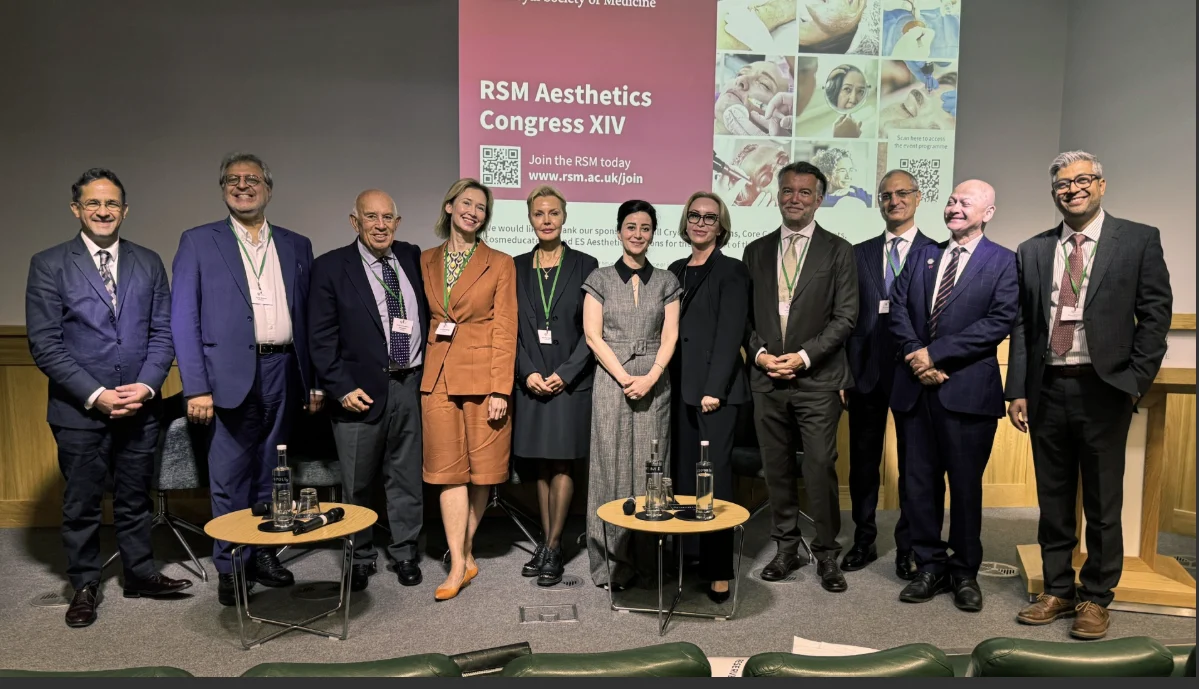
The Royal Society of Medicine (RSM) officially opened its doors to a distinguished assembly of medical professionals, researchers, and clinical leaders on September 4 for the highly anticipated Aesthetics XIV Annual Congress. Convening within the historic walls of the Society’s London headquarters, the one-day landmark event was convened under the guiding theme, "Shaping the Future of Aesthetic Medicine: A Multidisciplinary & Regenerative Perspective." As the aesthetic medicine sector continues to experience exponential global growth, this year’s congress marked a decisive philosophical shift away from purely cosmetic interventions toward an integrated framework rooted deeply in clinical health, comprehensive diagnostics, long-term patient wellbeing, and advanced regenerative science.
The convening of such a high-caliber assembly underscores the evolving nature of aesthetic medicine as a recognized and rigorous medical subspecialty. Practitioners gathered to address the pressing need for standardized clinical governance, heightened diagnostic precision, and collaborative cross-specialty practice. By bridging the traditional divides between surgical and non-surgical disciplines, the congress established a new benchmark for professional education, scientific integrity, and patient-centric care within the modern aesthetic landscape.
Main Facts and Core Themes of the Congress
At its core, the Aesthetics XIV Annual Congress sought to dismantle the siloed approach that has historically characterized various branches of aesthetic practice. The comprehensive academic programme placed holistic health, patient wellbeing, and rigorous clinical diagnosis at the absolute center of the medical aesthetics paradigm, insisting that these elements must precede the consideration of any aesthetic or cosmetic procedure.
Rather than focusing on product demonstrations or commercially driven agendas, the scientific committee curated a series of intensive sessions dedicated to foundational medical sciences. A significant portion of the day’s discourse was devoted to complex dermatological, endocrinological, and neurological conditions that frequently present in clinical settings but demand precise identification prior to aesthetic intervention.
Among the critical medical conditions highlighted by the faculty were rosacea, facial palsy, complex periorbital diseases, underlying endocrine and metabolic disorders, and the fundamental cellular biology of human aging. Presenters emphasized that failing to recognize these underlying systemic or localized pathologies can lead to compromised clinical outcomes, exacerbated medical conditions, or severe adverse events.
Complementing the diagnostic focus, the congress dedicated substantial programming to clinical risk management. Sessions thoroughly explored the management of procedural complications, the systematic recording of adverse events, the legal and ethical nuances of obtaining truly informed consent, and advanced methodologies for patient-practitioner communication. In an era where patient expectations are frequently shaped by digital media and unrealistic portrayals, the emphasis on transparent, medically sound communication was widely lauded by attendees as both timely and essential.
Chronology and Programme Structure
The day-long congress followed a carefully structured chronological sequence designed to maximize intellectual engagement and interdisciplinary dialogue. Proceedings commenced in the morning with introductory remarks from the leadership of the RSM Section of Aesthetic Medicine and Surgery, setting an academic tone that prioritized evidence-based practice over commercial interests.
The morning sessions immediately plunged into advanced diagnostics and underlying pathology. Leading dermatologists and clinical researchers took to the podium to present case studies and empirical data regarding inflammatory skin diseases such as rosacea, detailing how misdiagnosing these conditions as simple cosmetic concerns can lead to inappropriate and potentially harmful treatments. This was followed by specialized panels addressing periorbital diseases and the intricate metabolic markers associated with the biology of aging.
Mid-morning featured a series of cross-disciplinary symposia that brought surgeons, dermatologists, and general practitioners onto the same stage to debate and analyze complex clinical scenarios. This format was intentionally engineered to break down historical barriers between surgical subspecialties—such as plastic surgery and maxillofacial surgery—and non-surgical aesthetic fields, including advanced injectable therapies and energy-based devices.
The focal point of the morning schedule was the keynote lecture, delivered by Dr. Farhad Naini, a renowned authority in his field. Dr. Naini’s keynote provided a sweeping, masterclass-level analysis of facial form, proportion, and structural pathology, integrating historical anatomical principles with modern clinical applications. His lecture challenged delegates to look beneath the surface dermal layers and appreciate the underlying skeletal and muscular frameworks that dictate long-term aesthetic outcomes.
The afternoon schedule shifted toward intervention, management, and regenerative medicine. Sessions led by prominent figures such as Mr. Christopher Rowland-Payne examined the prevention, recognition, and management of procedural complications and vascular occlusions. These sessions incorporated recent clinical data and standardized safety protocols designed to minimize patient risk.
Subsequent panels addressed the legal and psychological dimensions of medical aesthetics, focusing on patient selection, body dysmorphic disorder screening, and the legal obligations surrounding informed consent. The day culminated in an integrative plenary session where surgical and non-surgical experts co-chaired open-floor debates, allowing delegates to engage directly with the faculty on controversial and evolving topics within the specialty.
Distinguished Faculty and Expert Perspectives
The academic rigor of the Aesthetics XIV Annual Congress was anchored by an elite faculty of national and international experts. Among the prominent speakers contributing to the multidisciplinary discourse were Dr. Souphi Samizadeh, Dr. Farhad Naini, and Mr. Christopher Rowland-Payne, alongside a diverse roster of leading surgeons, dermatologists, and clinical scientists.
Dr. Souphi Samizadeh, serving as the congress president of the Section of Aesthetic Medicine and Surgery at the Royal Society of Medicine, played a pivotal role in shaping the vision and execution of the event. Offering her reflections on the motivations behind the congress’s unique curriculum, Dr. Samizadeh emphasized the urgent need for structural reform in aesthetic education.
"My aim for this congress was to give healthcare professionals working in medical aesthetics an educational home, evidence-based, scientific and not product-led," Dr. Samizadeh stated. "Medical aesthetics is a multidisciplinary specialty, and it should be taught as one. We brought surgical and non-surgical experts from the UK and abroad into the same room for a whole day, chairing together and answering questions together, so that delegates could immerse themselves in every perspective rather than only their own. I also wanted to say clearly that health, wellbeing and correct diagnosis are integral to medical aesthetics, not something separate from it."
Dr. Samizadeh’s comments struck a chord with the attending delegates, many of whom have expressed growing concern over the commercialization and fragmentation of aesthetic training within the broader healthcare market. By positioning the RSM as an independent, scientifically rigorous sanctuary for professional development, the congress reinforced the principle that aesthetic interventions are medical procedures carrying inherent biological risks that require advanced clinical competency.
Background Context of the Event and Industry Landscape
To fully understand the significance of the Aesthetics XIV Annual Congress, it is necessary to examine the broader economic, regulatory, and clinical context in which modern aesthetic medicine operates. Over the past two decades, the global medical aesthetics market has expanded at a staggering pace, driven by technological advancements, minimally invasive techniques, and shifting societal perceptions regarding aging and personal appearance.
Concurrently, the industry has faced mounting scrutiny from regulatory bodies, public health authorities, and consumer protection agencies. In the United Kingdom and across Europe, historical regulatory gaps have frequently allowed non-medically qualified practitioners to perform complex aesthetic procedures, leading to rising rates of complications, disfigurement, and psychological distress among vulnerable patients.
Although professional bodies, government reviews, and independent advisory groups have repeatedly called for stricter statutory regulation, standardized training pathways, and mandatory qualifications, the implementation of these measures has been gradual and uneven. Within this transitional and often volatile landscape, institutions like the Royal Society of Medicine play an indispensable role. By establishing high-level academic standards and fostering interdisciplinary collaboration, the RSM acts as an authoritative anchor for medical professionals dedicated to clinical excellence and patient safety.
Furthermore, the emergence of regenerative medicine has fundamentally altered the trajectory of aesthetic science. The industry is rapidly shifting away from techniques that merely fill wrinkles or paralyze facial muscles toward biological interventions that stimulate natural tissue repair, collagen synthesis, and cellular rejuvenation. Concepts such as platelet-rich plasma (PRP), autologous fat grafting, polynucleotides, and stem-cell-derived therapies are moving from experimental research to mainstream clinical practice. The Aesthetics XIV Annual Congress captured this paradigm shift, providing practitioners with the evidence-based framework required to navigate these sophisticated biological modalities safely and effectively.
Supporting Data and Clinical Implications
While specific commercial data regarding the global aesthetics market highlights its multi-billion-dollar valuation, the clinical data presented at the congress focused heavily on complication rates, diagnostic oversight, and patient outcomes. Recent audits within aesthetic dermatology and plastic surgery indicate that a significant percentage of adverse events—ranging from localized skin necrosis to systemic complications—stem from two primary root causes: inadequate anatomical knowledge and a failure to diagnose underlying systemic or dermatological pathologies prior to treatment.
For instance, performing dermal filler injections on a patient with undiagnosed rosacea or active inflammatory skin disease can exacerbate the condition, trigger severe immune responses, or lead to chronic granulomatous reactions. Similarly, administering neuromodulators without recognizing early-stage facial palsy or neurological anomalies can result in asymmetrical facial paralysis and profound psychological trauma for the patient.
By dedicating extensive programming to these diagnostic imperatives, the congress provided practitioners with actionable data to refine their pre-treatment assessment protocols. The integration of metabolic and endocrine health discussions further underscored the reality that the skin and facial structures are external manifestations of internal systemic health. Conditions such as thyroid dysfunction, diabetes, and hormonal imbalances directly influence skin healing, tissue integration of biomaterials, and the overall aging process.
From a regulatory and legal standpoint, the emphasis on informed consent and communication addresses another critical vulnerability within the specialty. Legal precedents and medical malpractice data reveal an increasing volume of litigation centered around inadequate patient communication, unrealistic expectations, and failure to fully disclose potential risks. The congress’s legal and ethical sessions equipped clinicians with standardized consent frameworks designed to enhance transparency, ensure psychological readiness, and protect both the patient and the practitioner.
Broader Impact and Implications for the Future of Aesthetic Medicine
The successful conclusion of the Aesthetics XIV Annual Congress carries profound implications for the future direction of aesthetic medicine, both in the United Kingdom and internationally. By championing a multidisciplinary model that unites surgeons, dermatologists, general practitioners, and clinical researchers, the Royal Society of Medicine has set a clear precedent for how the specialty must mature in the coming decades.
First and foremost, the event accelerates the professionalization of medical aesthetics. As regulatory frameworks tighten and public expectations rise, the era of casual, product-driven, or siloed aesthetic practice is rapidly drawing to a close. The demand for practitioners who possess comprehensive medical training, rigorous diagnostic capabilities, and a deep understanding of regenerative science will only intensify. Institutions that fail to adopt this holistic, evidence-based approach risk falling behind clinical standards and exposing themselves to heightened legal and ethical liability.
Second, the integration of regenerative medicine into the core aesthetic curriculum signals a permanent evolution in treatment philosophy. Future aesthetic interventions will increasingly focus on restoring physiological function, enhancing skin quality at a cellular level, and promoting natural tissue regeneration rather than relying solely on temporary mechanical corrections. This shift aligns aesthetic medicine more closely with mainstream longevity medicine and internal medicine, bridging the gap between cosmetic enhancement and preventative healthcare.
Finally, the strong emphasis on patient wellbeing, mental health screening, and transparent communication reinforces the ethical obligations of the medical profession. Aesthetic practitioners are increasingly recognized as frontline healthcare providers who frequently interact with patients experiencing body image anxieties, psychological distress, or underlying systemic illnesses. By providing an educational home that prioritizes comprehensive patient care over commercial expediency, the Royal Society of Medicine has ensured that the future of aesthetic medicine remains anchored in its foundational Hippocratic oath: to heal, to protect, and above all, to do no harm.
