
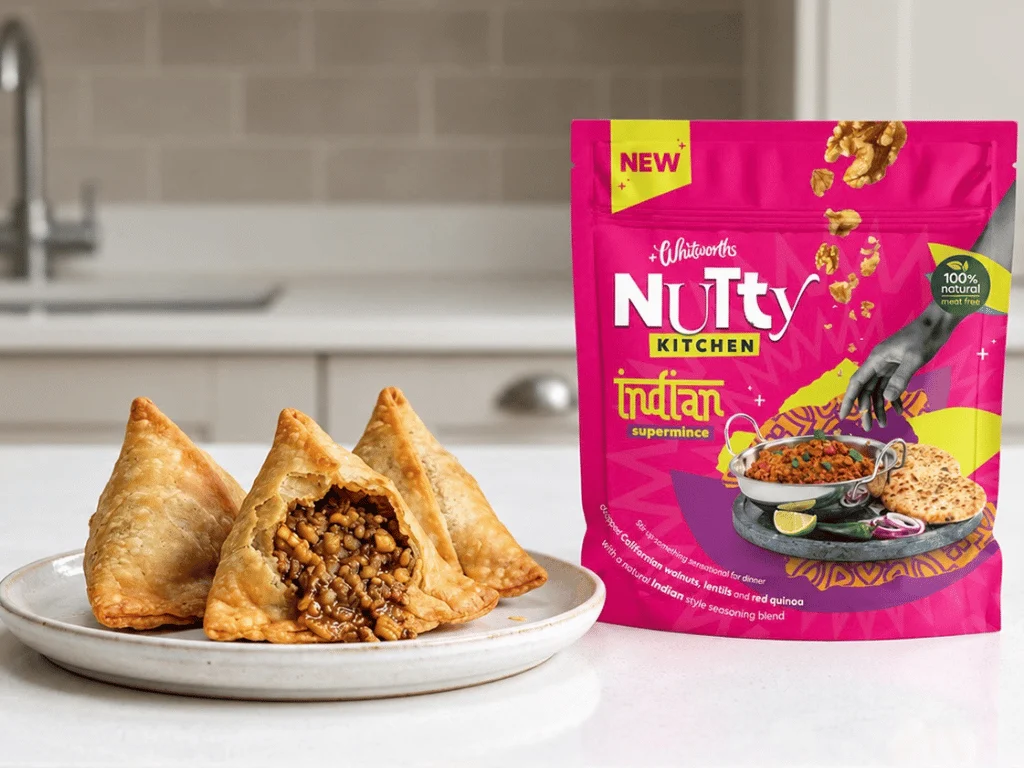
British snacking institution Whitworths is officially taking its next major step in the plant-based protein sector, bringing its innovative walnut-based minced meat alternative to brick-and-mortar retail grocery shelves for the very first time. Following an initial online debut last year, the company’s Nutty Kitchen Supermince range is rolling out across approximately 900 Tesco stores nationwide, marking a critical transition from digital-first testing to mainstream supermarket accessibility. This strategic retail expansion positions the heritage brand directly at the intersection of two rapidly accelerating consumer movements: the surging demand for clean-label, protein- and fiber-rich foods, and an intensifying cultural backlash against ultra-processed foods (UPFs) that has dampened sales for traditional plant-based meat analogues.
A Chronology of Innovation and Retail Expansion
The trajectory of Whitworths’ Supermince reflects a deliberate, phased market entry designed to mitigate consumer skepticism surrounding processed meat alternatives. Founded on a legacy of supplying dried fruits, nuts, and baking ingredients across the United Kingdom, Whitworths first conceptualized the nut-based mince alternative to address a glaring gap in the market: the lack of simple, whole-food options that could replicate the culinary versatility of beef mince without relying on extensive industrial processing, chemical binders, or artificial isolates.
In late 2023 and early 2024, internal research and product development teams finalized recipes anchored by nutrient-dense walnuts, lentils, and quinoa. By mid-2024, the company soft-launched the Nutty Kitchen Supermince exclusively via online channels. This digital-first approach allowed the brand to gather critical consumer feedback, refine flavor profiles, and validate the premise that shoppers were eager for a genuinely unprocessed, ambient-stable or easily rehydrated pantry staple.
Building on positive digital engagement and repeat purchases, Whitworths secured a landmark distribution agreement with Tesco, the United Kingdom’s largest supermarket chain, in late 2025 and early 2026. This nationwide rollout across 900 storefronts represents the brand’s first major foray into physical grocery aisles, instantly transforming a niche online novelty into a widely accessible household product. To lower consumer adoption barriers during this crucial physical launch, Tesco and Whitworths coordinated a high-profile "try-for-free" promotional campaign, allowing shoppers to claim full refunds if the product failed to meet their flavor expectations.
Nutritional Composition and Culinary Application
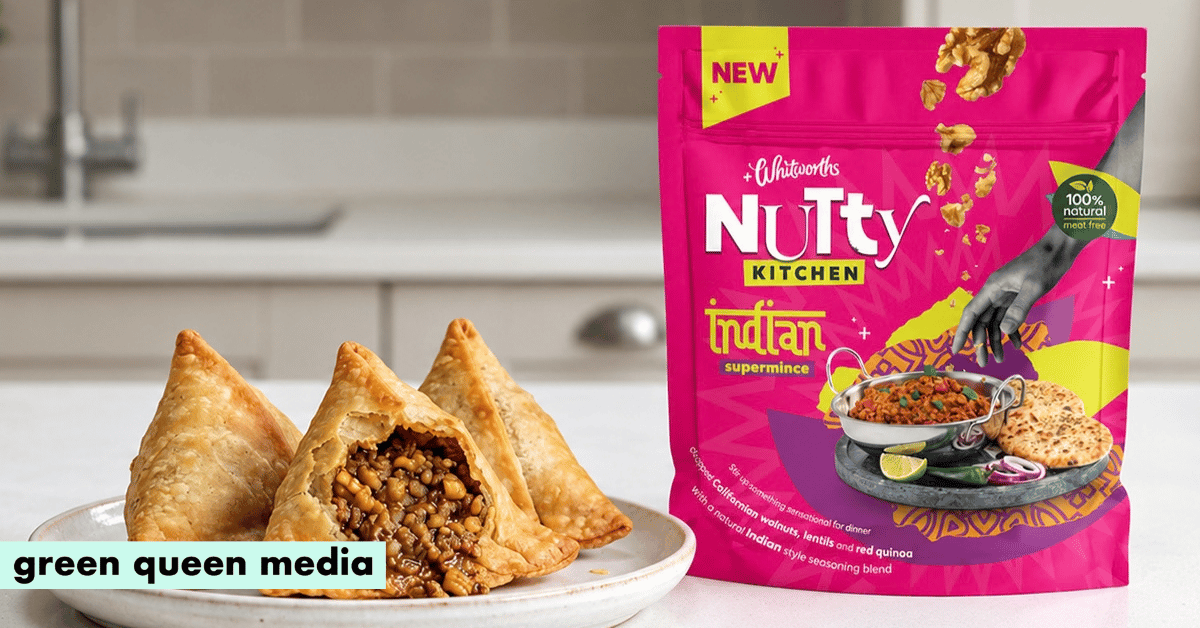
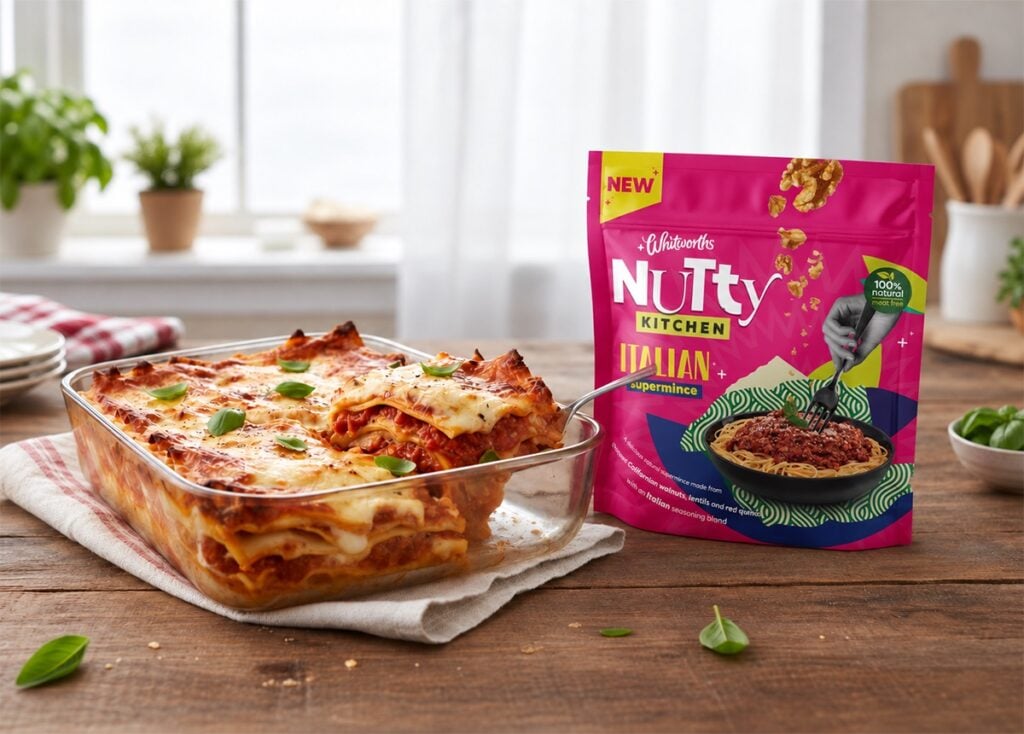
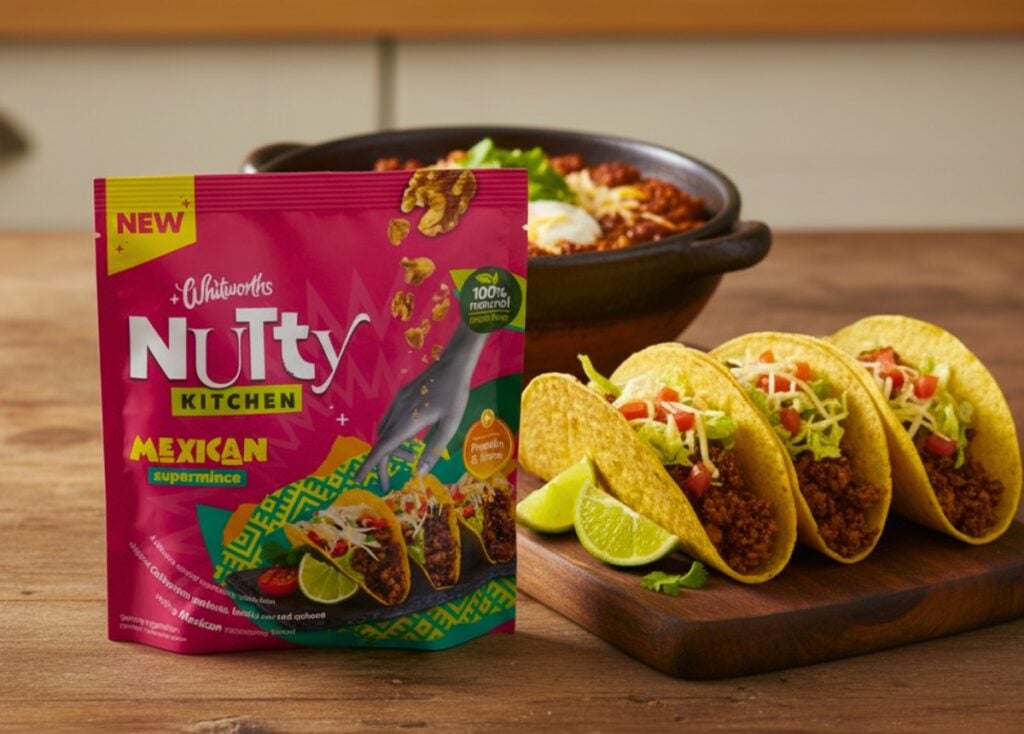
The Supermince lineup arrives in four distinct variants designed to mimic the culinary applications of conventional ground meat while proudly boasting a transparent, clean-label ingredient deck. The plain variant of the Supermince is formulated using precisely three core ingredients: walnuts, lentils, and quinoa. Meanwhile, the Indian, Mexican, and Italian-inspired flavour variants incorporate authentic spices and seasonings without relying on artificial flavorings, synthetic preservatives, or texturized vegetable proteins derived from highly processed soy and pea isolates.
Nutritionally, the range delivers robust macronutrient profiles tailored to modern health demands. Per 100-gram serving, the products supply between 9.9 and 10.3 grams of protein and 4.5 to 5.1 grams of dietary fiber. Furthermore, the walnut base introduces a rich concentration of alpha-linolenic acid (ALA), a plant-based omega-3 fatty acid naturally abundant in walnuts. Medical and nutritional research highlights ALA’s efficacy in lowering low-density lipoprotein (LDL) cholesterol—commonly referred to as "bad" cholesterol—reducing systemic inflammation, improving blood vessel flexibility, and supporting long-term cardiovascular health.
From a culinary perspective, Whitworths engineered the Supermince to behave identically to beef mince during cooking. The product seamlessly integrates into traditional family recipes such as spaghetti bolognese, cottage pies, tacos, chilis, and keema dishes. By maintaining familiar cooking methods and textures, the brand aims to remove the intimidation factor often associated with transitioning toward plant-forward diets.
Industry Perspectives and Corporate Strategy
The decision by Whitworths to enter the meat-alternative market with a whole-food, nut-based proposition has drawn praise from industry analysts who point to changing consumer sentiment. Phil Gowland, commercial director at Whitworths, emphasized that the product directly targets consumer frustrations with existing vegan alternatives.
"Our mission is to make healthy, unprocessed foods more accessible, and our Nutty Kitchen Supermince is a delicious step in that direction," stated Gowland. "We know shoppers are increasingly frustrated with plant-based products that feel over-processed or fall short on taste and texture. Whitworths’ Nutty Kitchen Supermince is different. It’s simple, unprocessed, natural, and bursting with essential nutrients we all need on a daily basis, whilst still delivering that meaty texture people love. It’s a product we’re incredibly proud of, and we can’t wait for shoppers to now find it in Tesco stores."
Industry observers note that Whitworths’ corporate heritage provides a distinct competitive advantage. Unlike startup food-tech firms that must invest heavily in consumer education regarding novel scientific processes, Whitworths is already a trusted household name associated with natural snacking and baking ingredients. This established brand equity significantly lowers consumer hesitancy when evaluating a novel walnut-based meat substitute.
The Broader Market Context: The Anti-UPF Movement and Protein Mania
Whitworths’ retail rollout occurs against a complex backdrop of shifting dietary habits across the United Kingdom. Public health discourse and digital media trends have cast a critical spotlight on ultra-processed foods (UPFs), triggering a profound behavioral shift among British consumers. According to official government polling data compiled by the Food Standards Agency, up to 78% of UK citizens express active concern regarding ultra-processed foods, while 75% worry about the overall healthiness of their daily diets.
This anxiety has directly impacted the commercial fortunes of traditional plant-based meat substitutes, which historically relied on complex extrusion techniques and heavy chemical processing to mimic animal tissue. Market research data from recent quarters indicates a continued cooling of the vegan meat sector. Across Europe and the UK, retail sales of conventional plant-based meat alternatives experienced notable contractions, registering a 7% dip followed by subsequent value sales declines of 2.7% into the first half of the year.
Conversely, consumer spending has pivoted sharply toward minimally processed, whole-food plant proteins. During the first six months of the year, value sales for traditional plant proteins—including beans, pulses, tofu, and tempeh—grew by 10.1%. Lentils alone, which serve as a foundational building block for Whitworths’ Supermince, enjoyed a remarkable 16.7% surge in sales volume.
Concurrently, the UK is experiencing a phenomenon known colloquially as "protein mania" and "fibremaxxing," driven heavily by social media platforms and health trends. Data from Ocado Retail indicates that 43% of UK shoppers actively increased their protein intake over the past year, accompanied by a 20% spike in online searches for "natural protein." Furthermore, approximately 57% of UK consumers report following a high-protein diet to some degree.
Dietary focus on fiber has seen an equally dramatic rise. Research conducted by HelloFresh reveals that 65% of UK consumers are currently attempting to consume more fiber than they did five years ago, with awareness of fiber’s benefits widely recognized: 83% cite digestive health, 82% point to gut health, and 61% associate fiber with effective weight management. These dietary priorities are further amplified by the cultural adoption of the "30-plants-a-week" gut-health movement and the widespread usage of GLP-1 weight-loss medications, where dietary protein preserves muscle mass and dietary fiber naturally stimulates the body’s endogenous GLP-1 hormone response.
Implications for the Future of Plant-Based Retail
The pivot by Whitworths toward a whole-food, nut-based meat alternative exemplifies a broader evolution within the UK food industry. Even though nutritional experts frequently emphasize that not all ultra-processed foods are inherently detrimental to health—with recent studies demonstrating that swapping processed meats for plant-based alternatives successfully increases fiber and lowers saturated fat—consumer perception remains firmly anchored in favor of clean labels and recognizable ingredients.
In response, legacy brands and agile startups alike are abandoning hyper-processed meat simulations in favor of veg-led, whole-food innovations. Competitors are rapidly introducing novel offerings such as mushroom-based tofu alternatives, chickpea-tofu ranges, and umami-rich vegetable burgers. Whitworths’ successful placement in 900 Tesco stores demonstrates that major UK retailers are increasingly willing to allocate prime shelf space to these clean-label, plant-forward innovations.
As the Supermince range hits physical aisles nationwide, its commercial performance will likely serve as a crucial bellwether for the future of the UK protein market. If walnut- and legume-based whole foods can successfully capture mainstream grocery dollars, it may permanently redefine the formulation standards for meat alternatives, proving that consumer demand for sustainability, health, and minimal processing can successfully coexist on supermarket shelves.
